
Chef Klaus
Apfelmus
The apple-harvest preserve of the German kitchen, cooked low until the fruit collapses, then kept smooth, tart, and ready for potato pancakes or warm Mehlspeisen.
A cooking platform built around craft, culture, and the stories behind what we eat.
Created by
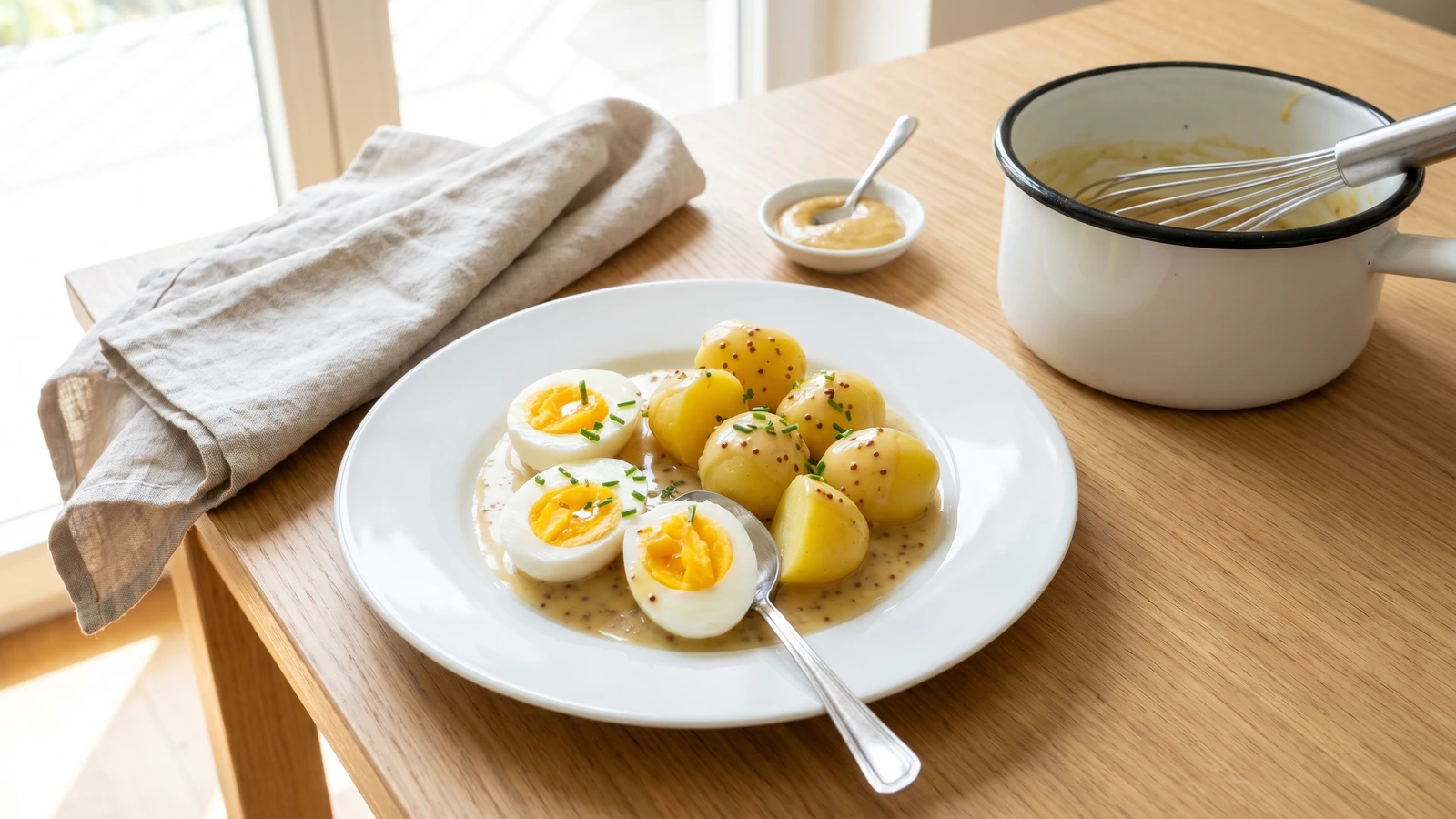
The eastern weeknight sauce that turns eggs, potatoes, or fish into supper: blond roux first, mustard last, because boiled mustard loses its bite.
Senfsoße belongs to the plain eastern table, especially with boiled eggs and potatoes, the dish many people know as Eier in Senfsoße. Saxony and Brandenburg keep it close to the weeknight stove; the north spoons a sharper mustard sauce over fish. Im Norden anders, im Süden anders. In the south you may meet mustard beside sausages and roasts, but this pale sauce over eggs is eastern Hausmannskost, honest home cooking.
I make it with a blond Mehlschwitze, a flour-and-butter roux, loosened with stock and milk. The colour stays pale because the flour is cooked only until it smells nutty, not brown. That matters. Raw flour tastes dusty, brown roux tastes like gravy, and Senfsoße should taste of mustard, not Sunday roast.
The whole dish turns on one rule: stir the mustard in off the heat. Boil it hard and the sharpness goes flat, the milk can split, and you've made a dull yellow sauce that tastes tired before it reaches the plate. Nicht aus dem Glas, and not from a packet either. Make the base, pull the pan aside, then let the mustard speak.
Senfsoße entered the eastern German everyday table as a cheap meatless sauce for eggs, potatoes, and freshwater or Baltic fish, especially in Prussian, Saxon, and later GDR home cooking. Bautzen in Saxony became a mustard town in the 19th century, and Bautz'ner Senf, developed in the GDR in 1953, helped fix the medium-hot eastern mustard flavour many cooks still expect in this sauce. The regional split remains clear: the north pairs mustard sauce with fish, while the east made Eier in Senfsoße a household and canteen standard.
Quantity
40g
Quantity
40g
Quantity
300ml
Quantity
250ml
Quantity
3 to 4 tablespoons
Quantity
1 teaspoon
Quantity
1 teaspoon
Quantity
1 teaspoon
Quantity
to taste
Quantity
8
peeled
Quantity
800g
Quantity
1 tablespoon
chopped
| Ingredient | Quantity |
|---|---|
| unsalted butter | 40g |
| plain flour | 40g |
| light vegetable stock or fish stock | 300ml |
| whole milk | 250ml |
| medium-hot German mustard | 3 to 4 tablespoons |
| mild wholegrain mustard (optional) | 1 teaspoon |
| sugar | 1 teaspoon |
| white wine vinegar or pickle brine | 1 teaspoon |
| salt and freshly ground white pepper | to taste |
| boiled eggspeeled | 8 |
| boiled potatoes | 800g |
| dill or chives (optional)chopped | 1 tablespoon |
Warm the stock and milk together in a small pan until they are hot but not boiling. Warm liquid blends into roux smoothly; cold liquid hits hot flour and butter, tightens the paste, and gives you lumps to chase with a whisk.
Melt the butter in a saucepan over medium-low heat, then stir in the flour and cook for 2 to 3 minutes, whisking steadily, until it smells lightly nutty and stays blond. Don't brown it. This sauce is pale on purpose, and raw flour needs cooking just long enough to lose its dusty taste.
Whisk in the warm stock and milk a ladle at a time, making the paste smooth before you add more. The first splash decides the texture; if you flood the roux at once, dry flour hides in the corners and the sauce turns grainy. Simmer gently for 6 to 8 minutes, until it coats a spoon.
Pull the pan off the heat and whisk in 3 tablespoons mustard, the wholegrain mustard if using, the sugar, and the vinegar or pickle brine. Mustard goes in off the heat because a hard boil dulls its bite and can split the milk base. Taste, then add the last spoon of mustard only if the sauce needs more backbone.
Season with salt and white pepper at the end, then spoon the sauce over halved boiled eggs and boiled potatoes. Würzen, Fett, Salz zum Schluss. Finish with dill or chives if they belong on your table, not because the plate looked lonely.
1 serving (about 465g)
Culinary guides, cultural storytelling, and the editorial depth that makes cooking meaningful.
Discover Culinary ExplorerChef Klaus
The apple-harvest preserve of the German kitchen, cooked low until the fruit collapses, then kept smooth, tart, and ready for potato pancakes or warm Mehlspeisen.

Chef Klaus
The northern marinated herring that belongs to the cold larder: salt fish, vinegar, onion, and time doing the work before bread or potatoes ever reach the table.

Chef Klaus
A proper Bratensoße begins with the brown bits in the pan, not a packet: bones roasted dark, wine scraped clean, stock reduced until it coats the spoon.

Chef Klaus
Plain mushrooms browned hard, then loosened with stock and cream. The sauce is mild, pale, quick, and honest, made for Schnitzel, Spätzle, or a weeknight pork cutlet.