
Chef Klaus
Ahle Wurst
North Hesse's old sausage is cured, not cooked: coarse pork, pepper, garlic, and cold weeks in a chamber until the slice turns firm enough for rye and cider.
A cooking platform built around craft, culture, and the stories behind what we eat.
Created by
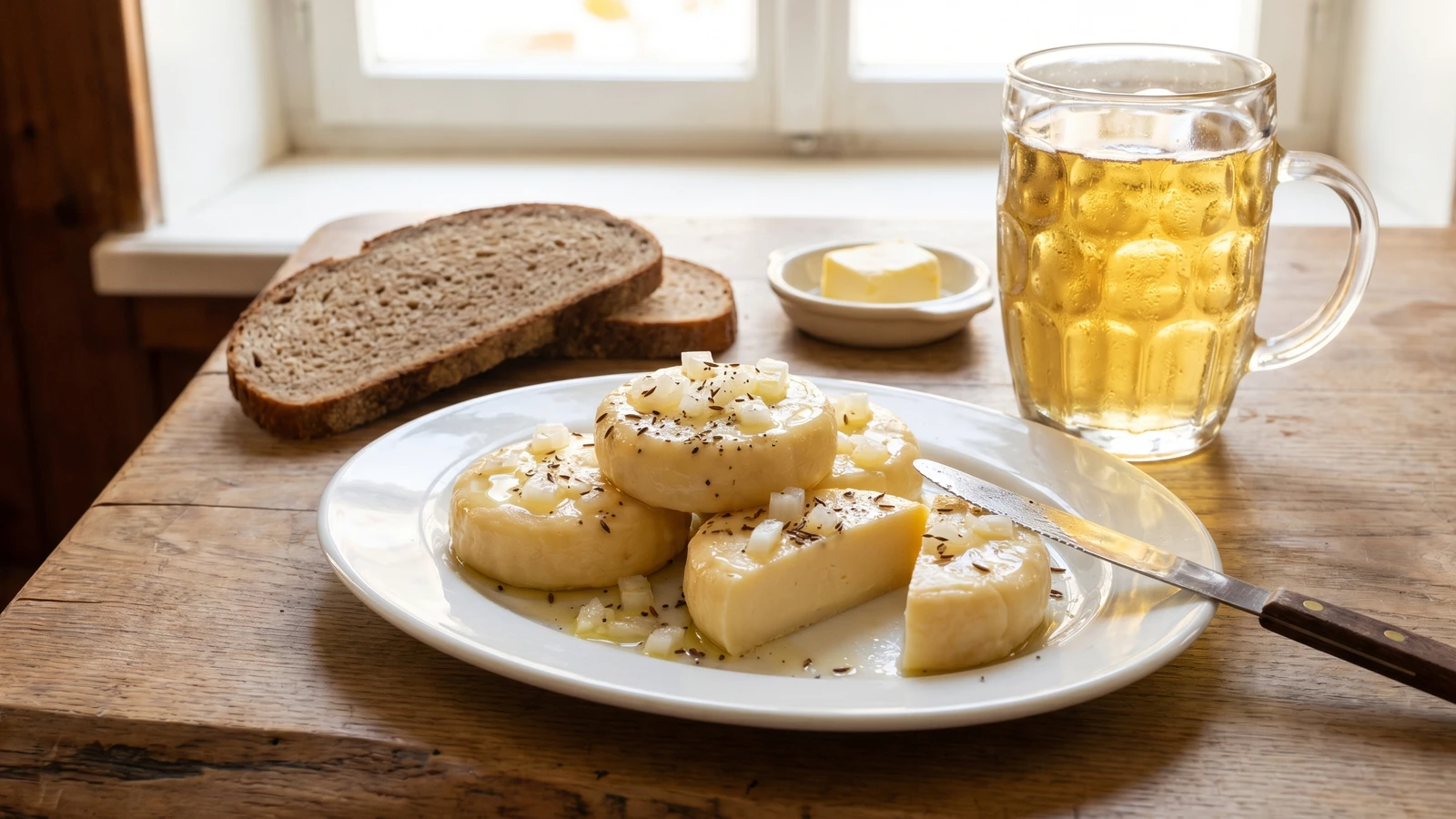
The Frankfurt Apfelwein table's sharp little cheese plate: sour-milk Handkäs under onion, vinegar, oil, and caraway, rested just long enough for the Musik to begin.
Handkäs mit Musik belongs to Hesse, especially Frankfurt and the Rhine-Main Apfelweinwirtschaft, where a small sour-milk cheese sits on the table with rye bread, butter, and a glass of cider. This is not a feast dish. It's the thing you order before the main plate, after work, at a picnic, or on a match day when the table wants something sharp, cheap, and honest.
The argument is in the onion. In Frankfurt, the Musik is raw onion in a vinegar-and-oil marinade, with caraway if the table wants it. In Rheinhessen and the Palatinate you'll see cousins of the dish, but the vinegar, oil, and onion balance shifts, and some cooks keep the onion separate so it stays louder. I keep it Hessian: onion in the marinade, enough acid to wake the cheese, enough oil to round it, no jarred dressing. Nicht aus dem Glas.
The one technique is rest, and not too much of it. Slice the onion fine and let it sit with vinegar, oil, caraway, and pepper before it goes over the cheese, because the acid takes the raw burn down while the onion juice seasons the dressing. Then give the cheese an hour under it. Less, and the Handkäs tastes like cold cheese with onion dumped on top. Much more, and the onion bullies the plate. Das braucht seine Zeit, but not the whole afternoon.
Handkäse is a Hessian sour-milk cheese traditionally shaped by hand, which is where the name comes from, and it became a staple of the Frankfurt Apfelwein taverns by the 19th century because it was cheap, low in fat, and kept well. The phrase mit Musik refers to the raw onion served with it, a dry tavern joke about what follows later. The regional split is practical: Hesse binds the dish to Apfelwein, rye bread, butter, vinegar, oil, and onion, while neighbouring wine regions serve related sour-milk cheeses with their own sharper or milder marinades.
Quantity
8 small rounds or 400g
Quantity
1 medium
very finely diced
Quantity
4 tablespoons
Quantity
3 tablespoons
Quantity
2 tablespoons
Quantity
1 teaspoon
lightly crushed
Quantity
1/2 teaspoon
Quantity
1/4 teaspoon, plus more only if needed
Quantity
1 small pinch
Quantity
4 thick slices
Quantity
to serve
| Ingredient | Quantity |
|---|---|
| Handkäse rounds or Harzer cheese | 8 small rounds or 400g |
| white onionvery finely diced | 1 medium |
| cider vinegar or mild white wine vinegar | 4 tablespoons |
| neutral oil, such as sunflower or rapeseed | 3 tablespoons |
| Apfelwein or water | 2 tablespoons |
| caraway seedslightly crushed | 1 teaspoon |
| freshly ground black pepper | 1/2 teaspoon |
| salt | 1/4 teaspoon, plus more only if needed |
| sugar | 1 small pinch |
| rye bread | 4 thick slices |
| butter | to serve |
Use Handkäse if you can get it, small Hessian sour-milk rounds with a firm centre and a sharper smell than taste. Harzer stands in honestly because it is made the same sour-milk way; a creamy cheese will not work, because the marinade needs a lean, springy cheese that can take acid without turning greasy.
Dice the onion very fine, not in big tavern chunks. Small dice matters because vinegar can soften the burn quickly and the onion can season the whole dressing; large pieces stay harsh in the middle and make every bite an onion dare.
Stir the vinegar, oil, Apfelwein or water, caraway, pepper, salt, and sugar with the onion and let it stand for 10 minutes. The acid pulls juice from the onion and rounds its raw edge, while the oil carries the caraway across the cheese instead of leaving dry seeds in one corner.
Lay the Handkäse in a shallow dish and spoon the onion marinade over it, turning the rounds once so both sides get coated. Cover and rest at cool room temperature for 1 hour, or in the refrigerator for up to 2 hours, because the cheese needs time to take the vinegar at the surface without becoming cold, tight, and mute.
Taste the dressing before it goes to the table. Add salt only if the cheese is mild, because Handkäse can already carry plenty. Serve with thick rye bread and butter, and put a knife down, not a fork, if you want the Frankfurt tavern way. Würzen, Fett, Salz zum Schluss. Schön ist, was schmeckt.
1 serving (about 175g)
Culinary guides, cultural storytelling, and the editorial depth that makes cooking meaningful.
Discover Culinary ExplorerChef Klaus
North Hesse's old sausage is cured, not cooked: coarse pork, pepper, garlic, and cold weeks in a chamber until the slice turns firm enough for rye and cider.

Chef Klaus
Baden's Vesper spread is nothing more than quark, cream, onion, and chives, but the whole dish depends on controlling the whey so the bowl stays spoonable beside hot potatoes.

Chef Klaus
Baden's lard spread is thrift in a crock: pork fat rendered slowly, onion and apple added when the water is gone, and the crisp Grieben stirred back before it sets.

Chef Klaus
The Bavarian beer-garden salad that lives by the cut: thin sausage strips, raw onion, vinegar and oil, no cheese, rested long enough to taste like supper.