Chef Juliette
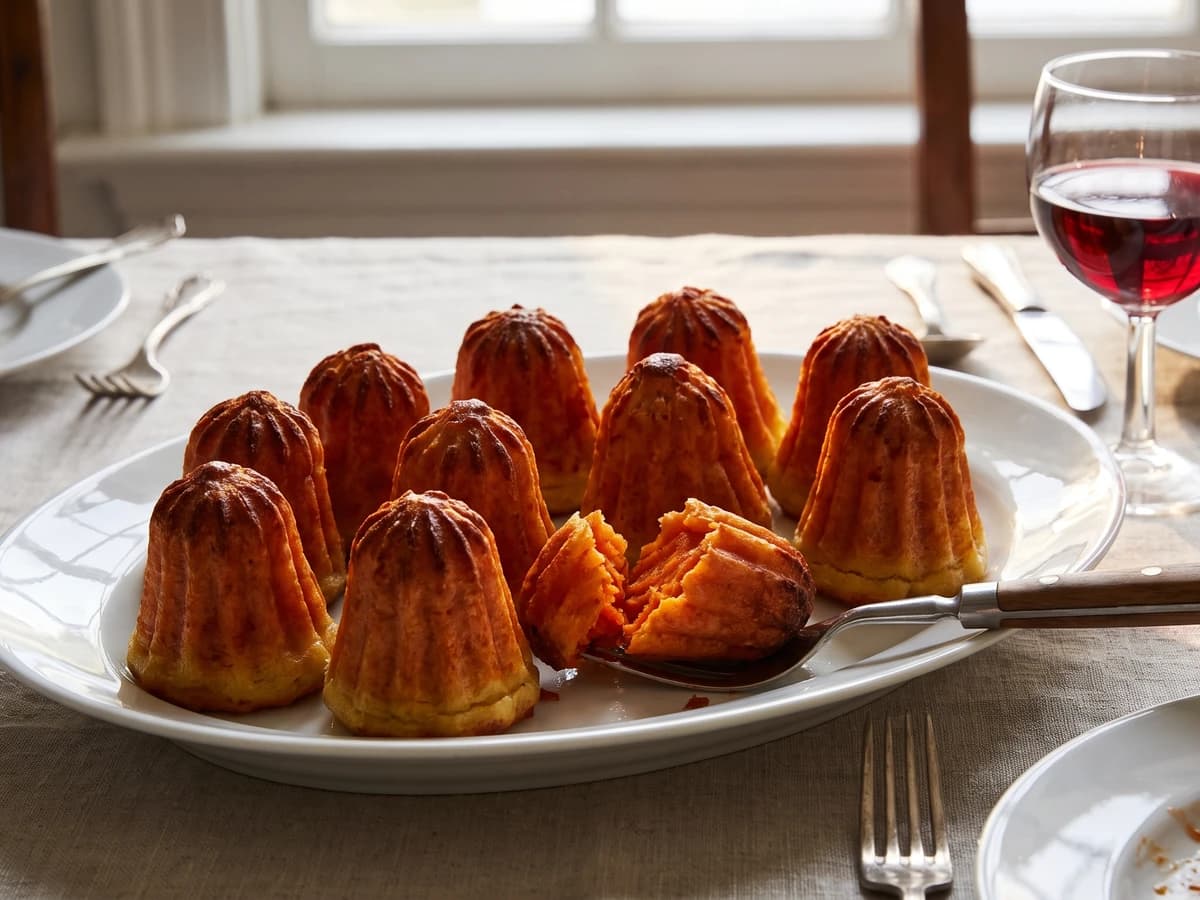
Marquise Potatoes
Croquette paste meets a fierce tomato reduction, then pipes into ridged meringue shapes and takes an egg gilding. Keep the purée dry, and every proud little Marquise holds its crown.

Recipe Archive
Side dishes should earn their place at the table. These recipes focus on contrast, seasoning, and supporting flavors that make the whole meal better.
1006 recipes
A cooking platform built around craft, culture, and the stories behind what we eat.
Chef Juliette
Croquette paste meets a fierce tomato reduction, then pipes into ridged meringue shapes and takes an egg gilding. Keep the purée dry, and every proud little Marquise holds its crown.

Chef Juliette
Pommes de terre Pont-Neuf prove that cut size is technique: stout half-inch rods meet one steady bath of fat and emerge crisp at the corners, tender and creamy through the middle.
Chef Juliette
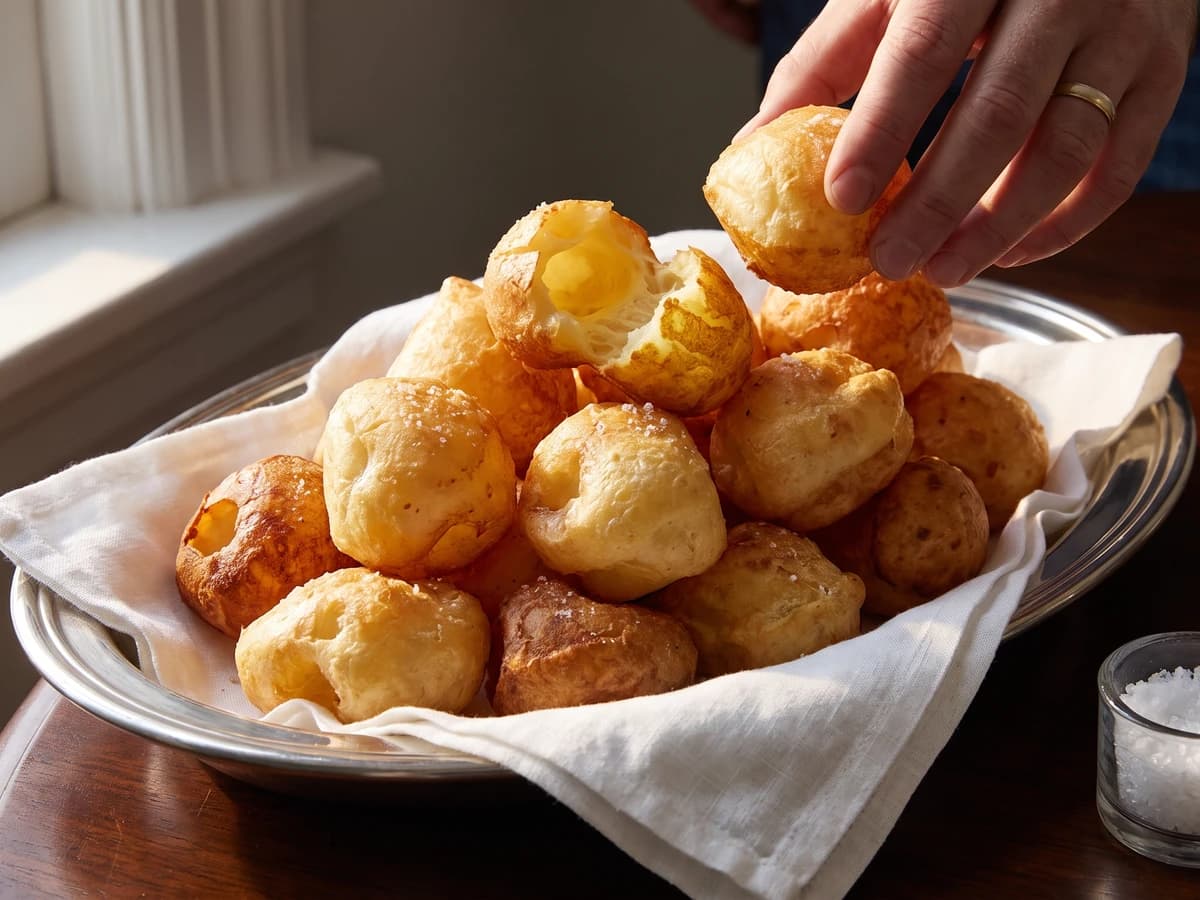
Exact eighth-inch slices, a dry surface, and two baths of fresh fat turn plain potatoes into crisp golden cushions, hollow at the center. The first bath cooks them; the hotter second bath gives them their proud rise.

Chef Juliette
Gratin de Pommes de Terre à la Dauphinoise turns a short list into a lesson in precision: slice evenly, season boldly, and bake until the milk custard turns tender beneath a bronzed Gruyère crown.

Chef Juliette
Thick potato roundels drink in consommé while onion, tomato, paprika, and butter reduce around them, leaving no broth behind, only a brick-red sauce that clings to every tender slice.

Chef Juliette
Smooth potato purée beneath a fierce, bronzed crown of cheese and fine bread raspings: pommes de terre gratinées teach that a gratin is quick heat at the finish, not a long bake.

Chef Juliette
Salt pork, onions, butter, flour, and consommé teach the quiet grammar of a one-pot braise, coating tender potatoes in a savory, glossy gravy that asks only for gentle heat and patience.

Chef Juliette
Cheese folded into Pommes Dauphine, shaped into the crescent that defines Lorette, lightly floured, then fried for six minutes: crisp and bronzed outside, tender and airy within.

Chef Juliette
Pommes de Terre à la Lyonnaise proves that separate cooking is not fuss but judgment: butter-gold potato rounds and onions browned at their own pace, then married with parsley in one generous pan.

Chef Juliette
Pommes de Terre Macaire turns baked potato and butter into one broad, deeply bronzed galette. Fork the pulp, never sieve it, because the craggy tenderness inside is the dish.

Chef Juliette
A quiet lesson in reduction: sliced boiled potatoes take up cream as it thickens, then a final uncooked spoonful restores the sauce's soft gloss, ready for roast chicken or veal.

Chef Juliette
Hot waxy potato roundels drink in boiling milk until the pan turns nearly dry, then parsley cuts through their pale richness. A spare classical side whose success rests on heat, timing, and restraint.

Chef Juliette
Ridged half-eggs of Pommes Duchesse, stained a clear tomato red, lightly gilded and baked until their furrows bronze: a precise little side dish whose success rests entirely on reduction.
Chef Juliette
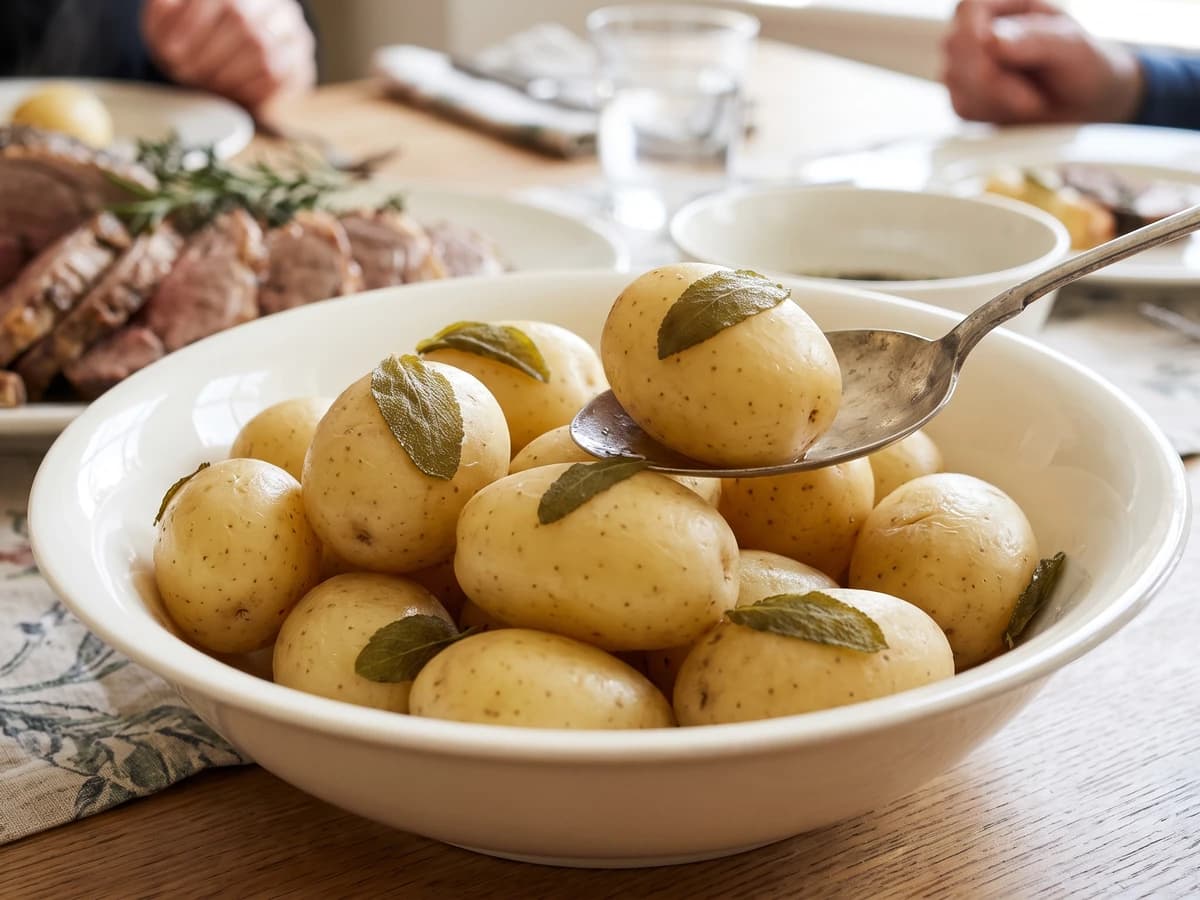
Fair-sized new potatoes scented by a whole bunch of mint, drained dry, and arranged in a warm timbale with one tender leaf apiece: a spring side dish whose precision lies in its restraint.

Chef Juliette
Raw potato roundels sautéed slowly in butter, joined at the last moment by buttery artichoke bottoms and generous black truffle: a precise lesson in cooking each element fully before the final toss.

Chef Juliette
Fine potato matchsticks cook gently in butter, meet black truffle and glossy meat glaze, then take Parmesan and a fierce broiler: a luxurious gratin whose success depends on tenderness without collapse.

Chef Juliette
Uniform cutting is the lesson: small potato spheres rolled patiently in butter until every face is golden and the centre stays creamy, a precise classical garnish made for a generous home table.

Chef Juliette
Pommes de Terre Parisienne turn disciplined shaping into pleasure: tiny butter-bronzed potato balls rolled in fluid meat glaze, brightened with parsley, and served while every surface still gleams.

Chef Juliette
Small Duchesse potato galettes worked with Parmesan, gilded with egg, capped with delicate cheese shavings, and baked to a burnished finish, a precise classical side scaled for one home tray.

Chef Juliette
Pommes de terre persillées proves that simple is exacting: plain-boiled potatoes drained bone dry, then rolled in real butter and parsley until every piece gleams and the herb stays bright.

Chef Juliette
Pommes de Terre Robert makes one decisive lesson of baked potato: keep the Macaire mixture dry, enrich it with eggs and chives, then brown the galette patiently until the crust releases.
Chef Juliette
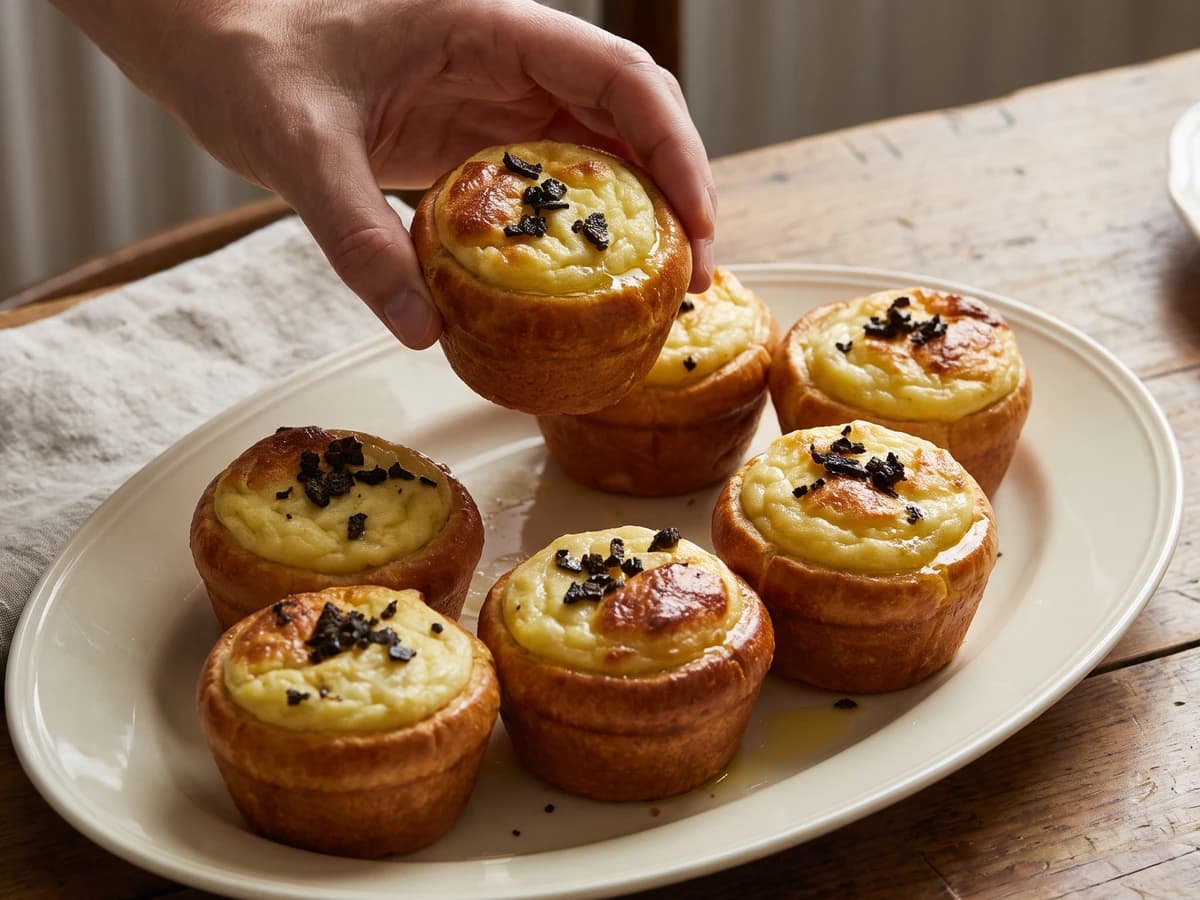
Baked potato becomes a Soufflé inside hollowed brioche, rich with butter, yolks, and cream, then lifted by beaten whites and crowned with chopped truffle for a generous special-occasion side.

Chef Juliette
Pommes de Terre à la Savoyarde trades the milk of its Dauphinoise parent for clear consommé, keeping egg, nutmeg, and Gruyère for a leaner gratin with a savory center and a deeply bronzed crown.

Chef Juliette
Lean ham-studded potato croquette paste, pressed into rectangles and wrapped in vermicelli, fries into a deeply golden side whose crisp shell gives way to a buttery, seasoned heart.
Culinary guides, cultural storytelling, and the editorial depth that makes cooking meaningful.
Discover Culinary Explorer