
Chef Lupita
Arroz a la Oaxaqueña
Oaxaca's red rice, stained with tomato and fried in lard, steamed with carrots, ejotes, black beans, and epazote. The side that anchors a Oaxacan family meal and earns its place beside the main.
A cooking platform built around craft, culture, and the stories behind what we eat.
Created by
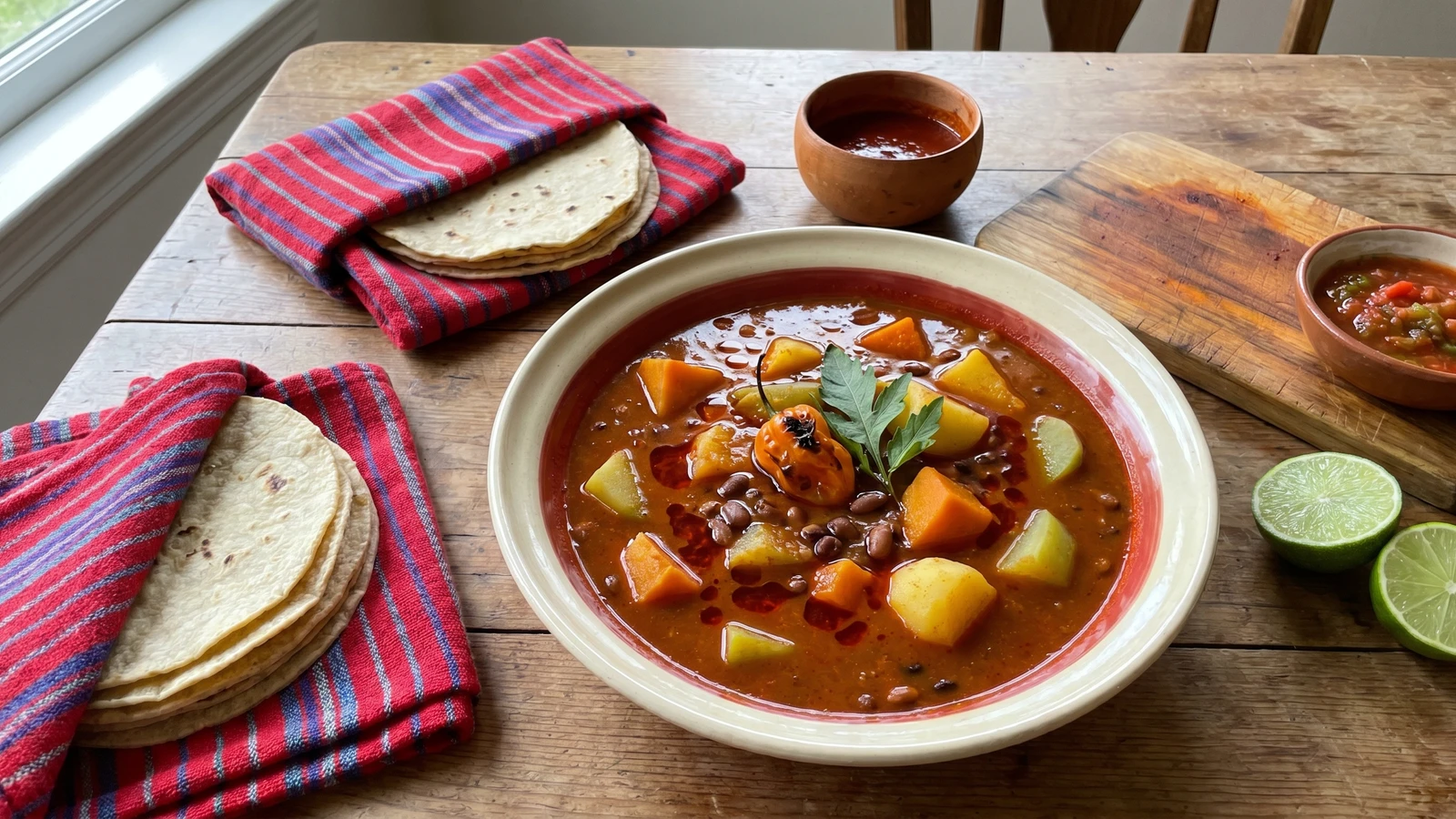
Yucatán's Sunday potaje of tender espelón cowpeas, calabaza, chayote, papa, and repollo, built on a sofrito of tomate, chile dulce, and recado rojo, perfumed with charred habanero and epazote.
This is from Yucatán. Not the Yucatán of cochinita pibil postcards. The other Yucatán, the everyday one, where families eat potajes of beans and verduras on the days that are not feast days. Espelón is the cowpea of the peninsula, smaller and thinner-skinned than the black beans of the central states, with a fresh, almost grassy flavor that sets it apart the moment you taste it. If you have only cooked frijol negro from Veracruz or Oaxaca, espelón will surprise you. It is its own bean.
The technique is what makes this a Yucatecan dish and not just a bean stew. The sofrito is built on tomate, garlic, and chile dulce, the small sweet pepper that grows in the peninsula and that no other state cooks with the same way. Then comes the recado rojo, achiote paste dissolved in bitter orange, bloomed in lard until the broth turns the color of terracotta. That achiote is not decoration. It is the regional signature, the same paste that goes into cochinita and pollo pibil, used here to anchor a humble pot of beans in the Yucatecan tradition. The calabaza, the chayote, the papa, and the repollo go in last, in order, because each one cooks in its own time. A Yucatecan cook does not throw everything in the pot at once.
I learned this potaje from a woman named Chichí Lupe in a small kitchen in Valladolid, in 2008. She kept a recetario, a recipe book, in a school notebook tied with a rubber band. She wrote the proportions in pencil and adjusted them every year. She told me: in Yucatán we are poor in many things but we are rich in epazote and we are rich in achiote, and a woman who knows how to use both can feed a family on what the milpa gives her. La cocina no es decoración, es trabajo. This is that lesson on the table.
Espelón (Vigna unguiculata, the cowpea or black-eyed pea family) reached Yucatán through the trans-Atlantic exchange, arriving via African enslaved peoples who were brought to the Caribbean and to Mexico's Gulf coast beginning in the 16th century, where the bean grafted onto the existing milpa tradition of corn, squash, and chile. Yucatecan cooks adopted espelón into both rice dishes (arroz con espelón) and potajes, often timing the harvest to the early rainy season when the young pods could also be eaten green. The recado rojo that colors this dish predates the conquest in form: achiote (Bixa orellana) was used by the ancient Maya as both a food coloring and a body paint, and its survival as the defining flavor of contemporary Yucatecan cuisine is one of the clearest unbroken lines from pre-Columbian Mesoamerican cooking to the modern table.
Quantity
1 pound
picked over and rinsed
Quantity
10 cups, divided
Quantity
1 small
halved, for the pot
Quantity
1/2 small
finely diced, for the sofrito
Quantity
1
halved crosswise, for the pot
Quantity
4
finely chopped, for the sofrito
Quantity
2 sprigs
for the pot
Quantity
1 tablespoon, plus more to taste
Quantity
3 tablespoons
Quantity
4 ripe
finely chopped
Quantity
2, or 1 small green bell pepper
stemmed, seeded, and finely diced
Quantity
2 tablespoons
dissolved in 1/4 cup bitter orange juice, or 3 tablespoons orange juice plus 1 tablespoon lime juice
Quantity
1 pound
peeled, seeded, and cut into 1 1/2-inch chunks
Quantity
1 large
peeled and cut into 1 1/2-inch chunks
Quantity
2 medium
peeled and cut into 1 1/2-inch chunks
Quantity
1/4 small head
cored and cut into 2-inch wedges
Quantity
1 sprig
for finishing
Quantity
1, charred whole, for serving
Quantity
for serving
Quantity
for serving
Quantity
for serving
warmed
| Ingredient | Quantity |
|---|---|
| dried espelón (Yucatecan black cowpeas)picked over and rinsed | 1 pound |
| water | 10 cups, divided |
| white onionhalved, for the pot | 1 small |
| white onionfinely diced, for the sofrito | 1/2 small |
| head of garlichalved crosswise, for the pot | 1 |
| garlic clovesfinely chopped, for the sofrito | 4 |
| fresh epazotefor the pot | 2 sprigs |
| kosher salt | 1 tablespoon, plus more to taste |
| manteca de cerdo (pork lard) | 3 tablespoons |
| Roma tomatoes (tomate)finely chopped | 4 ripe |
| chile dulce (Yucatecan sweet pepper)stemmed, seeded, and finely diced | 2, or 1 small green bell pepper |
| recado rojo (achiote paste)dissolved in 1/4 cup bitter orange juice, or 3 tablespoons orange juice plus 1 tablespoon lime juice | 2 tablespoons |
| calabaza (West Indian pumpkin)peeled, seeded, and cut into 1 1/2-inch chunks | 1 pound |
| chayotepeeled and cut into 1 1/2-inch chunks | 1 large |
| yellow papas (potatoes)peeled and cut into 1 1/2-inch chunks | 2 medium |
| repollo (green cabbage)cored and cut into 2-inch wedges | 1/4 small head |
| fresh epazotefor finishing | 1 sprig |
| chile habanero (optional) | 1, charred whole, for serving |
| chiltomate or salsa de chile habanero tatemado (optional) | for serving |
| lime halves (optional) | for serving |
| hand-pressed corn tortillas (optional)warmed | for serving |
Spread the dried cowpeas across a sheet pan and look at them. Pull out any stones, any shriveled beans, any pieces of stem. Espelón comes to the mercado the way the field gave it up, and the cook is the last filter before the pot. Rinse them in a colander under cold water until the water runs clear. No me vengas con atajos. Skip this and you will bite a stone at the table.
Place the espelón in a heavy 6-quart pot. Cover with 8 cups of cold water. Add the halved onion, halved garlic head, and the two sprigs of epazote. Do not add salt yet. Salt at the start hardens the skin and the cowpea will fight you for the next hour. Bring slowly to a gentle simmer over medium heat.
Lower the heat until you see lazy bubbles every few seconds. Skim any foam that rises in the first ten minutes. Cover partially and cook for 45 minutes to an hour, until the espelón is tender at the center but still holds its shape. Add the tablespoon of salt only in the last fifteen minutes. Taste one. If it gives easily under your teeth and the inside is creamy, it is ready. Fish out the spent onion, garlic, and epazote and discard.
While the espelón finishes, melt the manteca in a wide skillet or cazuela over medium heat. Add the diced white onion and chopped garlic. Cook for three minutes, stirring, until the onion turns translucent. Add the diced chile dulce and cook for three more minutes, until soft. Add the chopped tomate and a pinch of salt. Cook for eight to ten minutes, stirring often, until the tomato breaks down and the mixture darkens into a thick, glossy sofrito. La manteca es el sabor. Olive oil here would lie about the dish.
Push the sofrito to one side of the pan. Pour the dissolved recado rojo into the cleared space and let it bubble for thirty seconds, then stir it into the sofrito. The whole pan will turn brick red and the kitchen will smell like a Yucatecan kitchen on a Sunday morning. That smell is achiote waking up in fat. Cook for one minute more, until the paste is fully incorporated and the fat has a deep orange shimmer.
Scrape the entire sofrito into the pot with the espelón and its cooking liquid. Stir well. The broth will turn the color of brick and tomato. If the pot looks thick, add up to 2 cups of the reserved water to give the verduras room to cook. You want a brothy potaje, not a stew. Taste for salt now.
Bring the pot back to a gentle simmer. Add the calabaza and the papas first, since they take the longest. Cook for ten minutes. Then add the chayote and the repollo wedges, laying the cabbage on top so it steams above the broth. Tuck the finishing sprig of epazote into the pot. Simmer uncovered for fifteen to twenty more minutes, until a knife slides into the calabaza without resistance and the chayote is tender but not falling apart. Cada estado, su propia cocina. This is Yucatán in a pot.
Set a small comal over high heat. Place the whole habanero on it and char the skin on all sides until it blisters and softens, about three minutes. Do not pierce it. Float the whole charred habanero on top of the pot for the last five minutes of cooking. It perfumes the broth without making it hot. Taste the broth one final time and adjust salt. Pull the pot off the heat and let it settle for ten minutes before serving. Saber cocinar es saber vivir.
Ladle the potaje into deep bowls, making sure every bowl gets some espelón, some calabaza, some chayote, some repollo, and some papa. Set the chiltomate, lime halves, and warm tortillas on the table in small dishes. Each person tears a piece of habanero into their own bowl if they want heat. Así se hace y punto.
1 serving (about 540g)
Culinary guides, cultural storytelling, and the editorial depth that makes cooking meaningful.
Discover Culinary ExplorerChef Lupita
Oaxaca's red rice, stained with tomato and fried in lard, steamed with carrots, ejotes, black beans, and epazote. The side that anchors a Oaxacan family meal and earns its place beside the main.
Chef Lupita
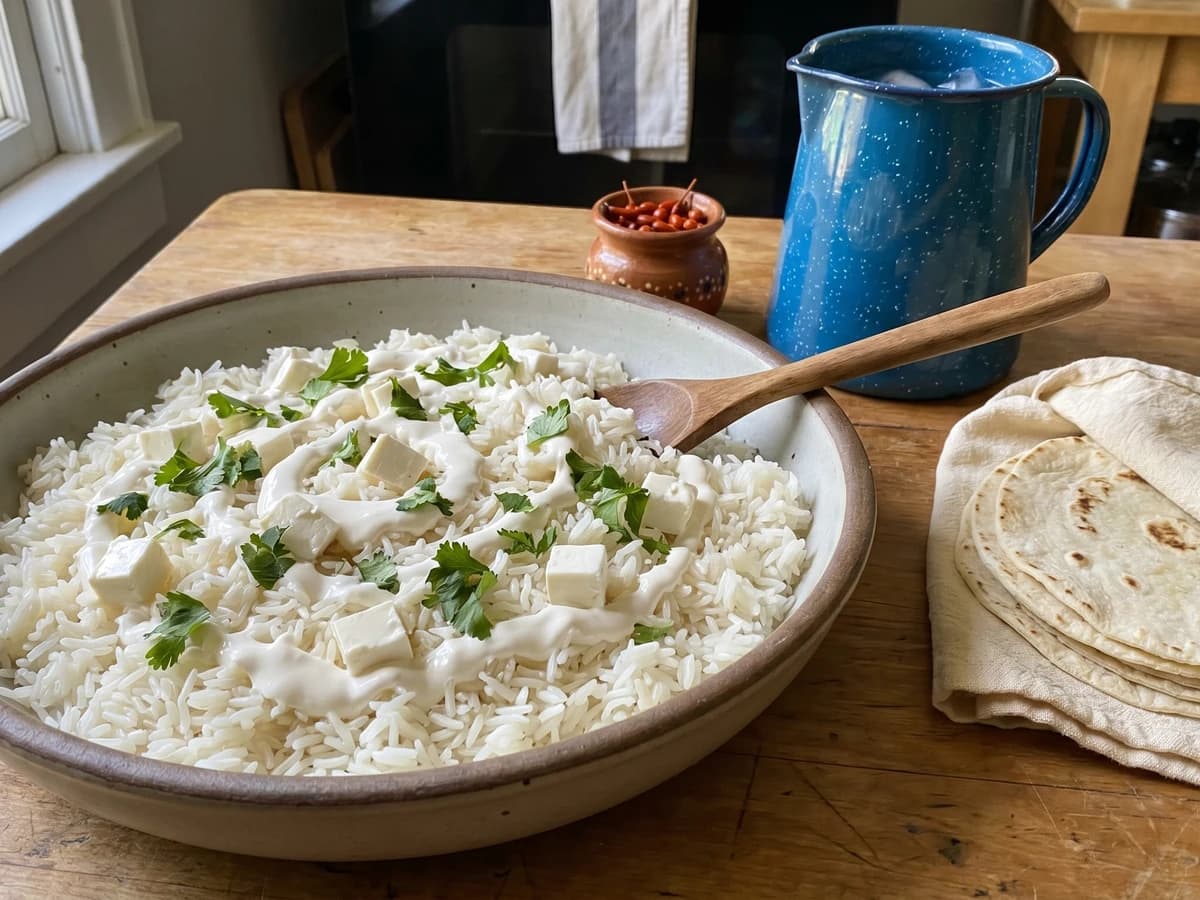
Sinaloa's home-cook white rice topped with cold cubes of cream cheese that soften into the warm grain, finished with crema and a sprinkle of chiltepin at the table. The trick that makes a side dish feel like a small luxury.
Chef Lupita
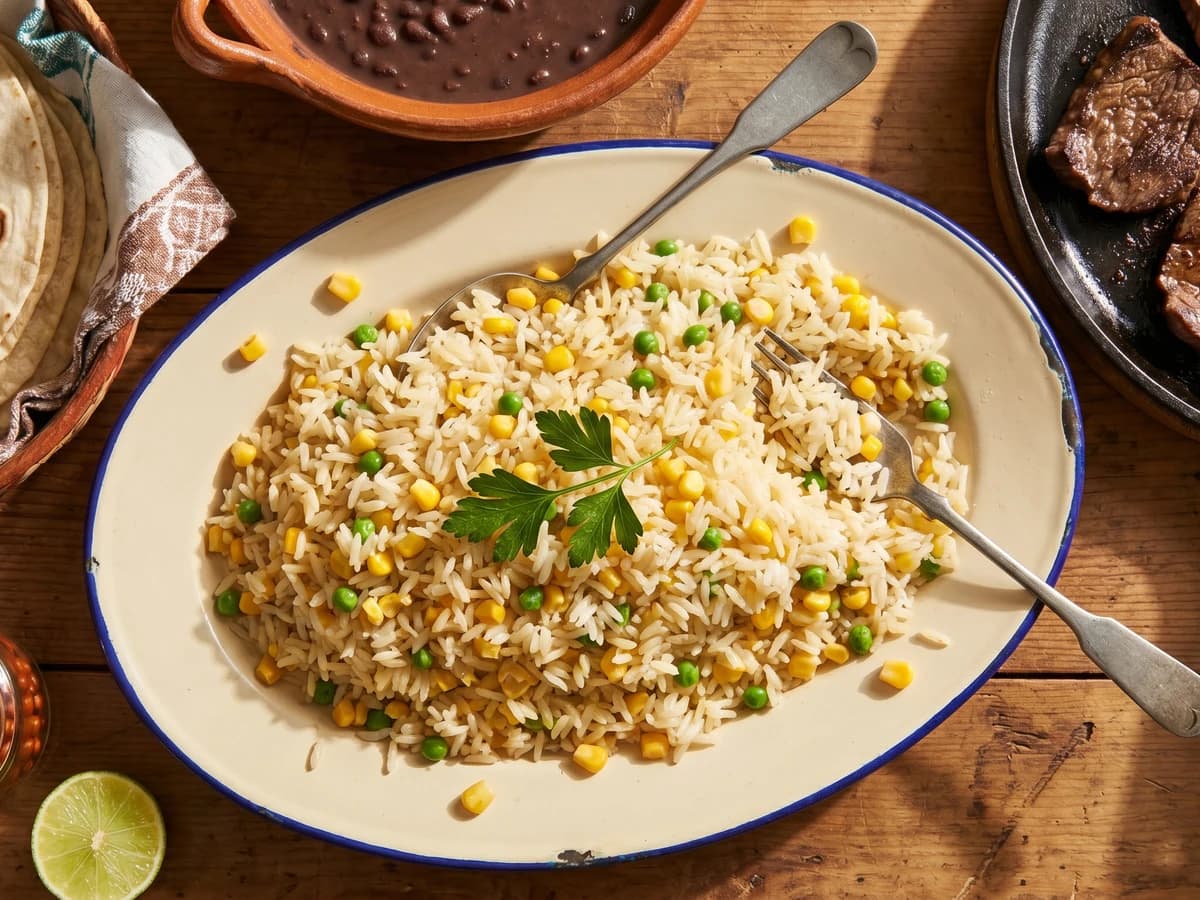
Sonora's white rice, toasted in butter and steamed with sweet corn and tender peas. The clean, quiet partner to a plate of carne asada, not the red rice of central Mexico.

Chef Lupita
Yucatán's white rice with sweet corn kernels, toasted in lard with garlic and onion. The quiet base that holds up against the peninsula's bold achiote-stained stews.