
Chef Lupita
Arroz a la Oaxaqueña
Oaxaca's red rice, stained with tomato and fried in lard, steamed with carrots, ejotes, black beans, and epazote. The side that anchors a Oaxacan family meal and earns its place beside the main.
A cooking platform built around craft, culture, and the stories behind what we eat.
Created by
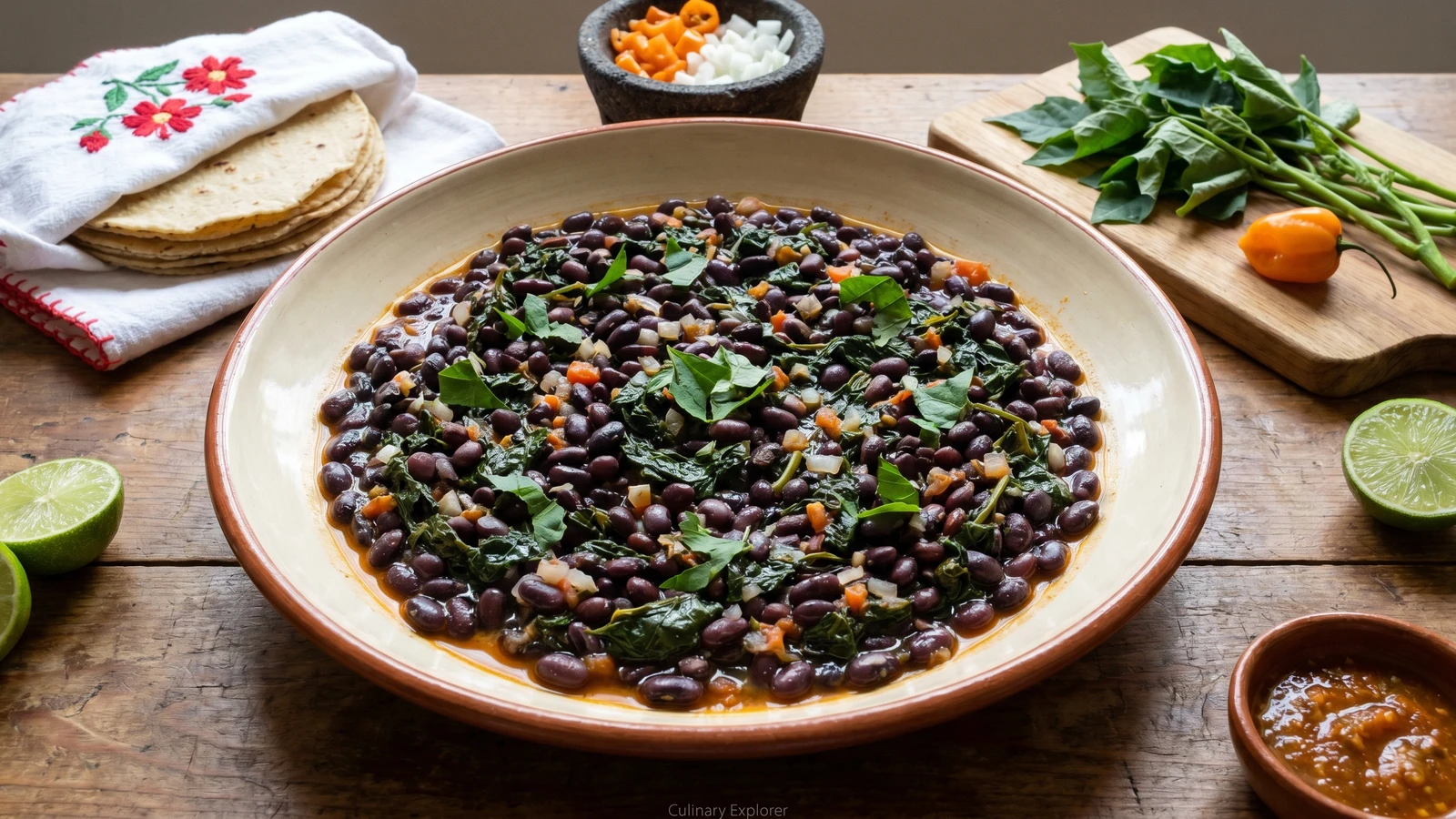
Yucatán's espelón, the native black-eyed cowpea of the milpa, sautéed with chaya, white onion, habanero, and pimienta gorda in lard. A Maya pairing the peninsula has cooked for centuries.
This is from Yucatán. Not from a generic Mexican kitchen, from the peninsula, where the milpa, the ancient three-sisters plot of corn, beans, and squash, has been planted alongside chaya and espelón since long before anyone drew a border around what is now Mexico.
Espelón is the small, tender cowpea native to the Yucatecan milpa. It cooks faster than other beans, has a thin skin, and turns the water a deep purple-black. Chaya is the leafy green the Maya have eaten for centuries, taller than a person, full of iron, mildly poisonous raw and perfectly safe after ten minutes in boiling water. Together they are one of the oldest plant pairings in Mexico. You will not find this dish in Sonora or Veracruz. It is from here, and the cooks who carry it forward are the women of small towns outside Mérida, Valladolid, and Ticul.
The technique is simple and the discipline is in the details. Cook the espelón until tender but not blown out. Boil the chaya the full ten minutes, no shortcuts, that is food safety. Build a small sofrito with white onion, chopped habanero, tomato, and pimienta gorda in lard. La manteca es el sabor. Pull it all together in the cazuela so the cowpeas and the chaya are bound by the fat and the tomato, never swimming.
I spent a week in a village south of Mérida with a señora named Doña Felipa, who grew her own chaya in the yard and traded espelón with her neighbor. She told me that this dish is a daily plate in Yucatán, the kind of food a family eats on Tuesday without thinking, and that the rest of Mexico has no idea it exists. She is right. Cada estado, su propia cocina.
Espelón (Vigna unguiculata subsp. unguiculata) is a Yucatecan variety of cowpea cultivated in the peninsular milpa system alongside corn and squash since pre-Columbian times, and it appears in colonial-era documents from the Diocese of Yucatán describing Maya household diets in the 16th and 17th centuries. Chaya (Cnidoscolus aconitifolius), known in Yucatec Maya as 'chay,' was a staple leafy green of the Classic Maya and remains one of the most nutritionally dense vegetables in Mesoamerica, with iron and protein content that exceeds spinach by several multiples; its raw leaves contain hydrocyanic glycosides that are deactivated by at least five minutes of boiling, a food-safety practice the Maya codified centuries before modern science explained why. The dish's reliance on pimienta gorda (allspice, Pimenta dioica) and chile habanero marks it firmly as Yucatecan rather than central Mexican, since both ingredients define the peninsular flavor profile against the chile-and-comino axis of the interior.
Quantity
1 1/2 cups
picked over and rinsed
Quantity
1 medium
half left whole, half finely chopped
Quantity
4
2 whole and 2 finely chopped
Quantity
1 small bunch (about 4 sprigs)
Quantity
2 teaspoons, divided
Quantity
1 large bunch (about 8 ounces of leaves)
stems removed
Quantity
3 tablespoons
Quantity
1
stemmed and finely chopped (seeds in for heat, out for less)
Quantity
2 medium
finely chopped
Quantity
1/2 teaspoon
Quantity
for serving
warmed
Quantity
for serving
Quantity
for serving
| Ingredient | Quantity |
|---|---|
| dried espelón (Yucatecan cowpeas)picked over and rinsed | 1 1/2 cups |
| white onionhalf left whole, half finely chopped | 1 medium |
| garlic cloves2 whole and 2 finely chopped | 4 |
| epazote | 1 small bunch (about 4 sprigs) |
| kosher salt | 2 teaspoons, divided |
| chaya leavesstems removed | 1 large bunch (about 8 ounces of leaves) |
| lard (manteca de cerdo) | 3 tablespoons |
| fresh chile habanerostemmed and finely chopped (seeds in for heat, out for less) | 1 |
| Roma tomatoesfinely chopped | 2 medium |
| ground allspice (pimienta gorda) | 1/2 teaspoon |
| hand-pressed corn tortillas (optional)warmed | for serving |
| lime halves (optional) | for serving |
| salsa de chile habanero tatemado (optional) | for serving |
Place the rinsed espelón in a heavy pot and cover with cold water by three inches. Add the whole half-onion, the two whole garlic cloves, and two sprigs of epazote. Bring to a gentle simmer over medium heat. Skim any foam that rises in the first ten minutes. Cook uncovered at a lazy simmer for 35 to 45 minutes, until the cowpeas are tender but still hold their shape. Add one teaspoon of salt only in the last ten minutes. Salt at the start hardens the skins and you will be chasing tenderness for an extra hour.
Bring a separate pot of water to a low boil. Add the chaya leaves and cook for 10 minutes. This is not optional. Raw chaya contains hydrocyanic compounds that the boil neutralizes, and the women of Yucatán who taught me this dish were emphatic about the timing. Drain, rinse under cold water, squeeze dry, and chop coarsely. The leaves should look dark green and tender, the texture of cooked spinach but with more body.
Reserve one cup of the espelón cooking liquid. Drain the cowpeas and discard the spent half-onion, garlic, and epazote sprigs. Set the cowpeas aside. La cocina no es decoración, es trabajo, and this is the unglamorous step that sets up everything that follows.
In a wide cazuela or heavy skillet, melt the lard over medium heat. Add the chopped white onion and cook for four minutes, until soft and just starting to turn at the edges. Add the chopped garlic and chile habanero. Cook one minute more, until the kitchen smells sharp and floral from the habanero. The habanero is the fruity Yucatecan heat. Use less if your guests are not ready for it. Do not substitute jalapeño. That is a different chile and a different region.
Add the chopped tomato and the ground allspice. Cook for five minutes, mashing the tomato lightly with the back of a wooden spoon, until the tomato breaks down and the lard turns reddish-orange at the edges. The allspice is pimienta gorda, the spice that anchors so much of the Yucatecan pantry. A half teaspoon is enough. More and it dominates the chaya.
Add the drained espelón and the chopped chaya to the cazuela. Stir to coat everything in the sofrito. Pour in about a third of the reserved cooking liquid and the remaining teaspoon of salt. Tear the last two sprigs of epazote and stir them in. Cook over medium heat for eight to ten minutes, stirring often, until the liquid has reduced and the mixture looks glossy and bound together, not soupy and not dry. Add a splash more cooking liquid if it tightens too fast. You want every cowpea coated and every leaf of chaya wrapped in the lard and tomato. Taste for salt. Adjust.
Spoon directly into a wide clay bowl or onto a shallow platter. Serve with warm corn tortillas, lime halves, and a small dish of salsa de chile habanero tatemado for those who want more heat. This is a side dish in a Yucatecan meal, set next to cochinita pibil or relleno negro, but it stands on its own on a weeknight with a few tortillas and nothing else. Recetas probadas y garantizadas.
1 serving (about 200g)
Culinary guides, cultural storytelling, and the editorial depth that makes cooking meaningful.
Discover Culinary ExplorerChef Lupita
Oaxaca's red rice, stained with tomato and fried in lard, steamed with carrots, ejotes, black beans, and epazote. The side that anchors a Oaxacan family meal and earns its place beside the main.
Chef Lupita
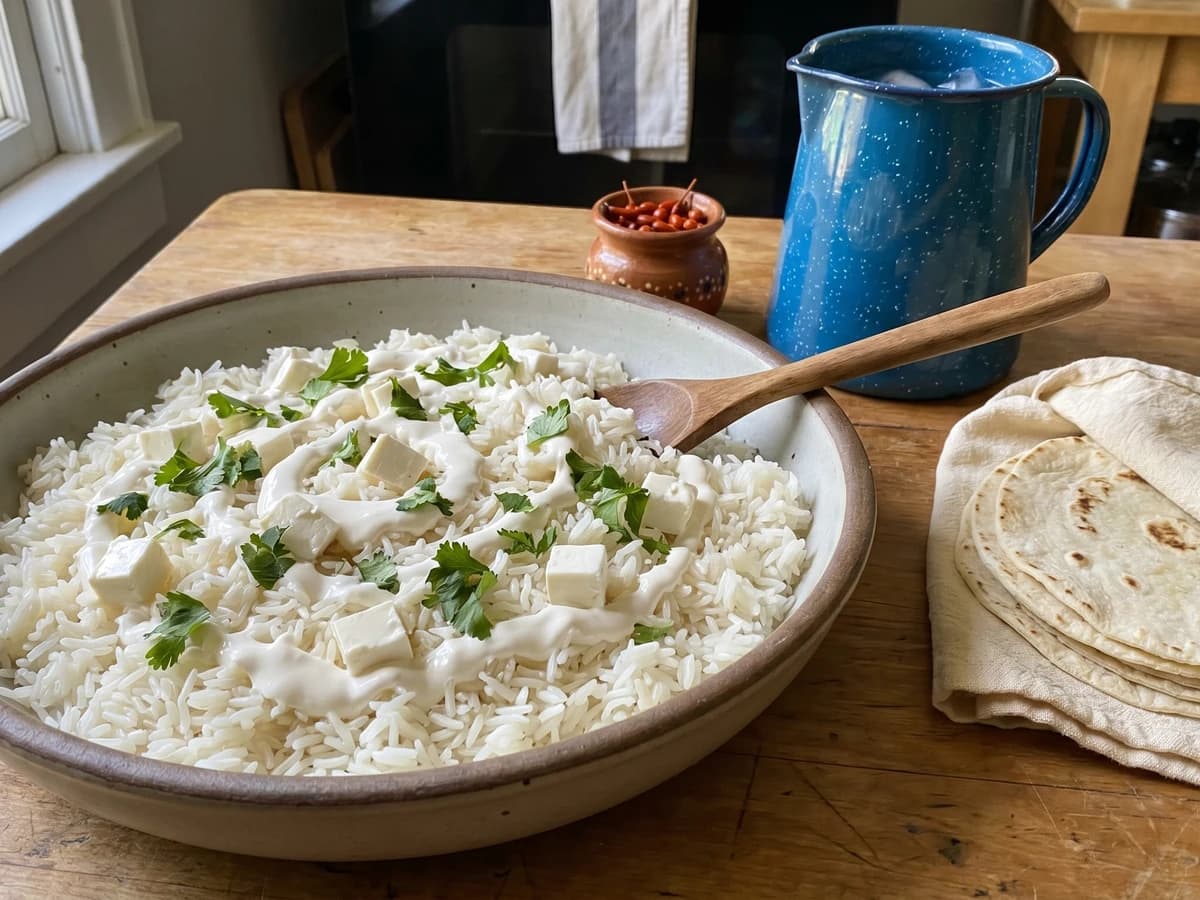
Sinaloa's home-cook white rice topped with cold cubes of cream cheese that soften into the warm grain, finished with crema and a sprinkle of chiltepin at the table. The trick that makes a side dish feel like a small luxury.
Chef Lupita
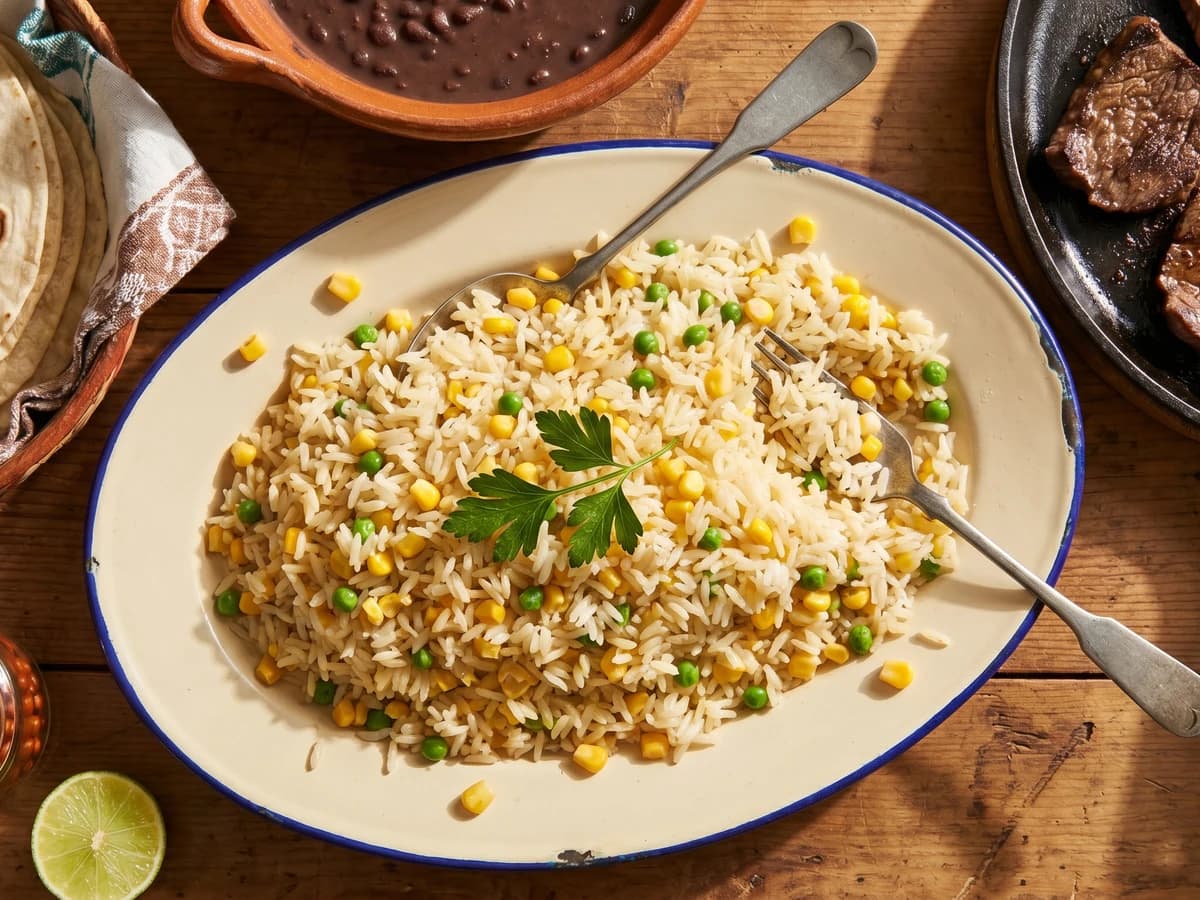
Sonora's white rice, toasted in butter and steamed with sweet corn and tender peas. The clean, quiet partner to a plate of carne asada, not the red rice of central Mexico.

Chef Lupita
Yucatán's white rice with sweet corn kernels, toasted in lard with garlic and onion. The quiet base that holds up against the peninsula's bold achiote-stained stews.