
Chef Elsa
Dillfisolen
Tender Austrian green beans folded into a silky, dill-bright cream sauce built on a proper Einbrenn. The Gasthaus side dish that quietly steals the whole meal.
A cooking platform built around craft, culture, and the stories behind what we eat.
Created by
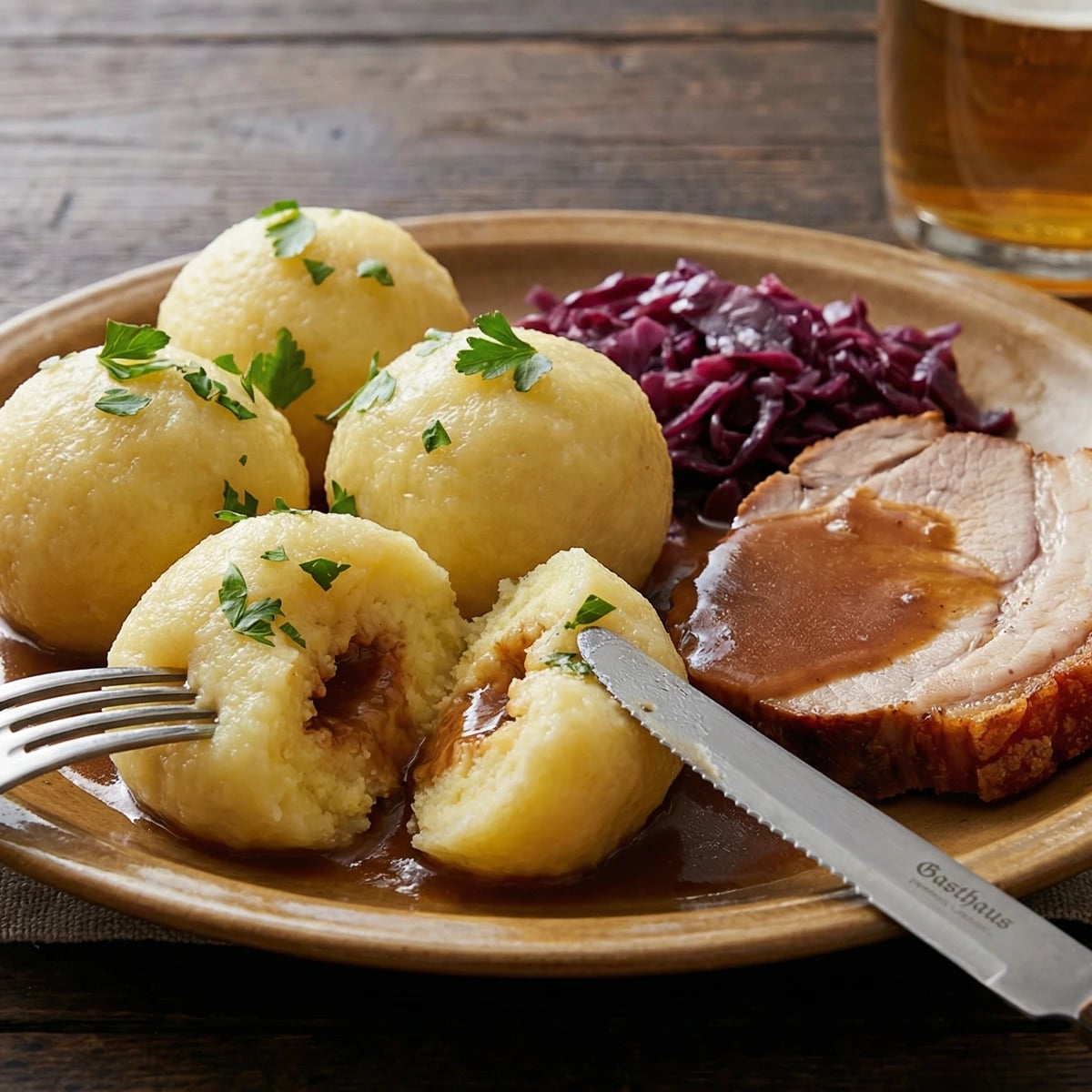
Upper Austria's silky potato dumplings, rolled by hand and simmered until they float, the quiet companion that makes every Schweinsbraten complete.
Gretel always said you could tell where someone in Austria came from by the Knödel they made. Semmelknödel meant Vienna or Lower Austria. Topfenknödel pointed toward the south. But Erdäpfelknödel, potato dumplings with that dense, smooth, almost silky bite, those belonged to Upper Austria. The farmers there grew potatoes in heavy soil, and the women who cooked them turned a plain root vegetable into something that could hold its own next to the richest Schweinsbraten on the table.
I learned these in two kitchens. The first was my grandmother Eva's in Kent, where she and Gretel would boil potatoes the night before, press them through a ricer the next morning, and work the dough with their hands until it felt right. No recipe card. No timer. Just touch. The second was at GAFA in Vienna, where the instructor pressed his thumb into the dough and said: if it sticks, add flour. If it cracks, add egg. If it feels like clay, start over. That's Knödel making in a sentence.
The whole point of Erdäpfelknödel is restraint. You use just enough flour to hold the dough together and not a gram more. Too much flour and you get rubber balls. Too little and they dissolve in the pot. The potatoes do the work. You boil them in their skins, let them cool overnight so the moisture evaporates, then rice them into a fine, dry snow the next day. That overnight rest is what separates a good Knödel from a sticky, heavy disappointment. Cold potatoes release their starch differently, and the dough comes together with less flour, which means a lighter, more tender dumpling.
This is good Austrian home cooking at its most honest. Four ingredients. No tricks. Just the patience to cook your potatoes a day ahead and the confidence to trust your hands.
Erdäpfelknödel are rooted in Upper Austrian farmhouse cooking, where potatoes became a dietary staple in the late 18th century after Maria Theresa's agricultural reforms encouraged their cultivation across the Habsburg lands. The name Erdäpfel, literally 'earth apple,' is the Austrian term for potato, distinct from the German Kartoffel, and marks one of many vocabulary lines that separate the two culinary traditions. In the Innviertel and Mühlviertel regions of Upper Austria, Knödel making was considered a core domestic skill, and a bride's reputation could rest on whether her dumplings held together in the pot.
Quantity
1 kg
boiled in skins the day before, peeled and riced
Quantity
150g
plus extra for dusting
Quantity
1 large
Quantity
1 teaspoon
Quantity
pinch
freshly grated
Quantity
1 tablespoon
melted
| Ingredient | Quantity |
|---|---|
| floury potatoes (King Edward or Maris Piper)boiled in skins the day before, peeled and riced | 1 kg |
| plain flourplus extra for dusting | 150g |
| egg | 1 large |
| salt | 1 teaspoon |
| nutmegfreshly grated | pinch |
| unsalted butter (optional)melted | 1 tablespoon |
Wash the potatoes and place them whole, skins on, in a large pot of salted water. Bring to a boil, then reduce to a steady simmer. Cook until a knife slides through the center without resistance, about 25 to 35 minutes depending on size. Drain them completely, let them cool, and refrigerate overnight. This step is not optional. Freshly boiled potatoes are too wet and too warm. They'll turn your dough into a sticky paste and you'll add too much flour trying to fix it, which gives you dense, chewy dumplings instead of tender ones. The overnight rest lets the moisture evaporate through the skins, and cold starch behaves itself.
Peel the cold potatoes. The skins should slip off easily. Press them through a potato ricer onto a clean, lightly floured work surface. You want a fine, dry, snow-like mound. If you don't have a ricer, grate them on the fine side of a box grater. Don't use a food processor or a masher. A processor turns potatoes to glue, and a masher leaves lumps that won't disappear in the dough. The ricer gives you an even texture with no effort.
Make a well in the center of the riced potato. Add the flour, egg, salt, nutmeg, and melted butter if using. Work everything together with your hands, folding and pressing the dough gently until it just comes together. This is not bread. You are not kneading. You're coaxing. The dough should feel smooth and slightly tacky but not stick to your hands. If it clings, dust in a little more flour, a tablespoon at a time. If it cracks when you try to roll it, the potatoes were too dry or you used too much flour. Add a touch more egg in that case.
Dust your hands and the work surface lightly with flour. Divide the dough into twelve equal portions. Roll each piece between your palms into a smooth ball, about the size of a golf ball or slightly larger. The surface should be seamless. If you see cracks, wet your palms with a little water and smooth them closed. Cracks let water in during cooking, and a waterlogged Knödel is a sad thing. Line the finished dumplings on a floured tray as you go.
Bring a large, wide pot of salted water to a gentle boil, then reduce the heat until the surface barely trembles. Drop a single Knödel in to test. It will sink. After eight to ten minutes, it should float to the surface and hold together without crumbling. Cut it open. The center should be smooth and cooked through, not raw or gummy. If it fell apart in the water, your dough needs a little more flour. If it's dense and heavy, you used too much. Adjust the remaining dough before cooking the full batch.
Slide the remaining Knödel gently into the trembling water. Don't crowd them. They need room to float. Keep the heat low. A rolling boil will tear them apart. Simmer for ten to twelve minutes. They'll sink first, then rise to the surface when they're nearly done. Give them another two minutes after they float, then lift them out with a slotted spoon. Let them drain for a moment on a warm plate.
Erdäpfelknödel go straight to the table. Set them alongside Schweinsbraten, a rich goulash, or any dish with good gravy. They're built to soak it up. In Upper Austria, some cooks split them open with a fork (never a knife, which presses the surface flat) to expose the soft interior so the gravy can seep in. Mahlzeit!
1 serving (about 290g)
Culinary guides, cultural storytelling, and the editorial depth that makes cooking meaningful.
Discover Culinary Explorer
Chef Elsa
Tender Austrian green beans folded into a silky, dill-bright cream sauce built on a proper Einbrenn. The Gasthaus side dish that quietly steals the whole meal.

Chef Elsa
Thin-sliced waxy potatoes layered with garlic-steeped cream and baked low and slow until the top turns golden brown and the kitchen smells like the kind of cooking that makes people wander in from the next room.

Chef Elsa
Silky Viennese mashed potatoes pressed through a ricer, enriched with cold butter and warm milk, finished with a whisper of nutmeg. The quiet side dish that makes the whole plate work.

Chef Elsa
Yesterday's boiled potatoes, coarsely grated and torn in a hot pan with too much butter until the edges go golden and crisp. Farmhouse cooking at its most honest, served straight from the skillet.