
Chef Lupita
Arroz a la Oaxaqueña
Oaxaca's red rice, stained with tomato and fried in lard, steamed with carrots, ejotes, black beans, and epazote. The side that anchors a Oaxacan family meal and earns its place beside the main.
A cooking platform built around craft, culture, and the stories behind what we eat.

Created by
Sonora and Chihuahua's version of the corn cup: kernels stewed in butter and manteca, finished with crema, crumbled queso fresco, lime, and a hot pinch of crushed chiltepin salt. No epazote. The north skips it.
This is northern Mexico's esquite. Sonora, Chihuahua, Coahuila. The corn cup as it is served from puestos in Hermosillo and Ciudad Juarez, not the version you know from Mexico City with its epazote and mayonnaise and queso cotija dusted on top like snow. Up here the dairy is different, the chile is different, and the herbs are absent.
The chile is chiltepin. Tiny, round, the size of a peppercorn, harvested wild from spiny bushes in the Sonoran desert. The women who pick it work in long sleeves in October and November and they sell it by the spoonful in the markets of Hermosillo and Magdalena de Kino. Chiltepin is not generic hot pepper. It is the regional chile, and it does not get substituted with red pepper flakes. If you cannot find chiltepin, ask at a Mexican grocery, look online, drive to the border if you have to. It matters. Esto no es comida de un solo Mexico.
The fat is butter and manteca, not mayonnaise. The north is cattle country and wheat country and the kitchens cook accordingly. The crema goes on cold, the queso fresco crumbles on top, and the lime gets squeezed at the cup. No epazote, no hoja santa, no garnish that pretends this is from somewhere else.
My mother was from Jalisco and she made esquites the central-Mexico way, with epazote and chile piquin. The first time I had the norteño version was in a small puesto outside the mercado in Hermosillo, served to me by a senora who had been making them the same way for forty years. She watched me taste it. She knew I would understand the difference. Saber cocinar es saber vivir.
The word 'esquite' comes from the Nahuatl 'izquitl,' meaning toasted corn, a pre-Columbian preparation in which kernels were dry-toasted on a comal and eaten as a portable snack. The modern stewed-in-fat preparation, served in cups with dairy and lime, is a 20th-century evolution that took different regional forms across Mexico: the central version with epazote and mayonnaise, the southern version with queso cotija and powdered chile, and the northern version anchored in butter, crema, and chiltepin. Chiltepin (Capsicum annuum var. glabriusculum), considered the ancestral wild parent of all domesticated chiles in the Americas, has been harvested from the Sonoran desert for at least 8,000 years and remains one of the few chiles in Mexico still primarily gathered wild rather than farmed.
Quantity
6 ears
husked, kernels cut from the cob (about 5 cups)
Quantity
3 tablespoons
Quantity
1 tablespoon
Quantity
1
finely diced
Quantity
3
finely minced
Quantity
1 teaspoon, plus more to taste
Quantity
1/2 cup
Quantity
20 to 25, plus more to taste
Quantity
1 tablespoon
for the chiltepin salt
Quantity
1/2 cup
Quantity
1 cup
crumbled
Quantity
2
cut into wedges
Quantity
1/4 cup
chopped
| Ingredient | Quantity |
|---|---|
| fresh sweet cornhusked, kernels cut from the cob (about 5 cups) | 6 ears |
| unsalted butter | 3 tablespoons |
| manteca de cerdo | 1 tablespoon |
| small white onionfinely diced | 1 |
| garlic clovesfinely minced | 3 |
| kosher salt | 1 teaspoon, plus more to taste |
| water or light chicken broth | 1/2 cup |
| dried chiltepin chiles (chiltepín sonorense) | 20 to 25, plus more to taste |
| flaky sea saltfor the chiltepin salt | 1 tablespoon |
| Mexican crema (crema mexicana) | 1/2 cup |
| queso fresco or queso rancherocrumbled | 1 cup |
| limescut into wedges | 2 |
| fresh cilantro (optional)chopped | 1/4 cup |
Stand each ear of corn upright in a wide bowl. Slice down the cob with a sharp knife, releasing the kernels. Then run the back of the knife down the stripped cob to scrape out the milky liquid still clinging to it. That milk is sugar and starch. It is what makes esquites taste like corn and not just buttered kernels. Do not skip it.
Place 15 of the chiltepin chiles in a molcajete with the flaky sea salt. Grind them together until the chiles break down into rough red flecks and the salt picks up their color and oil. The chiltepin is small and round and looks harmless. It is not. Taste a flake on the tip of your finger before you decide how much goes on the finished plate. Esto es chile sonorense. Treat it with respect.
In a wide cast-iron skillet or a heavy cazuela, melt the butter and the manteca over medium heat. The combination is the point: butter for the dairy sweetness the north loves, manteca for the depth. La manteca es el sabor. Add the diced onion and cook for about four minutes, stirring, until soft and translucent. Do not brown it. You want sweet, not toasted. Add the garlic and cook one minute more.
Add the corn kernels and any scraped milk from the bowl. Stir to coat in the fat. Crumble in the remaining 5 to 10 whole chiltepin chiles, depending on how much heat you want at the base of the dish. Season with the kosher salt. Pour in the water or broth, just enough to keep the kernels from sticking and to let them stew rather than fry.
Cover partially and cook for 10 to 12 minutes over medium-low heat, stirring every couple of minutes. The kernels should turn from pale yellow to a deeper, more golden color and the liquid should reduce until what remains is a glossy, buttery slick coating every kernel. Taste one. It should pop softly between your teeth, not crunch. If it crunches, give it a few minutes more. If the pan dries out before the corn is tender, add a splash more water.
Pull the skillet off the heat. Taste the corn. It should taste like corn, butter, and a low background hum of chile. Adjust the salt. If you want more heat in the base before serving, crumble another chiltepin or two directly into the pan and stir. Do not stir in the crema, the queso, or the lime yet. Those go on at the cup, not in the pan. That is how esquites work.
Spoon the hot corn into individual cups, small bowls, or wide enameled mugs the way the puestos serve them in Hermosillo and Ciudad Juarez. Drizzle each cup with crema. Top generously with crumbled queso fresco. Squeeze a lime wedge over the top. Finish with a pinch of the chiltepin salt and let each person add more at the table. Serve immediately, with a spoon and a lime wedge on the side. Cada estado, su propia cocina, and this cup belongs to the north.
1 serving (about 265g)
Culinary guides, cultural storytelling, and the editorial depth that makes cooking meaningful.
Discover Culinary ExplorerChef Lupita
Oaxaca's red rice, stained with tomato and fried in lard, steamed with carrots, ejotes, black beans, and epazote. The side that anchors a Oaxacan family meal and earns its place beside the main.
Chef Lupita
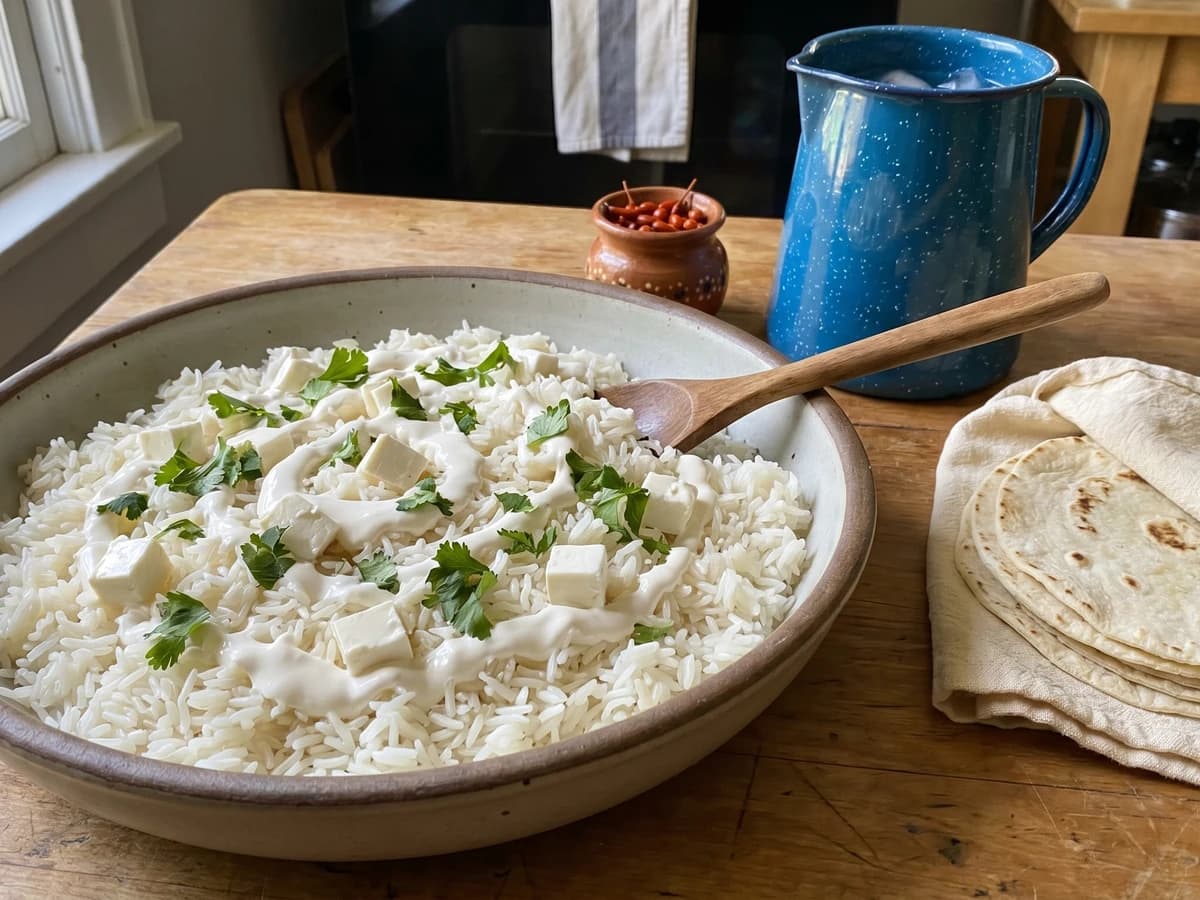
Sinaloa's home-cook white rice topped with cold cubes of cream cheese that soften into the warm grain, finished with crema and a sprinkle of chiltepin at the table. The trick that makes a side dish feel like a small luxury.
Chef Lupita
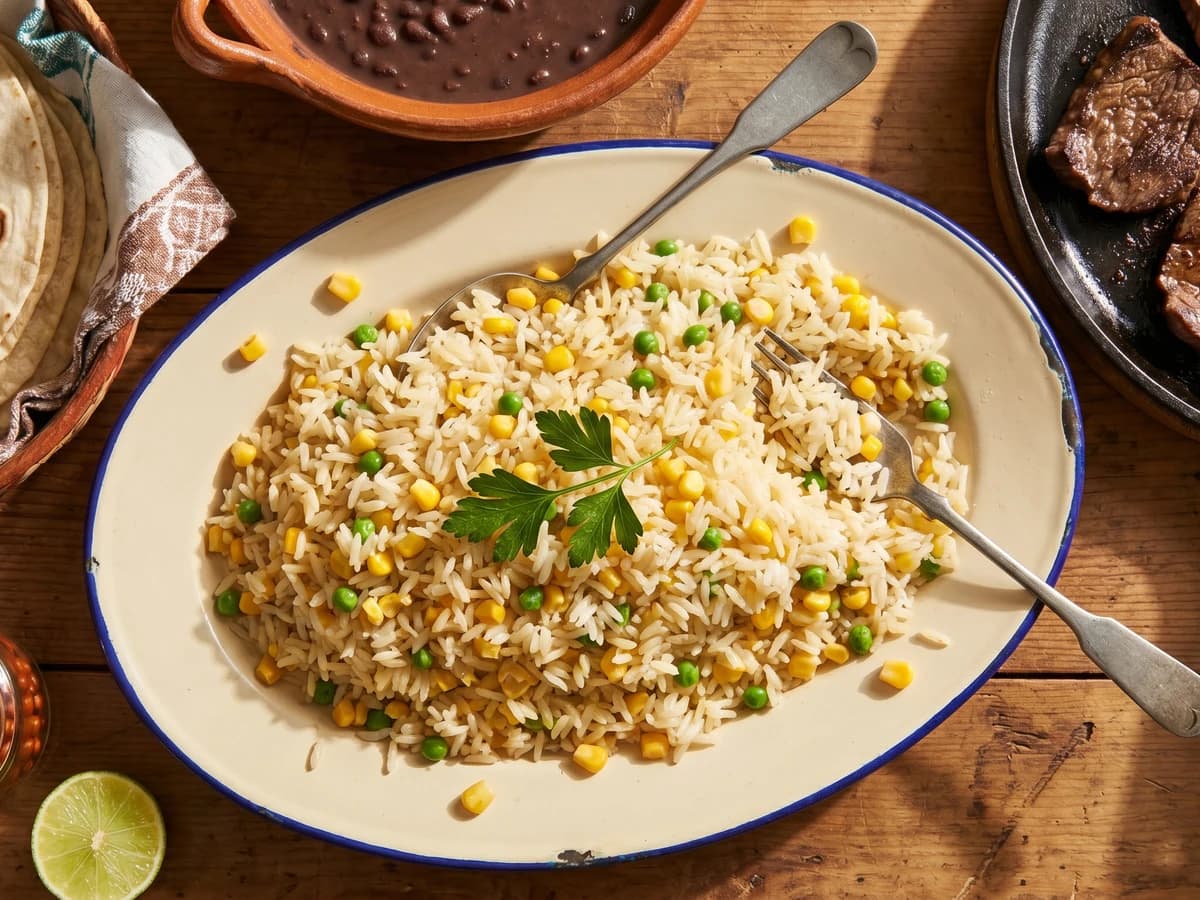
Sonora's white rice, toasted in butter and steamed with sweet corn and tender peas. The clean, quiet partner to a plate of carne asada, not the red rice of central Mexico.

Chef Lupita
Yucatán's white rice with sweet corn kernels, toasted in lard with garlic and onion. The quiet base that holds up against the peninsula's bold achiote-stained stews.