Culinary Explorer

A cooking platform built around craft, culture, and the stories behind what we eat.
Discover Culinary Explorer
Faʻi Umu (Sāmoan Green Bananas Cooked in the Umu)

Faʻi Umu (Sāmoan Green Bananas Cooked in the Umu)

Created by

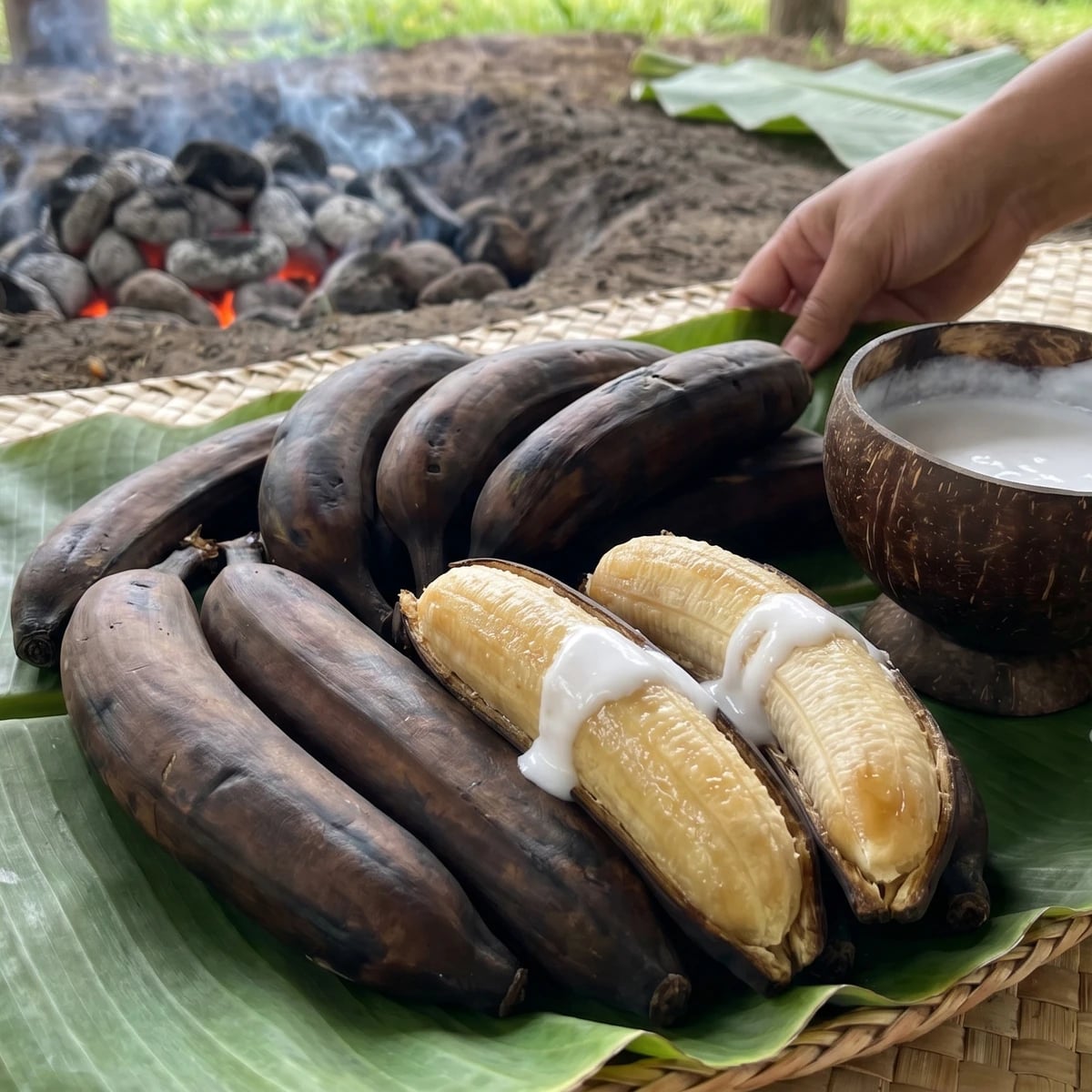
Sāmoa's faʻi umu is the starch of the hot-stone oven: green bananas baked in their own skins until tender, peeled warm, and eaten with fresh peʻepeʻe.

Side Dishes
Polynesian, Samoan
Celebration
Comfort Food
Make Ahead
20 min
Active Time
1 hr cook1 hr 20 min total
Yield6 servings

An auntie in Sāmoa taught me this one by handing me a banana hot from the skin and laughing when I tried to make it fancier than it was. Eat first. Talk after. Faʻi umu belongs to Sāmoa: green cooking bananas laid whole, skins on, among the hot stones of the umu, the above-ground earth oven, beside the talo, taro, ʻulu, breadfruit, palusami, taro leaves in coconut cream, fish, and meat that feed the aiga, the family.

The method is humble because the fruit already knows its work. The skin protects the flesh while the stones do their slow work; starch turns tender, just a little sweet, and the peel blackens like a wrapper that gave itself up. Then the peʻepeʻe, fresh coconut cream, goes over the warm faʻi and makes it a meal, not a dry starch on the side.

Across the Triangle the cousins know this law of starch and oven: Hawaiʻi's imu, pit earth oven, with maiʻa, banana, and kalo, taro; Tongan umu with lū, the taro-leaf parcel; Cook Islands umukai, earth oven, with root crops; Māori hāngī, earth oven, with kūmara, sweet potato; Tahitian ahimaʻa with ʻuru, breadfruit. The umu by any name is one oven, but this dish is Sāmoan. I cook it open-handed, and for the deeper ceremony of the umu and the tautua, the service around it, go sit with Sāmoan elders. They should tell their own story. Here, we make a kitchen version that still remembers where it came from.

Faʻi umu belongs to Sāmoa's above-ground hot-stone oven, where green bananas, talo, ʻulu, palusami, fish, and meat are set around heated stones and covered for the Sunday toʻonaʻi, the family meal after church. Bananas were among the canoe plants carried and selected through Island Southeast Asia into the central Pacific, then rooted into village food systems across the Triangle beside taro and breadfruit. Rice and tinned meat came later through mission, trade, and plantation economies; the faʻi on the umu is the older starch still sitting on the same table with the foods Sāmoans eat now.

The technique, the tradition, and the story behind every dish.

Discover Culinary Explorer

Ingredients

firm green cooking bananas (faʻi)

Quantity

12

washed, unpeeled

grated mature coconut

Quantity

4 cups

fresh or thawed frozen, for squeezing peʻepeʻe

warm water

Quantity

1 cup

for squeezing coconut cream

thick canned coconut cream (optional)

Quantity

2 cups

use instead of fresh-squeezed peʻepeʻe

sea salt

Quantity

1/2 to 3/4 teaspoon

plus more to taste

banana leaves (optional)

Quantity

2 to 3 large pieces

for lining and covering, or use parchment and foil

water

Quantity

1/2 cup

for the roasting pan

Equipment Needed

  • 13-by-18-inch rimmed sheet pan or shallow roasting pan
  • Clean cotton cloth or nut-milk bag for squeezing peʻepeʻe
  • Banana leaves and heavy foil for covering
  • Long tongs, if cooking beside an umu

Instructions

  1. 1

    Choose green faʻi

    Use firm green cooking bananas, not yellow dessert bananas. The peel should be hard and tight, the fruit starchy, no perfume yet. Wash them well, trim any ragged stem ends, and cut one shallow slit down each peel so the heat can get in and the skins open clean.

  2. 2

    Squeeze peʻepeʻe

    Put the grated coconut in a bowl, pour over the warm water, and work it with your hands until the milk goes thick and white. Squeeze through a clean cloth, hard, like you're wringing the last bit of rain from it, then salt the cream until it tastes full but not sharp.

    A can will do on a weeknight, but fresh peʻepeʻe is the soul of this Sāmoan table. Stir canned coconut cream well before salting it.
  3. 3

    Set the oven

    For a home oven, heat to 400F. Line a roasting pan with banana leaf if you have it, lay the faʻi in one layer, add the water to the pan, then cover with more leaf and foil so the oven roasts and steams at once. If you have a Sāmoan umu, the bananas go whole in their skins among the hot stones, then under the leaves with the rest of the food.

  4. 4

    Cook until tender

    Bake 45 to 60 minutes, depending on size, until the skins are black-brown and split in places and a skewer slides through the middle with no chalky stop. If the center still grips, cover it back up and give it time. No blame the faʻi. You opened it early.

  5. 5

    Peel while warm

    Rest 5 minutes, then use a towel to hold each banana and pull the peel away in strips. The flesh should be ivory to pale gold, dense but yielding, with a soft satin sheen. Keep the peeled faʻi covered so it doesn't dry while the table comes together.

  6. 6

    Serve with peʻepeʻe

    Lay the warm faʻi on banana leaf and spoon the peʻepeʻe over the top, or serve the cream in a coconut-shell cup so each person dresses their own. A little salt wakes it up. Eat it beside palusami, oka iʻa, roast fish, puaʻa, sapasui, or corned beef if that's the spread; keeper, not gatekeeper, yeah?

Chef Tips

  • Green cooking bananas are not sweet dessert bananas. If you can't find Sāmoan-style green bananas, very green plantains are the honest substitute. Eat what you have.
  • Keep the skins on. They are the wrapper, the moisture guard, and the handle all at once. Peel before cooking and the banana dries out before it gets tender.
  • Fresh peʻepeʻe matters here because there are so few ingredients. The coconut cream carries the richness, the salt brings it forward, and the faʻi gives the body.
  • If the bananas stain your hands a little, no panic. Green banana sap does that. Rub your hands with a little oil before peeling if you want an easier cleanup.

Advance Preparation

  • Squeeze the peʻepeʻe the morning of and keep it chilled; fresh coconut cream separates and can sour if it sits too long.
  • Cooked faʻi can be made a day ahead. Peel while warm, cover tightly, and reheat gently with a spoonful of water so it stays soft.
  • If cooking for an umu day, wash and slit the bananas ahead, but leave them unpeeled until they come off the stones.

Frequently Asked Questions

Nutrition Information

1 serving (about 290g)

Calories
500 calories
Total Fat
29 g
Saturated Fat
25 g
Trans Fat
0 g
Unsaturated Fat
4 g
Cholesterol
0 mg
Sodium
300 mg
Total Carbohydrates
64 g
Dietary Fiber
7 g
Sugars
13 g
Protein
6 g

Note: Chef personas and recipes are created with AI assistance. Cook with care: follow safe food-handling practices, check doneness with a thermometer when needed, and adapt for allergies and your kitchen.

Where cooking meets culture.

Culinary guides, cultural storytelling, and the editorial depth that makes cooking meaningful.

Discover Culinary Explorer

More from The Earth Oven: One Oven, Many Names

Browse the full collection