Culinary Explorer

A cooking platform built around craft, culture, and the stories behind what we eat.
Discover Culinary Explorer
Hāngī (Māori Pit-Oven Pork and Root Vegetables)

Hāngī (Māori Pit-Oven Pork and Root Vegetables)

Created by

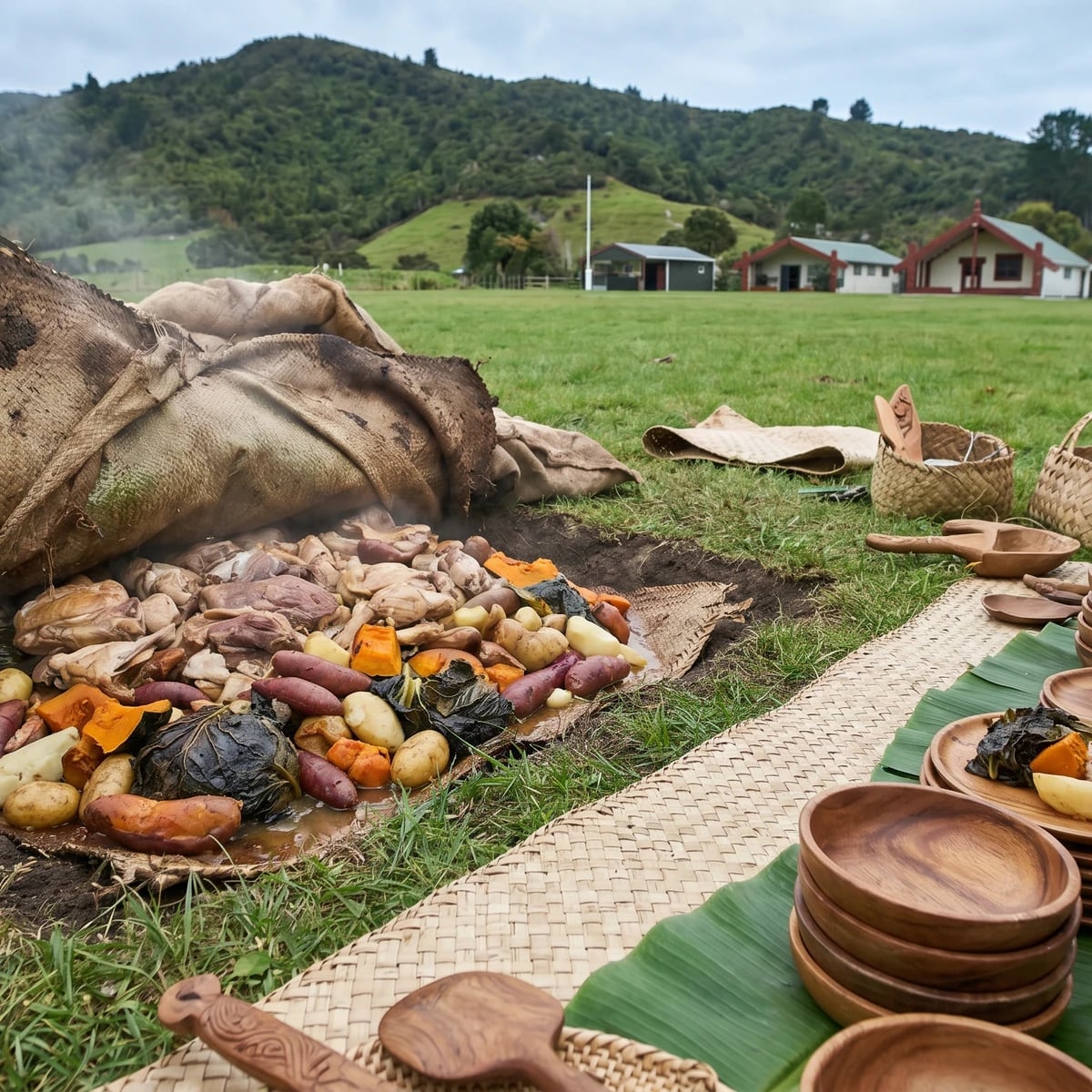
Aotearoa's Māori hāngī: pork, chicken, kūmara, potato, and pumpkin lowered over hot stones until the meat pulls soft and the roots drink in the earth-oven richness.

Main Dishes
Polynesian, Māori
Celebration
Special Occasion
Comfort Food
1 hr 30 min
Active Time
4 hr cook5 hr 30 min total
Yield10 to 12 servings

The first time I stood beside a hāngī in Aotearoa, I kept my mouth shut and watched the whānau work. Whānau means family, and the whenua, the land, was right there teaching too. This is Māori food, from Aotearoa, not mine to claim, and I cook it open-handed, the way a younger cousin should. For the deep tikanga, the right practice and protocol, sit with Māori elders and the people who carry it. They should tell their own story.

The hāngī is an earth oven: stones heated hard, baskets of meat and roots lowered into a pit, wet cloth and earth sealing everything tight, then time doing what fire alone cannot do. Back home in Hawaiʻi we say imu. In Sāmoa and Tonga, umu. In Tahiti, ahimaʻa. In the Cook Islands, umukai. Rapa Nui has umu pae. The umu by any name is one oven, but every island speaks it with its own hand.

Here the pork goes in with chicken, kūmara, potato, pumpkin, and cabbage. The roots are not filler. Kūmara came with the old movements of people and crops across the ocean, and in Aotearoa it became a deep food of storage pits, planting knowledge, and survival through cold seasons. Cook it like kin. Salt it plain, keep the basket humble, and don't keep opening the oven because you're nervous.

Most of us don't have a marae kitchen or a yard ready for a pit, so I give you both paths: the backyard hāngī where it can be done safely, and a covered-roaster version for the kitchen. No shame. Eat what you have. Just remember the shape of the old oven while you cook: stone, leaf, water, earth, patience, and enough food for one more.

Hāngī is the Māori earth-oven tradition of Aotearoa, using heated stones in a pit to steam meat, kūmara, potatoes, pumpkin, and greens under wet coverings and earth. Kūmara, the sweet potato, is one of the great historical surprises of Polynesian foodways: it reached eastern Polynesia from South America before European contact and became especially important in Aotearoa, where Māori developed storage and cultivation systems suited to a cooler land. Across the Triangle the same oven idea appears as Hawaiian imu, Sāmoan and Tongan umu, Tahitian ahimaʻa, Cook Islands umukai, and Rapa Nui umu pae, one ocean, one canoe, one root, each island with its own tikanga and hand.

The technique, the tradition, and the story behind every dish.

Discover Culinary Explorer

Ingredients

bone-in pork shoulder

Quantity

5 pounds

cut into 3-inch chunks

bone-in chicken thighs or drumsticks

Quantity

3 pounds

coarse sea salt

Quantity

3 tablespoons

divided

cracked black pepper

Quantity

1 tablespoon

neutral oil

Quantity

2 tablespoons

kūmara (New Zealand sweet potatoes)

Quantity

4 pounds

scrubbed and cut into large chunks

waxy potatoes

Quantity

3 pounds

scrubbed and halved

pumpkin or winter squash

Quantity

2 pounds

seeded and cut into thick wedges

green cabbage

Quantity

1 large

cut into wedges

large cabbage leaves, banana leaves, or untreated clean hessian cloth

Quantity

8 to 10

for wrapping

water or light unsalted stock

Quantity

2 cups

for the home oven version

Equipment Needed

  • Metal hāngī basket for pit cooking
  • Long-handled shovel and fire-safe gloves
  • Heavy 8-quart Dutch oven or deep roasting pan with tight foil for the kitchen version
  • Clean untreated hessian cloth or large cabbage or banana leaves

Instructions

  1. 1

    Season the meat

    Rub the pork and chicken with 2 tablespoons of the salt, the pepper, and the oil. Let them sit while you ready the roots. The seasoning is plain on purpose: the hāngī flavor comes from stone, leaf, moisture, and time, not from hiding the food under a heavy hand.

  2. 2

    Ready the roots

    Toss the kūmara, potatoes, pumpkin, and cabbage wedges with the remaining salt. Keep the pieces large so they come out soft but still themselves, with edges that hold and centers that give. No blame the taro, my kumu used to say, and the same law sits here with kūmara: if you cut it too small and it falls apart, that's on the cook.

  3. 3

    Build the basket

    For a pit hāngī, line a metal hāngī basket with cabbage leaves, banana leaves, or clean untreated hessian. Put the pork on the bottom, chicken above it, then the kūmara, potato, pumpkin, and cabbage on top so the meat juices season the roots as they cook. Cover the food with more leaf or cloth, tucked close but not packed tight.

    If you're cooking with Māori hosts, follow their order and their tikanga. Every whānau has its way, and that is the point.
  4. 4

    Heat the stones

    For the traditional pit path, heat clean volcanic or river stones made for hāngī until they are fiercely hot, then rake away the burning wood. Use only stones known to be safe for this work, because the wrong stone can crack or burst. Lower the basket over the stones, add water carefully to start the steam, cover with wet cloth or sacks, then seal with earth so no heat escapes.

  5. 5

    Cook without peeking

    Cook the pit hāngī for 3 1/2 to 4 hours, depending on the size of the basket and the heat in the stones. Don't keep opening it. You are trusting the sealed oven now. When it is ready, the pork should pull soft, the chicken should be fully cooked, and the kūmara should be tender with a glossy surface from the meat juices.

  6. 6

    Use the oven

    For the home kitchen path, heat the oven to 300F. Line a deep roasting pan or heavy Dutch oven with cabbage or banana leaves, layer in the seasoned pork, chicken, roots, pumpkin, and cabbage, pour the water or stock around the sides, then cover with more leaves and seal the pan very tight with a lid or foil. Roast for 4 hours, until the meat gives up under a fork and the roots are soft all the way through.

  7. 7

    Open and serve

    Rest the basket or covered pan for 15 minutes before opening. Lift the leaves back and serve the pork, chicken, kūmara, potato, pumpkin, and cabbage together, family-style, with the glossy juices spooned over everything. This is not a precious plate. It is a feed, and it should look like one.

Chef Tips

  • For the pit method, work with someone experienced in hāngī. The food is simple, but the fire, stones, pit, wet covers, and earth seal all matter, and safety matters too.
  • Use stones meant for earth-oven cooking. River stones and volcanic stones can behave differently, and some stones hold water inside and can crack under hard heat.
  • No pit where you live? The covered-roaster version is honest weeknight technology. It won't carry the same stone and earth note, but it keeps the shape of the dish: covered heat, moisture, roots, meat, patience.
  • Leftovers belong in the everyday table. Chop the pork with cabbage and potato for breakfast, tuck the chicken beside rice, or pack it plate-lunch style. Keeper, not gatekeeper.

Advance Preparation

  • Season the pork and chicken up to 24 hours ahead and keep them covered in the refrigerator.
  • Scrub and cut the kūmara, potatoes, pumpkin, and cabbage the morning of the cook; hold them covered and chilled until the basket is built.
  • For a pit hāngī, dig and prepare the site ahead of time, and check local fire rules before the day of the cook.

Frequently Asked Questions

Nutrition Information

1 serving (about 625g)

Calories
865 calories
Total Fat
41 g
Saturated Fat
14 g
Trans Fat
0 g
Unsaturated Fat
27 g
Cholesterol
185 mg
Sodium
2200 mg
Total Carbohydrates
70 g
Dietary Fiber
12 g
Sugars
12 g
Protein
55 g

Note: Chef personas and recipes are created with AI assistance. Cook with care: follow safe food-handling practices, check doneness with a thermometer when needed, and adapt for allergies and your kitchen.

Where cooking meets culture.

Culinary guides, cultural storytelling, and the editorial depth that makes cooking meaningful.

Discover Culinary Explorer

More from The Earth Oven: One Oven, Many Names

Browse the full collection