Chef Klaus
Allgäuer Kaspressknödel
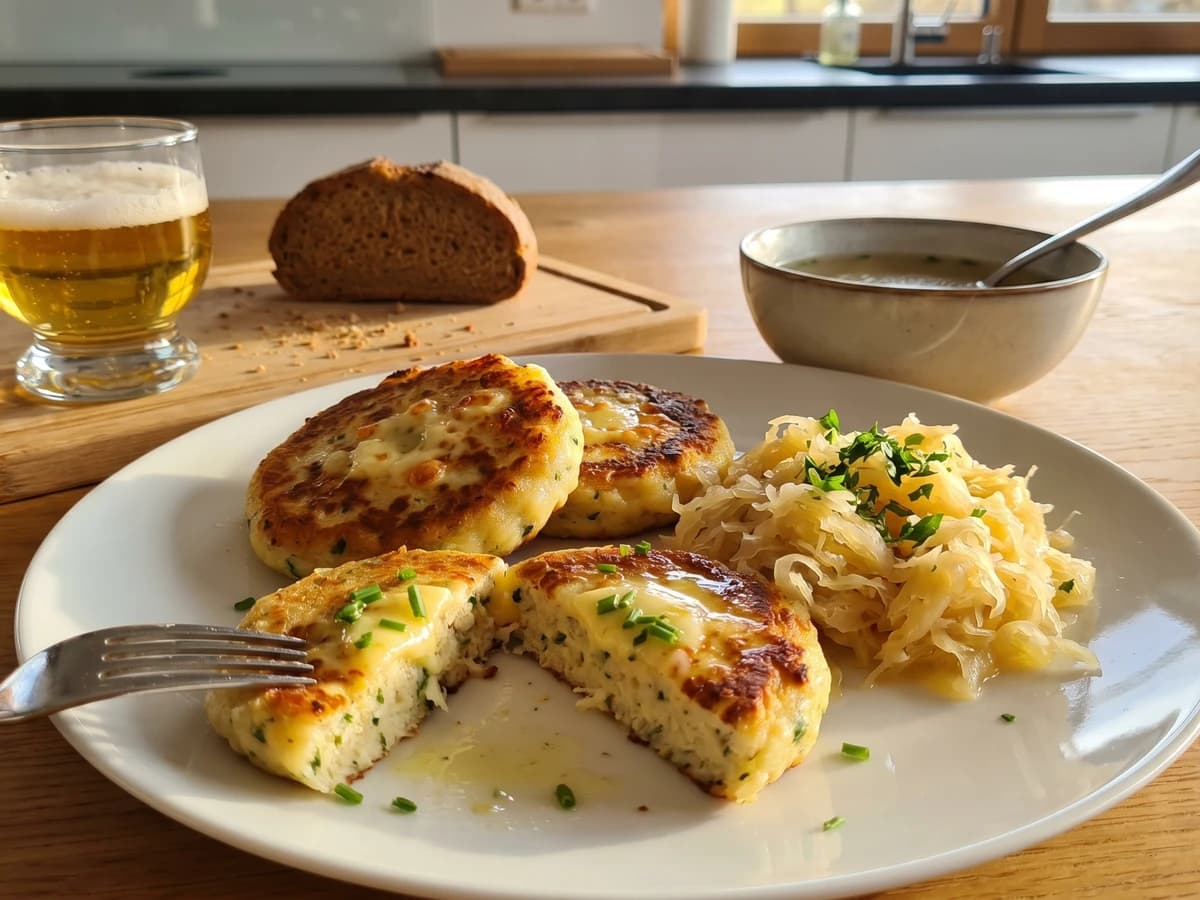
Pressed bread dumplings from the Alpine south, fried until the cheese catches at the edges and the middle stays soft enough for broth, kraut, or a weekday plate.
A cooking platform built around craft, culture, and the stories behind what we eat.
Created by
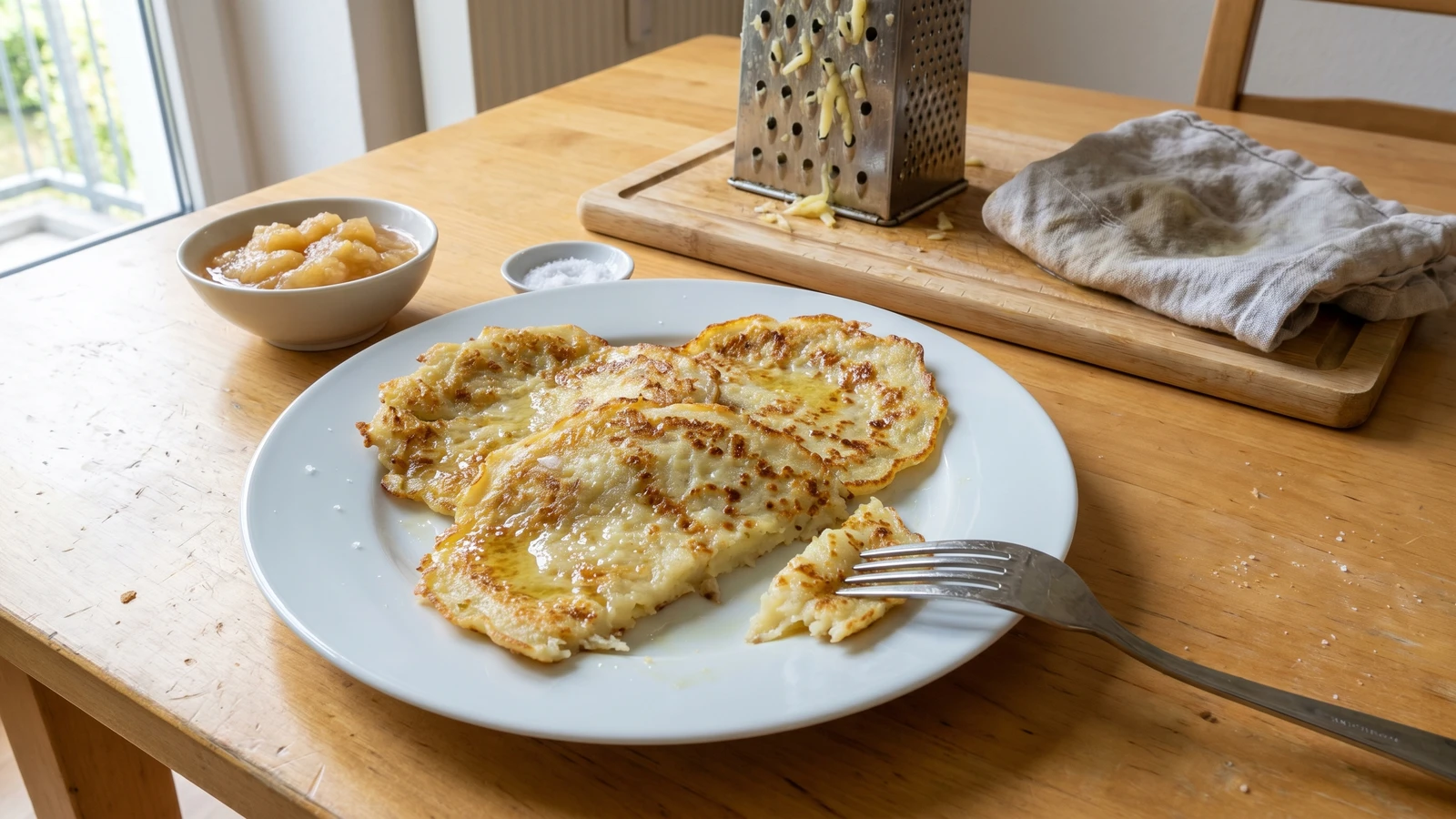
The Ore Mountain potato pancake that works only if the grated potato is wrung dry first; leave the water in and you get steam, not a crisp edge.
Klitscher belong to the Erzgebirge, the Saxon Ore Mountains, where stored potatoes fed winter kitchens when the garden had gone quiet. This is weeknight food from the larder: potato, egg, a little flour, fat in the pan. Nothing grand. Put down a plate of these with apple compote, quark, or a sharp cucumber salad and nobody asks for a speech.
The Vogtland calls its close cousin Bambes, and even there the argument starts: coarse or fine grate, buttermilk or none, sweet beside it or salty. Im Norden anders, im Süden anders, and in Saxony different again. I keep the Erzgebirge version thin, mostly raw potato, just enough binder to hold it together.
The one rule is this: wring the grated potato hard before you mix the batter. Potato water in the pan turns to steam, and steam makes a soft, grey pancake. Dry shreds touch hot fat directly, so the edge crisps and the middle stays tender. Save the settled starch at the bottom of the bowl and put it back. Weggeworfen wird nichts.
Fry one test Klitscher before you commit the pan. If it spreads like soup, add a spoon of flour. If it sits heavy and pale, the pan is too cool. Runter mit der Temperatur only after the crust has set.
The potato became a Saxon and Prussian staple only after the eighteenth century, helped by state pressure such as Frederick II of Prussia's potato orders in the 1750s and by the hard sense of mountain households that needed a crop with yield. In the Erzgebirge, poor soils and long winters made potato dishes central to everyday cooking, and Klitscher sit in the same family as Saxon Reibekuchen and Vogtland Bambes. The regional dispute is small but real: the Erzgebirge name is Klitscher, while the Vogtland name Bambes marks nearly the same thrift dish across a local border.
Quantity
1kg
peeled
Quantity
1
finely grated
Quantity
2
Quantity
3 tablespoons
plus more if needed
Quantity
1 teaspoon
Quantity
to taste
freshly ground
Quantity
1 pinch
Quantity
80ml
Quantity
for frying
Quantity
to serve
| Ingredient | Quantity |
|---|---|
| floury potatoespeeled | 1kg |
| small onionfinely grated | 1 |
| eggs | 2 |
| plain flourplus more if needed | 3 tablespoons |
| fine salt | 1 teaspoon |
| black pepperfreshly ground | to taste |
| ground nutmeg | 1 pinch |
| buttermilk or whole milk (optional) | 80ml |
| lard, clarified butter, or neutral oil | for frying |
| apple compote, quark, or cucumber salad (optional) | to serve |
Grate the potatoes finely or half fine and half coarse into a bowl of cold water. The cold water slows browning and rinses loose surface starch, but don't leave them soaking long or you wash away flavour.
Drain the potatoes into a sieve set over a bowl, then squeeze them hard in a clean cloth until they feel almost dry. Let the drained liquid stand for five minutes, pour off the water, and scrape the white potato starch from the bottom back into the shreds. That starch binds the Klitscher better than another spoon of flour, and it was already yours.
Stir the onion, eggs, flour, salt, pepper, nutmeg, and buttermilk if using into the potato. The batter should hold together on a spoon but still look like grated potato, not cake batter. Too much flour makes it dull and bready; too little and it tears in the pan.
Heat a heavy pan over medium-high heat and add enough fat to coat the base well. The batter should sizzle the moment it lands. If it lies there quietly, the potato will drink the fat before it browns.
Spoon in small mounds and press each one thin, about 8 to 10cm wide. Fry 3 to 4 minutes per side until the edges are crisp and brown and the centre has set. Don't crowd the pan, because crowded potato throws off moisture and lowers the heat.
Drain briefly on paper or a rack, salt lightly while the surface is still glossy with fat, and serve at once. Würzen, Fett, Salz zum Schluss. Apple compote makes it supper, quark makes it sharper, and cucumber salad keeps the plate awake.
1 serving (about 240g)
Culinary guides, cultural storytelling, and the editorial depth that makes cooking meaningful.
Discover Culinary ExplorerChef Klaus
Pressed bread dumplings from the Alpine south, fried until the cheese catches at the edges and the middle stays soft enough for broth, kraut, or a weekday plate.

Chef Klaus
The Bavarian potato salad that works because warm waxy slices drink hot broth first, then oil last, until the bowl turns glossy without mayonnaise.

Chef Klaus
White cabbage shaved thin, wilted with hot caraway vinegar, and finished with crisp Speck fat: the Bavarian salad that belongs beside bread, sausages, and roast pork.

Chef Klaus
The south's sweet-sour white cabbage, cooked from fresh Kraut rather than sauerkraut, soft enough for roast pork and sharp enough to wake the plate.