Culinary Explorer
A cooking platform built around craft, culture, and the stories behind what we eat.
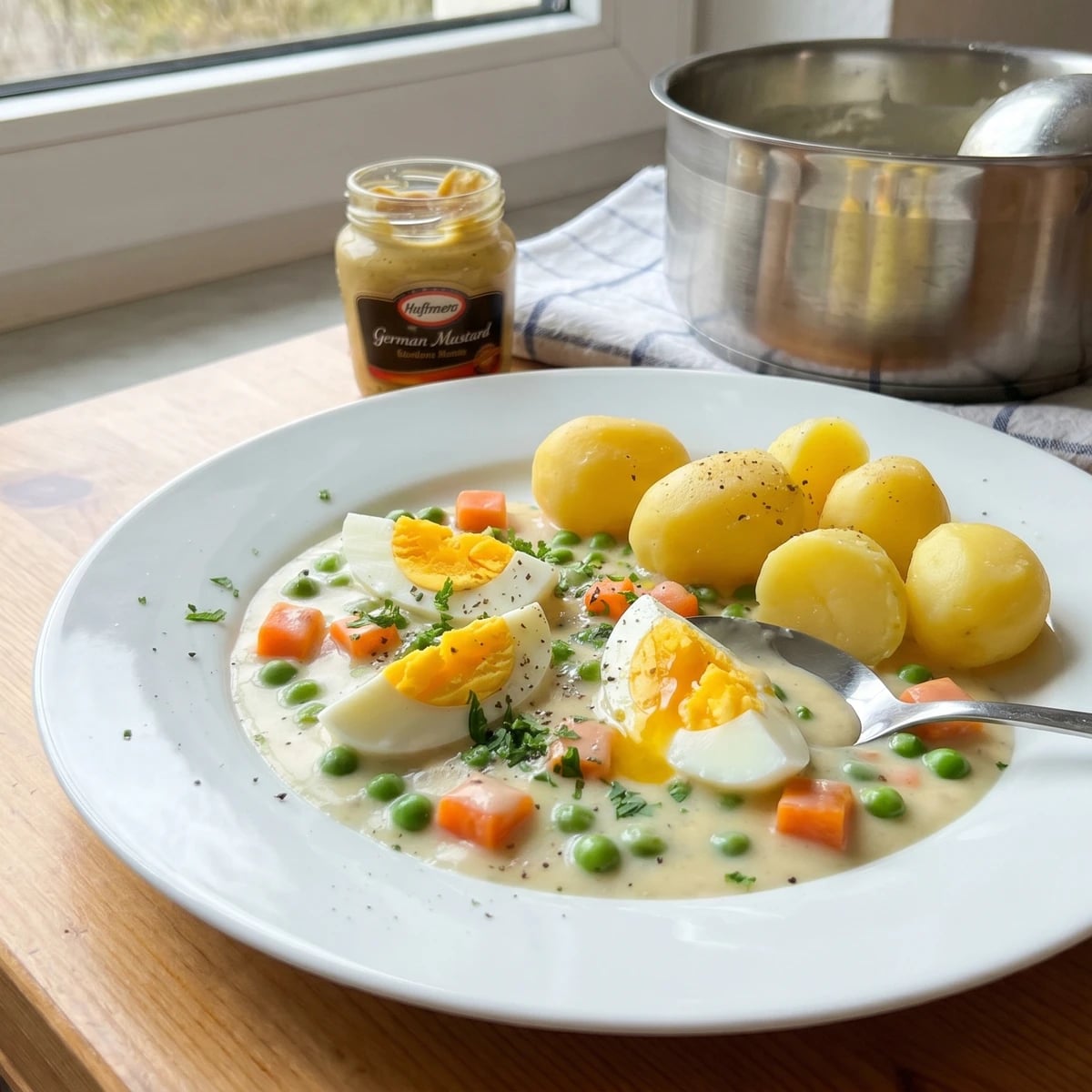
Eierragout
Created by Chef Klaus
An East German weekday egg dish: hard-boiled eggs warmed gently in a pale sauce with peas, carrots, and lemon, cheap enough for Tuesday and proper enough for the table.
Eierragout belongs to the East German weekday table, the canteen table, and the kitchen where supper has to be cheap without tasting poor. Hard eggs, a few frozen peas, diced carrots, a light roux, potatoes beside it. That is enough, if you make the sauce yourself. Nicht aus dem Glas.
The regions split quickly once eggs meet sauce. In Berlin and the old eastern kitchens, Eierragout often runs like a small fricassee, pale and mild, with peas and carrots and a little lemon at the end. In the north and west you meet Eier in Senfsauce, eggs in mustard sauce, sharper and plainer, usually without the vegetables. Im Norden anders, im Süden anders. Same egg, different table.
The step that decides the dish is the heat after the eggs go in. Boil them in the sauce and the yolks chalk up, the whites toughen, and the sauce goes tired. Warm them gently, below a hard bubble, because the eggs are already cooked and only need to take the sauce. Würzen, Fett, Salz zum Schluss: lemon and mustard go in at the close, when they still taste bright.
This is thrift cooking, not punishment. The vegetable cooking water can thin the sauce, the potato pot gives you the side dish, and nothing expensive has to happen. Weggeworfen wird nichts, and nobody misses the meat.
Ingredients
large eggs
Quantity
8
waxy potatoes
Quantity
500g
peeled or scrubbed
butter
Quantity
40g
| Ingredient | Quantity |
|---|---|
| large eggs | 8 |
| waxy potatoespeeled or scrubbed | 500g |
| butter | 40g |
Where cooking meets culture.
Culinary guides, cultural storytelling, and the editorial depth that makes cooking meaningful.
Discover Culinary Explorer