
Chef Klaus
Büsumer Krabben mit Spiegelei
Brown North Sea shrimp on buttered dark rye, a soft fried egg over the top, and the whole plate decided by one thing: keep the shrimp cool and the yolk running.
A cooking platform built around craft, culture, and the stories behind what we eat.

Created by
Yesterday's boiled potatoes, a little ham, onion, and egg. The whole dish works only if the potatoes brown before the egg goes in.
Bauernfrühstück is larder cooking, and Saxony knows this plate well: cold boiled potatoes sliced into the pan, onion and ham beside them, egg folded through at the end. It belongs to the weeknight as much as to breakfast, especially when yesterday's potatoes are waiting in the cold. Weggeworfen wird nichts, nothing gets thrown away.
The regions argue in the usual useful way. In Saxony it often lands as a folded egg-and-potato pan, neat enough to cut. In the north, a sour pickle sits beside it, sometimes even a Rollmops, because fat and salt need sharpness. Around Berlin you hear Hoppelpoppel, with leftover roast joining the pan. Im Norden anders, im Süden anders.
The technique is simple and strict: fry the potatoes first, alone enough to brown. Cold cooked potato has surface starch that crisps when it meets hot fat; crowd it or stir too early and it sweats, breaks, and turns dull. Only when the edges are gold do the onion, ham, and egg come in. The egg is not glue. It is the thing that gathers the pan together.
Keep the heat lively for the potatoes, then runter mit der Temperatur, down with the temperature, when the egg goes in. Brown first, set gently after. Erst verstehen, dann kochen.
Bauernfrühstück is not an old medieval dish; it depends on the potato becoming ordinary food in German kitchens after the 18th century, when Frederick II of Prussia pushed potato cultivation through repeated orders, including the 1756 Kartoffelbefehl. The name means farmer's breakfast, but the dish spread as practical home cooking wherever boiled potatoes, cured pork, and eggs made a cheap second meal. Regional cousins show the same thrift: Berlin-Brandenburg Hoppelpoppel uses leftover meat, while northern plates often add a Gewürzgurke, a pickled cucumber, or Rollmops for sharpness.
Quantity
500g
peeled and sliced 5mm thick
Quantity
2 tablespoons
Quantity
1 medium
finely diced
Quantity
120g
diced
Quantity
4
Quantity
2 tablespoons
Quantity
1 teaspoon
Quantity
1 tablespoon
chopped
Quantity
to taste
Quantity
2
sliced
| Ingredient | Quantity |
|---|---|
| cold boiled waxy potatoespeeled and sliced 5mm thick | 500g |
| lard, clarified butter, or neutral oil | 2 tablespoons |
| onionfinely diced | 1 medium |
| cooked ham or smoked bacondiced | 120g |
| large eggs | 4 |
| whole milk | 2 tablespoons |
| German mustard | 1 teaspoon |
| chiveschopped | 1 tablespoon |
| salt and black pepper | to taste |
| Gewürzgurken, pickled cucumbers (optional)sliced | 2 |
Use cold boiled potatoes and slice them about 5mm thick. Cold potato cuts clean and keeps its shape in the pan; warm potato breaks at the edges and gives you mash before you've earned it.
Heat the fat in a wide frying pan over medium-high heat, then lay in the potato slices in one loose layer. Leave them alone until the underside is golden before turning; moving them too soon tears the crust away and gives you pale potatoes with no bite.
Stir in the onion and ham once the potatoes have colour, not before. The onion needs only a few minutes to soften, and the ham only needs to brown at the edges; add them early and their moisture keeps the potatoes from crisping.
Beat the eggs with the milk, mustard, a pinch of salt, and black pepper. Turn the heat down, pour the egg over the potatoes, and fold slowly with a spatula so it sets around the slices instead of scrambling dry in little bits.
Stop while the egg is just set and still soft between the potatoes, because carryover heat will finish it on the plate. Scatter over the chives and serve with sliced Gewürzgurken. Würzen, Fett, Salz zum Schluss: taste once more before it leaves the pan.
1 serving (about 440g)
Culinary guides, cultural storytelling, and the editorial depth that makes cooking meaningful.
Discover Culinary ExplorerChef Klaus
Brown North Sea shrimp on buttered dark rye, a soft fried egg over the top, and the whole plate decided by one thing: keep the shrimp cool and the yolk running.
Chef Klaus
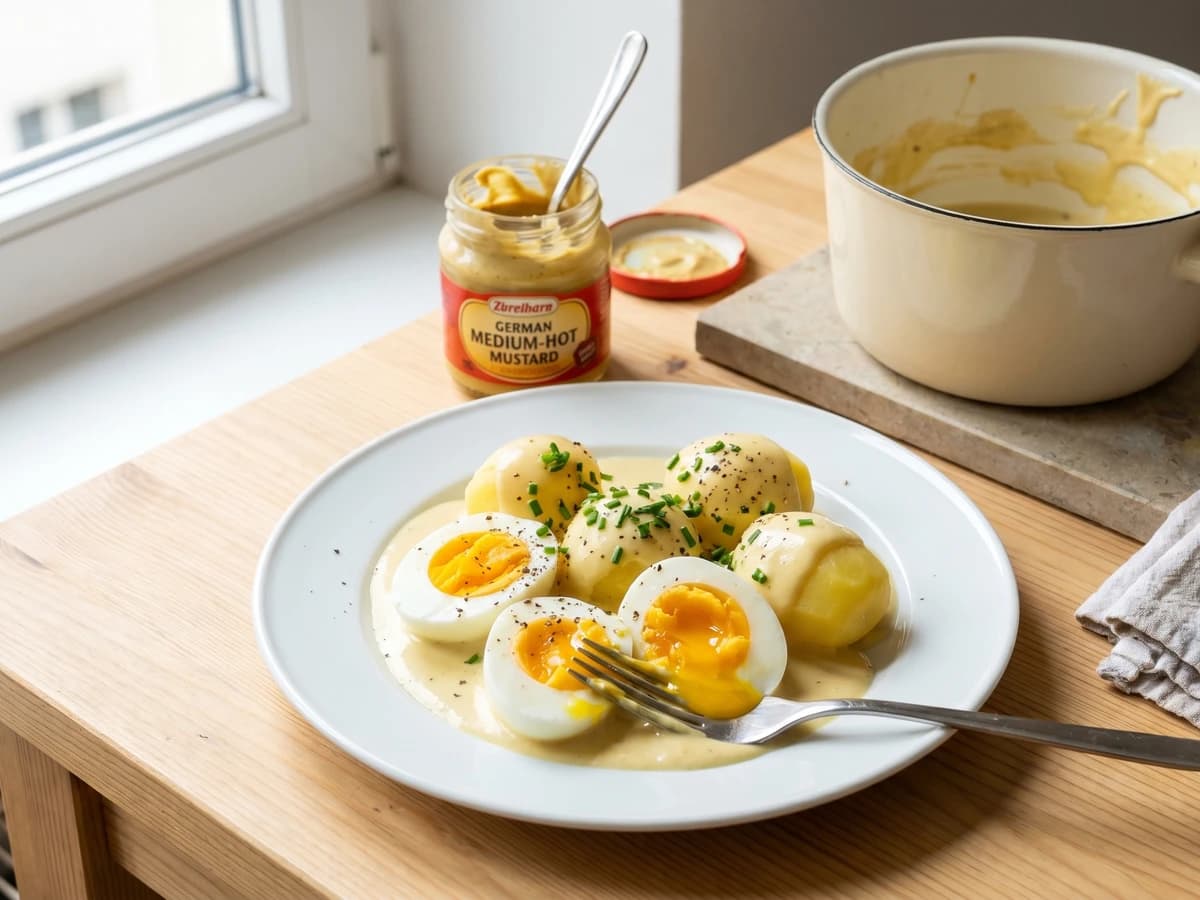
Hard eggs, boiled potatoes, and a mustard sauce made from a proper roux: the quick eastern supper that works because the mustard goes in last.
Chef Klaus
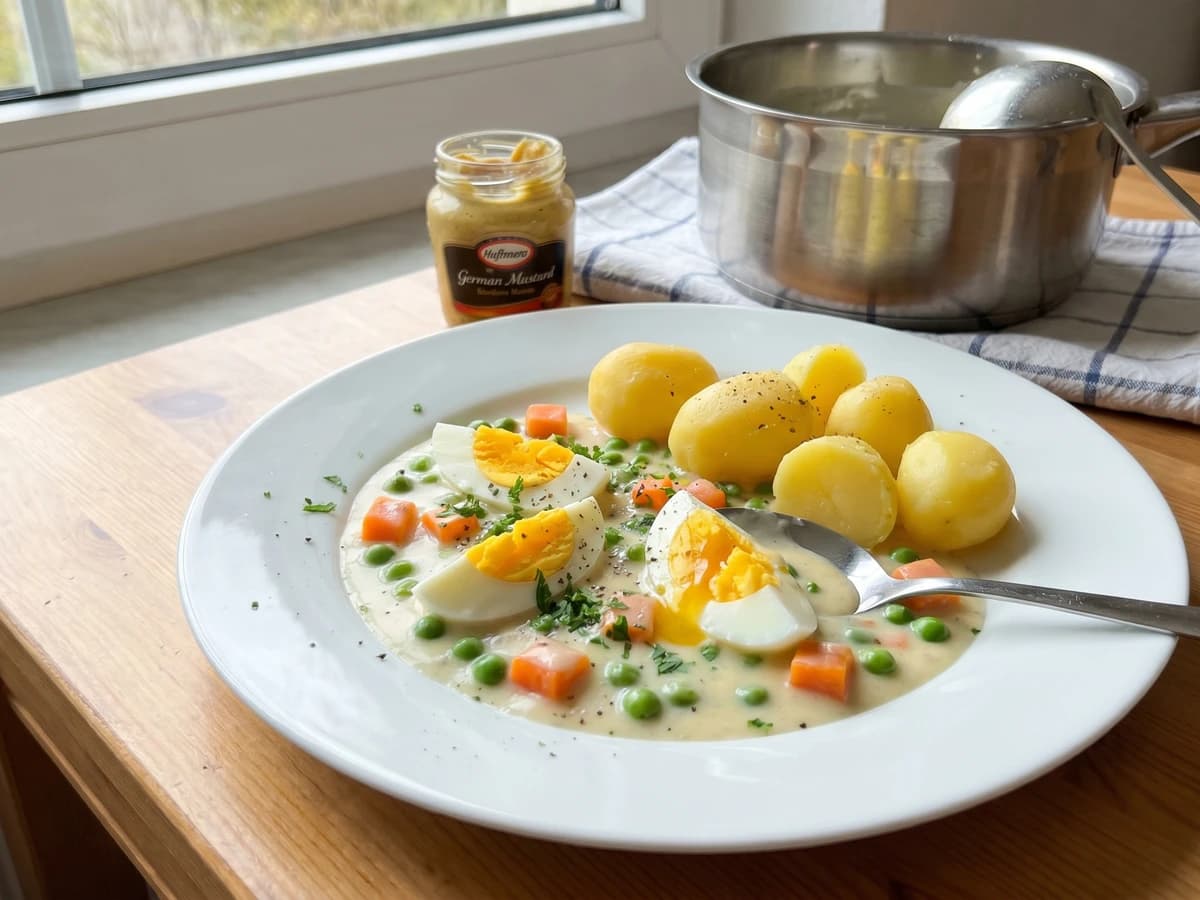
An East German weekday egg dish: hard-boiled eggs warmed gently in a pale sauce with peas, carrots, and lemon, cheap enough for Tuesday and proper enough for the table.

Chef Klaus
The Berlin and Saxon larder pan: yesterday's potatoes fried hard with sausage and ham, then bound with egg so the edges stay crisp and the middle stays tender.