
Chef Klaus
Bauernfrühstück
Yesterday's boiled potatoes, a little ham, onion, and egg. The whole dish works only if the potatoes brown before the egg goes in.
A cooking platform built around craft, culture, and the stories behind what we eat.
Created by
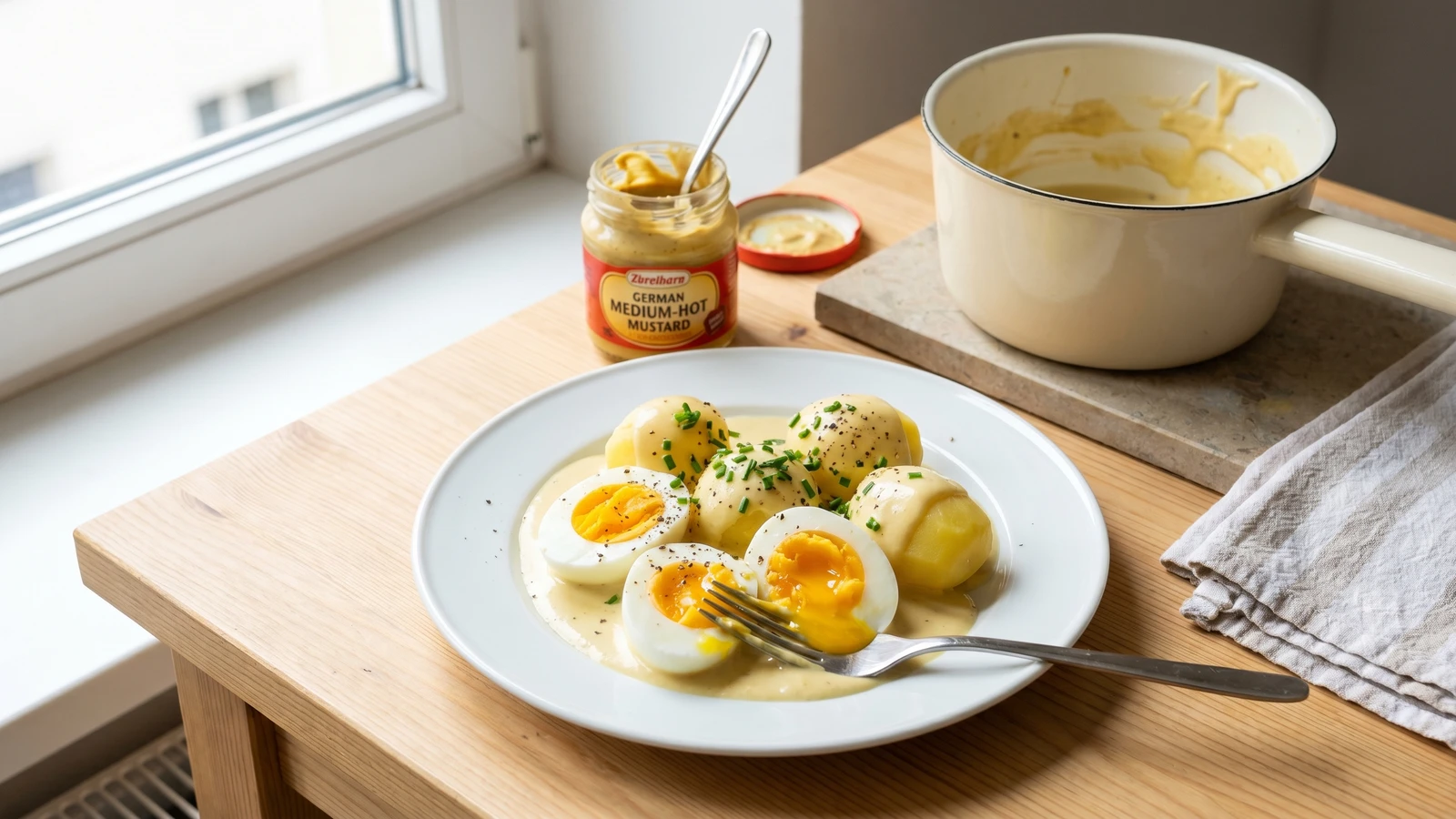
Hard eggs, boiled potatoes, and a mustard sauce made from a proper roux: the quick eastern supper that works because the mustard goes in last.
Eier in Senfsoße sit strongest on the eastern table, Berlin, Brandenburg, Saxony, Thuringia, the old weeknight plate with potatoes underneath and enough sauce to make the eggs matter. It is budget food, meatless food, canteen food when done badly, and a fine supper when done with care. Das ist kein Bierzelt. It is eggs, mustard, milk, stock, and potatoes, and that is enough.
The regions argue quietly over it. In the east I keep the sauce pale and sharp, with medium-hot mustard and a little vinegar or pickle liquor if the mustard is too soft. In the north you'll see dill and a cleaner sour edge. In the south the sauce is often rounder, with cream and a gentler mustard. Im Norden anders, im Süden anders, different in the north, different in the south.
The technique is simple and it decides the dish: make the roux first, cook the flour until it smells nutty but stays pale, then whisk in warm milk and stock until smooth. The mustard goes in off the heat. Boil mustard hard and you drive off its bite, roughen the sauce, and leave bitterness where there should be brightness. Nicht aus dem Glas means not a jarred sauce, not a packet. A spoon, a pan, five minutes.
Boil the potatoes in their skins if you have time, because the skin keeps the potato from drinking the pot water and turning loose. Halve the eggs so the yolks meet the sauce. Taste at the end: salt, mustard, vinegar, sugar only if the mustard needs balancing. Würzen, Fett, Salz zum Schluss. Schön ist, was schmeckt.
Senfeier became especially associated with Berlin, Brandenburg, Saxony, and the GDR household and canteen table, where eggs and potatoes made a filling meatless meal from cheap staples. German mustard has its own older centers: Düsseldorf's ABB mustard was founded in 1726, and Bautzen in Saxony became so closely tied to mustard that Bautz'ner Senf, introduced in the 1950s, became the everyday eastern jar. The dish shows how German thrift cooking often built a full meal around preserved sharpness, stored potatoes, eggs, and a sauce made in the pan.
Quantity
800g
scrubbed
Quantity
8
Quantity
40g
Quantity
40g
Quantity
350ml
warm
Quantity
250ml
warm
Quantity
3 tablespoons
Quantity
1 teaspoon
Quantity
1 teaspoon
Quantity
1/2 teaspoon
Quantity
to taste
Quantity
2 tablespoons
chopped
| Ingredient | Quantity |
|---|---|
| waxy potatoesscrubbed | 800g |
| large eggs | 8 |
| butter | 40g |
| plain flour | 40g |
| whole milkwarm | 350ml |
| light vegetable stock or chicken stockwarm | 250ml |
| German medium-hot mustard | 3 tablespoons |
| sharp mustard (optional) | 1 teaspoon |
| white wine vinegar or pickle liquor | 1 teaspoon |
| sugar (optional) | 1/2 teaspoon |
| salt and black pepper | to taste |
| chives or parsleychopped | 2 tablespoons |
Put the scrubbed potatoes in cold salted water and bring them up gently, then cook until a small knife slides through without forcing, about 20 to 25 minutes. Starting in cold water cooks the potatoes evenly from skin to center; drop them into boiling water and the outside softens before the middle catches up.
Lower the eggs into simmering water and cook 9 to 10 minutes, then cool them under cold water and peel. You want set yolks, not chalk; overboiled eggs bring a grey ring and a sulphur smell into a clean mustard sauce, and nobody asked for that.
Melt the butter in a saucepan over medium heat, stir in the flour, and cook for 2 minutes until it smells lightly nutty but stays pale. This short cooking takes the raw flour taste out without browning the sauce; brown roux belongs somewhere else, not on Senfeier.
Whisk in the warm milk a little at a time, then the warm stock, keeping the whisk moving until the sauce is smooth and coats the back of a spoon. Warm liquid keeps the roux from tightening into lumps, and adding it slowly gives you a sauce instead of a pot of paste.
Take the pan off the heat and whisk in the medium-hot mustard, sharp mustard if using, vinegar or pickle liquor, salt, pepper, and only enough sugar to balance the edge. Mustard goes in off the heat because boiling dulls its aroma and can turn the sauce bitter. Erst verstehen, dann kochen.
Peel the potatoes if you like, or leave the thin skins on, then halve or quarter them on warm plates. Halve the eggs and set them cut side up so the yolks catch the sauce, spoon the mustard sauce over generously, and finish with chives or parsley. Weggeworfen wird nichts: any leftover sauce goes over tomorrow's potatoes.
1 serving (about 470g)
Culinary guides, cultural storytelling, and the editorial depth that makes cooking meaningful.
Discover Culinary ExplorerChef Klaus
Yesterday's boiled potatoes, a little ham, onion, and egg. The whole dish works only if the potatoes brown before the egg goes in.

Chef Klaus
Brown North Sea shrimp on buttered dark rye, a soft fried egg over the top, and the whole plate decided by one thing: keep the shrimp cool and the yolk running.
Chef Klaus
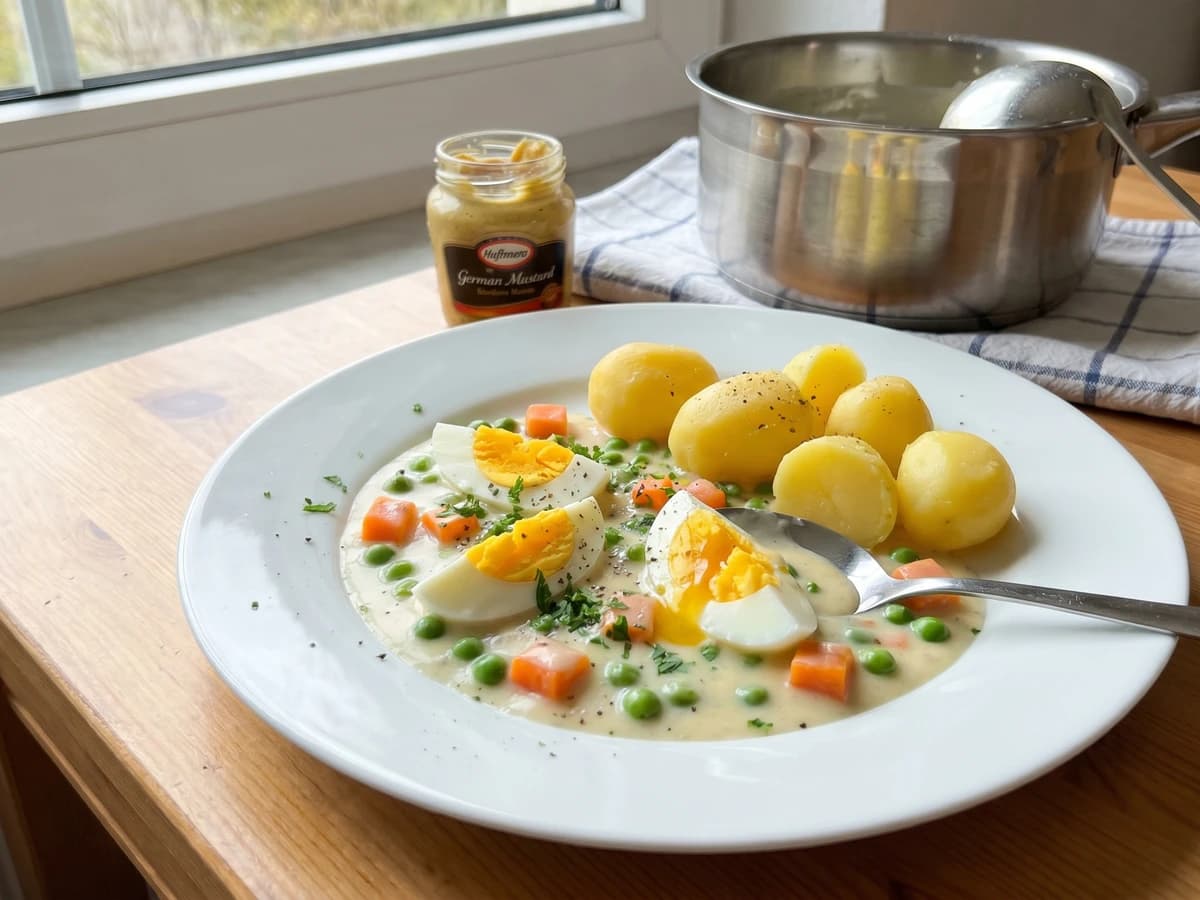
An East German weekday egg dish: hard-boiled eggs warmed gently in a pale sauce with peas, carrots, and lemon, cheap enough for Tuesday and proper enough for the table.

Chef Klaus
The Berlin and Saxon larder pan: yesterday's potatoes fried hard with sausage and ham, then bound with egg so the edges stay crisp and the middle stays tender.