
Chef Elsa
Dillfisolen
Tender Austrian green beans folded into a silky, dill-bright cream sauce built on a proper Einbrenn. The Gasthaus side dish that quietly steals the whole meal.
A cooking platform built around craft, culture, and the stories behind what we eat.
Created by
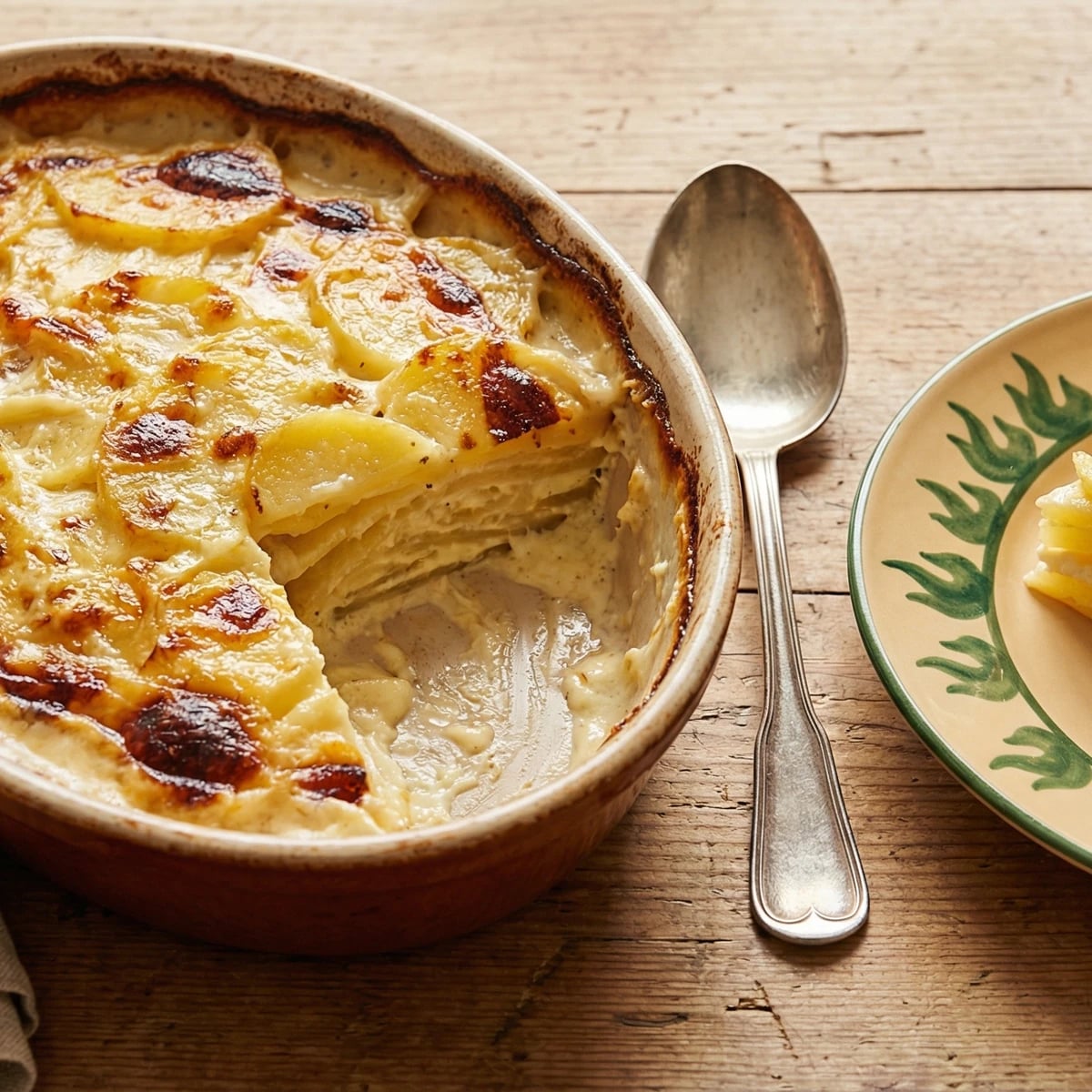
Thin-sliced waxy potatoes layered with garlic-steeped cream and baked low and slow until the top turns golden brown and the kitchen smells like the kind of cooking that makes people wander in from the next room.
Erdäpfel. That's what Austrians call potatoes. Earth apples. Gretel always used the word, never 'Kartoffeln,' because Kartoffeln is what they say in Germany and this is not German cooking. In my grandmother Eva's kitchen, when winter got serious and the wind came off the Channel, Gretel would layer sliced potatoes into a dish with warm cream and garlic and put the whole thing in the oven for an hour. The kitchen in Deal would fill with that smell, and you knew dinner was going to be good.
Erdäpfelgratin is not a recipe that tries to impress you with complexity. It's five or six ingredients and an hour of your oven doing the work. What makes it extraordinary is precision: the potatoes sliced evenly so they cook at the same rate, the cream warmed with garlic so the flavor is round instead of sharp, the covered bake that lets everything cook through before the top even thinks about browning. You get layers of tender potato held together by a cream that's thickened and reduced into something closer to a sauce than a liquid.
This is the side dish I serve at my restaurant in Salzburg with roasted pork, with Tafelspitz, with almost anything that wants a warm, golden companion on the plate. It's good Austrian home cooking at its most reliable. If you can slice a potato and pour cream, you can make this tonight. And you should.
Erdäpfelgratin arrived in Austrian kitchens through French influence during the 18th and 19th centuries, when Viennese aristocratic cooking borrowed liberally from French technique while adapting dishes to local tastes and ingredients. The Austrian version typically uses less cheese than the French gratin dauphinois and relies more heavily on cream and nutmeg, reflecting the Viennese preference for richness through dairy rather than bold flavors. In Alpine regions like Salzburg and Tyrol, local Bergkäse sometimes appears on top, connecting the French-origin dish to Austria's mountain dairy traditions.
Quantity
1.2 kg
peeled
Quantity
400ml
Quantity
200ml
Quantity
2 cloves
one halved, one finely minced
Quantity
1 tablespoon
softened
Quantity
1 teaspoon
Quantity
1/2 teaspoon
freshly ground
Quantity
pinch
freshly grated
Quantity
80g
finely grated
| Ingredient | Quantity |
|---|---|
| waxy potatoes (Kipfler or similar)peeled | 1.2 kg |
| heavy cream (Schlagobers) | 400ml |
| whole milk | 200ml |
| garlicone halved, one finely minced | 2 cloves |
| unsalted buttersoftened | 1 tablespoon |
| fine sea salt | 1 teaspoon |
| white pepperfreshly ground | 1/2 teaspoon |
| nutmegfreshly grated | pinch |
| Gruyère or Austrian Bergkäse (optional)finely grated | 80g |
Preheat your oven to 170°C (340°F). Take one garlic clove, halve it, and rub the cut side all over the inside of a shallow baking dish, about 28cm by 20cm. Press firmly. You want the garlic oils in every corner. Then coat the entire inside with the softened butter. This does two things: it keeps the potatoes from sticking, and it gives the edges a golden, almost nutty crust where the cream bakes against the butter.
Pour the cream and milk into a saucepan. Add the minced garlic, the salt, the white pepper, and the nutmeg. Set it over low heat and bring it just to the point where tiny bubbles appear at the edges. Don't let it boil. You're warming the cream to dissolve the salt and wake up the garlic, not cooking it. Take it off the heat and let it sit while you slice the potatoes. The garlic will steep gently and give you a deeper, rounder flavor than raw garlic ever could.
Slice the peeled potatoes into rounds about three millimeters thick. A mandoline makes this easy, but a sharp knife and steady hand work fine. Consistency matters. If some slices are thick and some thin, the thin ones will dissolve into paste while the thick ones stay crunchy. Three millimeters. Not five. Not two. You want slices thin enough to cook through and absorb the cream, but sturdy enough to hold their shape as layers.
Arrange a layer of potato slices across the bottom of your prepared dish, overlapping each slice by about a third. Think of fish scales. Pour a few spoonfuls of the warm cream mixture over the first layer, just enough to coat. Repeat: potatoes, cream, potatoes, cream. You want three to four layers, finishing with a neat layer of potatoes on top. Pour the remaining cream evenly over everything. The liquid should come about three-quarters of the way up the potatoes. If it doesn't reach that level, add a splash more milk. The potatoes need to be mostly submerged to cook evenly.
Cover the dish tightly with aluminum foil and place it on the middle rack of the oven. Bake for forty-five minutes. The foil traps moisture so the potatoes steam in the cream and cook through completely before you ask the top to brown. If you skip the foil and go straight into an uncovered bake, the top layer turns leathery while the center stays raw. Patience here. Forty-five minutes, covered.
Remove the foil. If using cheese, scatter it evenly across the surface now. Return the dish to the oven, uncovered, and bake for another twenty to twenty-five minutes. The cream will bubble up at the edges, thick and golden, and the top layer of potatoes will turn deep brown in spots. You're looking for a color somewhere between honey and chestnut. When you press the center gently with a spoon, the potatoes should yield without resistance.
Pull the gratin from the oven and let it rest for ten to fifteen minutes on the counter. This is not optional. The cream, which is boiling and liquid right now, needs time to be absorbed back into the potato layers. If you cut into it immediately, it runs everywhere and you lose the structure. After fifteen minutes, the slices hold together when you serve them, the cream has thickened into a silky sauce between each layer, and the edges have that gorgeous golden crust where the cream reduced against the butter. Serve it straight from the dish. Mahlzeit!
1 serving (about 275g)
Culinary guides, cultural storytelling, and the editorial depth that makes cooking meaningful.
Discover Culinary Explorer
Chef Elsa
Tender Austrian green beans folded into a silky, dill-bright cream sauce built on a proper Einbrenn. The Gasthaus side dish that quietly steals the whole meal.

Chef Elsa
Silky Viennese mashed potatoes pressed through a ricer, enriched with cold butter and warm milk, finished with a whisper of nutmeg. The quiet side dish that makes the whole plate work.

Chef Elsa
Yesterday's boiled potatoes, coarsely grated and torn in a hot pan with too much butter until the edges go golden and crisp. Farmhouse cooking at its most honest, served straight from the skillet.

Chef Elsa
Upper Austria's silky potato dumplings, rolled by hand and simmered until they float, the quiet companion that makes every Schweinsbraten complete.