
Chef Makoa
Fēʻi (Tahitian Roasted Cooking Bananas)
Tahiti's fēʻi are orange-fleshed mountain bananas, cooked until tender and served like a starch, warm with sea salt, coconut cream, and the quiet sweetness of the high valleys.
A cooking platform built around craft, culture, and the stories behind what we eat.

Created by
Tahiti's fāfā cooks young taro leaves down with onion and coconut cream until they turn dark, silky, and rich enough to feed the whole table.
The canoe carried the elder brother far before any of us had a map, and in Tahiti that kinship comes to the table as fāfā, young taro leaves cooked down in coconut cream until they turn dark and tender. This is Tahiti's hand, not mine from home, so I cook it open-handed and name it straight. Reo Tahiti calls the leaf fāfā, and the people of that fenua, that land, know how a tough green can turn rich enough to hold a whole meal.
Taro was among the canoe crops carried through central East Polynesia, and Tahiti became one of the great voyaging hearths from which plants, language, and food knowledge moved on to Hawaiʻi, the Cook Islands, and Rapa Nui. Fāfā belongs to Tahiti's everyday and feast table, and its better-known poulet fāfā shows the post-contact layer, chicken folded into an older taro-leaf and coconut grammar. The same gesture has cousins across the Triangle: Cook Islands rukau, Sāmoan palusami, Tongan lū, and Hawaiian lūʻau or laulau, each one named by its own island.
Quantity
2 pounds
thick stems and ribs removed
Quantity
2 tablespoons
Quantity
1 large
thinly sliced
Quantity
3 cloves
finely chopped
Quantity
1 1/2 teaspoons
plus more to taste
Quantity
2 cups
preferably fresh-pressed from grated mature coconut
Quantity
1 cup
plus more as needed
Quantity
1 tablespoon
| Ingredient | Quantity |
|---|---|
| young taro leaves (fāfā leaves or lūʻau leaf)thick stems and ribs removed | 2 pounds |
| coconut oil or neutral oil | 2 tablespoons |
| onionthinly sliced | 1 large |
| garlicfinely chopped | 3 cloves |
| sea saltplus more to taste | 1 1/2 teaspoons |
| thick coconut creampreferably fresh-pressed from grated mature coconut | 2 cups |
| waterplus more as needed | 1 cup |
| fresh lime juice (optional) | 1 tablespoon |
Wash the taro leaves well, then strip away the thick stems and big ribs. Raw taro leaf carries that needle-bite from oxalate crystals, so respect it. This leaf has to cook fully, no shortcut, until every bit of sharpness is gone.
Warm the oil in a heavy pot over medium heat. Add the onion and cook until soft and sweet-smelling, about 8 minutes, then stir in the garlic for another minute. You want fragrance and softness, not browning.
Add the taro leaves by handfuls, salting lightly as you go, turning them until they collapse into the pot. They start big and proud, then they give. Keep folding until the leaves are glossy, deep green, and sitting low in their own moisture.
Pour in the water, cover the pot, and lower the heat. Simmer gently for 45 minutes, stirring now and then, until the leaves turn dark, tender, and lose all their bite. If the pot gets dry, add a splash more water. No blame the taro. Give it the time it needs.
Stir in the coconut cream and cook uncovered for 15 to 25 minutes more, until the cream thickens around the leaves and leaves a white-gold shimmer in the folds. The fāfā should be soft enough to spoon, rich but not soupy.
Taste for salt. Add a little lime only if the cream feels heavy and wants brightness. Serve warm in a wooden bowl, beside fish, chicken, roasted ʻuru, rice, or as the dark green base under poulet fāfā. Enough for one more, always.
1 serving (about 250g)
Culinary guides, cultural storytelling, and the editorial depth that makes cooking meaningful.
Discover Culinary ExplorerChef Makoa
Tahiti's fēʻi are orange-fleshed mountain bananas, cooked until tender and served like a starch, warm with sea salt, coconut cream, and the quiet sweetness of the high valleys.
Chef Makoa
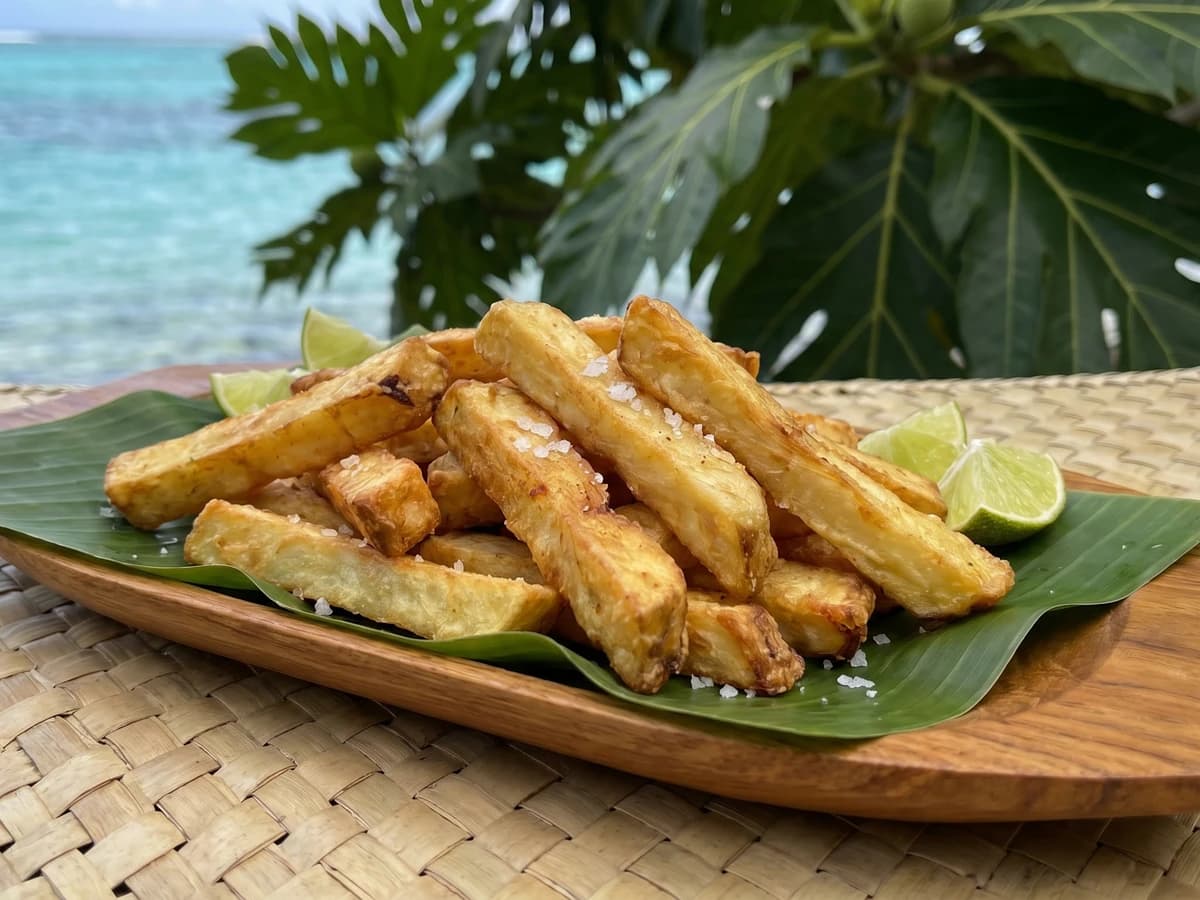
Firm Tahitian ʻuru cut into thick wedges, cooked until tender, then fried crisp and salted while hot. The old canoe crop lands on the table like chips, only deeper.

Chef Makoa
Tender slices of Tahitian ʻuru, breadfruit, baked in coconut milk until the edges go gold, with just enough cheese from the French island pantry to brown the top.

Chef Makoa
Ripe Tahitian ʻuru kept sour the old way, kneaded with coconut cream and wrapped in leaf until it sets into a tangy, glossy starch beside fish, pork, or one quiet bowl of rice.