Chef Makoa
Ika Lolo (Tongan Fish Baked in Taro Leaves and Coconut Cream)
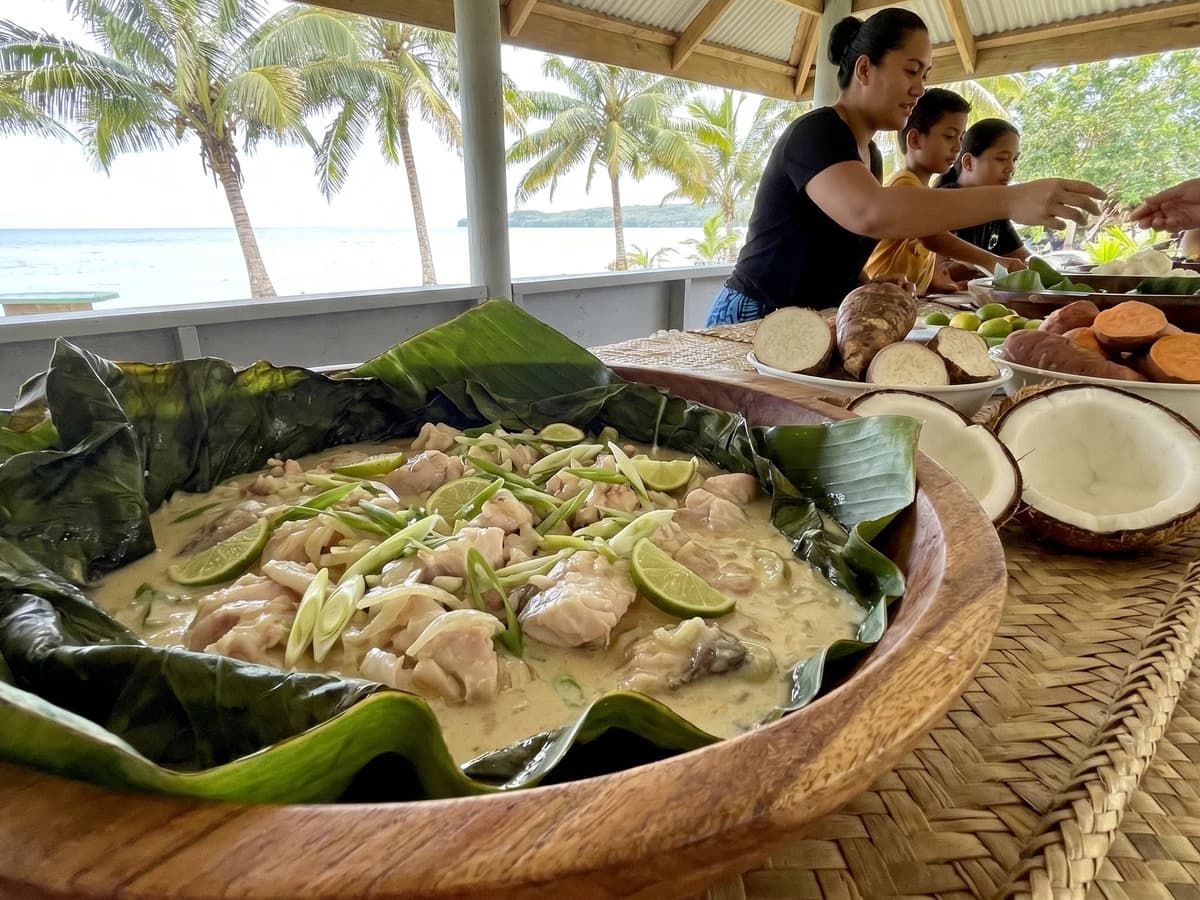
Tonga's ika lolo, fresh fish folded into taro leaves with ginger, garlic, and coconut cream, then baked until the leaf goes silky and the fish stays sweet under the coconut.
A cooking platform built around craft, culture, and the stories behind what we eat.
Created by
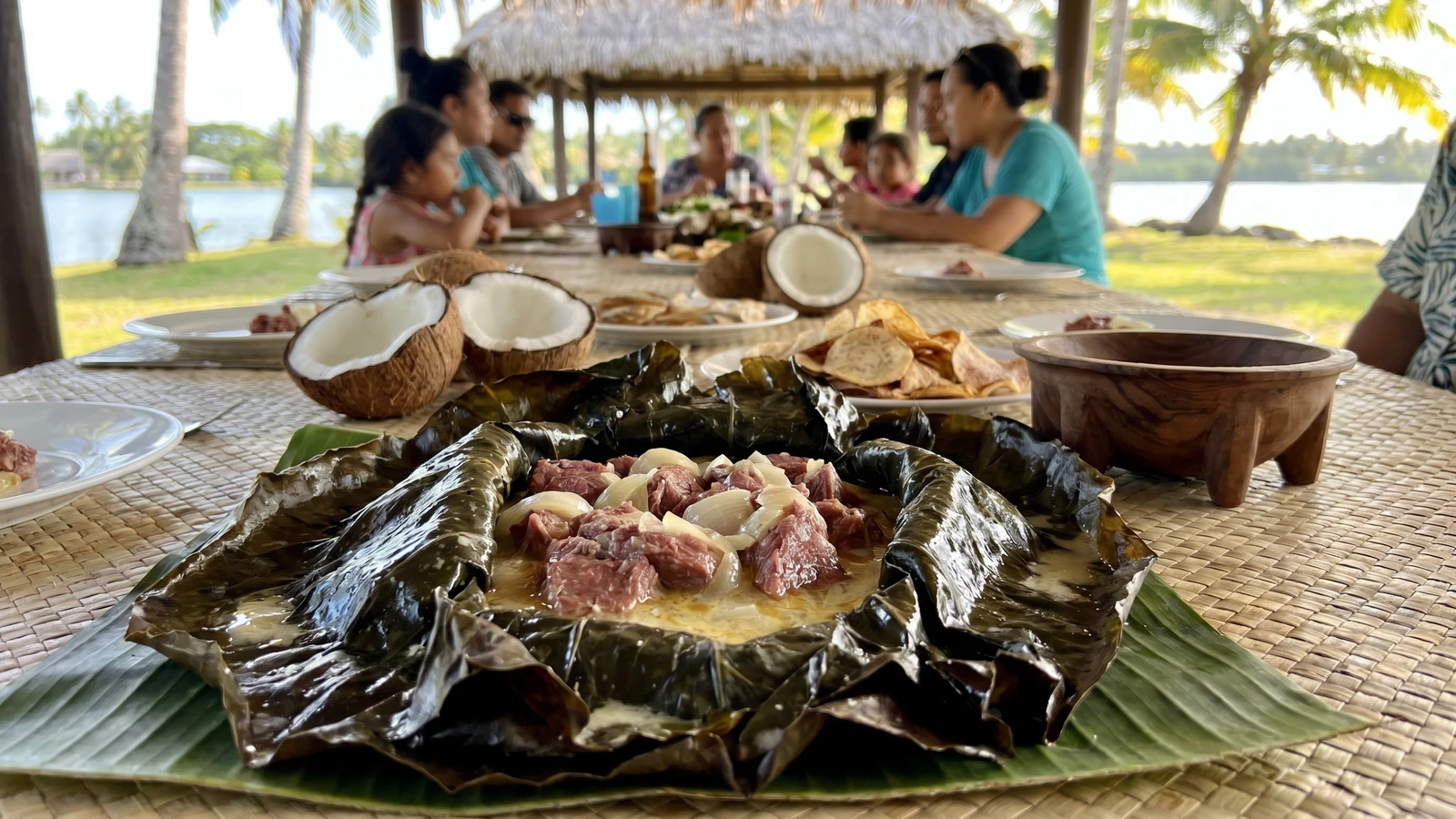
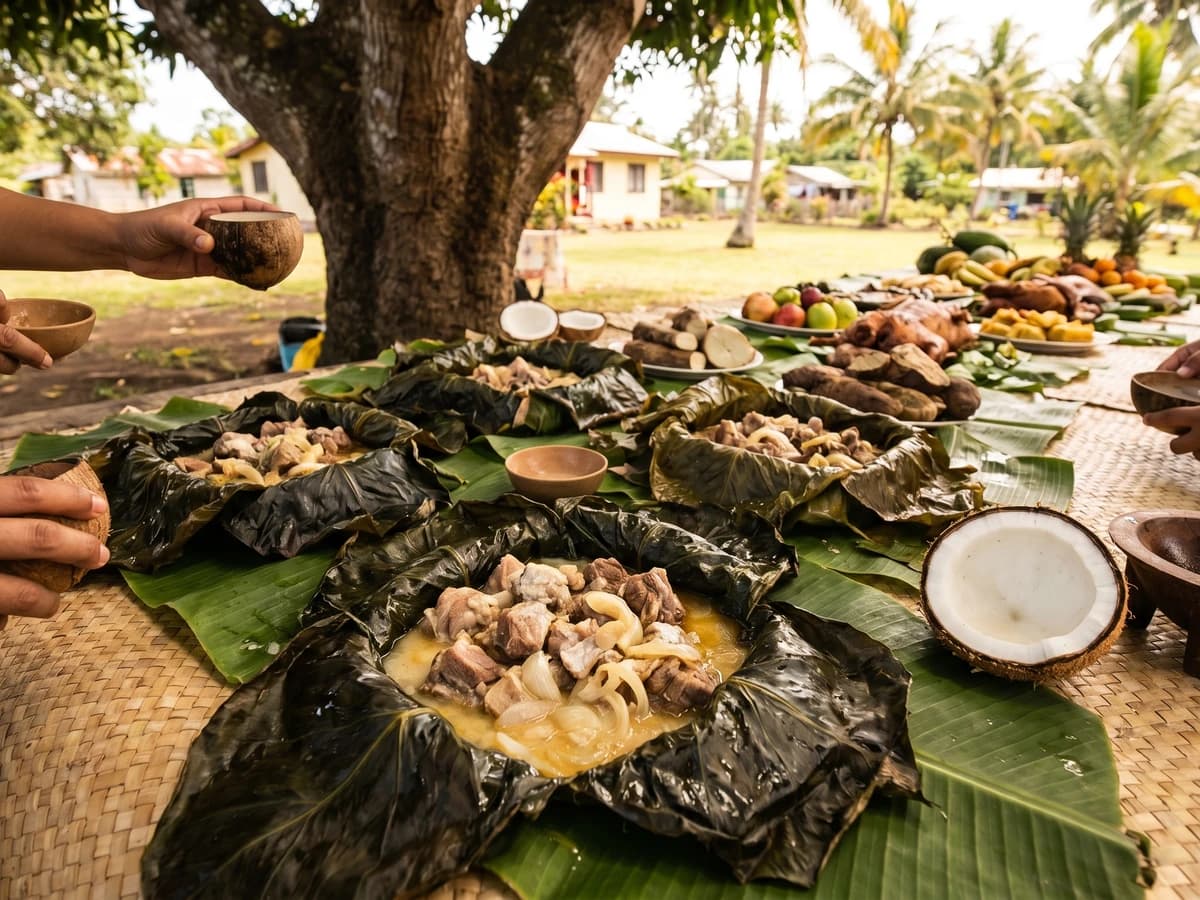
Tonga's lū pulu folds taro leaves around corned beef, onion, and lolo niu coconut cream, then bakes it slow until leaf and meat turn soft, dark, and rich.
The first time a Tongan auntie put lū pulu in front of me, she didn't explain it like a chef. She just opened the leaf, pushed the cream back into the meat with a spoon, and looked at me like, eat. Tonga's hand was right there: lū, the taro leaf, wrapped around pulu, the corned beef that came by ship and stayed because the people made it useful, generous, and good.
This is not old-before-contact food in every part. The taro leaf is old, the coconut is old, the leaf parcel is old. The corned beef is newer, from the trade and mission and shipping years, and still the islands took it into the kitchen without shame. Keeper, not gatekeeper. The people eat what they have, and in Tonga that can mean lū sipi with mutton, lū pulu with corned beef, and a whole katoanga, a celebration, laid out with enough for one more.
The method is the meaning. Build the leaves four and five deep, because the cream needs a protected place to cook down. Let the parcel stay closed, because the leaf needs time to lose every bit of its bite. Sāmoa's cousin is palusami, the Cooks have rukau, back home Hawaiʻi has laulau and lūʻau leaf. Same gesture, different hand. Don't blur them. Name the island and feed the table.
For the deep ʻumu, the Tongan earth oven, and the ceremony around it, go sit with Tongan elders, with the aunties and uncles who carry that work. In this kitchen version, we bake it covered and slow, and we keep the heart of it: leaf, coconut, salt, patience, kinship. Deep food is not fancy. It's not precious. It's food that remembers who carried it.
Lū is Tonga's taro-leaf parcel family, cooked in the ʻumu, the hot-stone earth oven, and filled in different ways, including lū sipi with mutton and lū pulu with tinned corned beef. The taro leaf and coconut cream belong to the older canoe-crop foodway shared across Polynesia, while corned beef entered island kitchens through nineteenth and twentieth century trade, mission, military, and shipping routes, then became part of everyday and feast food in Tonga and Sāmoa. The dish shows the deep-food and mission-food line sitting in one parcel: ancestral leaf and coconut holding a modern pantry meat, still Tongan in the hand that folds it.
Quantity
36
thick stems and ribs removed
Quantity
1 can (12 ounces)
broken into chunks
Quantity
2 cups
or 1 can thick coconut cream
Quantity
1 medium
thinly sliced
Quantity
1 teaspoon
plus more to taste
Quantity
1/2 teaspoon
Quantity
6
softened over heat, or use parchment and heavy foil
Quantity
1/2 cup
for the baking dish
| Ingredient | Quantity |
|---|---|
| young taro leaves (lū)thick stems and ribs removed | 36 |
| corned beef (pulu)broken into chunks | 1 can (12 ounces) |
| fresh coconut cream (lolo niu)or 1 can thick coconut cream | 2 cups |
| onionthinly sliced | 1 medium |
| sea saltplus more to taste | 1 teaspoon |
| freshly ground black pepper | 1/2 teaspoon |
| banana leavessoftened over heat, or use parchment and heavy foil | 6 |
| waterfor the baking dish | 1/2 cup |
Rinse the taro leaves well and strip out the thick stems and ribs so the leaves fold without cracking. Raw taro leaf can bite the throat, so this dish must cook long enough for every needle of oxalate to go quiet. No blame the taro if it scratches. You rushed it.
Break the corned beef into big soft chunks and toss it with the sliced onion, salt, and pepper. Go easy with the salt at first, because pulu, the tinned corned beef Tonga made its own, already carries plenty.
Lay four or five taro leaves in your palm or in a shallow bowl, overlapping them like cupped pages, dark side down and edges crossing. This deep stack matters. It keeps the lolo niu, the coconut cream, from burning through and gives the leaf time to melt into the meat.
Set a handful of corned beef and onion in the middle of the leaves, then spoon over enough coconut cream to wet everything without flooding the parcel. Fold the leaves over the filling from all sides, then wrap the bundle in banana leaf. If you don't have banana leaf, use parchment against the food and foil outside it. Cook what you have.
Set the parcels seam side down in a baking dish, add the water to the dish, cover tightly, and bake at 350F for 1 hour 30 minutes to 1 hour 45 minutes. Don't keep opening it to check. You are not steaming a vegetable. You are melting tough leaf, salty meat, onion, and coconut cream into one another until all of them forget they were tough.
Let the parcels rest 10 minutes before opening. The leaf should be deep green-black and silky, the coconut cream white-gold and glossy, the corned beef soft enough to press apart with a spoon. Taste the cream pooling in the leaf and add salt only if it asks.
Serve lū pulu family-style with cassava, kumala, ʻulu, rice, or whatever starch is on your table. Tonga owns this hand, but the cousins sit close: Sāmoa has palusami, the Cook Islands have rukau, Hawaiʻi has laulau and lūʻau leaf. One ocean, one canoe, one root, each island speaking in its own bowl.
1 serving (about 190g)
Culinary guides, cultural storytelling, and the editorial depth that makes cooking meaningful.
Discover Culinary ExplorerChef Makoa
Tonga's ika lolo, fresh fish folded into taro leaves with ginger, garlic, and coconut cream, then baked until the leaf goes silky and the fish stays sweet under the coconut.
Chef Makoa
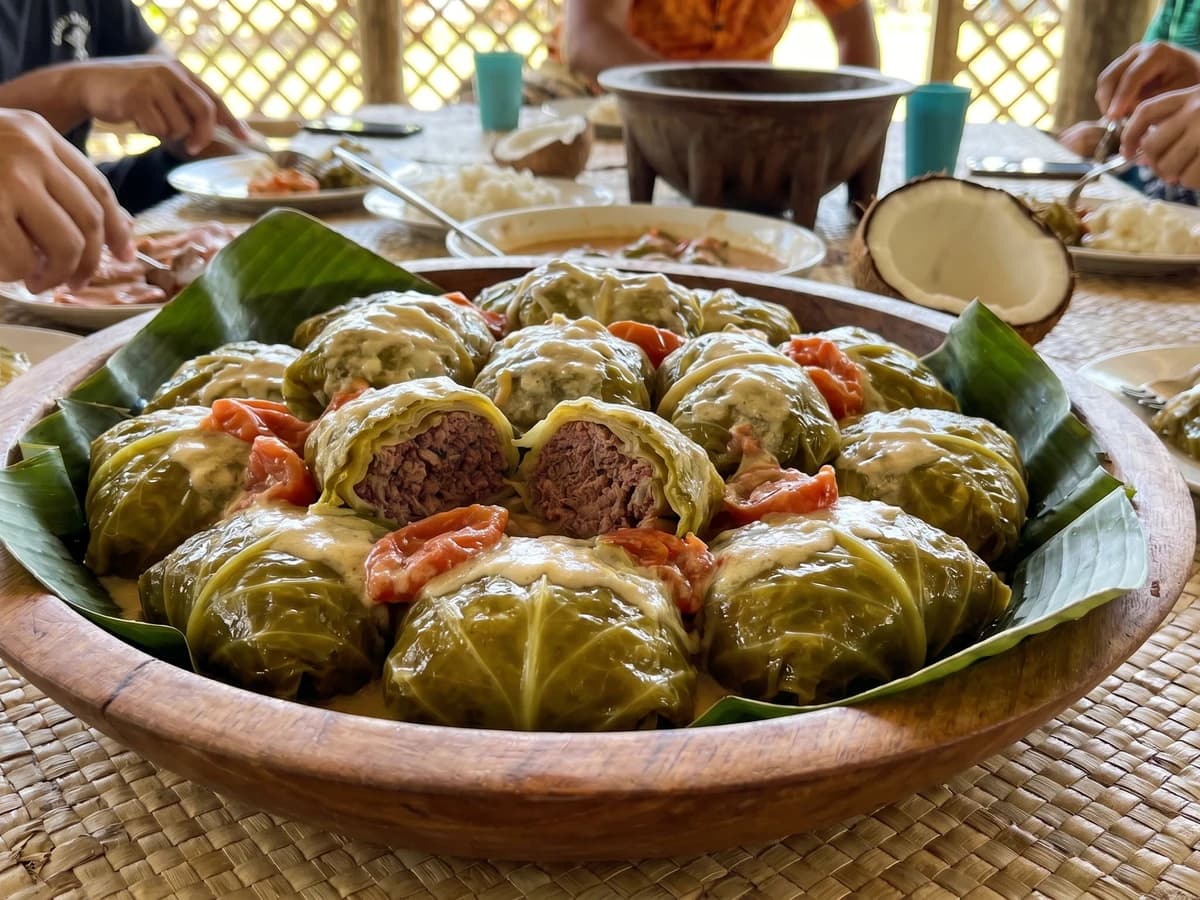
Tonga takes cabbage, tinned corned beef, tomato, onion, and coconut cream, then bakes them into generous parcels for Sunday tables. Cheap food, feast hand, everybody fed.
Chef Makoa
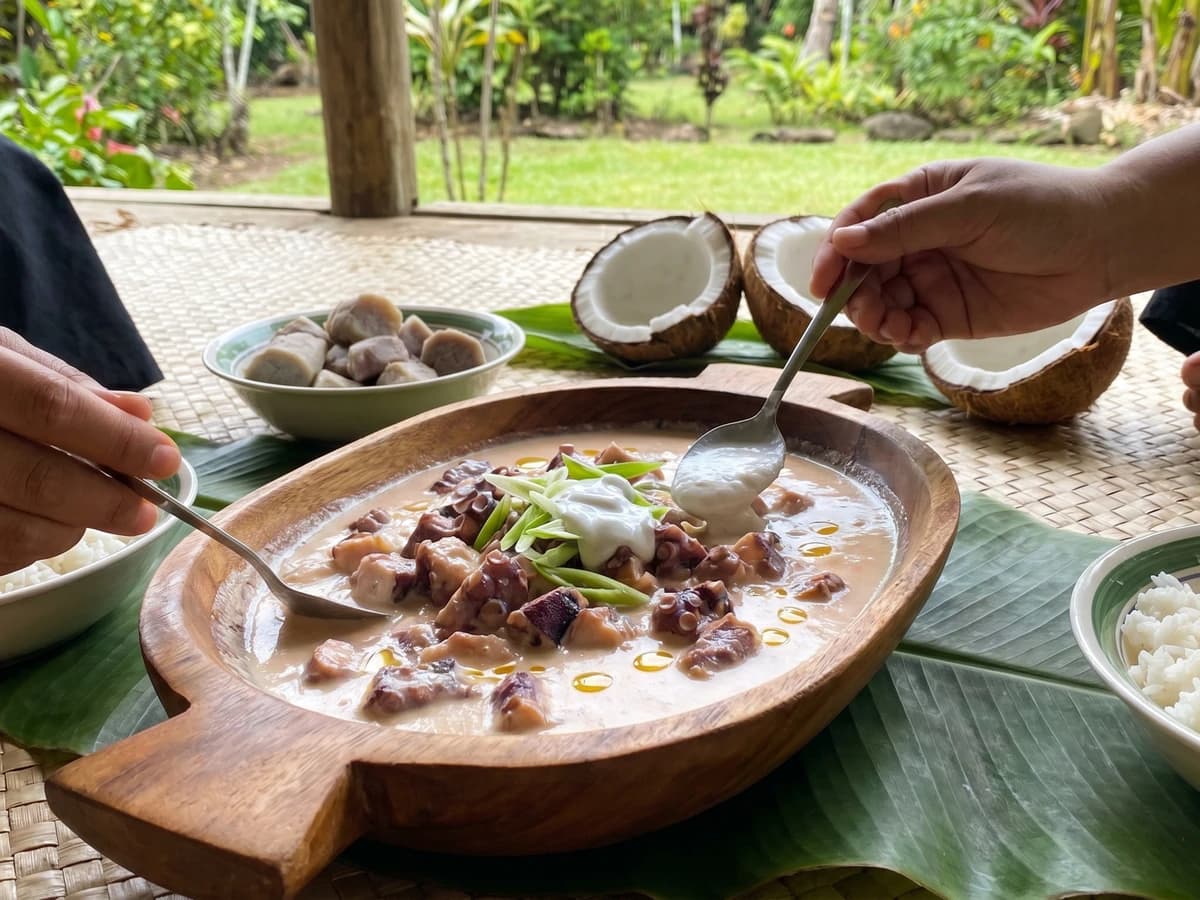
Tonga's loʻi feke takes reef octopus slow in coconut cream, onion, and tomato until the meat gives under the spoon and the sauce turns rich enough for rice, talo, or ʻulu.
Chef Makoa
Tonga's lū sipi wraps young taro leaves around fatty mutton, onion, and coconut cream, then cooks it slow until the leaf goes dark and the meat gives up soft.