Lū Niue (Niuean Taro-Leaf Parcel with Coconut Cream)
Created by
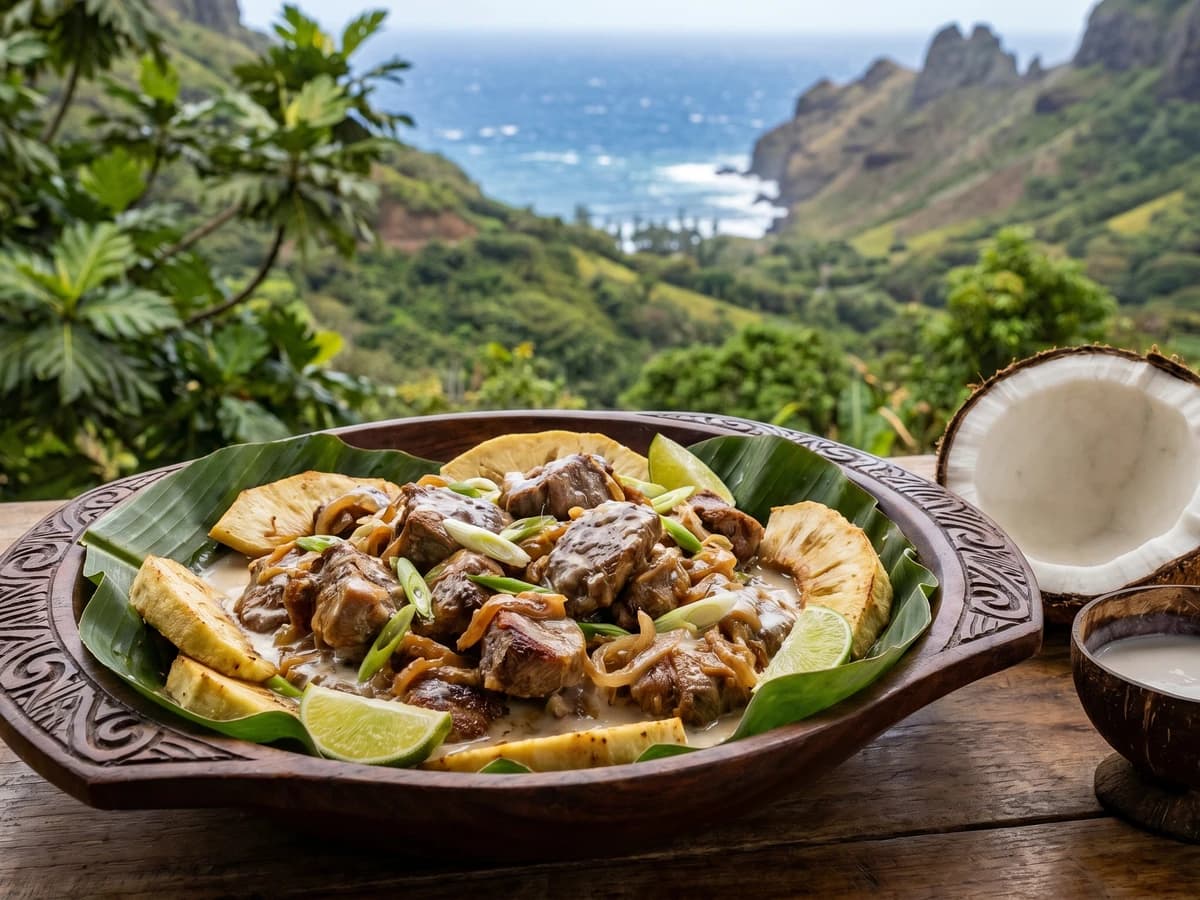
Niue's lū folds young taro leaves around fish or chicken, coconut cream, and onion, then bakes the parcel slow until the leaf turns dark, silky, and rich.
Main Dishes
Polynesian
Special Occasion
Celebration
Comfort Food
35 min
Active Time
1 hr 30 min cook•2 hr 5 min total
Yield6 servings
The first thing I think of with Niue is not the parcel, it's the island itself: a raised coral rock in the open sea, small to the eye and mighty in the heart. Niuē, Niue, has its own hand, its own language, its own way of feeding family from talo, the taro, and niu, the coconut. This lū belongs to Niuean tables, and I cook it open-handed, because the deep parts belong to Niuean elders and aunties who carry them from inside.
Lū is the leaf parcel, young taro leaves stacked deep, filled with fish or chicken, onion, and coconut cream, then folded tight and cooked slow. In Tonga the cousin is lū, in Sāmoa palusami, in the Cook Islands rukau, back home in Hawaiʻi we know laulau and lūʻau leaf. Same gesture. Different island. One ocean, one canoe, one root.
The method is simple, but don't treat it small. Build the leaves four and five deep so the cream can't burn through. Cook them long enough that every needle of the raw taro leaf is gone, because undercooked leaf will bite the throat. You are not steaming a vegetable. You're melting a tough leaf and its filling into each other until both forget they were tough.
Fresh coconut cream is the soul if you can get it, especially in the western islands' food. A can will do on a weeknight. Eat what you have. Just give the leaf its time, and when the parcel opens dark and glossy, with the white-gold cream pooling into it, set it down for the whole table. Deep food is not fancy. It's family.
Niue sits east of Tonga and Samoa on a raised coral island where talo, coconut, fish, and the umu, the earth oven, anchor older foodways in a hard limestone landscape. The leaf-and-coconut-cream parcel is one of the great western Polynesian food gestures, spoken as Niuean lū, Tongan lū, Sāmoan palusami, Cook Islands rukau, and Hawaiian laulau or lūʻau leaf. Today the same parcel may hold reef fish, chicken, or tinned meat in family kitchens from Alofi to Auckland, which is not loss by itself, it is the food staying alive.
The technique, the tradition, and the story behind every dish.
cut into large chunks, or use bone-in chicken thighs
fresh coconut cream
Quantity
2 cups
or 1 can (13 to 14 oz) thick coconut cream
onion
Quantity
1 medium
thinly sliced
green onions
Quantity
2
thinly sliced
sea salt
Quantity
1 1/2 teaspoons
plus more to taste
freshly ground black pepper
Quantity
1/2 teaspoon
fresh lime juice (optional)
Quantity
1 tablespoon
banana leaves, taro leaves, parchment, and foil
Quantity
as needed
for wrapping
Ingredient
Quantity
young taro leavesthick stems and ribs removed
30
firm white fish filletscut into large chunks, or use bone-in chicken thighs
1 1/2 pounds
fresh coconut creamor 1 can (13 to 14 oz) thick coconut cream
2 cups
onionthinly sliced
1 medium
green onionsthinly sliced
2
sea saltplus more to taste
1 1/2 teaspoons
freshly ground black pepper
1/2 teaspoon
fresh lime juice (optional)
1 tablespoon
banana leaves, taro leaves, parchment, and foilfor wrapping
as needed
Equipment Needed
•Heavy 7-quart Dutch oven or covered roasting pan
•Kitchen scissors for trimming taro leaves
•Foil and parchment or banana leaves for wrapping
Instructions
1
Ready the leaves
Rinse the taro leaves well and cut away the thick stems and ribs so the leaves fold without tearing. If the leaves are very mature, use them only for outer wrapping or cook them longer. Raw taro leaf has oxalate crystals that bite the throat, so the long cook is not optional. No blame the taro if you rush it.
Frozen taro leaves are fine. Thaw, drain, and pat them dry, then still build the parcel thick and cook it fully soft.
2
Season the filling
Put the fish or chicken in a bowl with the onion, green onion, salt, pepper, and lime juice if using. Turn it gently so the pieces stay whole. The seasoning should be simple, because the leaf and coconut cream are doing the old work here.
3
Build the parcel
Lay down a sheet of banana leaf or parchment on foil. Stack four or five taro leaves in the center, overlapping them like cupped hands, then spoon in some filling and pour coconut cream over it. Build the leaves deep so the cream can't burn straight through the bottom.
4
Fold it tight
Fold the taro leaves over the filling, then wrap the outside leaf or parchment around the bundle and seal it with foil. Make six parcels, or one big family parcel if your pan can hold it. Tight is good, but don't crush it. You want the coconut cream held close while the leaf goes dark and silky.
5
Bake slow
Set the parcels seam-side up in a covered roasting pan or Dutch oven with 1/2 cup water in the bottom. Bake at 350F for 1 hour 15 minutes for fish, or 1 hour 45 minutes for chicken, until the taro leaf is fully tender and the coconut cream has cooked into a glossy sauce. Don't keep opening it to check. Trust the leaf and the time.
6
Rest and open
Let the parcels rest 10 minutes before opening. The leaf should be deep green-black, soft all the way through, and shining with coconut cream. Taste the sauce and add a small pinch of salt if it asks. Serve with taro, breadfruit, green banana, or rice, because today's island table knows all of those.
Chef Tips
•Fresh coconut cream, pressed from grated mature coconut, is the best version. A good thick can is still welcome. Keeper, not gatekeeper.
•Fish cooks faster and stays soft in the cream. Chicken needs longer, and bone-in thighs give more flavor than breast. If the leaf is not fully tender yet, keep cooking.
•You can add tinned corned beef for an everyday family version, the way western Polynesian kitchens have made imported foods their own. That sits beside the deep food, not above it.
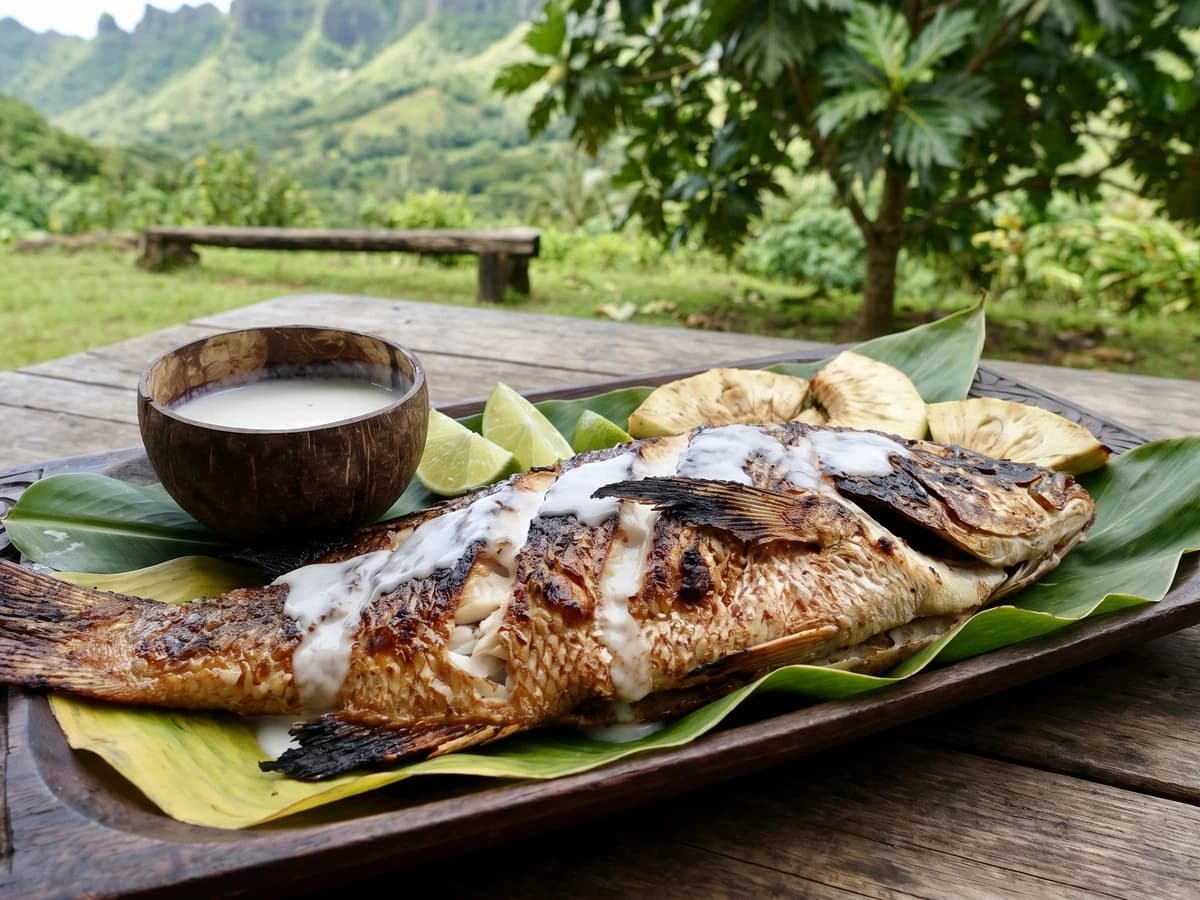
•Serve lū with boiled talo, roasted ʻulu or breadfruit, green banana, or rice. The starch catches the coconut cream, and no good sauce gets left behind.
Advance Preparation
•Trim the taro leaves up to 1 day ahead, wrap them in a damp towel, and refrigerate.
•Squeeze fresh coconut cream the morning of the meal; it separates and can sour if it sits too long.
•Assemble the parcels up to 4 hours ahead and keep them chilled, then bake them close to the meal so the leaf opens glossy and soft.
Frequently Asked Questions
Nutrition Information
1 serving (about 260g)
Calories
380 calories
Total Fat
27 g
Saturated Fat
23 g
Trans Fat
0 g
Unsaturated Fat
3 g
Cholesterol
50 mg
Sodium
670 mg
Total Carbohydrates
12 g
Dietary Fiber
5 g
Sugars
4 g
Protein
25 g
Where cooking meets culture.
Culinary guides, cultural storytelling, and the editorial depth that makes cooking meaningful.