Chef Makoa
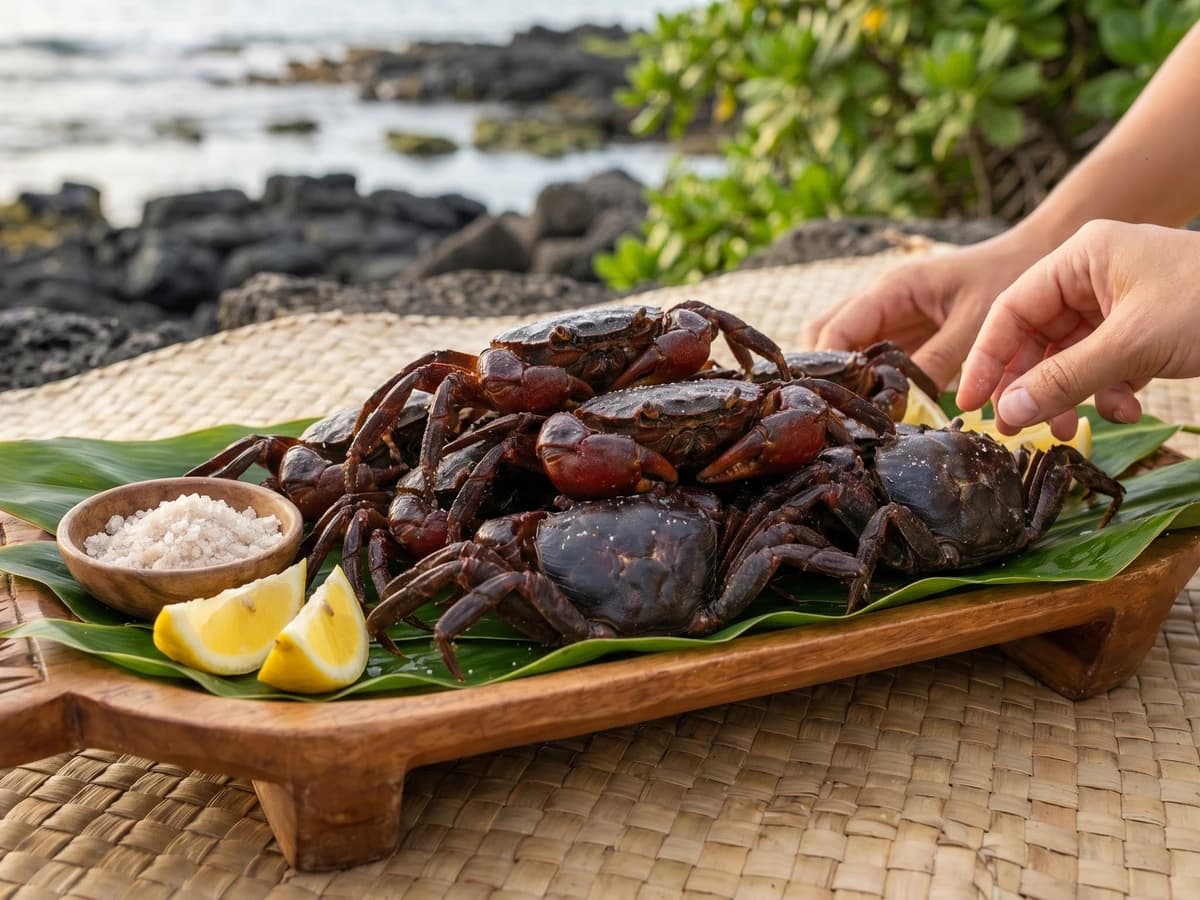
ʻAʻama (Hawaiian Black Rock Crab with Paʻakai)
Hawaiʻi's reef-gathered ʻaʻama, the small black rock crab from the shoreline stones, boiled quick in salty water and picked whole at the lūʻau table beside ʻopihi.
A cooking platform built around craft, culture, and the stories behind what we eat.
Created by
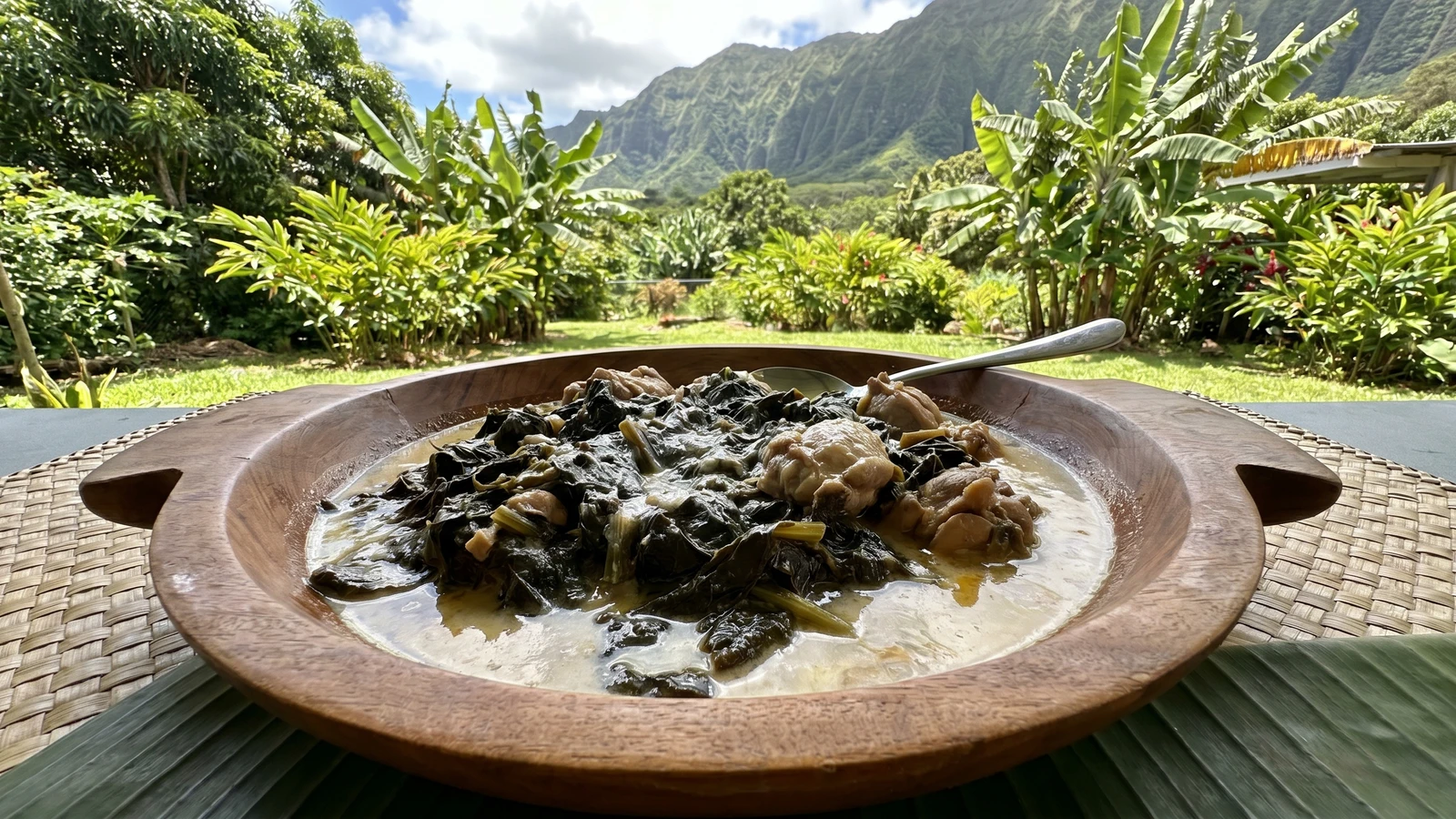
Hawaiian chicken lūʻau is kalo leaf cooked past its bite with tender chicken and coconut milk, a windward Oʻahu comfort pot with cousins in Sāmoa's palusami, Tonga's lū, and Cook Islands rukau.
Papa Kainoa used to say Hāloa, our elder brother, fed us twice: from the corm in the bowl and from the leaf in the pot. This dish belongs to Hawaiʻi. Chicken lūʻau, lūʻau meaning the young taro leaf before the word got borrowed for the whole feast, is the kind of food that sits between deep food and everyday comfort: kalo, the taro plant, cooked with chicken, coconut milk, salt, and patience until the pot goes dark and glossy.
Back home on windward Oʻahu, I knew it as a family pot more than a showpiece. Somebody's auntie would have it on the stove, rice waiting, poi close by if we had it, and nobody made a speech. The leaf did the teaching. Raw lūʻau leaf bites the throat with needle-like oxalate, so the long simmer isn't fussing. You cook it past tough, past bright green, until it gives itself over and turns silky. No blame the taro. If it still bites, you didn't give it time.
The cousins know this same move by their own hands. Sāmoa wraps the leaf as palusami, Tonga folds lū sipi or lū pulu, the Cook Islands cook rukau, Tahiti has fāfā, and Hawaiʻi also tucks leaf around pork or fish as laulau. Same elder brother, different bowl. One ocean, one canoe, one root.
So make this in the pot you have. Fresh lūʻau leaf if you can get it, frozen if that's what your market carries, canned coconut milk on a weeknight with no shame. Eat what you have. Just cook the leaf all the way down, keep the pot generous, and remember this is kin and kuleana, responsibility, not just something to hold us over to the next meal.
In Hawaiʻi, lūʻau first named the edible young leaf of kalo, taro, and the dishes cooked from it; by the 19th century the word also became the common name for a Hawaiian feast. The leaf-and-coconut-cream family has clear cousins across the Triangle: Sāmoan palusami, Tongan lū, Cook Islands rukau, Tahitian fāfā, and Hawaiian laulau, each held by its own island hand. Kalo is a canoe crop tied in Hawaiian genealogy to Hāloa, and this old leaf food now sits beside later mission and plantation foods, chicken, rice, tins, and plate lunch, as part of how Hawaiʻi actually eats.
Quantity
2 pounds
thick stems and ribs removed, washed well, or frozen lūʻau leaves thawed
Quantity
2 1/2 pounds
skin removed
Quantity
1 1/2 teaspoons
or coarse sea salt, plus more to taste
Quantity
1 tablespoon
Quantity
1 medium
thinly sliced
Quantity
3
minced
Quantity
1 tablespoon
finely grated or thinly sliced
Quantity
2 cups
plus more as needed
Quantity
1 can (13.5 ounces)
Quantity
1 cup
fresh-pressed or canned
Quantity
for serving
| Ingredient | Quantity |
|---|---|
| young taro leaves (lūʻau leaf)thick stems and ribs removed, washed well, or frozen lūʻau leaves thawed | 2 pounds |
| bone-in chicken thighs and drumsticksskin removed | 2 1/2 pounds |
| paʻakai ʻalaea (Hawaiian red sea salt)or coarse sea salt, plus more to taste | 1 1/2 teaspoons |
| neutral oil | 1 tablespoon |
| yellow onionthinly sliced | 1 medium |
| garlic clovesminced | 3 |
| fresh gingerfinely grated or thinly sliced | 1 tablespoon |
| chicken stock or waterplus more as needed | 2 cups |
| full-fat coconut milk | 1 can (13.5 ounces) |
| thick coconut creamfresh-pressed or canned | 1 cup |
| cooked white rice, poi, or paʻiʻai (optional) | for serving |
Wash the lūʻau leaf, the young taro leaf, in several changes of water, then strip away the thick stems and heavy ribs. Stack the leaves and chop them rough. If your hands are sensitive, wear gloves. The raw leaf can irritate skin, and it must be cooked fully before anybody eats it.
Pat the chicken dry and season it all over with the paʻakai ʻalaea, the Hawaiian red sea salt, or coarse sea salt. Let it sit while you ready the pot. The salt starts early, the way it should, getting into the meat before the coconut comes around it.
Heat the oil in a heavy pot over medium-high heat. Brown the chicken in batches until the outside takes color, 3 to 4 minutes per side. It won't be cooked through yet. Pull it out to a plate and keep the brown bits in the pot, because that's where the weeknight flavor is hiding.
Lower the heat to medium. Add the onion, garlic, and ginger to the pot and cook until the onion softens and smells sweet, about 5 minutes. Scrape the bottom as the onion lets go of its moisture. No need make this fancy. Just wake the pot up.
Add the chopped lūʻau leaf by handfuls, stirring as it wilts, then pour in the chicken stock or water. Cover the pot and simmer gently for 45 minutes, stirring once or twice, until the leaf collapses from bright green to dark green and starts to feel soft under the spoon.
Nestle the browned chicken back into the pot, along with any juices from the plate. Cover and simmer 35 to 45 minutes more, until the chicken is tender, cooked through to 165F, and the lūʻau leaf is nearly silky. If the pot gets dry, add a splash of water. Don't run the fire hard. Let the leaf and meat come around together.
Stir in the coconut milk and coconut cream, then simmer uncovered on low for 15 to 20 minutes, until the sauce turns white-gold and glossy and the leaves go deep green-black and soft. Taste for salt. If the leaf gives even a little prickly feeling in the throat, add a splash of water and cook it 20 minutes more. No blame the taro. Give it time.
Turn off the heat and let the pot rest 10 minutes so the coconut settles back into the leaf. Serve with rice, poi, or paʻiʻai, the hand-pounded taro starch, and spoon the coconut-rich lūʻau over the chicken. Put the pot where everyone can reach. There should be enough for one more.
1 serving (about 510g)
Culinary guides, cultural storytelling, and the editorial depth that makes cooking meaningful.
Discover Culinary ExplorerChef Makoa
Hawaiʻi's reef-gathered ʻaʻama, the small black rock crab from the shoreline stones, boiled quick in salty water and picked whole at the lūʻau table beside ʻopihi.

Chef Makoa
Hawaiʻi Local chicken hekka, the plantation-camp cousin of Japanese sukiyaki, with tender chicken, long rice, shiitake, bamboo shoots, and sweet shoyu gravy for rice.
Chef Makoa
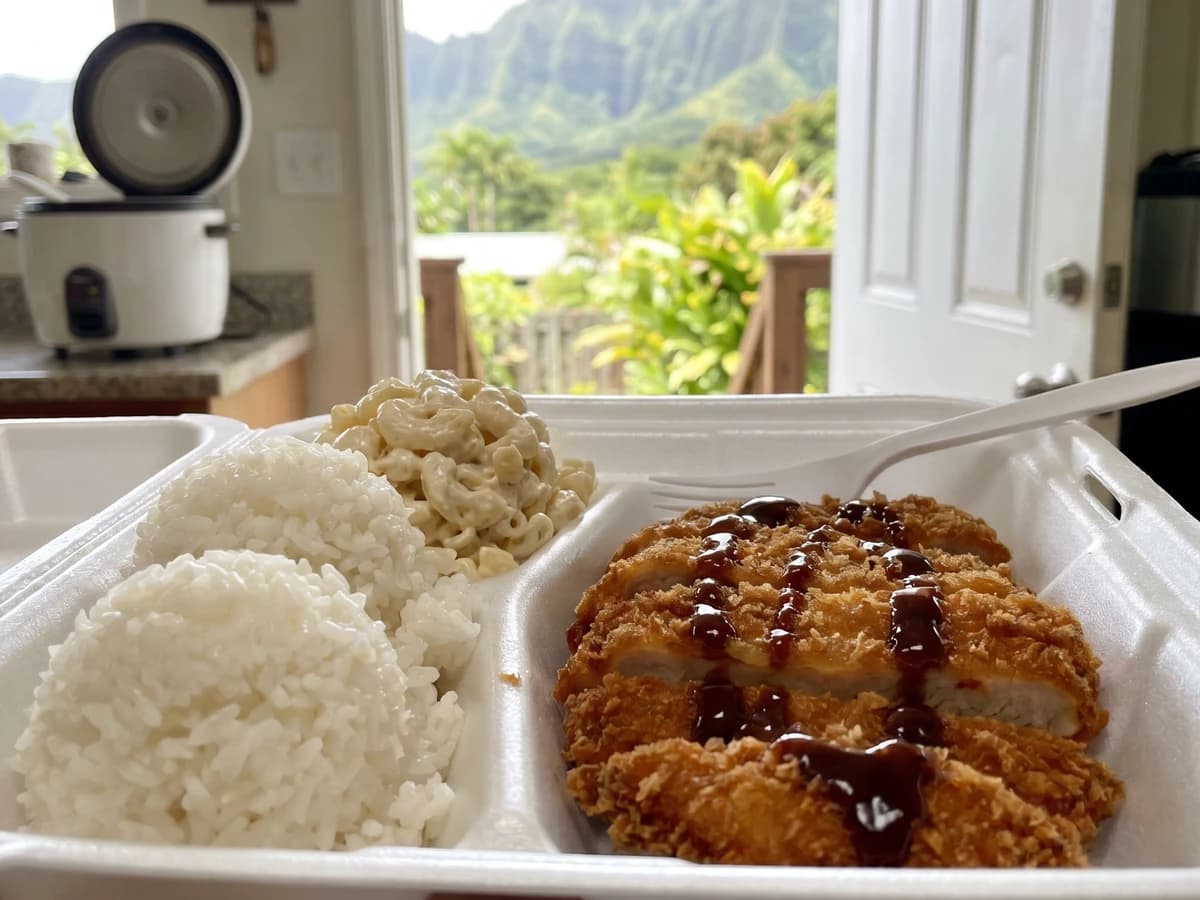
Hawaiʻi's Local plate-lunch comfort: juicy chicken thigh in panko, fried crisp, sliced over white rice with mac salad and katsu sauce, the sugar-camp stove brought home.

Chef Makoa
A Hawaiʻi Local plate-lunch staple: tender seasoned beef patties smothered in onion brown gravy over two scoops rice, with mac salad alongside. The loco moco's plainspoken cousin, no egg needed.