Chef Makoa
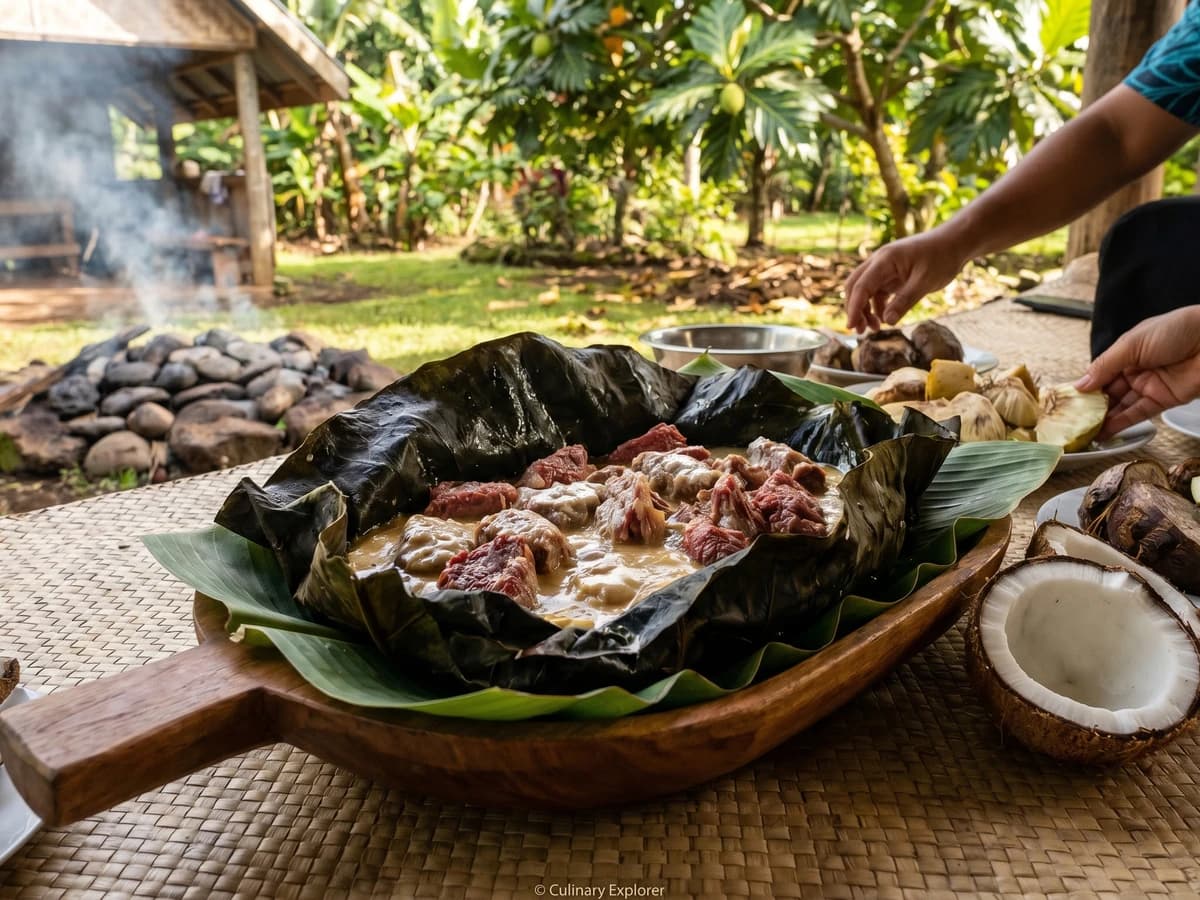
Luau Pisupo (Sāmoan Corned-Beef Taro-Leaf Parcel)
Sāmoa's taro-leaf parcel made generous with pisupo, coconut cream, and time: a toʻonaʻi kind of comfort, with Tonga's lū pulu and Hawaiʻi's laulau sitting close as cousins.

Updated June 9, 2026
The one shared gesture of Polynesia, taro leaves and coconut cream cooked slow into silk, shown across the islands by its own names: Sāmoan luau pisupo, Tongan lū, Hawaiian lūʻau, Cook Islands rukau, Tahitian fāfā, Niuean lū. Same gesture, different island, different filling.
A cooking platform built around craft, culture, and the stories behind what we eat.
Chef Makoa
Sāmoa's taro-leaf parcel made generous with pisupo, coconut cream, and time: a toʻonaʻi kind of comfort, with Tonga's lū pulu and Hawaiʻi's laulau sitting close as cousins.
Chef Makoa
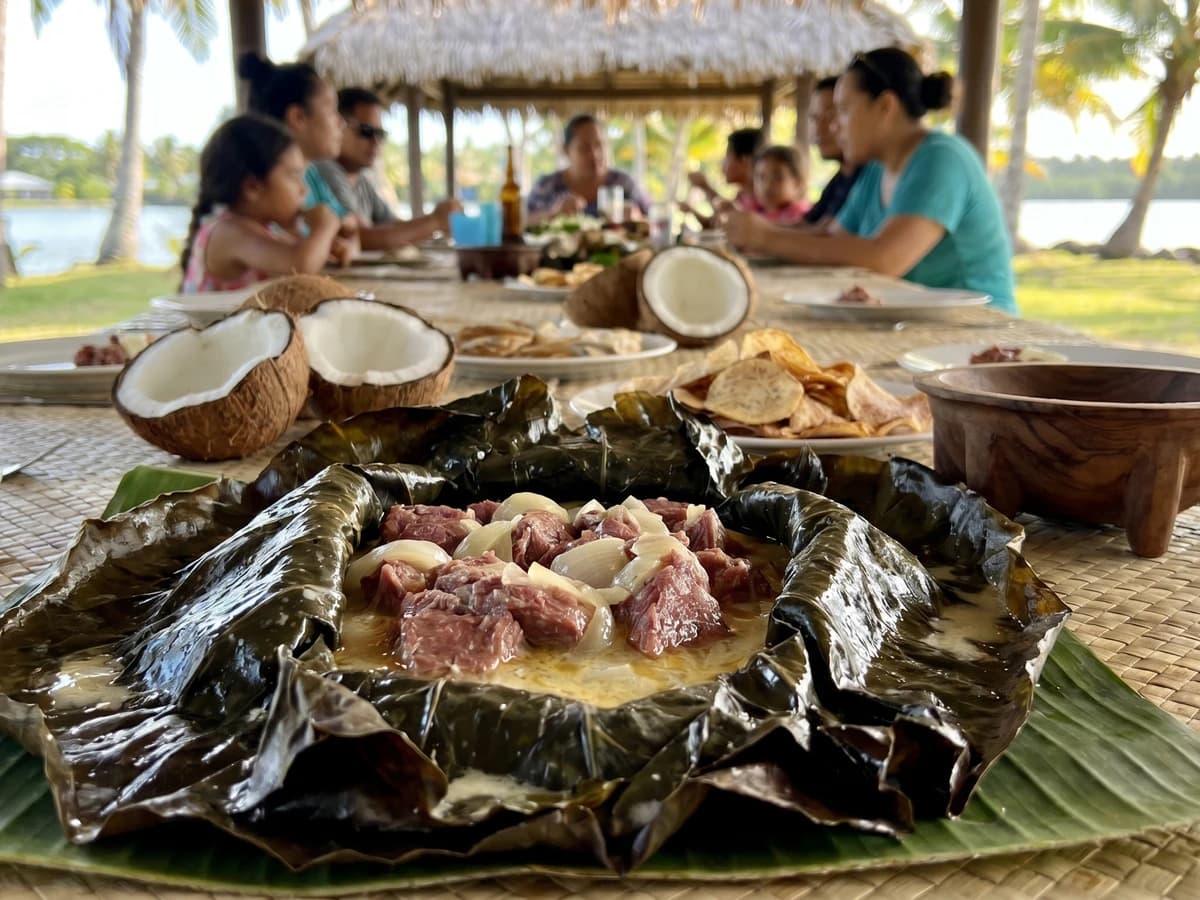
Tonga's lū pulu folds taro leaves around corned beef, onion, and lolo niu coconut cream, then bakes it slow until leaf and meat turn soft, dark, and rich.
Chef Makoa
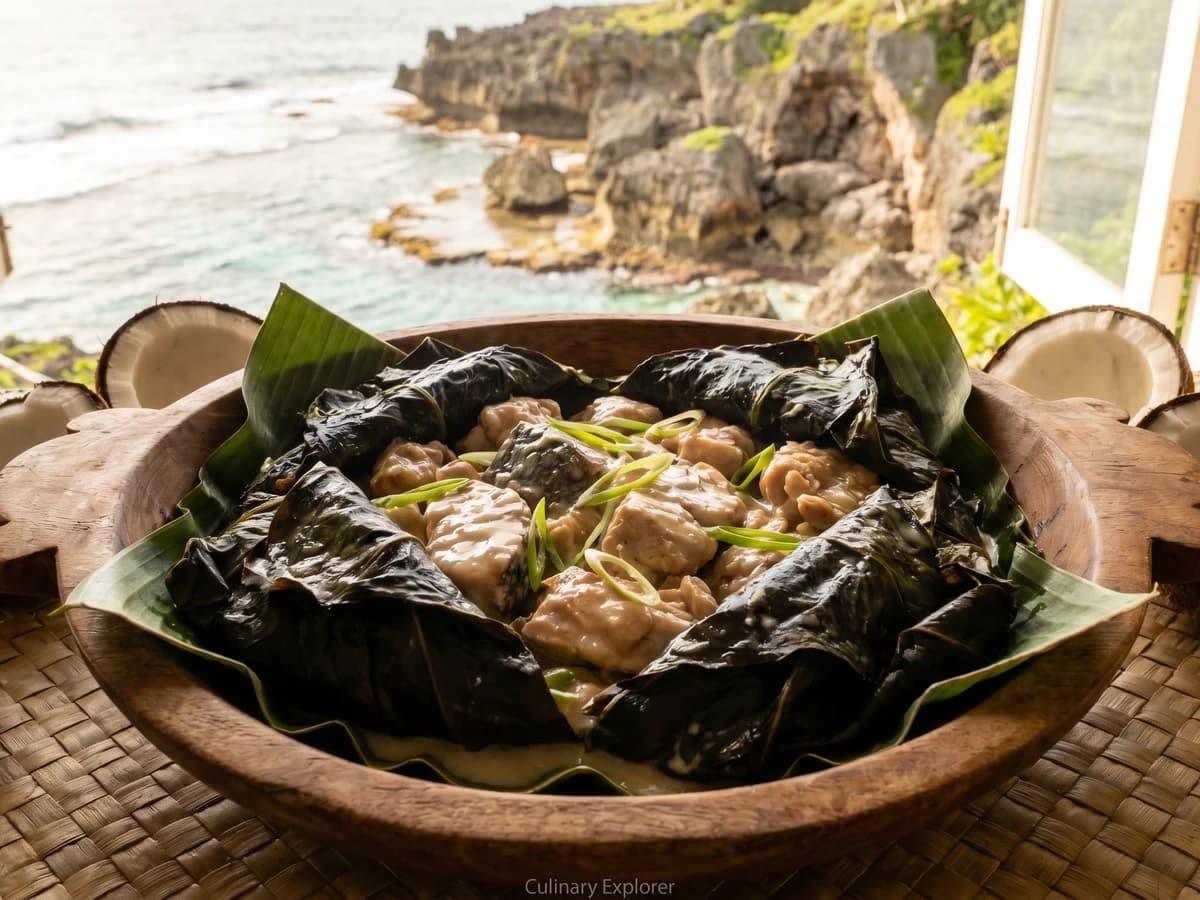
Niue's lū folds young taro leaves around fish or chicken, coconut cream, and onion, then bakes the parcel slow until the leaf turns dark, silky, and rich.
Chef Makoa
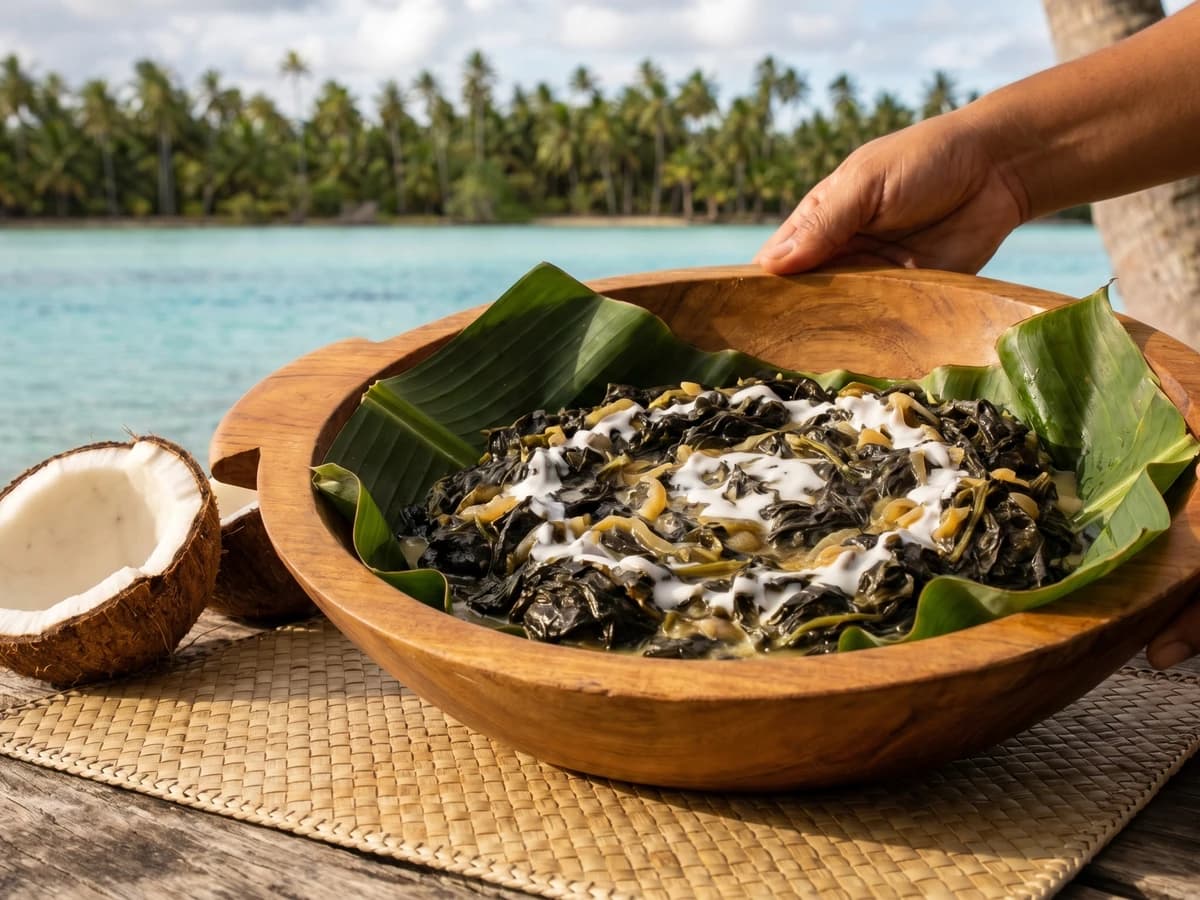
Tahiti's fāfā cooks young taro leaves down with onion and coconut cream until they turn dark, silky, and rich enough to feed the whole table.
Chef Makoa
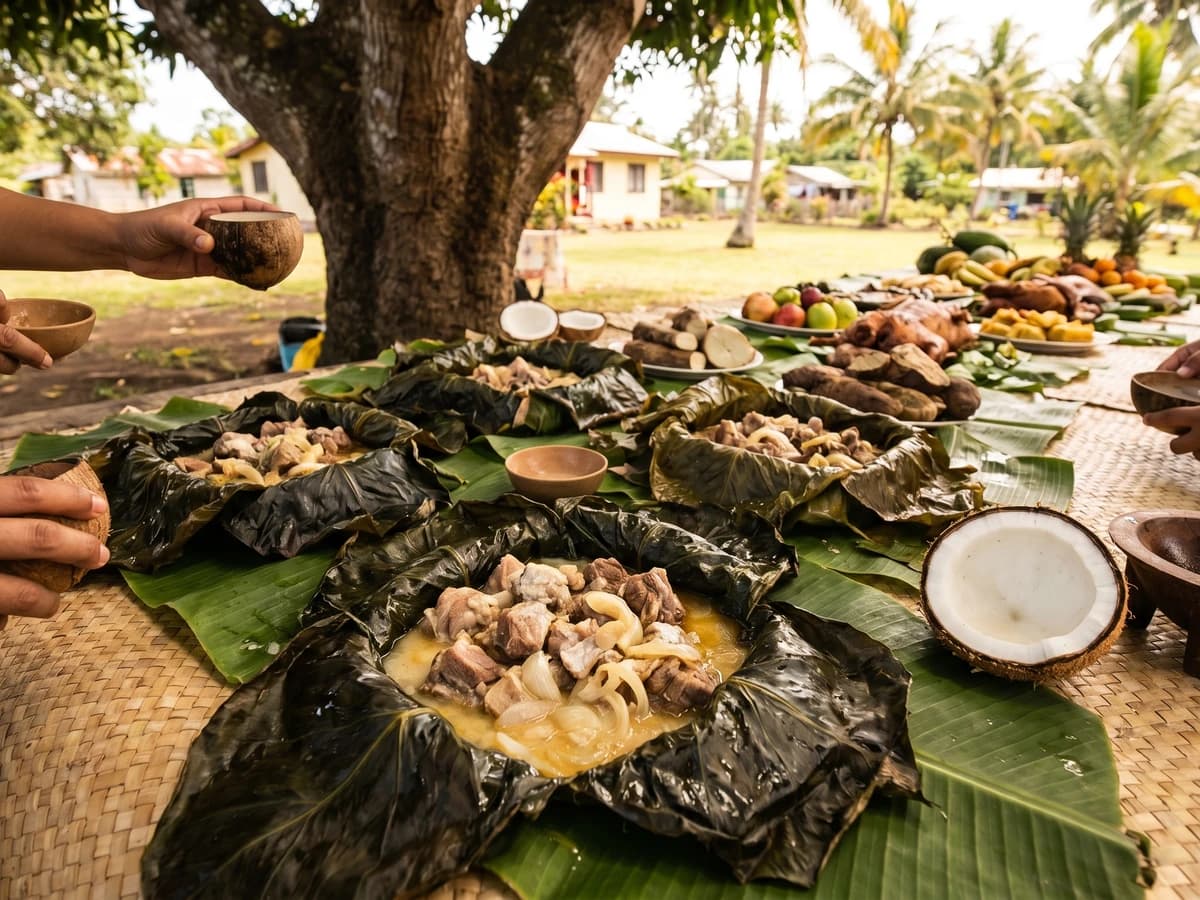
Tonga's lū sipi wraps young taro leaves around fatty mutton, onion, and coconut cream, then cooks it slow until the leaf goes dark and the meat gives up soft.
Chef Makoa
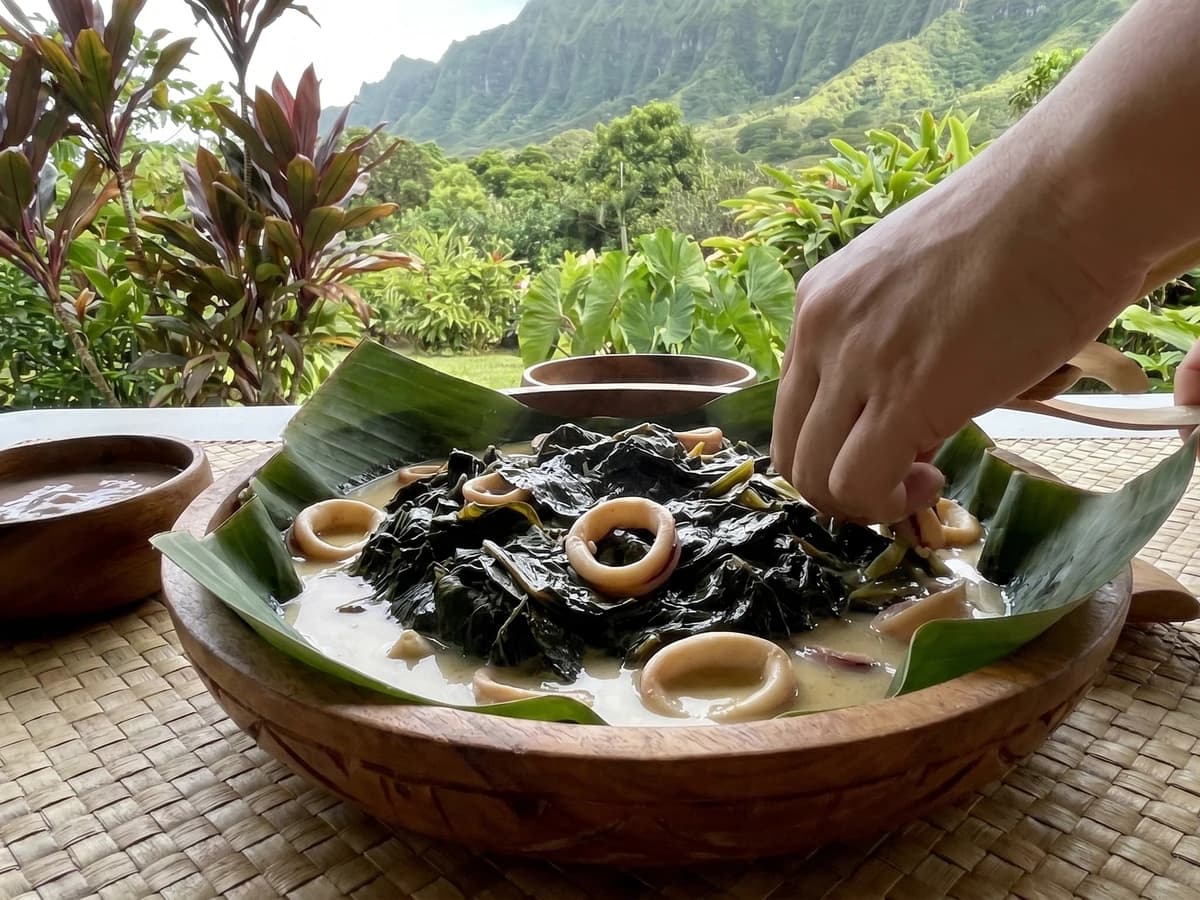
Hawaiʻi's squid lūʻau is taro leaf cooked long and dark with squid or heʻe, coconut milk, and patience, until the leaf turns silky and the sea settles into the cream.
Chef Makoa
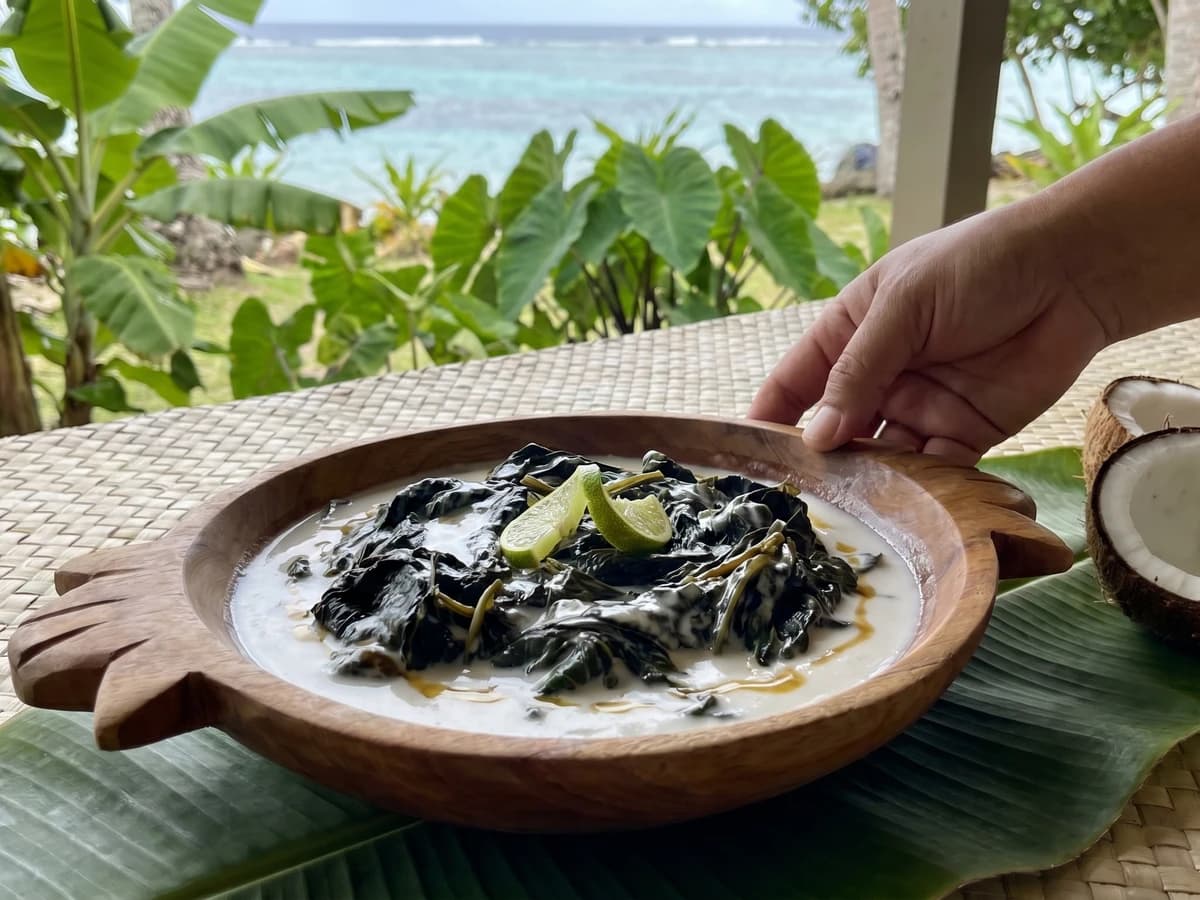
Cook Islands rukau takes taro leaf, onion, and coconut cream and cooks them down slow until the leaf turns dark and silky. Same elder root, Cook Islands hand.
Chef Makoa
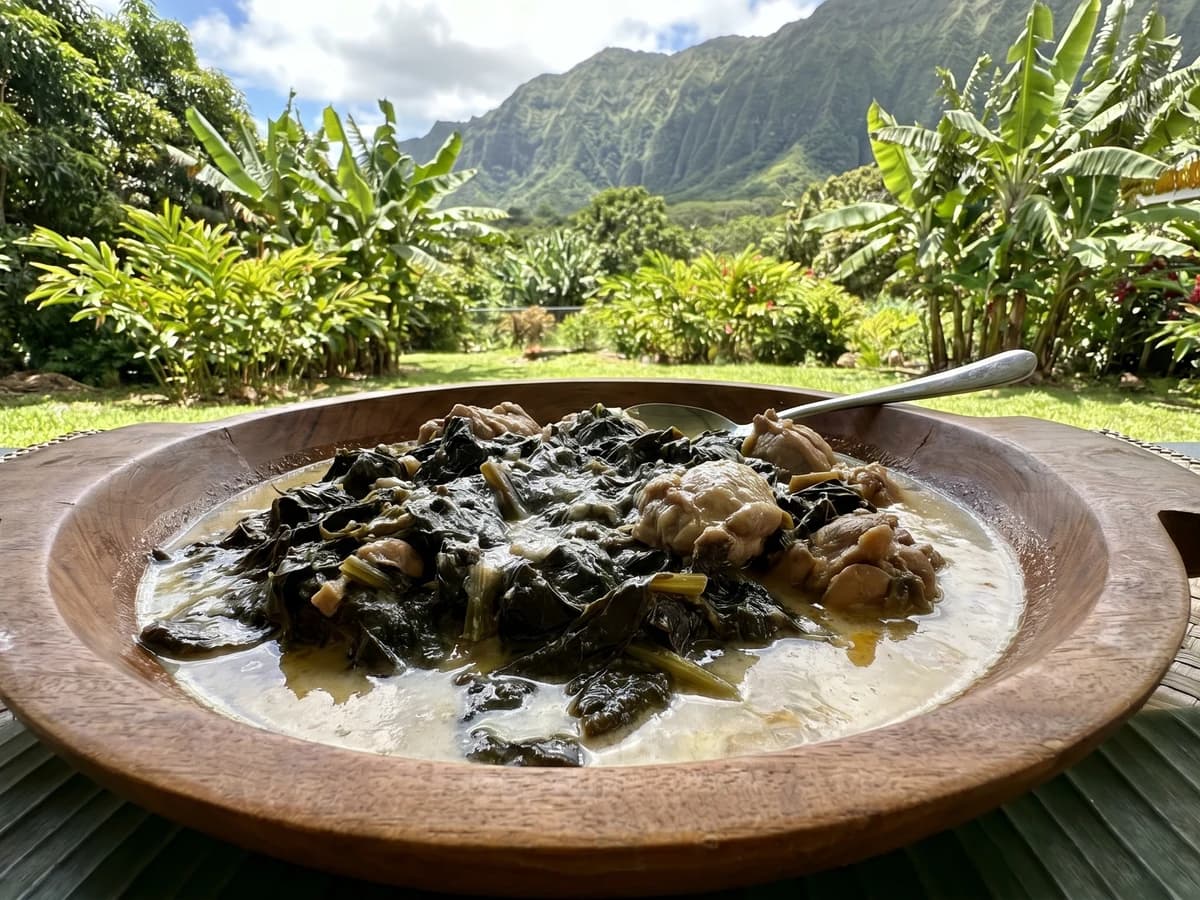
Hawaiian chicken lūʻau is kalo leaf cooked past its bite with tender chicken and coconut milk, a windward Oʻahu comfort pot with cousins in Sāmoa's palusami, Tonga's lū, and Cook Islands rukau.
Culinary guides, cultural storytelling, and the editorial depth that makes cooking meaningful.
Discover Culinary ExplorerChef Makoa is a fictional culinary guide to Pan-Polynesian Heritage Cuisine, written with the assistance of AI.