Chef Makoa
ʻAʻama (Hawaiian Black Rock Crab with Paʻakai)
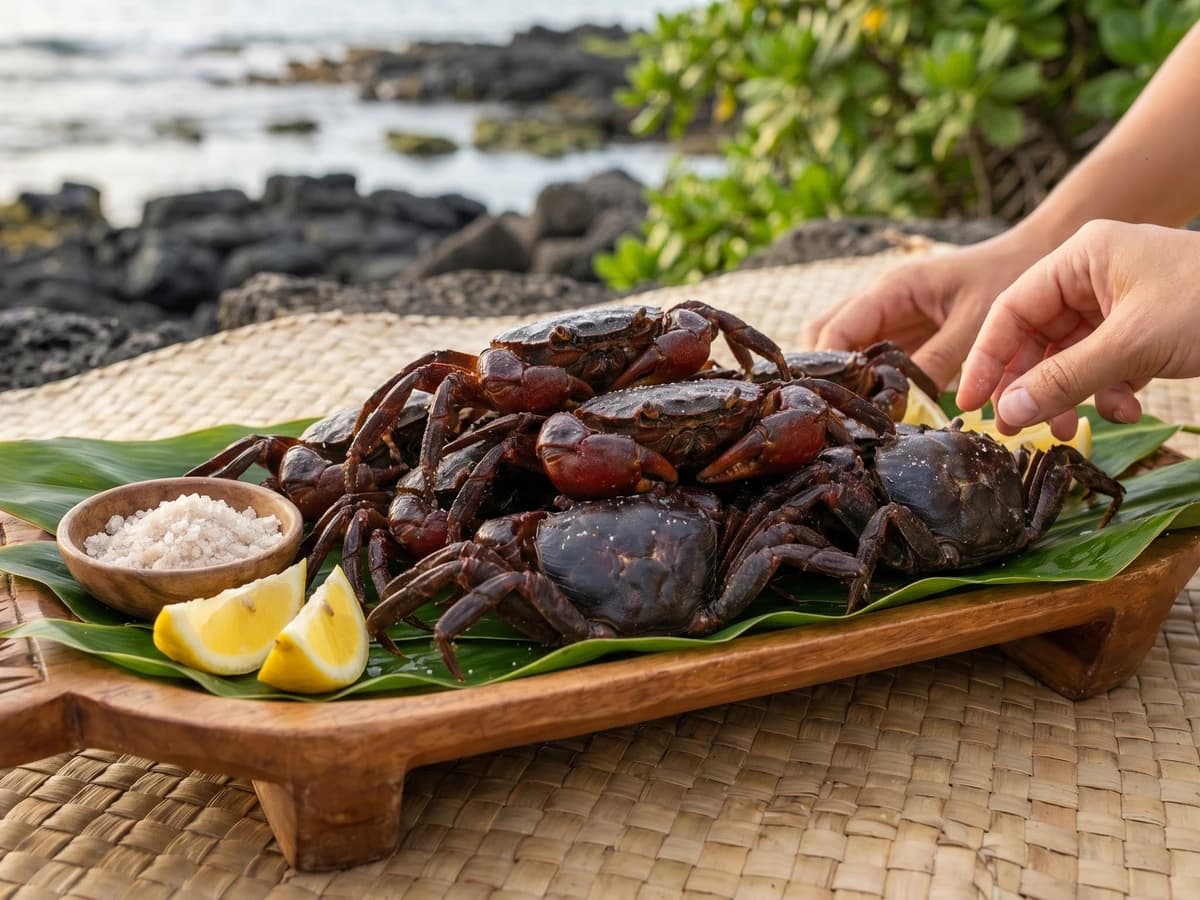
Hawaiʻi's reef-gathered ʻaʻama, the small black rock crab from the shoreline stones, boiled quick in salty water and picked whole at the lūʻau table beside ʻopihi.
A cooking platform built around craft, culture, and the stories behind what we eat.
Created by
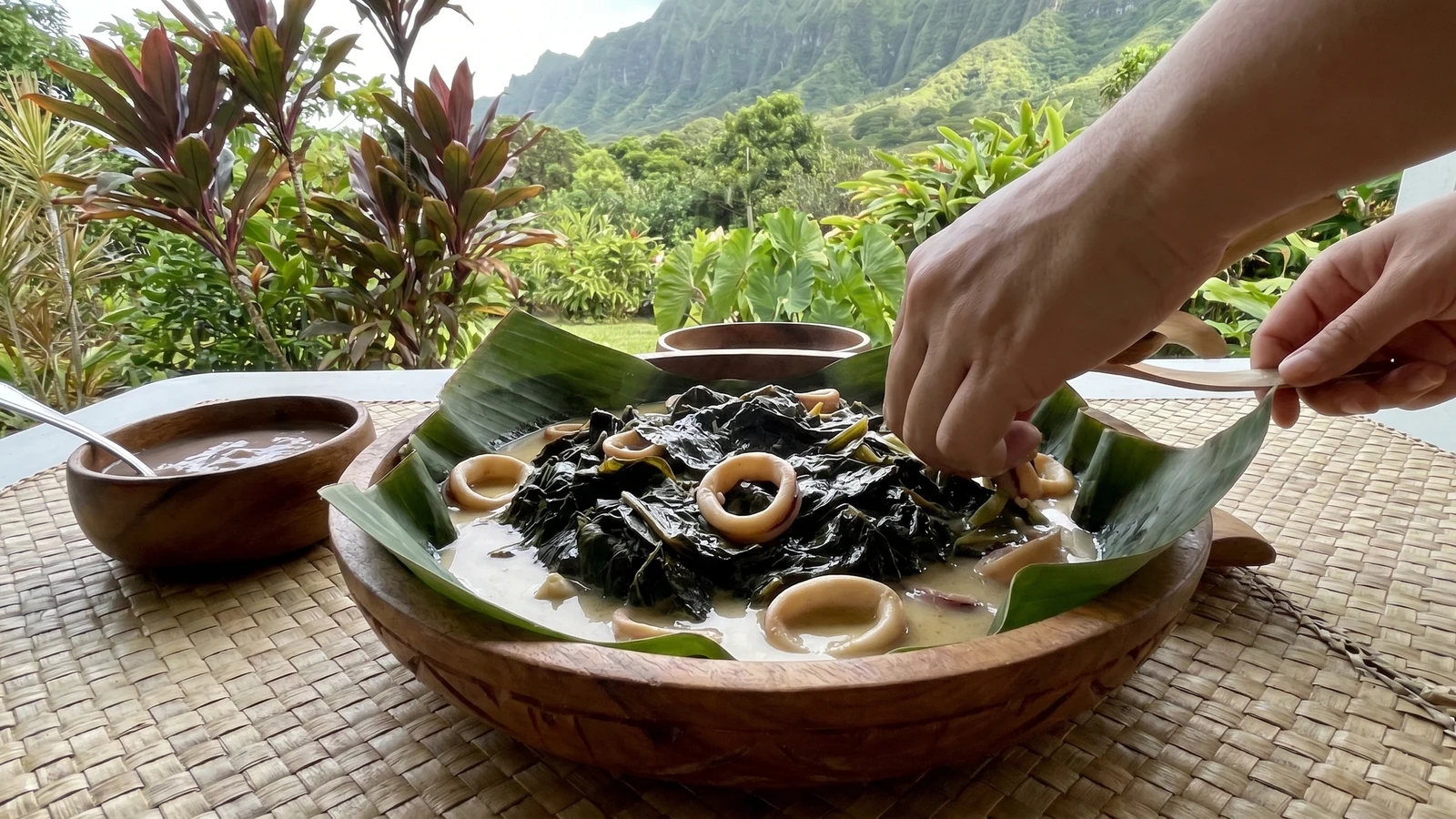
Hawaiʻi's squid lūʻau is taro leaf cooked long and dark with squid or heʻe, coconut milk, and patience, until the leaf turns silky and the sea settles into the cream.
My kumu used to say, no blame the taro. It's not the taro's fault. If the lūʻau leaf bites your throat, you rushed it. If it stays tough, you didn't give it time. That lesson belongs right here, in this Hawaiian dish, where the leaf of Hāloa, our elder brother, meets the squid or heʻe from the ocean and both have to soften before they can feed the table.
Back home in Hawaiʻi, lūʻau means the young taro leaf, not only the feast people use the word for now. Squid lūʻau sits on the lūʻau table beside poi, kālua puaʻa, chicken long rice, poke, and all the everyday cousins that came later. Deep food and mission food, old food and new food, all talking story on one plate. That's how Hawaiʻi actually eats.
Across the Triangle, this leaf-and-coconut-cream gesture has cousins: Sāmoan palusami, Tongan lū, Cook Islands rukau, Tahitian fāfā, and Hawaiian laulau. Same elder brother, different hands. This version is Hawaiʻi's, simmered loose in the pot instead of folded tight in a parcel, dark green-black and glossy, a little sweet, a little salty, with the sea tucked into the coconut.
So cook it long. Don't make the leaf prove anything. Let it lose every needle of oxalate and go to silk, then fold in the coconut milk and the tender squid. Eat what you have, fresh leaf or frozen, squid or heʻe, weeknight pot or celebration table. The kuleana is the same: feed the people and respect the plant that fed us first.
In Hawaiʻi, lūʻau originally names the edible young taro leaf, and the word later came to mean the feast itself because those leaves sat at the center of the table. Squid lūʻau grew from older Hawaiian taro-leaf cookery into the lūʻau spread known today, often made with squid or heʻe, coconut milk, salt, and a little sugar, served beside poi and other foods shaped by mission, plantation, and local home cooking. Its wider family stretches across Polynesia in leaf-and-coconut dishes like Sāmoan palusami, Tongan lū, Cook Islands rukau, and Tahitian fāfā, one ocean, one canoe, one root.
Quantity
2 pounds
thick stems and ribs removed, or frozen lūʻau leaf thawed
Quantity
1 pound
cut into rings and tentacle pieces, or cooked heʻe cut bite-size
Quantity
1 1/2 cups
plus more as needed
Quantity
1 can (13.5 ounces)
or 1 3/4 cups fresh coconut milk
Quantity
1/2 cup
Quantity
1 small
finely chopped
Quantity
2 tablespoons
Quantity
1 tablespoon
or to taste
Quantity
1 1/2 teaspoons
plus more to taste
Quantity
1/4 teaspoon
optional, to help the leaves soften
Quantity
for serving
| Ingredient | Quantity |
|---|---|
| young taro leaves (lūʻau leaf)thick stems and ribs removed, or frozen lūʻau leaf thawed | 2 pounds |
| cleaned squidcut into rings and tentacle pieces, or cooked heʻe cut bite-size | 1 pound |
| waterplus more as needed | 1 1/2 cups |
| full-fat coconut milkor 1 3/4 cups fresh coconut milk | 1 can (13.5 ounces) |
| thick coconut cream | 1/2 cup |
| sweet onionfinely chopped | 1 small |
| unsalted butter (optional) | 2 tablespoons |
| sugaror to taste | 1 tablespoon |
| sea saltplus more to taste | 1 1/2 teaspoons |
| baking soda (optional)optional, to help the leaves soften | 1/4 teaspoon |
| cooked rice or poi | for serving |
Rinse the lūʻau leaf well and strip away the thick stems and ribs, because those parts stay tough longer than the tender blade. If you're using frozen leaf, thaw it and squeeze out only the extra packing water, not every bit of life. The leaf still needs moisture for the long cook.
Put the leaves, onion, water, salt, and baking soda if using into a heavy pot. Cover and set over medium-low heat until the leaves collapse, then lower the heat and cook gently for 60 to 75 minutes, stirring now and then. At first the pot looks too full. Then Hāloa gives, the leaf darkens, and the whole thing settles down.
Keep cooking until the leaf is deep green-black, tender all the way through, and no longer sharp on the tongue. Add a splash of water if the bottom gets dry. You are not keeping a vegetable bright. You are taking a tough leaf past toughness, all the way to silk.
Fold in the squid and cook gently for 10 to 15 minutes, just until the rings turn opaque and tender. If you're using cooked heʻe, add it now and warm it through for about 10 minutes. Don't boil hard. Squid can go rubbery if you bully it, and no need make the ocean fight you.
Stir in the coconut milk, coconut cream, butter if using, and sugar. Simmer uncovered for 20 to 30 minutes, stirring often, until the cream thickens around the leaf and the surface turns glossy. Taste for salt and sweetness. It should be rich, earthy, a little briny, and soft enough to spoon.
Turn off the heat and let the pot rest 10 minutes so the coconut settles into the leaf. Serve warm with poi or rice, family-style, with the glossy coconut cream pooling dark and white-gold in the bowl. This is lūʻau-table food, but it eats just right on a weeknight too.
1 serving (about 340g)
Culinary guides, cultural storytelling, and the editorial depth that makes cooking meaningful.
Discover Culinary ExplorerChef Makoa
Hawaiʻi's reef-gathered ʻaʻama, the small black rock crab from the shoreline stones, boiled quick in salty water and picked whole at the lūʻau table beside ʻopihi.

Chef Makoa
Hawaiʻi Local chicken hekka, the plantation-camp cousin of Japanese sukiyaki, with tender chicken, long rice, shiitake, bamboo shoots, and sweet shoyu gravy for rice.
Chef Makoa
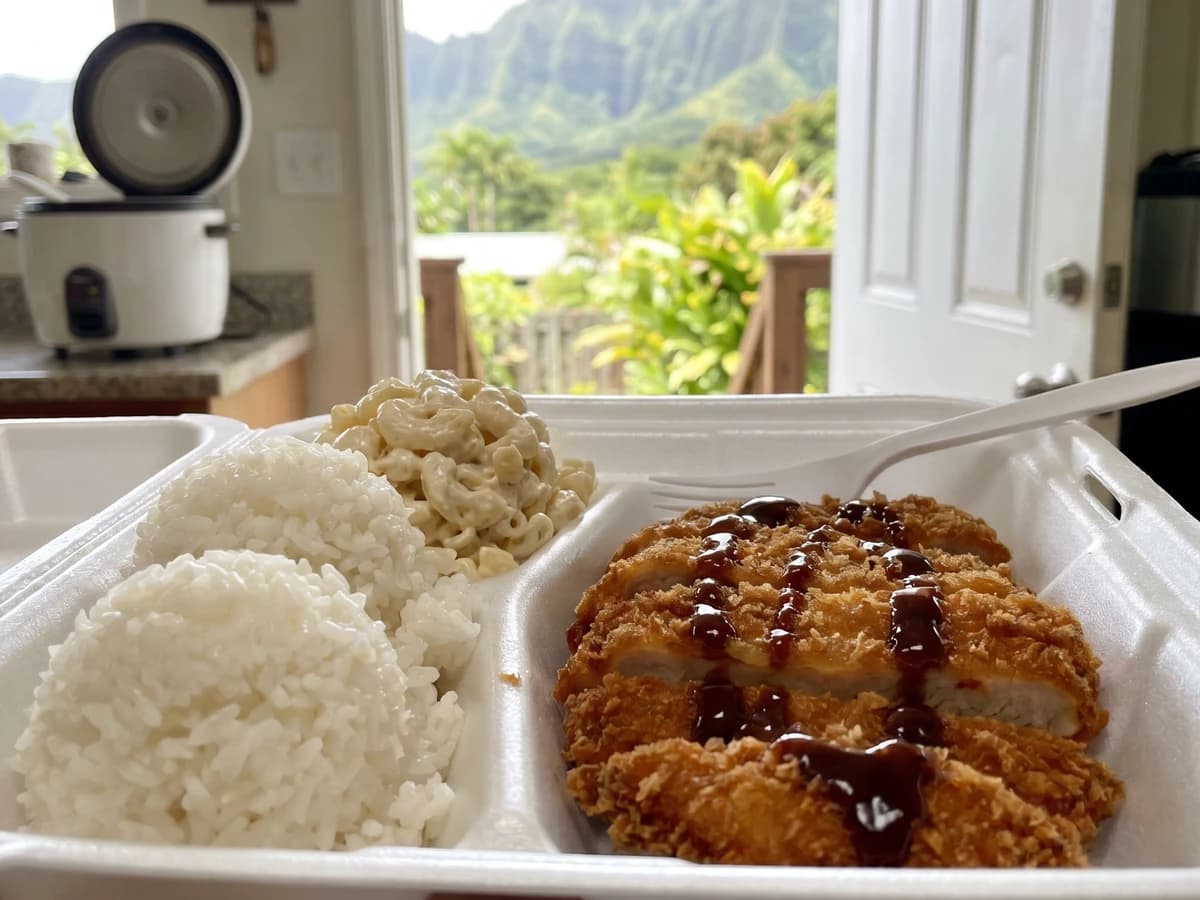
Hawaiʻi's Local plate-lunch comfort: juicy chicken thigh in panko, fried crisp, sliced over white rice with mac salad and katsu sauce, the sugar-camp stove brought home.
Chef Makoa
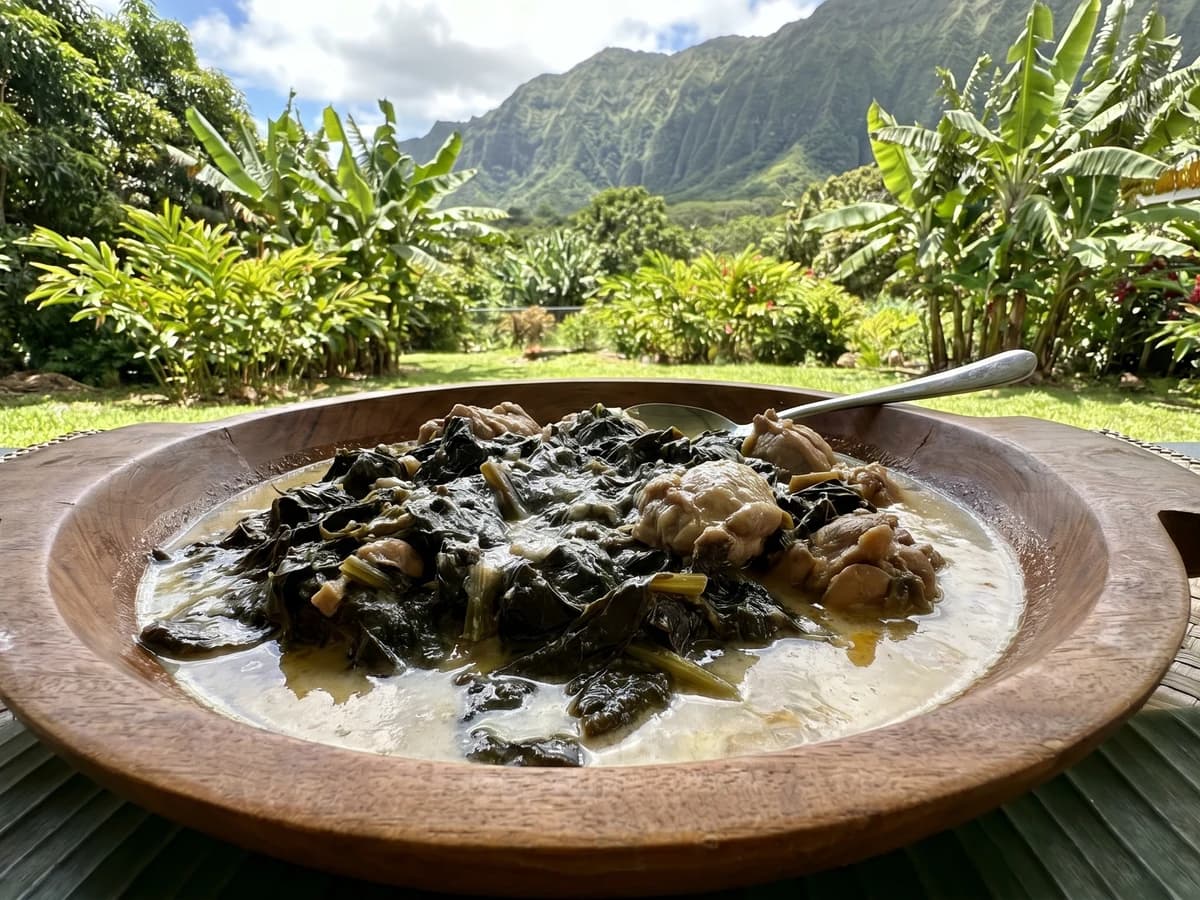
Hawaiian chicken lūʻau is kalo leaf cooked past its bite with tender chicken and coconut milk, a windward Oʻahu comfort pot with cousins in Sāmoa's palusami, Tonga's lū, and Cook Islands rukau.