Chef Juliette
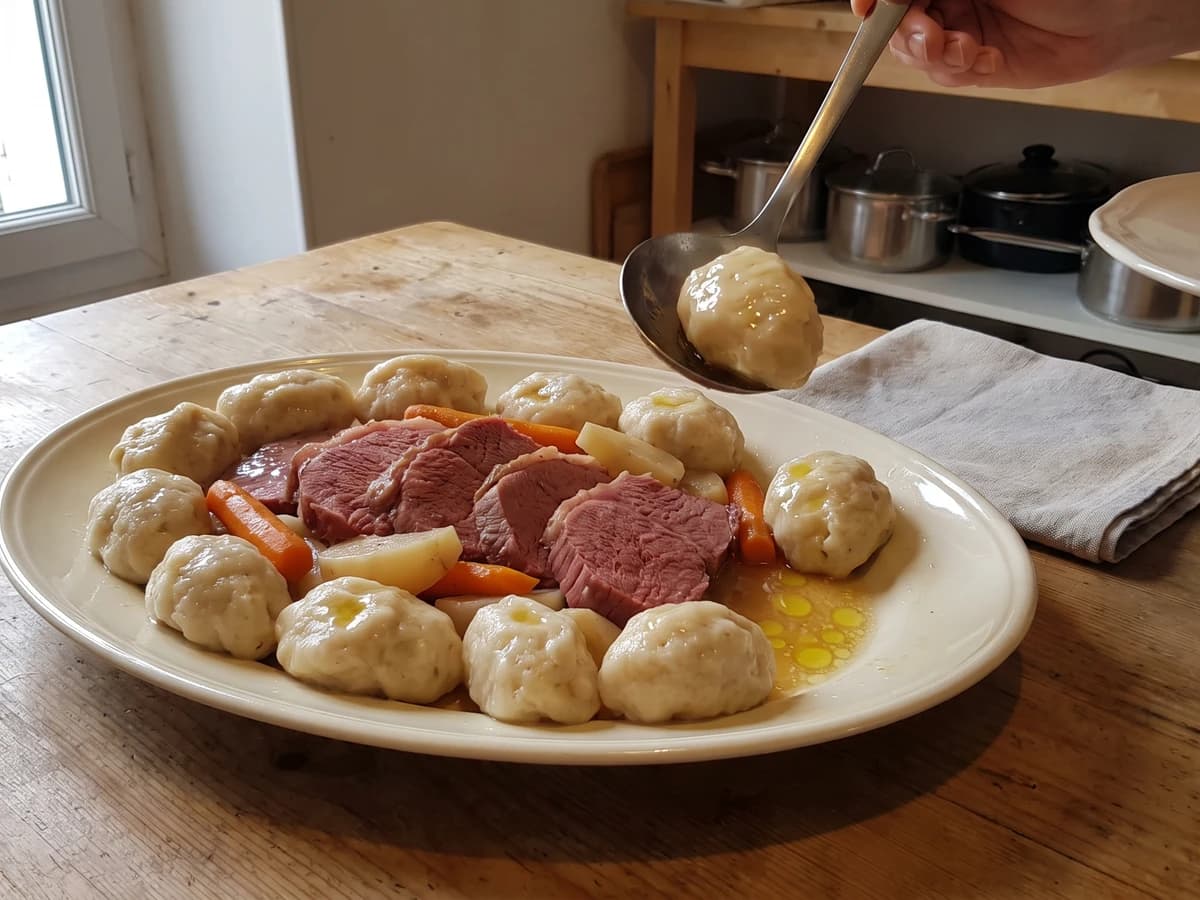
Suet Dumpling
Boulettes au suif, poached beside salt beef, turn equal weights of flour and finely chopped suet into tender, rich dumplings. Keep the beef liquor at a bare tremble and the old garnish works beautifully at home.
A cooking platform built around craft, culture, and the stories behind what we eat.

Created by
Cook Islands rukau takes taro leaf, onion, and coconut cream and cooks them down slow until the leaf turns dark and silky. Same elder root, Cook Islands hand.
The Cook Islands keep the taro close, same as we do back home, but the hand is their own. Rukau is Cook Islands food, taro leaves cooked down with coconut cream until the green goes dark and silky, the kind of side that sits beside fish, ʻuru, rice, or whatever the table has that day. One ocean, one canoe, one root, but no plain Polynesian plate here. This one belongs to the Cooks.
I learned to listen for the old rule in dishes like this: don't rush the leaf. Raw taro leaf has that needle in the throat, the oxalate sting, and only a full cook takes it away. No blame the taro. If it bites, you hurried it. Cook it low, keep it covered, let the coconut cream move through the leaves until they stop acting tough.
You can see its cousins across the Triangle: Sāmoan palusami, Tongan lū, Hawaiian laulau and lūʻau leaf, Tahitian fāfā. Some are parcels, some are pots, some go into the umu or umukai, the Cook Islands earth oven. Same gesture, different island hand. For the deep parts of a Cook Islands umukai or family feast, I send you to Cook Islands elders and aunties who carry it. They should tell their own story.
For our kitchen today, a heavy pot does the work. Fresh coconut cream is best when you can squeeze it, but a thick can will feed the people on a weeknight. Eat what you have. Keep the kinship, cook it through, and put it down where everybody can reach.
Rukau comes from the Cook Islands table, where taro leaf and coconut cream meet as daily food and feast food, often beside fish, root crops, and dishes from the umukai, the Cook Islands earth oven. Taro was one of the canoe crops carried through central Polynesia, and the same leaf-and-coconut grammar appears as palusami in Sāmoa, lū in Tonga, fāfā in Tahiti, and laulau or lūʻau leaf in Hawaiʻi. The surprise for many cooks is that the long cook is not only for softness: taro leaf must be cooked fully to remove the oxalate sting that can bite the mouth and throat.
Rukau is a Cook Islands dish of taro leaves cooked down slowly with onion and coconut cream until dark, silky, and completely tender. The long, gentle cooking removes the leaves' natural oxalate sting. It is served as a rich green side beside fish, breadfruit, or rice at everyday and celebration tables alike.
Quantity
2 pounds
thick stems and ribs removed
Quantity
2 tablespoons
Quantity
1 medium
finely diced
Quantity
2 cloves
minced
Quantity
1 1/2 cups
fresh if possible, or canned
Quantity
1/2 cup
plus more if needed
Quantity
1 teaspoon
plus more to taste
Quantity
1 tablespoon
for serving
| Ingredient | Quantity |
|---|---|
| young taro leavesthick stems and ribs removed | 2 pounds |
| coconut oil or neutral oil | 2 tablespoons |
| onionfinely diced | 1 medium |
| garlic (optional)minced | 2 cloves |
| thick coconut creamfresh if possible, or canned | 1 1/2 cups |
| waterplus more if needed | 1/2 cup |
| sea saltplus more to taste | 1 teaspoon |
| fresh lime juice (optional)for serving | 1 tablespoon |
Wash the taro leaves well, then strip away the thick stems and heavy ribs. Stack the leaves and slice them into wide ribbons. Keep only tender leaf for this pot; the tough ribs fight you too long.
Warm the oil in a heavy pot over medium heat. Add the onion and cook until it turns soft and sweet-smelling, 5 to 7 minutes. Add the garlic if you're using it and stir for another minute, just until it wakes up.
Add the taro leaves by the handful, turning them through the onion as they collapse. They will look like too much at first, then the pot remembers itself. Sprinkle in the salt and add the water so the leaves can cook without scorching.
Cover the pot, lower the heat, and cook 25 to 30 minutes, stirring now and then, until the leaves are dark, soft, and no longer springy. This is the part you don't shorten. You're not warming a green. You're taking every needle out of the leaf.
Stir in the coconut cream and cook uncovered over low heat for 15 to 20 minutes more, until the cream thickens around the leaves and leaves a white-gold sheen in the folds. If the pot gets dry before the leaves are fully tender, add a small splash of water and keep going.
Taste a small spoonful. The leaf should be silky, dark, and gentle in the mouth, with no prickly bite. Add salt if it needs it, brighten with lime if you like, and serve warm in a shared bowl with fish, ʻuru, taro, rice, or whatever the table has.
1 serving (about 220g)
Culinary guides, cultural storytelling, and the editorial depth that makes cooking meaningful.
Discover Culinary ExplorerChef Juliette
Boulettes au suif, poached beside salt beef, turn equal weights of flour and finely chopped suet into tender, rich dumplings. Keep the beef liquor at a bare tremble and the old garnish works beautifully at home.

Chef Juliette
Bread, flour, frangipane, and rice become four cool, supple panades for binding forcemeats, each changing body and flavor while preserving tenderness. The finest Mousselines need none, and knowing that distinction is the lesson.

Chef Juliette
Panade au pain is bread, milk, salt, heat, and attention: stir until the paste releases cleanly, butter it against a skin, and you have the quiet binder behind tender French farces.

Chef Juliette
Panade de farine teaches the drying stroke behind pâte à choux: flour meets boiling buttered water, then stays over the fire until the paste gathers, smooths, and quits the pan cleanly.