Chef Makoa
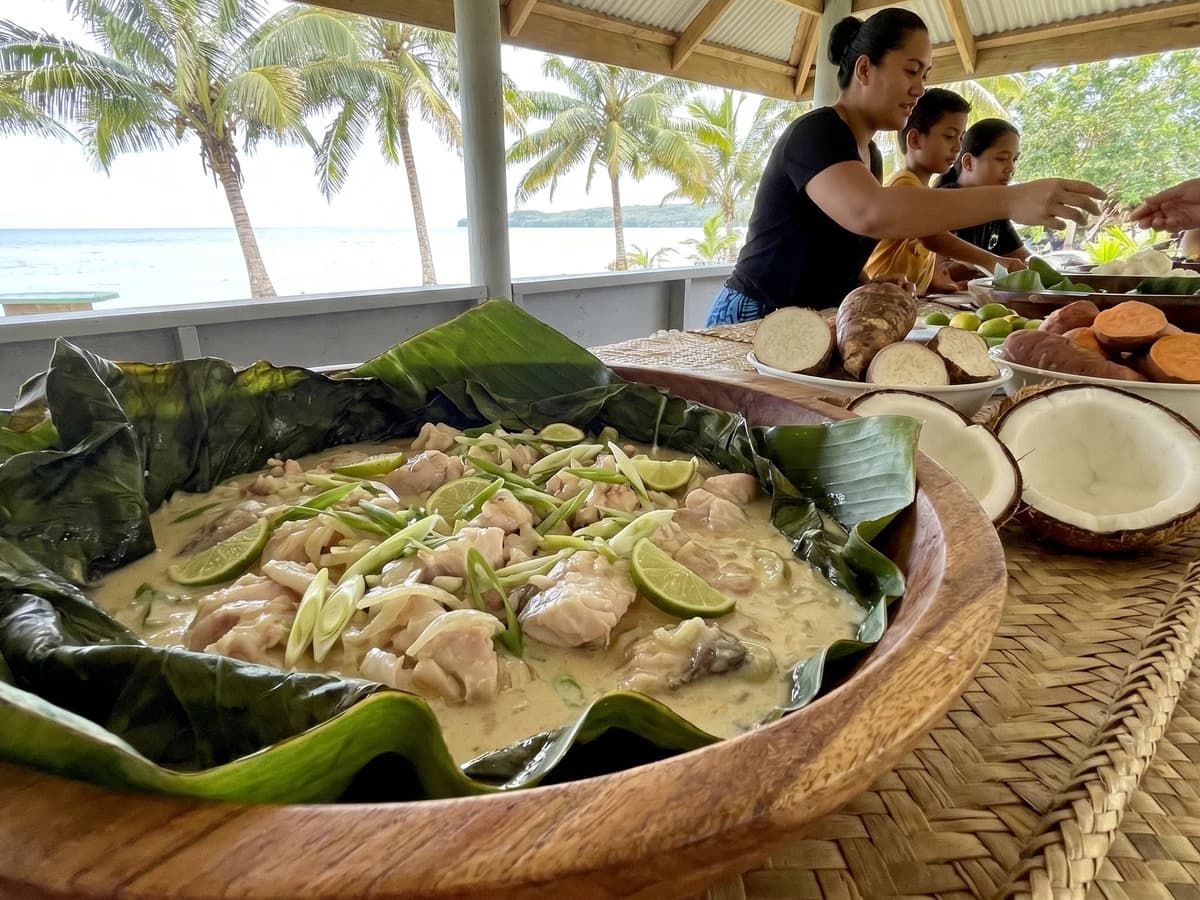
Ika Lolo (Tongan Fish Baked in Taro Leaves and Coconut Cream)
Tonga's ika lolo, fresh fish folded into taro leaves with ginger, garlic, and coconut cream, then baked until the leaf goes silky and the fish stays sweet under the coconut.
A cooking platform built around craft, culture, and the stories behind what we eat.
Created by
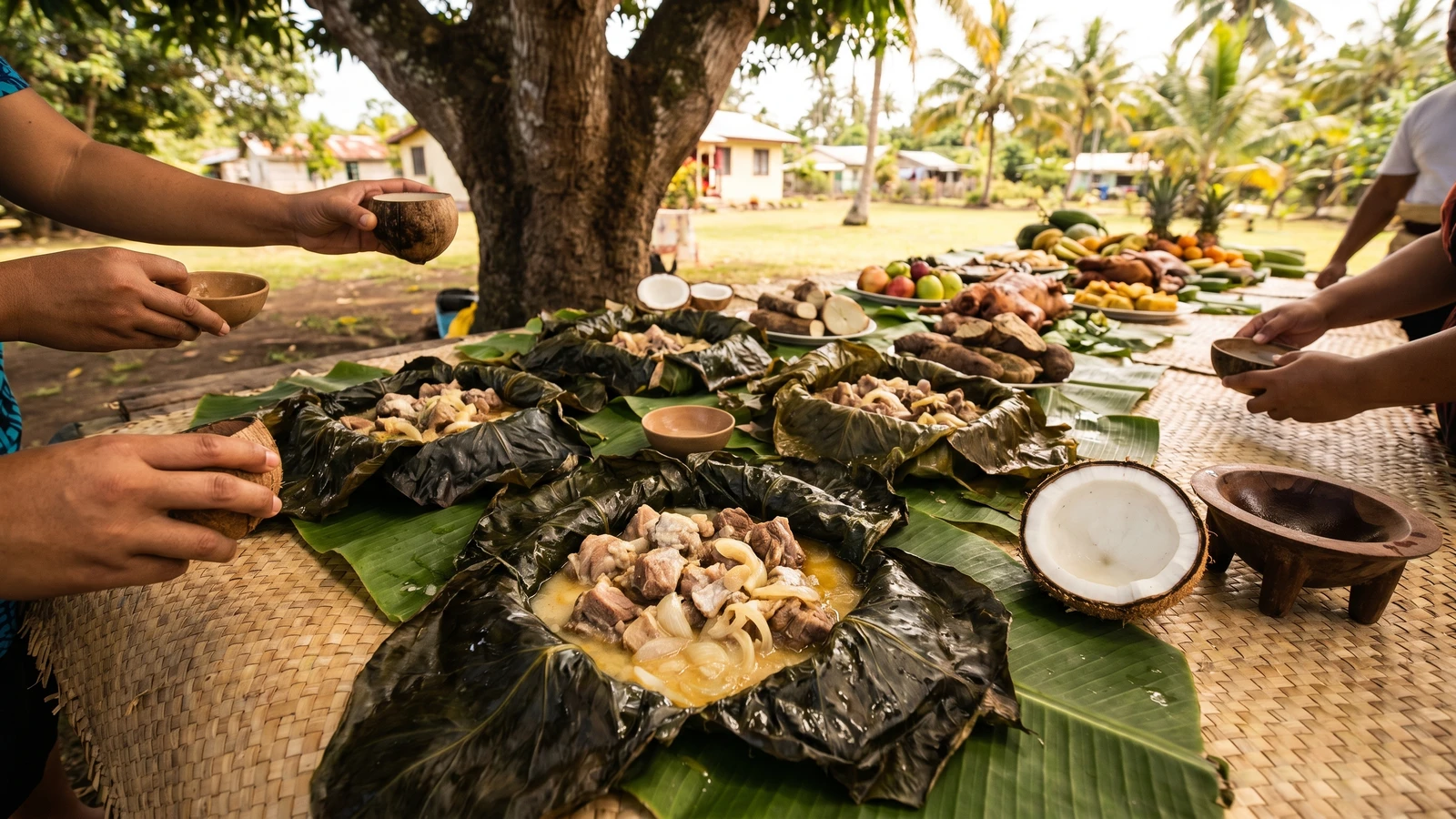
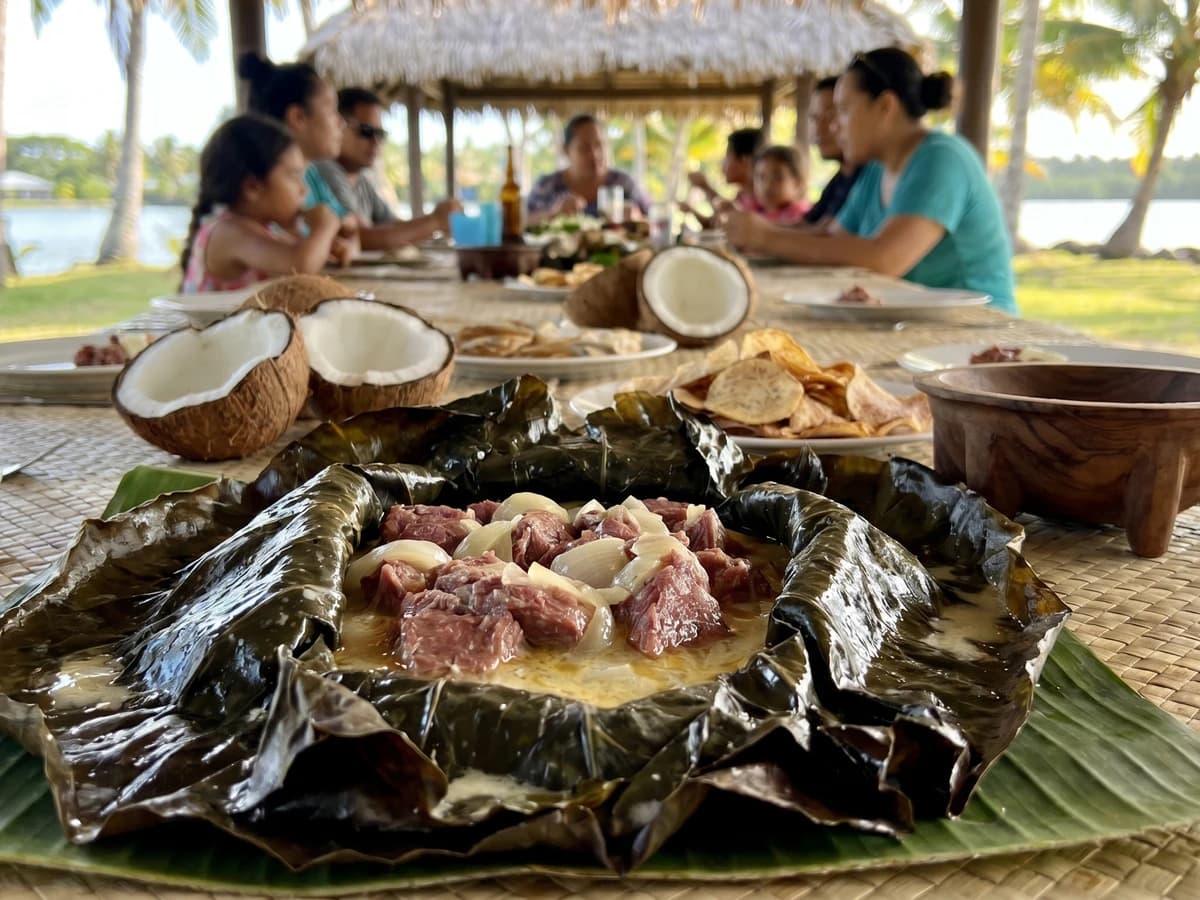
Tonga's lū sipi wraps young taro leaves around fatty mutton, onion, and coconut cream, then cooks it slow until the leaf goes dark and the meat gives up soft.
The first time I ate lū sipi at a Tongan table, I kept quiet and watched the hands. That's how you learn when the dish isn't from your own yard. Lū means taro leaf in Tongan, and sipi is sheep, the mutton that came through trade and got pulled into Tonga's own feast table. The old root was already family. The new meat became useful. That's how living food works.
Tonga takes the lū, the tender young taro leaves, and builds them deep enough to hold coconut cream like a cup. Four leaves, five leaves, no thin bottom, because the cream has to melt into the meat and leaf instead of burning away. The mutton flap is fatty on purpose. That fat softens into the coconut cream, the onion sweetens, the leaf turns deep green-black and silky, and the whole parcel comes out rich enough to feed somebody who worked all day.
This belongs to Tonga. Its cousins sit all across the Triangle: Sāmoan palusami, Cook Islands rukau, Tahitian fāfā, Hawaiian laulau and lūʻau leaf. Same gesture, different hand. One ocean, one canoe, one root, but no blur the islands. I cook this open-handed and send you to Tongan aunties, uncles, and ʻeiki of the table for the deeper feast knowledge that isn't mine to hold.
At home, you can bake it in a covered pan or run it in a slow cooker. Foil stands in where banana leaf and the umu, the Tongan hot-stone earth oven, aren't in reach. Eat what you have. Just don't rush the taro leaf. Raw or short-cooked lū bites the throat. Cook it until every needle is gone and the parcel gives in like it was always meant to be soft.
Lū sipi is a Tongan feast dish shaped by both canoe-crop foodways and later trade: taro leaf and coconut are old Polynesian foundations, while mutton flap and lamb flaps became everyday Pacific meats through colonial and shipping economies. The dish sits beside other leaf-and-coconut parcels across Polynesia, including Sāmoan palusami, Cook Islands rukau, Tahitian fāfā, and Hawaiian laulau. That mix of deep food and newer pantry is not a weakness; it is how Tonga kept feeding people through change.
Quantity
28 to 32
thick stems and ribs removed
Quantity
2 pounds
cut into 2-inch pieces
Quantity
2 cups
or thick canned coconut cream
Quantity
1 large
thinly sliced
Quantity
1 medium
diced
Quantity
1 1/2 teaspoons
plus more to taste
Quantity
1/2 teaspoon
freshly ground
Quantity
as needed
for wrapping
| Ingredient | Quantity |
|---|---|
| young taro leaves (lū)thick stems and ribs removed | 28 to 32 |
| mutton flap or fatty lamb shouldercut into 2-inch pieces | 2 pounds |
| fresh coconut creamor thick canned coconut cream | 2 cups |
| onionthinly sliced | 1 large |
| tomato (optional)diced | 1 medium |
| sea saltplus more to taste | 1 1/2 teaspoons |
| black pepper (optional)freshly ground | 1/2 teaspoon |
| banana leaves, taro leaves, parchment, or heavy foilfor wrapping | as needed |
Rinse the taro leaves well and trim away the thick stems and heavy ribs so the leaves fold without cracking. Keep the tender leaf whole where you can. Lū is kin food, but raw taro leaf has oxalate crystals that bite the throat, so the long cook is not decoration. It is the safety and the soul both.
Put the mutton in a bowl with the onion, tomato if using, salt, and pepper. Mix with your hands until every piece is touched. Use the fatty pieces. Tonga made good food from that trader's offcut, and the fat is what turns the coconut cream rich instead of thin.
Lay down a square of banana leaf, parchment, or foil. Cup four or five taro leaves in the center like pages held in your palm, shiny side down and edges overlapping, so the coconut cream can't burn straight through the bottom. Spoon in a generous handful of seasoned mutton and onion, then pour 1/3 cup coconut cream into the leaves.
Gather the taro leaves up over the filling, folding the sides in first, then the top, keeping the cream inside. Wrap the outside tight in banana leaf and then foil, or parchment and foil if that's what your kitchen has. Make 6 parcels. They should feel full but not ready to burst.
Set the parcels seam-side up in a deep baking dish, cover the dish tight, and bake at 325F for 2 hours, until the leaf is dark, glossy, and fully soft and the mutton pulls apart with a spoon. Don't keep opening it to check. You are not steaming a vegetable. You are melting a tough leaf and a tough cut into each other until both forget they were tough.
For a slow cooker, place the wrapped parcels seam-side up in the insert, add 1/2 cup water around them, cover, and cook on low for 6 to 7 hours or on high for 3 to 4 hours. The parcel is done when the leaf is dark silk and the coconut cream has turned white-gold and rich around the meat.
Rest the parcels 10 minutes before opening so the cream settles back into the leaf and meat. Open them over a platter or woven mat lined with banana leaf, spoon any coconut cream back over the top, and serve with root starch, rice, or whatever is on your table. Deep food is not precious. It feeds people.
1 serving (about 310g)
Culinary guides, cultural storytelling, and the editorial depth that makes cooking meaningful.
Discover Culinary ExplorerChef Makoa
Tonga's ika lolo, fresh fish folded into taro leaves with ginger, garlic, and coconut cream, then baked until the leaf goes silky and the fish stays sweet under the coconut.
Chef Makoa
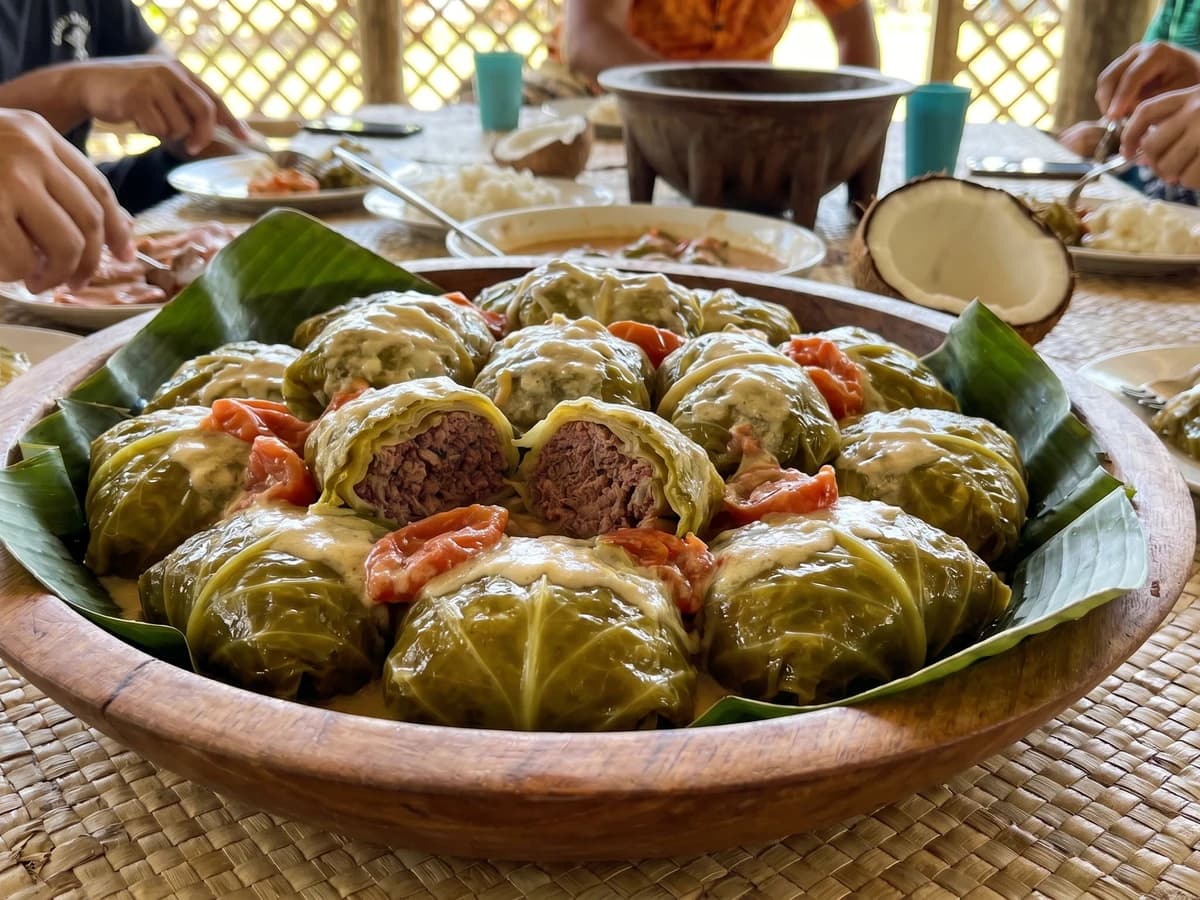
Tonga takes cabbage, tinned corned beef, tomato, onion, and coconut cream, then bakes them into generous parcels for Sunday tables. Cheap food, feast hand, everybody fed.
Chef Makoa
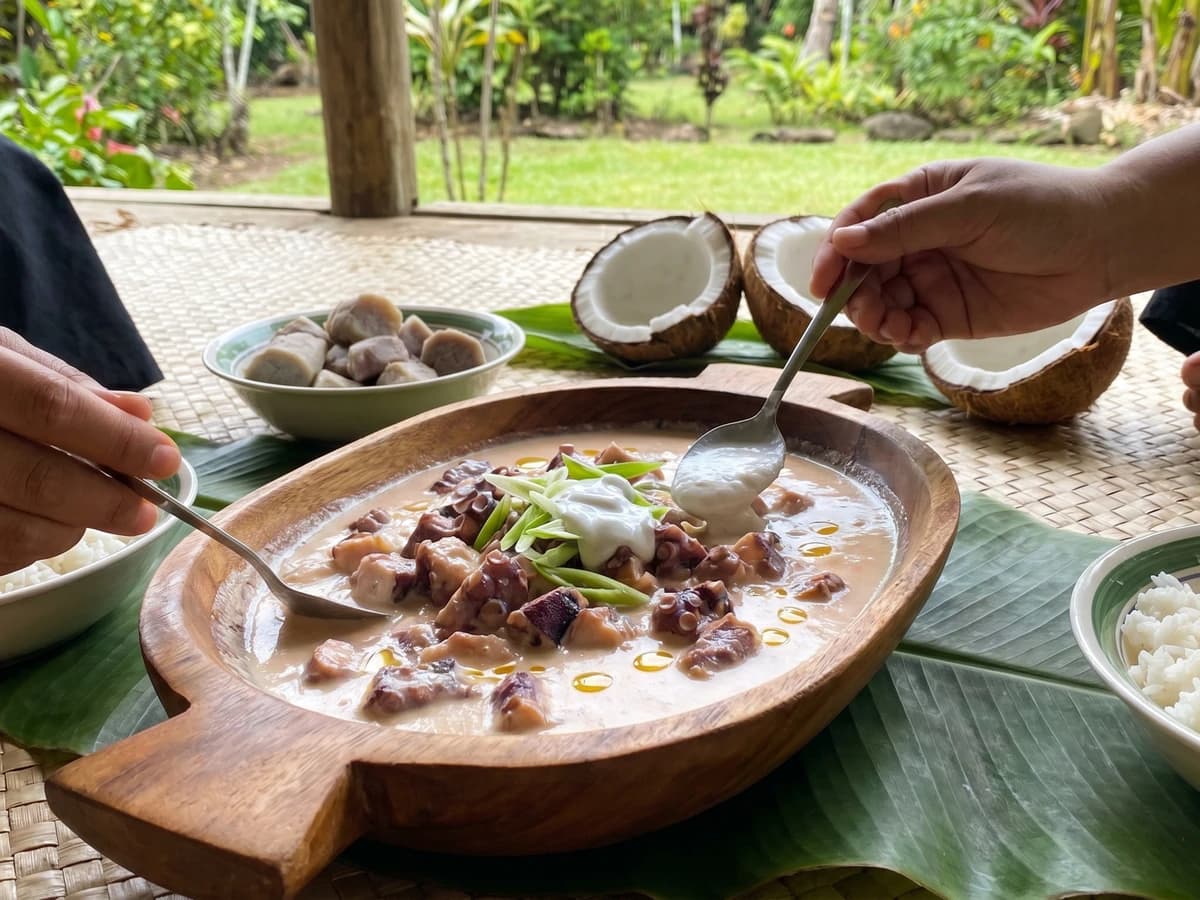
Tonga's loʻi feke takes reef octopus slow in coconut cream, onion, and tomato until the meat gives under the spoon and the sauce turns rich enough for rice, talo, or ʻulu.
Chef Makoa
Tonga's lū pulu folds taro leaves around corned beef, onion, and lolo niu coconut cream, then bakes it slow until leaf and meat turn soft, dark, and rich.