
Chef Lupita
Arroz a la Oaxaqueña
Oaxaca's red rice, stained with tomato and fried in lard, steamed with carrots, ejotes, black beans, and epazote. The side that anchors a Oaxacan family meal and earns its place beside the main.
A cooking platform built around craft, culture, and the stories behind what we eat.

Created by
Ciudad de México's market-kitchen green beans, simmered in a dark pasilla chile sauce until the ejotes stay tender but still remember the field.
Ciudad de México, Valle de México. This dish lives in the market kitchens around La Merced, Jamaica, and the neighborhood fondas where a cazuela of vegetables has to feed people well without pretending to be a feast.
The chile pasilla is the authority here. Not chipotle, not ancho, not a handful of whatever dried chile was lonely in your cupboard. Pasilla is the dried chilaca: dark, wrinkled, mildly smoky, with a raisin depth and very little heat. That is why this dish proves what I keep telling students: not every Mexican chile dish is about fire.
The ejotes should be fresh, firm, and snapped by hand if you have time. My mother wrote in her notebook, 'no los mates,' don't kill them. She was right. You simmer them in the sauce long enough to take the flavor, not until they collapse into army-green sadness. A little manteca de cerdo rounds the chile and tomato. La manteca es el sabor.
Serve this in a glazed clay cazuela from Metepec or a plain barro dish, family-style, with warm corn tortillas and beans. It is weeknight food, yes, but weeknight food is where a cuisine proves itself. Saber cocinar es saber vivir.
Chile pasilla, the dried form of chile chilaca, is strongly associated with central Mexican cooking, especially the salsas, caldos, and guisos of the Valle de México, Puebla, Hidalgo, and Michoacán. Green beans arrived in Mexico through colonial-era agricultural exchange, but cooks folded them into older chile-and-tomato sauce techniques that already belonged to the indigenous and mestizo kitchen. In central Mexico, mild dried chile sauces like pasilla and ancho were never only for meat; they were practical ways to give depth to vegetables, eggs, beans, and tortillas when money was tight.
Quantity
1 pound
trimmed and cut into 2-inch pieces
Quantity
4
stemmed and seeded
Quantity
2 medium
Quantity
1/4 medium
Quantity
2
unpeeled
Quantity
1 1/2 tablespoons
Quantity
1/2 teaspoon, plus more to taste
Quantity
1/2 cup
as needed
Quantity
1 small sprig
Quantity
2 tablespoons
for serving
| Ingredient | Quantity |
|---|---|
| fresh green beans (ejotes)trimmed and cut into 2-inch pieces | 1 pound |
| dried chile pasillastemmed and seeded | 4 |
| ripe Roma tomatoes | 2 medium |
| white onion | 1/4 medium |
| garlic clovesunpeeled | 2 |
| pork lard (manteca de cerdo) | 1 1/2 tablespoons |
| kosher salt | 1/2 teaspoon, plus more to taste |
| hot water or vegetable brothas needed | 1/2 cup |
| fresh epazote | 1 small sprig |
| crumbled queso fresco (optional)for serving | 2 tablespoons |
Bring a medium pot of salted water to a boil. Add the ejotes and cook for 3 to 4 minutes, just until their raw edge softens and the color turns bright green. Drain and rinse briefly under cold water. Do not cook them to death now. They still have to simmer in the sauce.
Heat a dry comal or heavy skillet over medium. Press each chile pasilla against the hot surface for 10 to 15 seconds per side, just until the skin softens, darkens slightly, and smells like dried fruit and smoke. Pasilla burns fast. If it turns black, throw it out. Burned chile makes bitter salsa, and no spoonful of sugar will save you.
Put the toasted pasilla chiles in a bowl and cover with hot water. Hot, not boiling. Let them soak for 15 minutes until soft. Boiling water roughens the skins and can pull bitterness into the sauce. Pregúntale a las señoras del mercado. They know.
On the same comal, roast the tomatoes, onion, and unpeeled garlic until the tomatoes blister and slump, the onion chars at the edges, and the garlic feels soft when pressed. Peel the garlic. This roasted base is what keeps the pasilla from tasting thin.
Drain the chiles and put them in a blender with the roasted tomatoes, onion, peeled garlic, salt, and 1/4 cup hot water or broth. Blend until completely smooth. If the blender struggles, add the remaining water a spoonful at a time. You want a dark, pourable salsa, not a watery soup.
Melt the manteca de cerdo in a wide clay cazuela or heavy skillet over medium heat. Pour in the pasilla salsa carefully. It will sputter. Cook for 6 to 8 minutes, stirring often, until the sauce darkens, thickens, and the fat begins to shine at the edges. This frying step matters. No me vengas con atajos.
Add the blanched ejotes and the sprig of epazote to the sauce. Stir so every piece is coated. Lower the heat and simmer for 8 to 10 minutes, until the beans are tender but still hold their shape and the sauce clings to them. Taste for salt. Remove the epazote before serving.
Spoon the ejotes and sauce into a shallow clay dish. Scatter queso fresco over the top if using. Serve with warm corn tortillas, not flour tortillas. Flour tortillas belong to the north. This is central Mexican food. Cada estado, su propia cocina.
1 serving (about 120g)
Culinary guides, cultural storytelling, and the editorial depth that makes cooking meaningful.
Discover Culinary ExplorerChef Lupita
Oaxaca's red rice, stained with tomato and fried in lard, steamed with carrots, ejotes, black beans, and epazote. The side that anchors a Oaxacan family meal and earns its place beside the main.
Chef Lupita
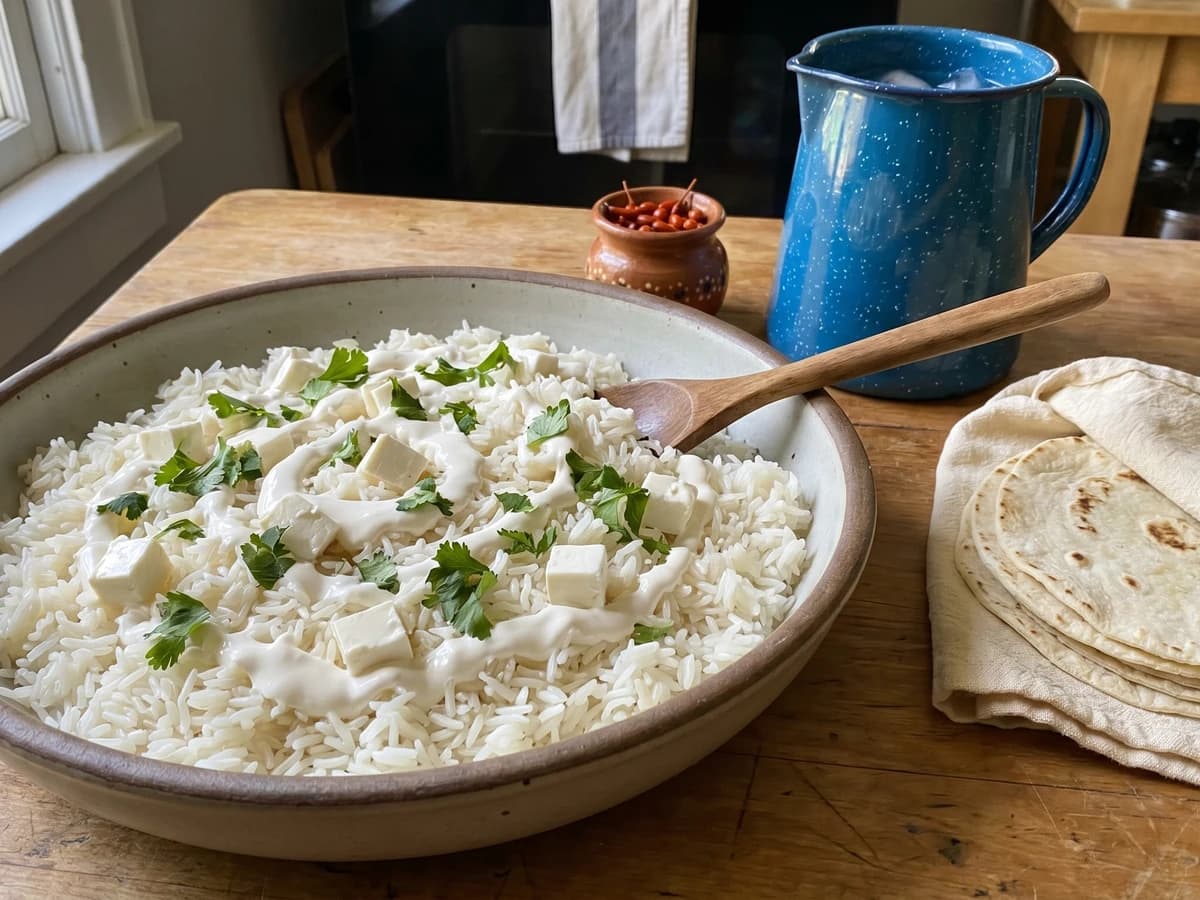
Sinaloa's home-cook white rice topped with cold cubes of cream cheese that soften into the warm grain, finished with crema and a sprinkle of chiltepin at the table. The trick that makes a side dish feel like a small luxury.
Chef Lupita
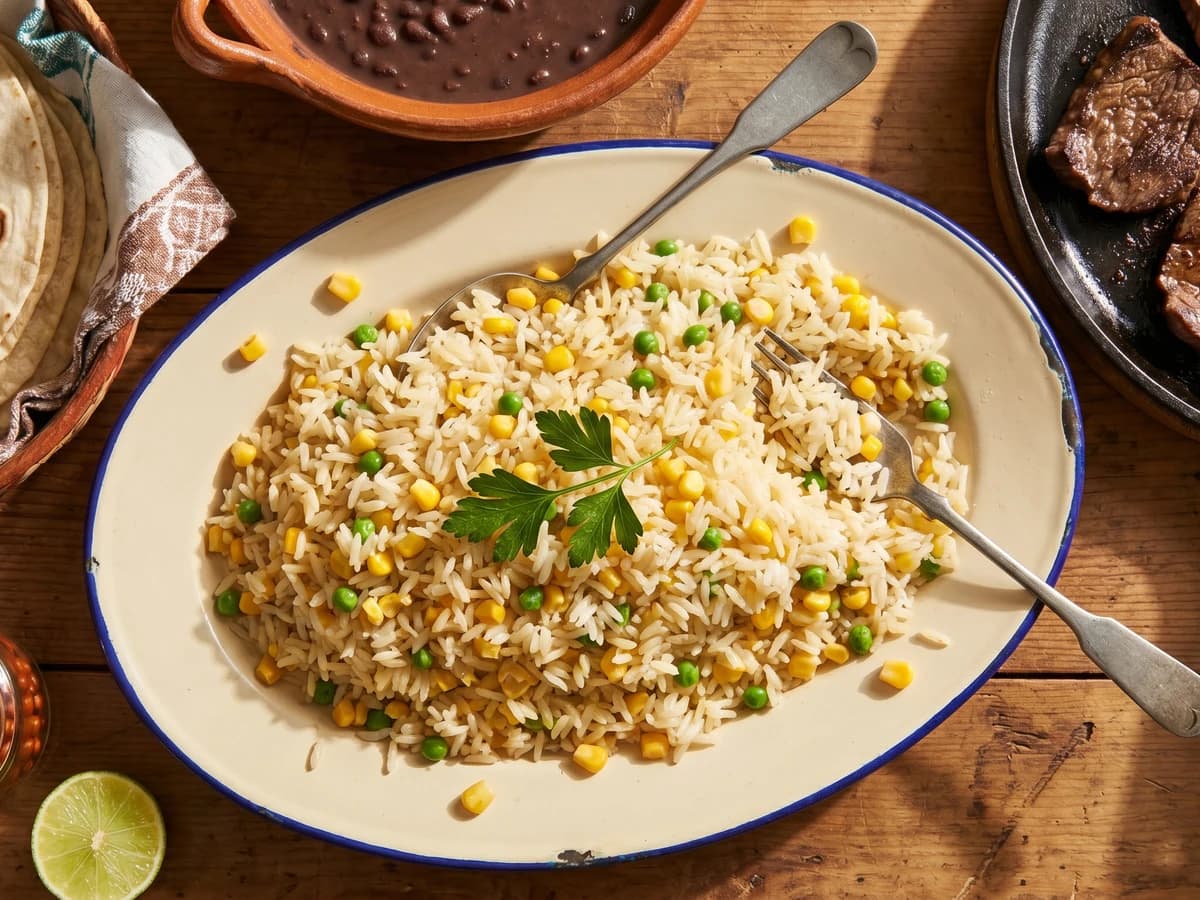
Sonora's white rice, toasted in butter and steamed with sweet corn and tender peas. The clean, quiet partner to a plate of carne asada, not the red rice of central Mexico.

Chef Lupita
Yucatán's white rice with sweet corn kernels, toasted in lard with garlic and onion. The quiet base that holds up against the peninsula's bold achiote-stained stews.