
Chef Lupita
Trenzas Yucatecas
Mérida's buttery braided pastries, enriched with eggs and naranja agria, finished with chocolate sprinkles or coarse sugar, and eaten the same morning they leave the oven of the panadería.
Updated May 23, 2026
The distinctive pan dulce of Yucatán. Polvorones de naranja, bizcochos twice-baked in the Mérida style, hojaldra dulce, and the small sweet breads of the panaderías yucatecas that fill the tin-roof shops at sundown.
A cooking platform built around craft, culture, and the stories behind what we eat.
Chef Lupita
Mérida's buttery braided pastries, enriched with eggs and naranja agria, finished with chocolate sprinkles or coarse sugar, and eaten the same morning they leave the oven of the panadería.

Chef Lupita
Mérida's modern dessert icon, Tere Cazola's pay de queso de bola, where finely grated Edam disappears into a sweet custard set over a Maria cookie crust and topped with dark caramel. Salty, sweet, and unmistakably yucateco.

Chef Lupita
Yucatán's panadería pastry, a crumbly lard-and-butter shortbread sealed around a slab of ate de guayaba and buried under powdered sugar. Sold wrapped in waxed paper to anyone with twenty pesos and a sweet tooth.
Chef Lupita
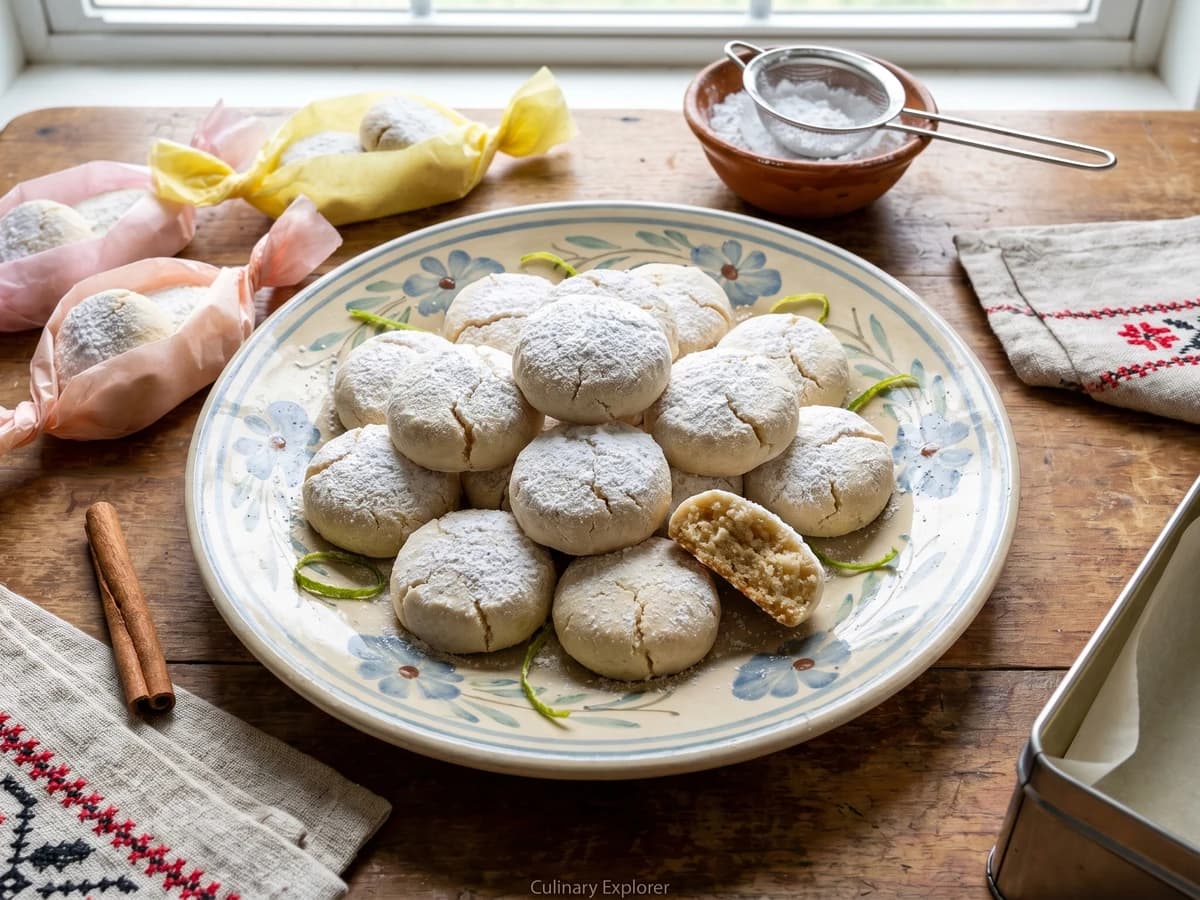
Yucatán's convent-inheritance polvorón, made with toasted sagú flour and good pork lard, until it dissolves on the tongue with the faintest perfume of lime and canela.

Chef Lupita
Yucatán's hard anise rings, kneaded with whole toasted anise seed and lard, baked dry on purpose so they can survive the long dip into a clay jarro of hot chocolate.
Chef Lupita
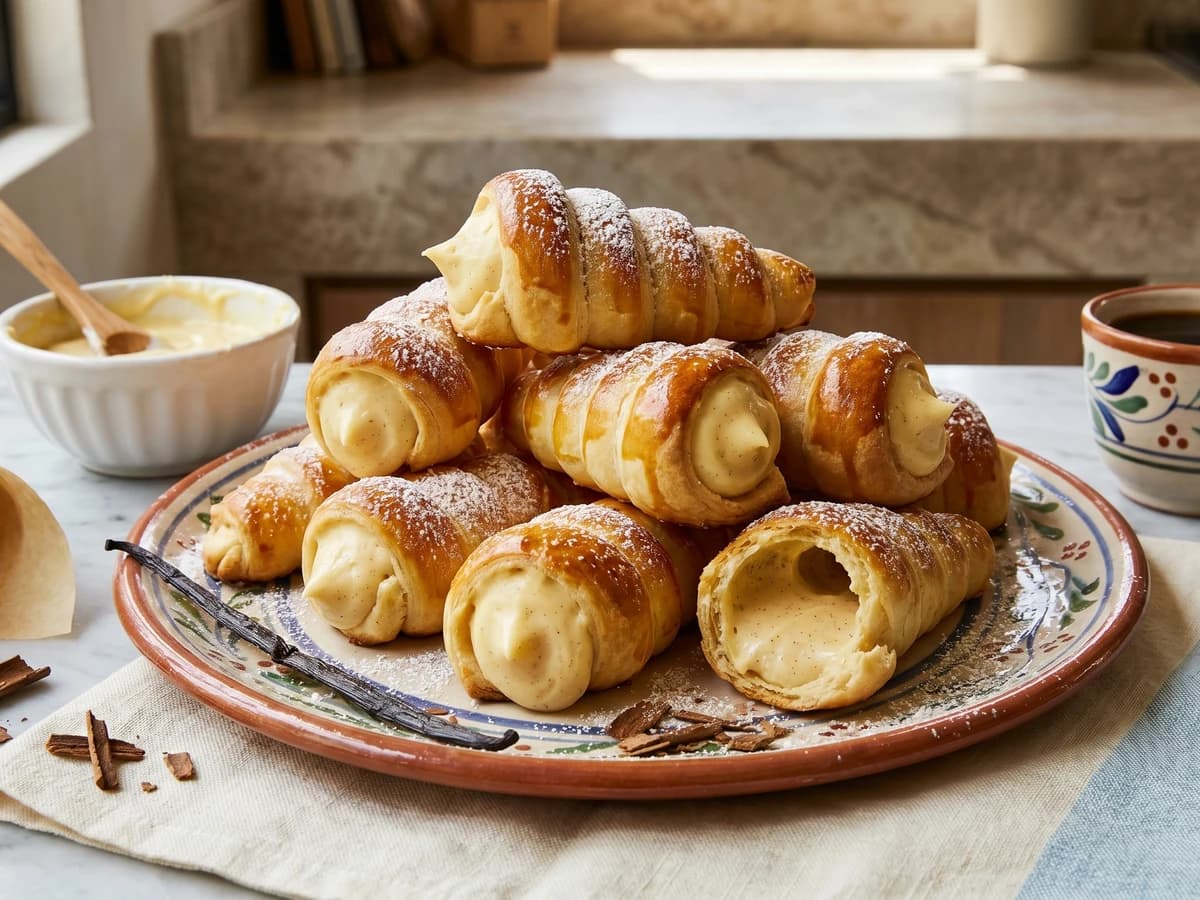
Mérida's Porfiriato-era cream cones, a French choux shell built around vanilla and canela-infused pastry cream from the Yucatán, dusted with sugar and eaten the day they are filled.

Chef Lupita
Yucatán's twice-baked rusks, half finished with sugar and half with flaky salt, built to drink coffee or hot chocolate with at any hour of the day.

Chef Lupita
Yucatán's conventual fried empanadas, wheat dough enriched with lard and sherry, filled with piloncillo-sweetened camote and rolled in cinnamon sugar. A recipe carried down from the Conceptionist nuns of 16th-century Mérida.

Chef Lupita
Mérida's pale egg-yolk-and-vanilla kisses, tiny cookies built on eight yolks and a perfume of orange blossom, sandwiched with guava paste and dusted heavy with powdered sugar.

Chef Lupita
Yucatán's Christmas Eve and Hanal Pixán sweet. Paper-thin fried dough, brittle at the edges, drowned in dark piloncillo syrup steeped with anise, canela, and orange peel.

Chef Lupita
Mérida's round puff pastry rounds laminated with pork lard and glazed in white sugar, denser and more filling than orejas, with layers that shatter into crumbs the moment you bite. Eat them over a plate.
Chef Lupita
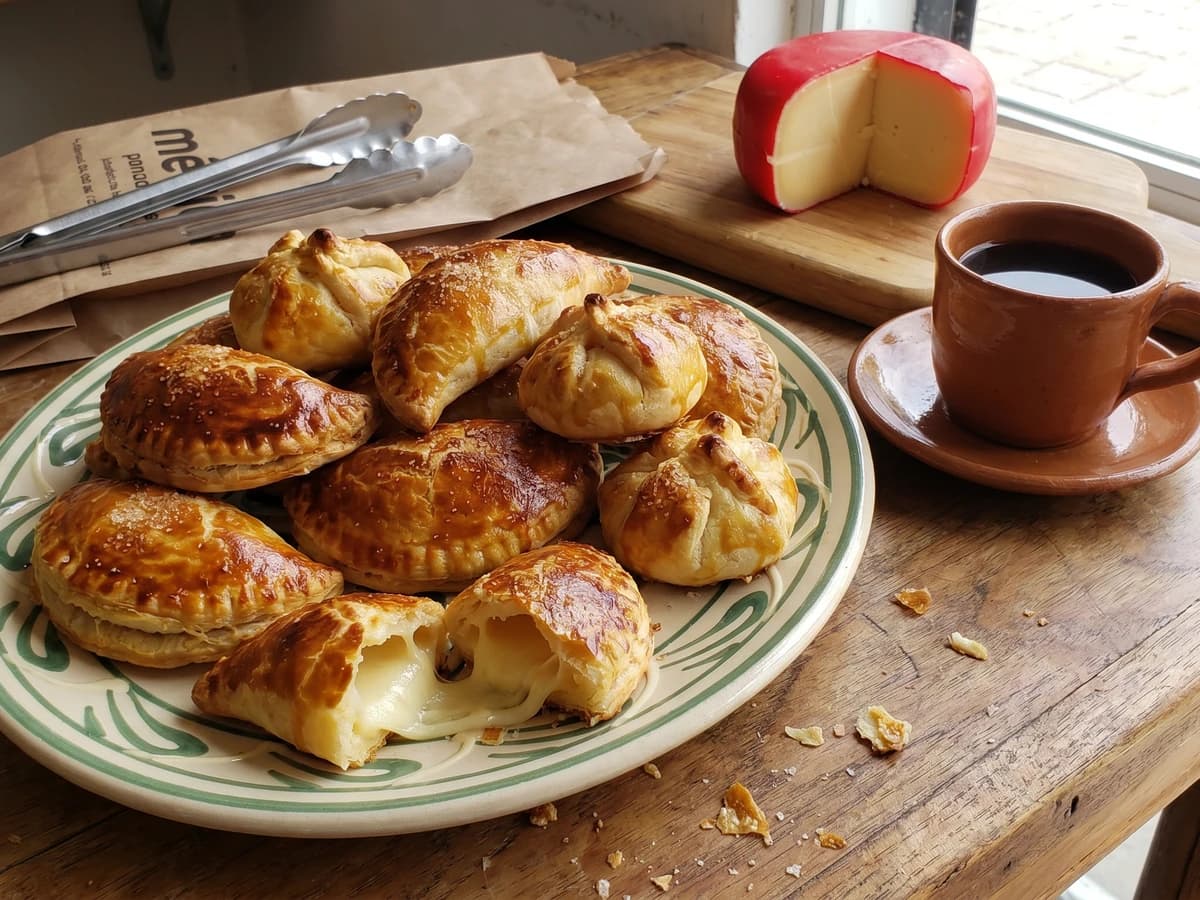
Mérida's afternoon bakery pastry: a tender pasta quebrada shell hiding grated queso de bola from Holland, a whisper of sugar arguing with the sharp salt of the cheese. Sold by the piece, eaten with coffee.

Chef Lupita
Yucatán's lard-rich shortbread from Ticul, dusted with the bright sprinkles that mark Hanal Pixán. The cookies that sit on the altar in late October, waiting for the souls to come home.
Chef Lupita
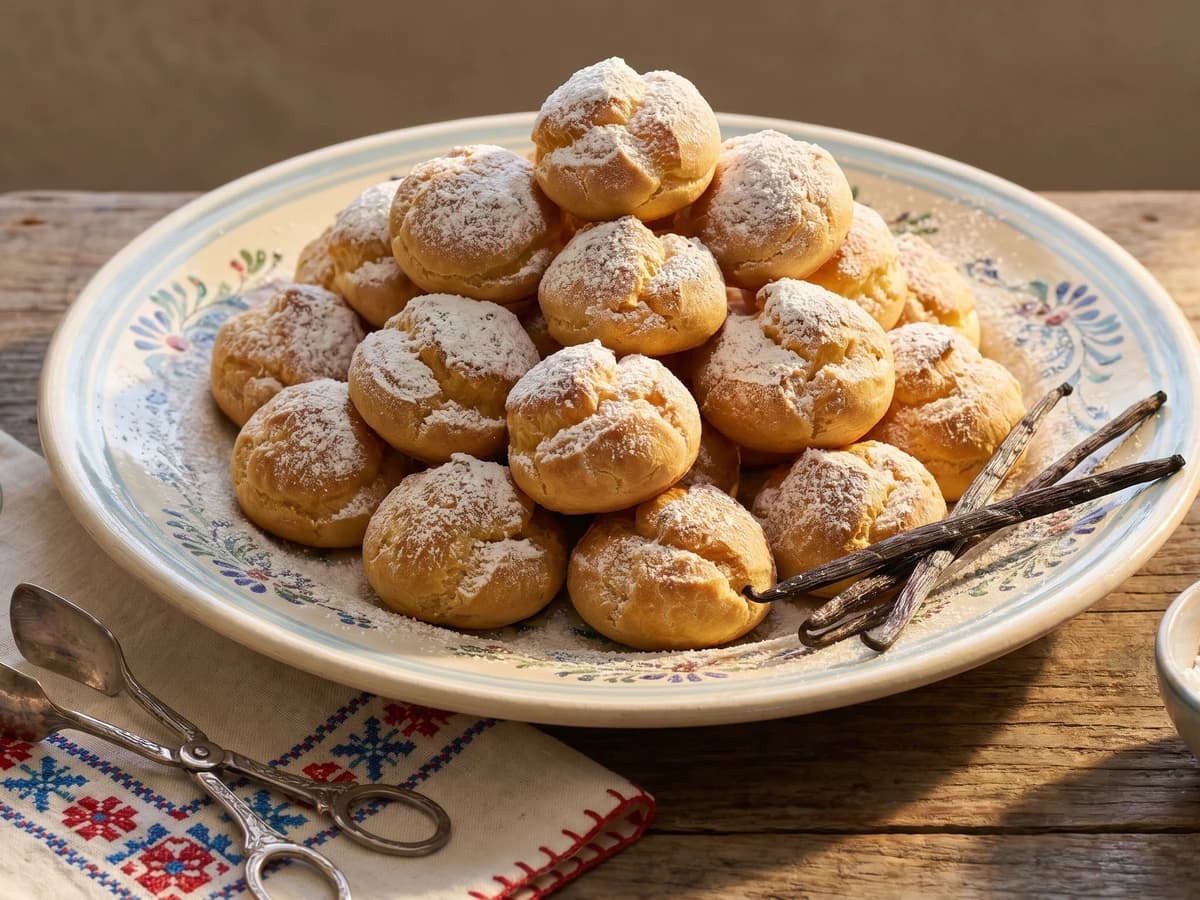
Merida's profiteroles, golden pate a choux puffs the Yucatecos call cabbages, filled with cold vanilla cream and piled high on a platter for quinceaneras, weddings, and Sunday merienda.

Chef Lupita
Mérida's puff pastry triangles, laminated with butter and lard, crowned with a reckless heap of crystal sugar, baked until they fan open and the sugar glitters across the top.
Chef Lupita
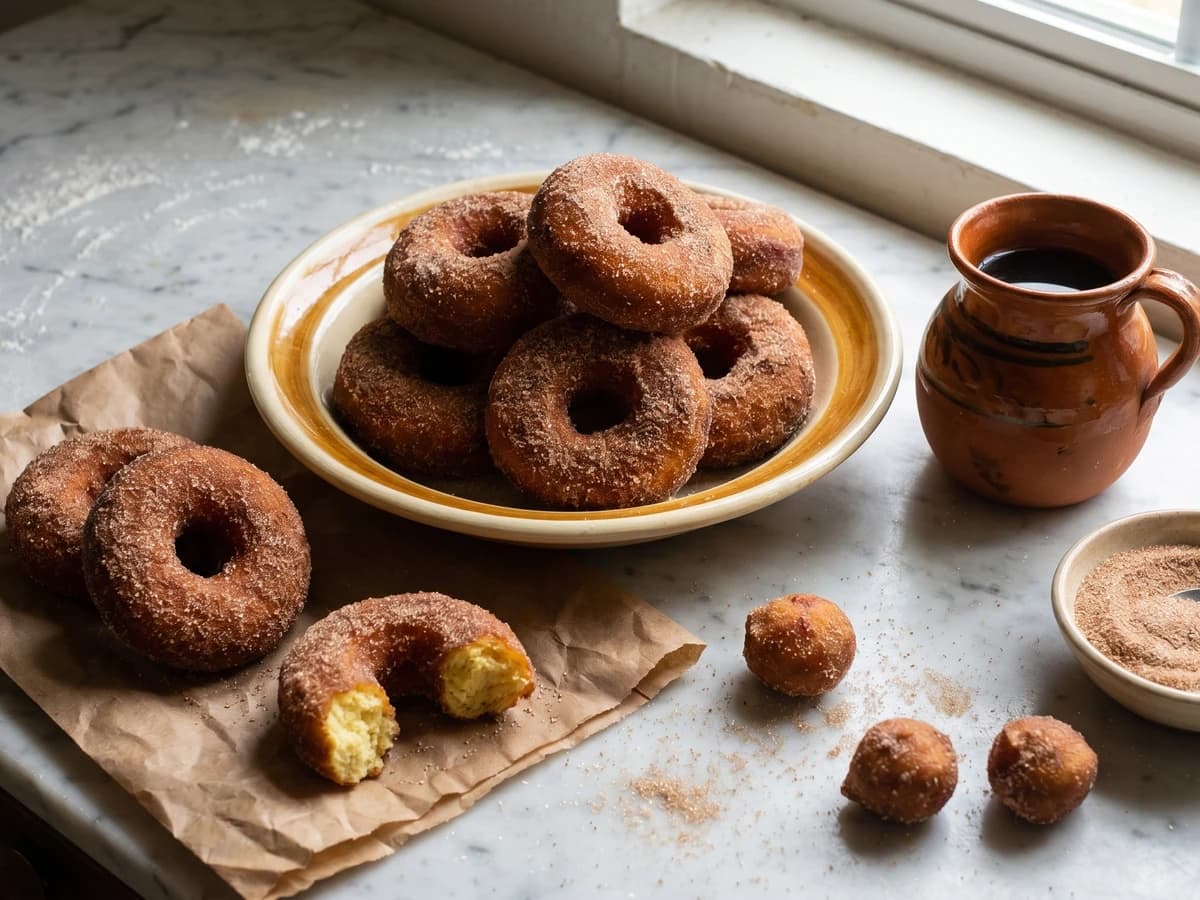
Yucatán's potato-enriched donuts from the panaderías of Mérida and Valladolid, denser and softer than yeast donuts, rolled hot in canela sugar and eaten with strong café yucateco.
Chef Lupita
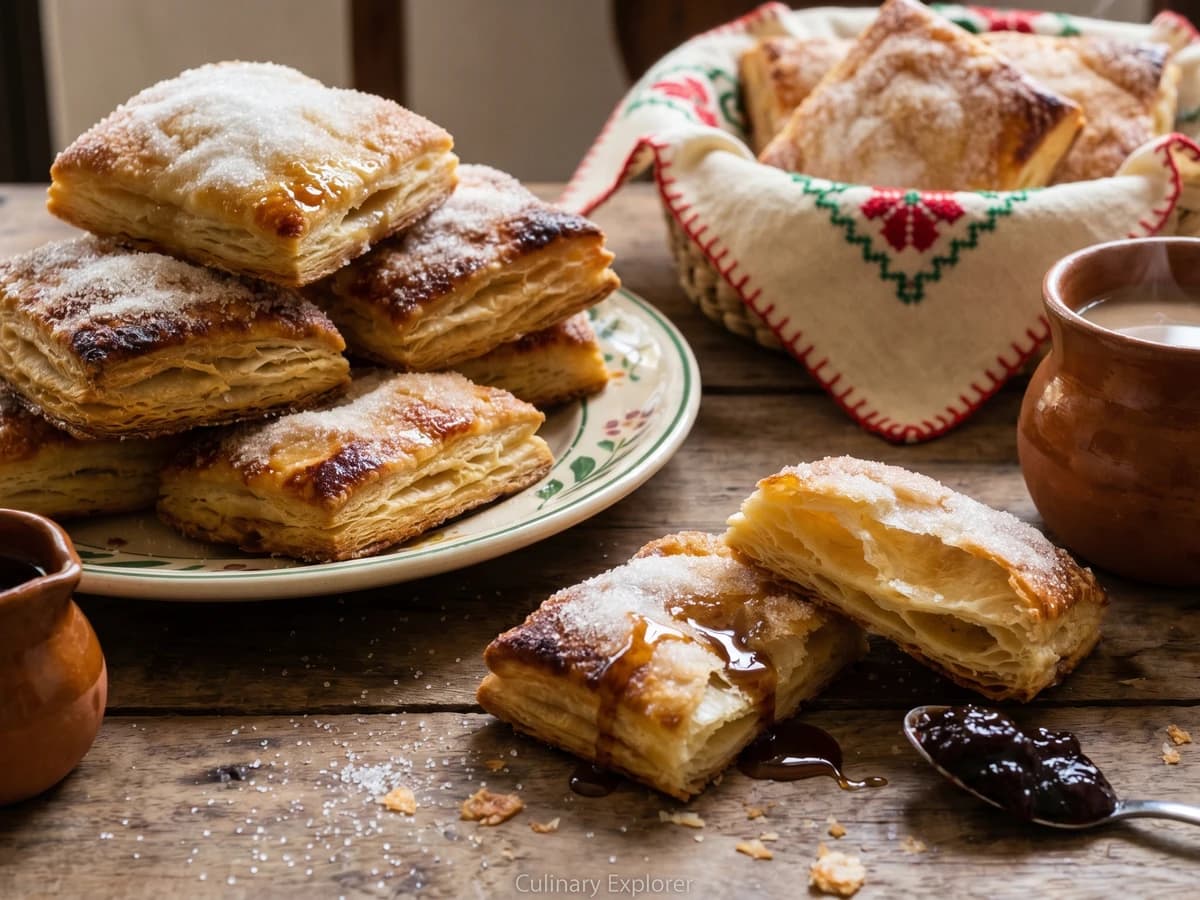
Yucatán's merienda pastry, buttery hojaldre layers piled with a snowdrift of sugar, baked until the layers separate and the top turns glassy. Crumbles on the first bite and ruins your shirt.
Chef Lupita
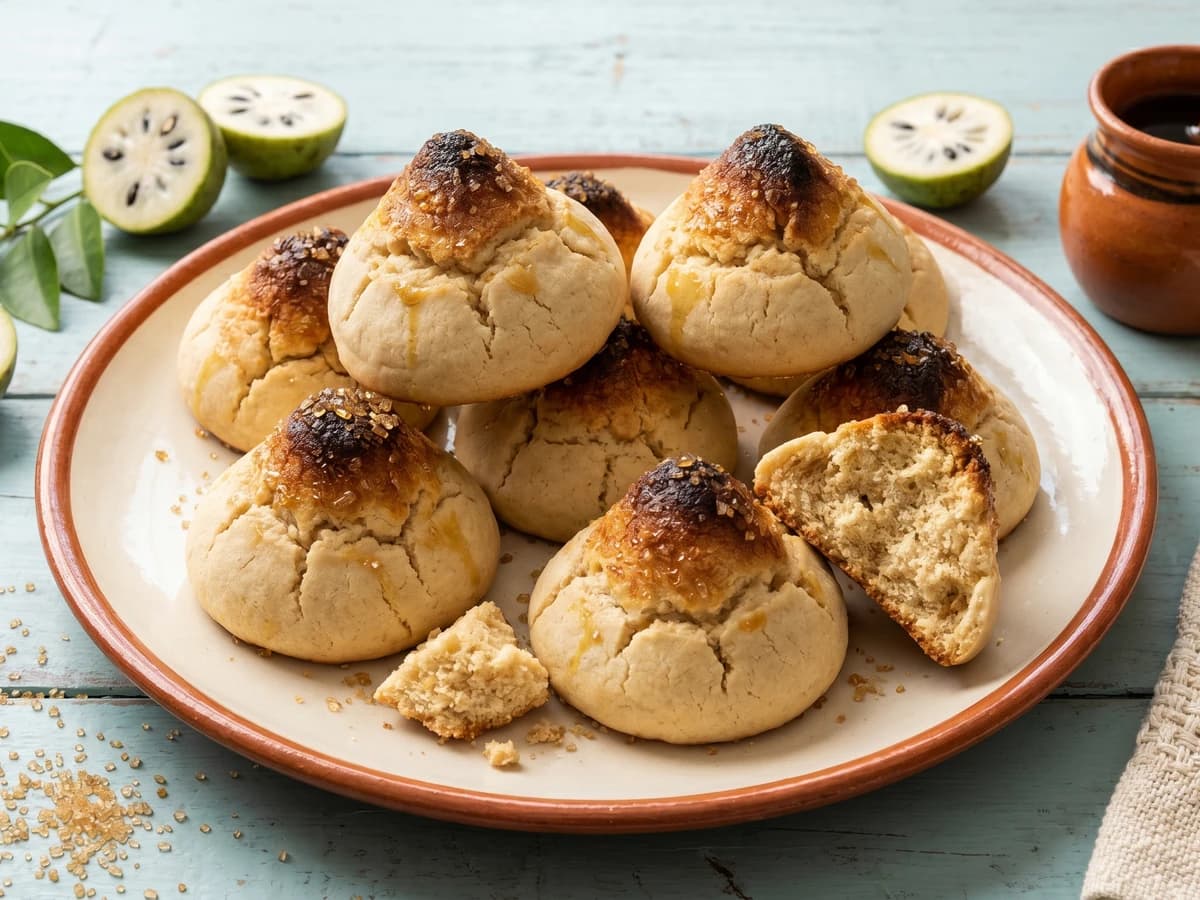
Yucatan's volcano-shaped pan dulce, crisp at the base and soft inside, crowned with a peak of crystal sugar and named for the sweet saramuyo fruit that grows in the peninsula's home gardens.

Chef Lupita
Mérida's flaky pan dulce rounds, laminated with butter and a touch of manteca, filled with melted queso de bola, and crusted in caramelized sugar. The bite that defines a Yucatecan panaderia morning.

Chef Lupita
Mérida's lard-enriched bizcochos, denser and crumblier than their agua cousins, the kind of pastry that appears at breakfast, at merienda, and on the table whenever family walks through the door.

Chef Lupita
Yucatán's flaky puff pastry balls, filled with sweetened cream cheese kissed with lima dulce, baked until the layers shatter under the sugar coat. The pan dulce of every Mérida baptism and birthday.

Chef Lupita
Mérida's anise-and-orange shortbread, made with manteca de cerdo and a few drops of agua de azahar. They crumble the second you touch them, built for hacer chuc with a cup of hot chocolate.
Chef Lupita
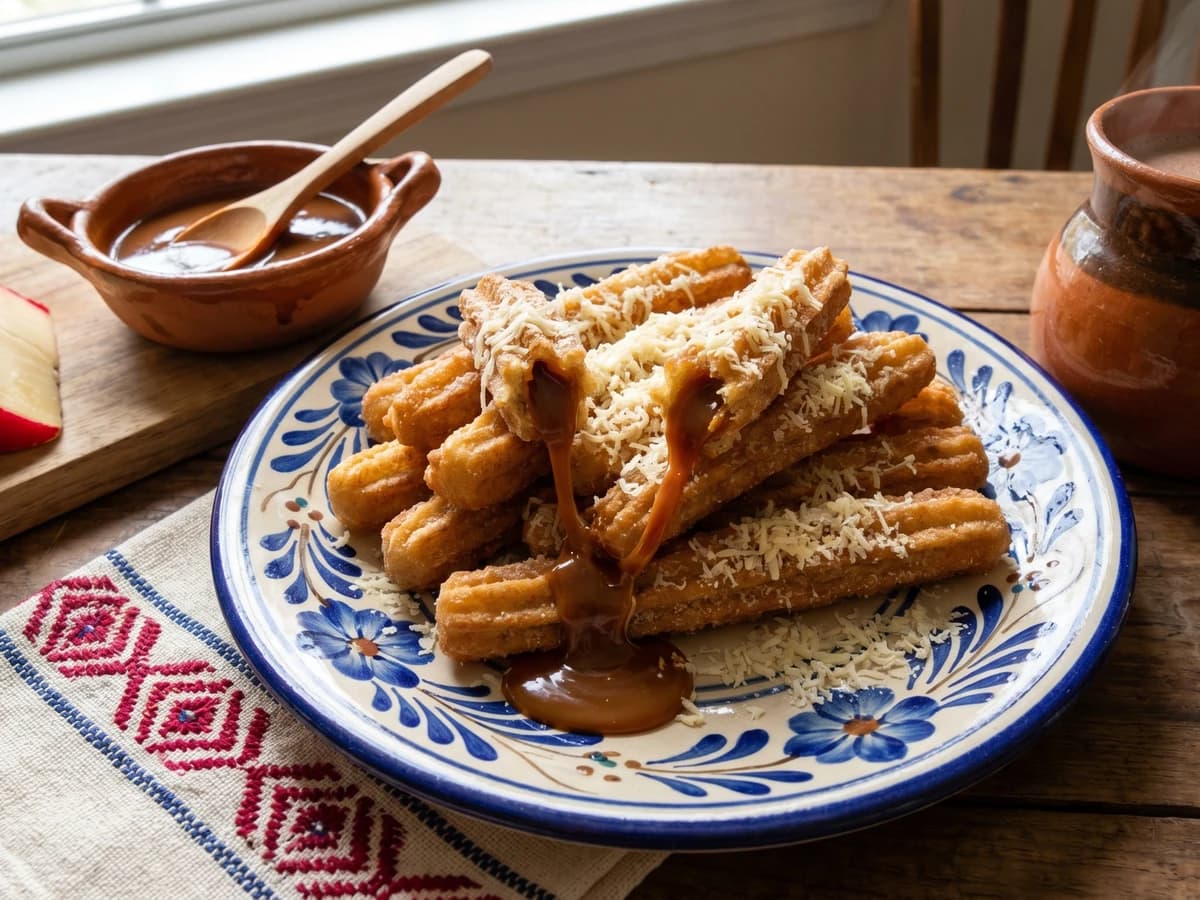
Mérida's street-bakery churros, choux fried until the ridges crackle, filled with cajeta de Celaya, and crowned with grated queso de bola. The Yucatán contrast of salt against sweet that defines the peninsula's pastry tradition.

Chef Lupita
Yucatán's fried coconut empanadas, sweetened with piloncillo and Mexican canela, with a faint corn note from masa harina in the dough. The merienda staple that shows up on the Hanal Pixan altar every November.

Chef Lupita
Yucatán's panadería pastry, paper-thin laminated dough rolled into spirals, pressed flat, blanketed in sugar that melts to amber glass in the oven. The pastry that lives next to every cup of café con leche on the peninsula.

Chef Lupita
Yucatan's pleated-paper mantecadas, perfumed with orange rind and studded with raisins. The panaderia merienda of Merida, baked in butter and lard the way they have been since the henequen years.

Chef Lupita
Yucatan's polvoron of mestizaje: Spanish wheat, Mexican lard, canela from the old colonial spice routes, and Papantla vanilla. Crumbly, pale, and dusted in cinnamon sugar for la merienda.
Chef Lupita
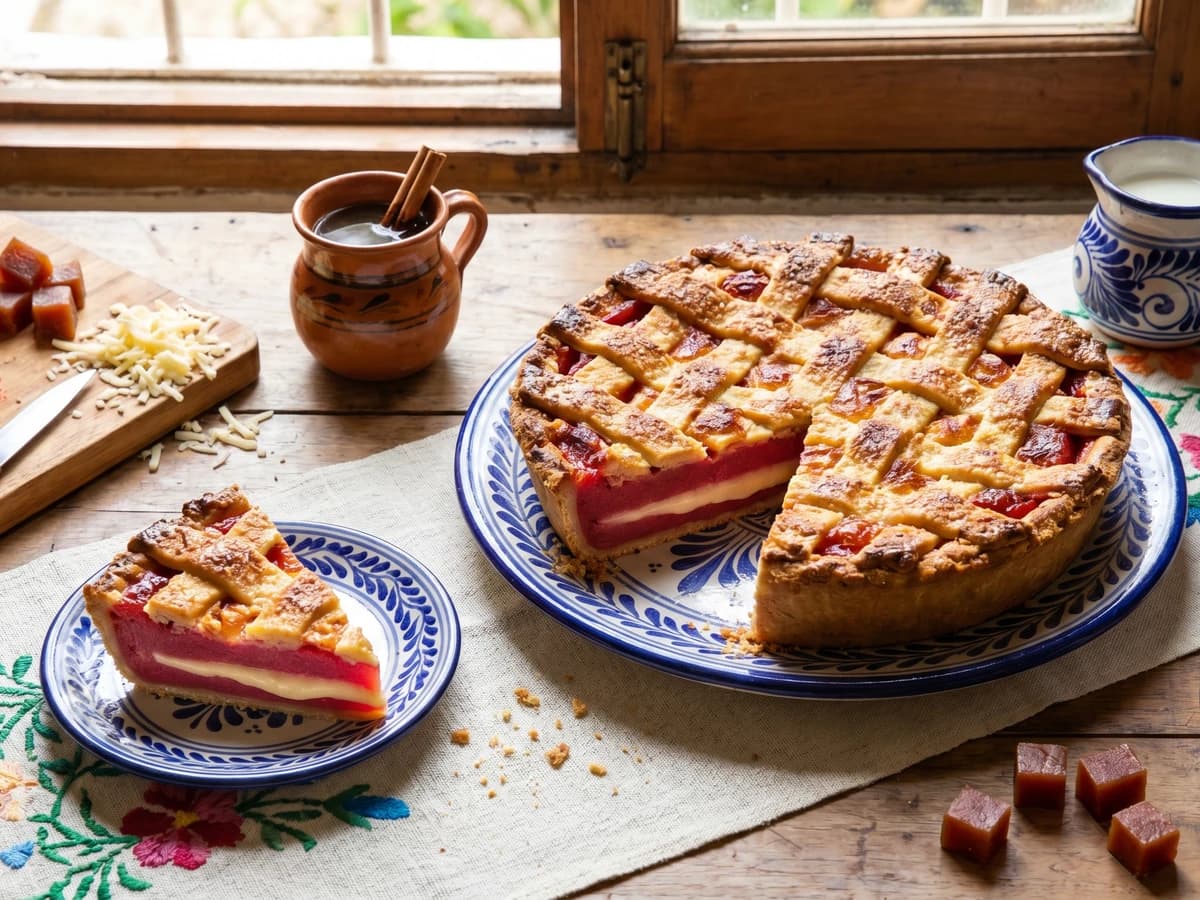
Mérida's beloved guava and Edam pie, a flaky butter crust over softened ate de guayaba layered with grated queso de bola, the salt cutting the sweetness exactly the way Yucatecan repostería demands.

Chef Lupita
Yucatán's convent-era pastry: paper-thin dough rolled around a horn and fried until it blisters, then stuffed with glossy Italian meringue. The white wine in the dough is what gives the shell its crackle.
Chef Lupita
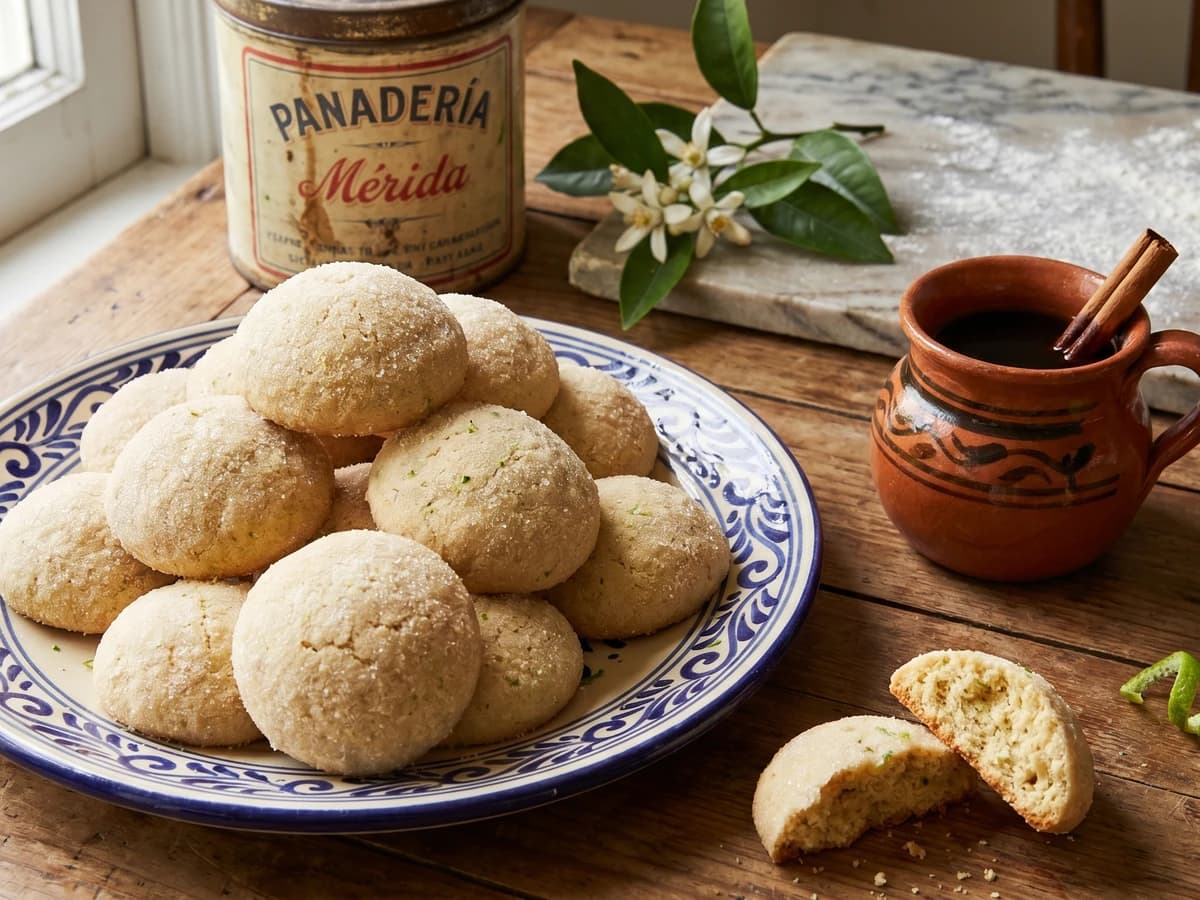
Yucatan's buttery sugar-dusted cookie from Pan Elena Vales, Merida's oldest panaderia. Lard, orange flower water, lime zest, and a recipe the family has guarded since 1865.

Chef Lupita
Mérida's éclairs from the Porfiriato bakeries: long choux shells filled with Papantla vanilla crema pastelera and finished with a dark chocolate glaze. The French repertoire learned, kept, and made Yucateco.

Chef Lupita
Yucatán's wedding-table tartaletas, pasta quebrada shells built on manteca, filled with a salted queso de bola custard, and crowned with cubes of ate de guayaba glazed to a soft shine.

Chef Lupita
Yucatán's hollow yuca fritters, fried in manteca until they crackle, split open, and bathed inside and out with warm miel de abeja melipona spiced with canela and clove. Made for the novenas of finados.

Chef Lupita
Yucatán's rosette-iron buñuelos, thin floral disks fried crisp on a hot bronze mold, dusted in cinnamon sugar, and drizzled at the table with a dark miel of piloncillo, canela, and anís.

Chef Lupita
Yucatecan palmiers from the panaderias of Merida and Valladolid, rolled in sugar, folded into ears, and baked until the surface turns to amber glass that breaks apart at the first bite.
Culinary guides, cultural storytelling, and the editorial depth that makes cooking meaningful.
Discover Culinary ExplorerChef Lupita is a fictional culinary guide to Regional Mexican Cuisine, written with the assistance of AI.