Chef Lupita
Chivo Tapeado de Peñamiller
Querétaro Sierra Gorda goat sealed in a clay olla with guajillo adobo, hierbas de monte, xoconostle, and a masa-wrapped lid that keeps every bit of flavor inside.

Updated June 1, 2026
Plated flagships of the Bajío subregion (Guanajuato, Querétaro, San Luis Potosí, Aguascalientes). The hacienda-mining-criollo synthesis crystallized along the Lerma basin between the 1546 silver discovery and the Reforma: pacholas worked on the metate, pollo San Marcos created for the 1828 feria, lechón al horno from the rancho aguascalentense, barbacoa de hoyo wrapped in pencas de maguey from the Sierra Gorda, conejo-and-cabrito Otomí substrate, carnitas Apaseo el Grande, fiambre potosino composed cold for 15 de Agosto, and the Lerma freshwater fish register. Distinct from Centro Mexicano (no mole architecture), Occidente (no Tarascan lacustrine), Norteño (corn line still holds, beef is not the center), Huasteca (no zacahuil), and P'urhépecha (no Quiroga carnitas register). Cada estado, su propia cocina.
A cooking platform built around craft, culture, and the stories behind what we eat.

Chef Lupita
Querétaro Sierra Gorda goat sealed in a clay olla with guajillo adobo, hierbas de monte, xoconostle, and a masa-wrapped lid that keeps every bit of flavor inside.

Chef Lupita
Guanajuato's Bajio pork loin, browned in manteca de cerdo and braised with xoconostle, chile guajillo, and tomate verde until the sauce tastes sour, red, and serious.

Chef Lupita
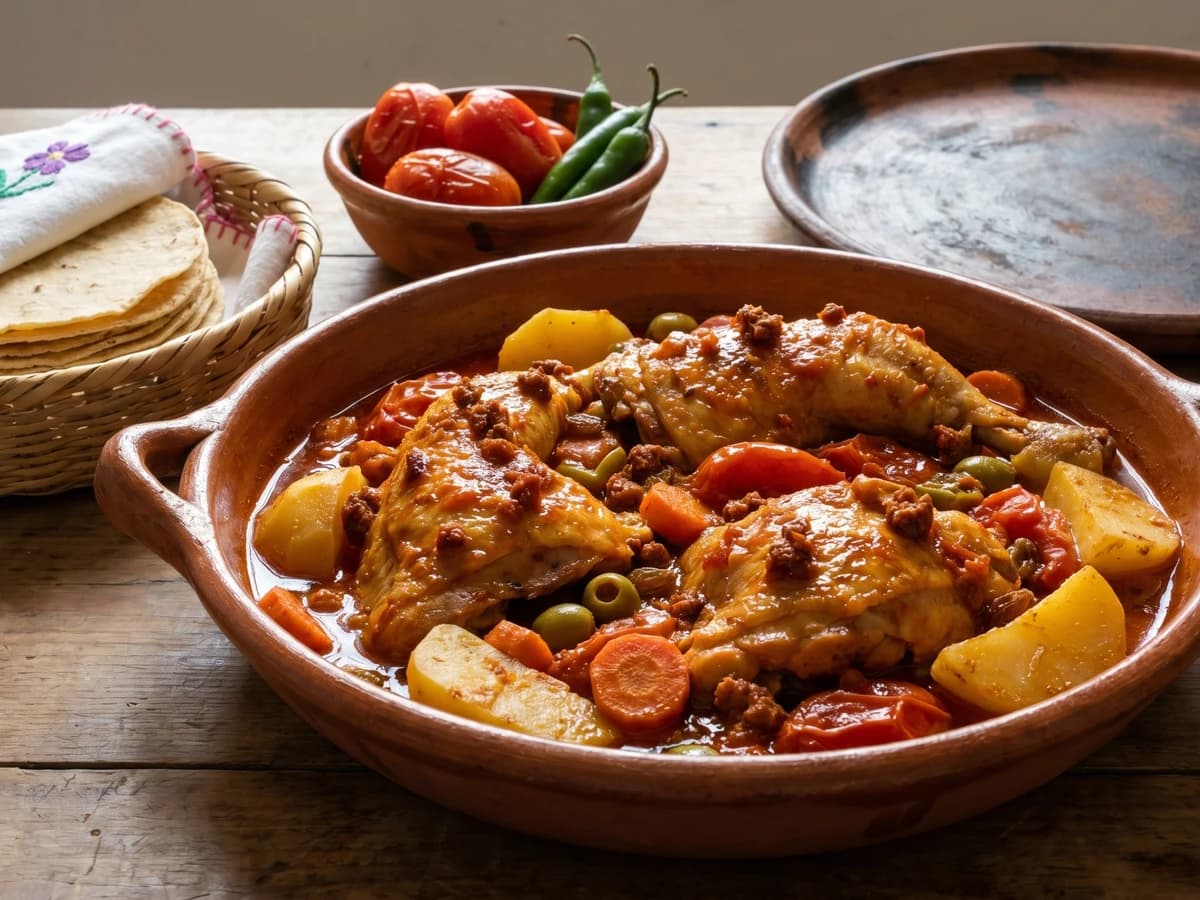
Aguascalientes' Pollo San Marcos is feria chicken browned in lard, carried by chorizo, papas, zanahoria, and a tomato-serrano salsa that is savory, bright, and mild.

Chef Lupita
Aguascalientes' hacienda celebration pig, painted with chile guajillo adobo, rested overnight, then roasted low until the meat loosens and the skin crackles under the knife.

Chef Lupita
Aguascalientes chamorro al horno, pork shank marinated overnight in guajillo-pasilla adobo with naranja agria, then baked low until the skin crackles and the bone gives up clean.

Chef Lupita
Querétaro's Sierra Gorda cabrito, browned in manteca de cerdo and braised until the young goat turns tender in a guajillo, comino, and azafrán sauce meant for pan de rancho, tortillas calientes, and a crowded table.

Chef Lupita
Guanajuato's Lerma corridor fish, scored to the bone, rubbed with garlic, serrano, and limón, then pan-fried whole until the fins turn crisp and the table smells like a Bajío river picnic.

Chef Lupita
Guanajuato's Lerma basin fish plate: tiny charales dried well, dusted with nixtamalized corn, fried until crisp, and eaten with limon, chile piquin, salsa verde, and hot tortillas.

Chef Lupita
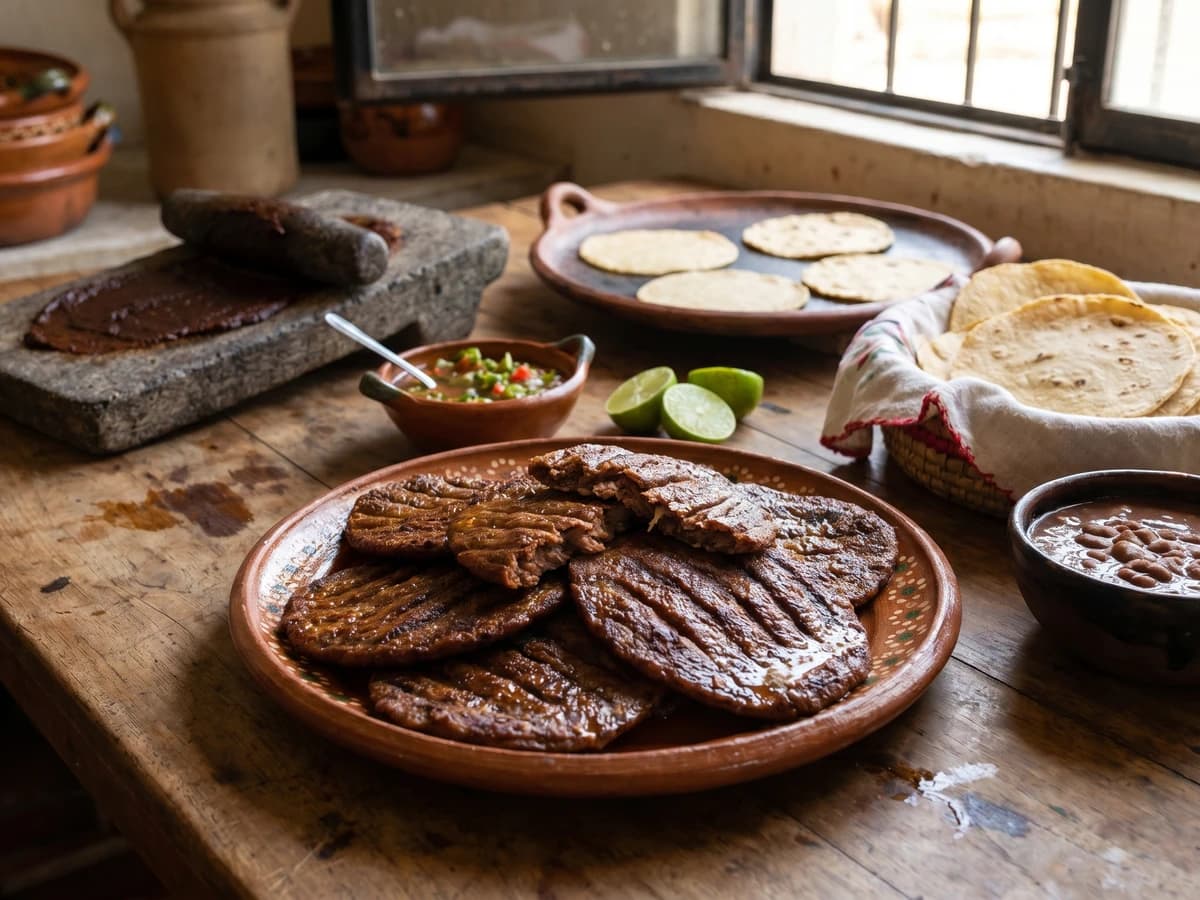
San Luis Potosi's thin beef pacholas, worked with chile pasilla, comino, and clavo on the metate, then fried in manteca until the edges darken and the center stays tender.

Chef Lupita
San Luis Potosí's Día de la Asunción platter of cecina, lengua, poached chicken, fruit, and market vegetables, served cold over lettuce with a sharp vinaigrette that wakes up every layer.

Chef Lupita
Guanajuato's Apaseo el Grande carnitas, pork shoulder and skin cooked slowly in manteca de cerdo with orange, salt, and milk, then torn and crisped on the comal for celebration tacos.

Chef Lupita
Querétaro's Sierra Gorda barbacoa is lamb salted, wrapped in roasted maguey pencas, sealed over carbón overnight, and served with garbanzo consomé from the clay olla catching every drop below.

Chef Lupita
Querétaro's semidesert nopal dish, whole cactus paddles layered with xoconostle pico de gallo, barely cooked shrimp, and queso ranchero, then browned in the hard heat of a stone oven.

Chef Lupita
Sierra Gorda de Guanajuato's capones are tender nopales stewed with sour xoconostle, chile pasilla, epazote, and cebolla, a milpa-and-monte pot finished with queso fresco and eaten with hot corn tortillas.

Chef Lupita
Guanajuato's Bajio beef pacholas are thin metate-worked ovals seasoned with chile ancho, bolillo, mint, parsley, and warm spices, then fried in manteca until the edges brown.

Chef Lupita
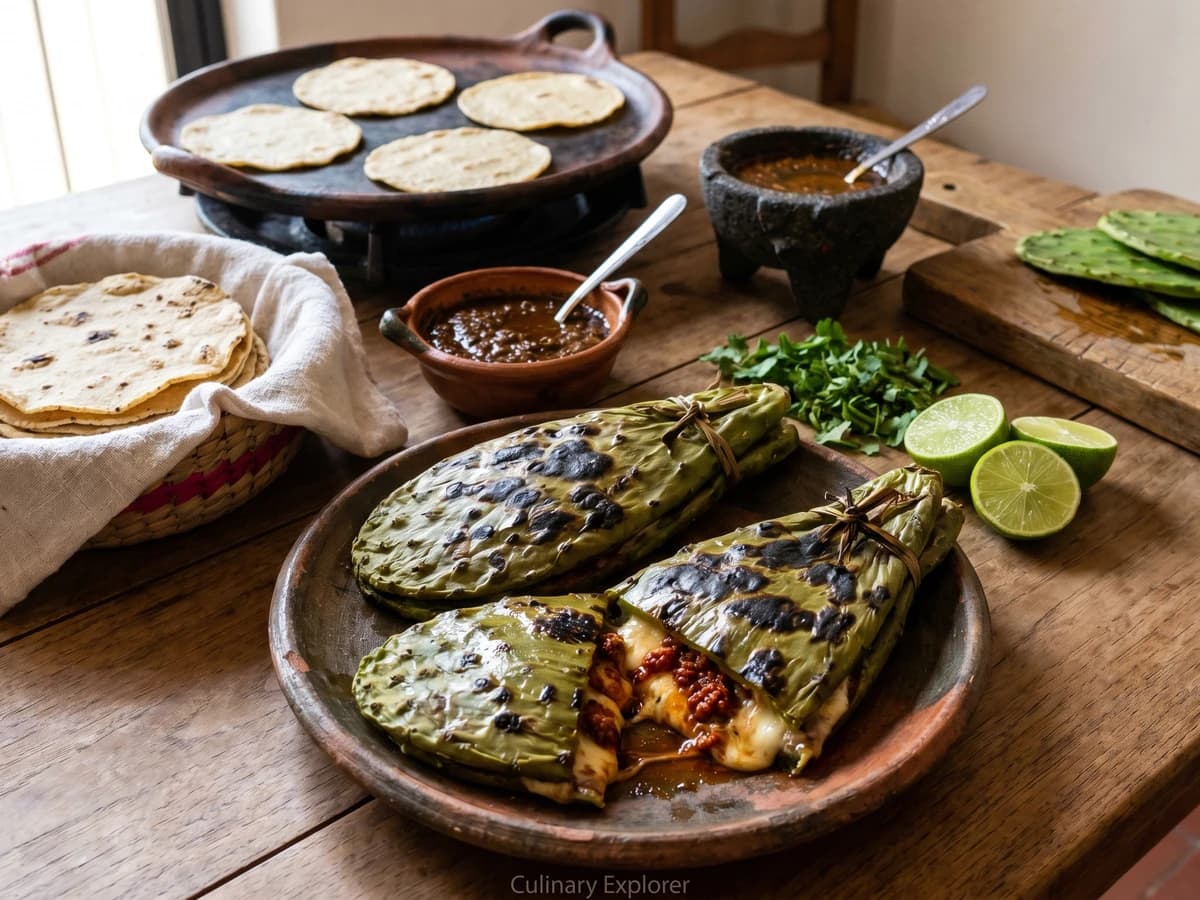
Queretaro's Otomi rancho nopal, split and stuffed with queso ranchero, chorizo, ajo, cilantro, and a dark chile ancho salsa before the penca chars over carbon.

Chef Lupita
Villa Progreso's Otomí feast-day nopales, tender cactus paddles simmered in a brick-red guajillo caldo with xoconostle and Mexican oregano, served from a clay cazuela with corn tortillas.
Culinary guides, cultural storytelling, and the editorial depth that makes cooking meaningful.
Discover Culinary Explorer