Chef Lupita
Acúmara Tatemada al Comal
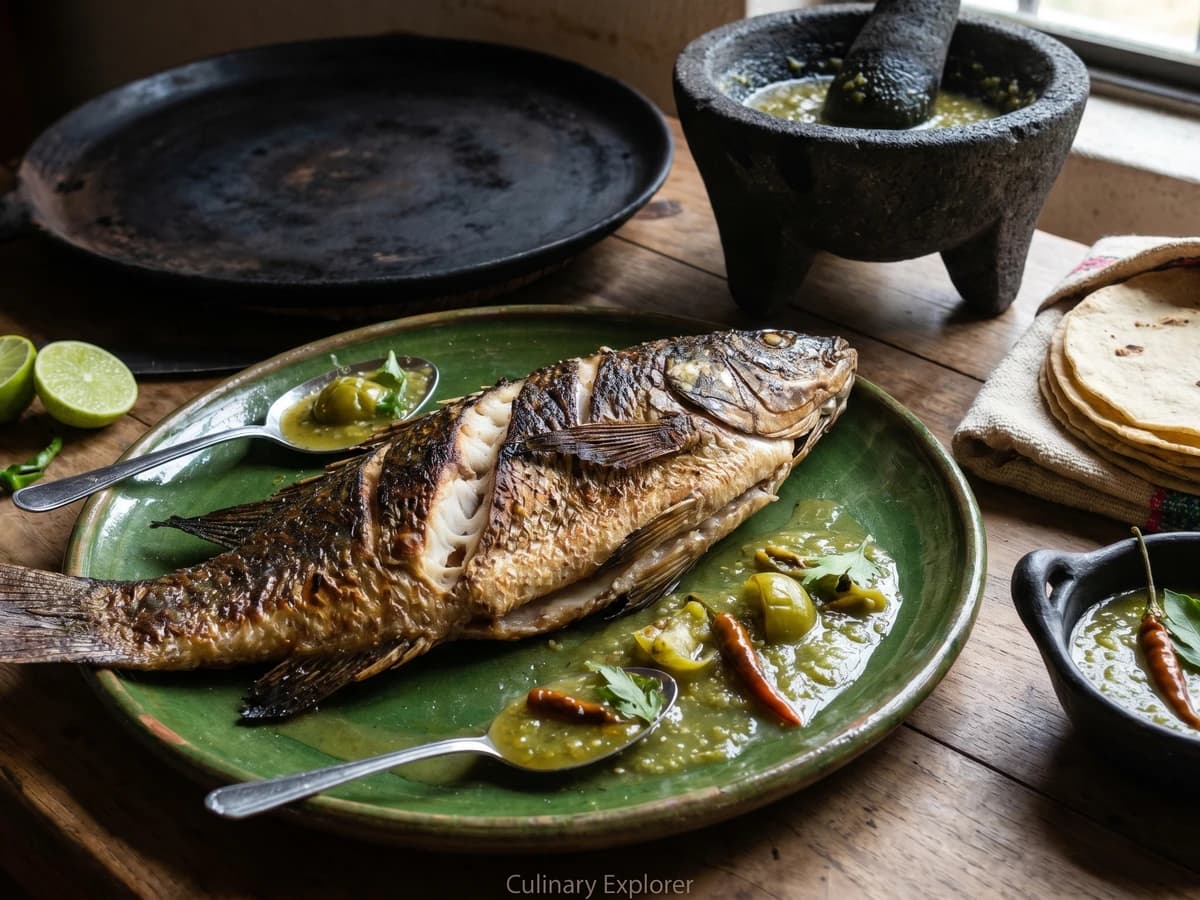
Michoacán's Lake Pátzcuaro acúmara, a whole kurucha from the lago tatemada on a comal de leña and served with chile perón atápakua, corn tortillas, and P'urhépecha discipline.
A cooking platform built around craft, culture, and the stories behind what we eat.

Created by
Querétaro's Sierra Gorda barbacoa is lamb salted, wrapped in roasted maguey pencas, sealed over carbón overnight, and served with garbanzo consomé from the clay olla catching every drop below.
Querétaro's Sierra Gorda, from Pinal de Amoles down toward Jalpan de Serra, has its own barbacoa de hoyo. The mountains sit north of the Bajío, with maguey on the dry slopes and cold mornings that make a bowl of consomé feel like sense, not luxury. This is celebration food: baptisms, patron saint days, weddings, the meal that tells everyone the family prepared properly.
The pencas de maguey are the ingredient that gives the dish its spine. They are roasted until flexible, then folded around lamb so the meat cooks in the earth with a green, mineral flavor banana leaf cannot give. Do not confuse them. A penca from the Sierra Gorda is not decoration. It is a cooking vessel, a seasoning, and a lid.
I have seen men dig the pit and tend the fire, yes. But the señora who taught me outside Pinal de Amoles decided the salt, wrapped the lamb, set the clay olla, and knew when the leaves had softened enough to bend without tearing. The technique lives in those hands. No me vengas con atajos.
The consomé below is not an afterthought. Garbanzos, chile guajillo, epazote, hierbabuena, and rice catch the lamb drippings until the broth turns deep and fatty. Serve it in clay, with warm corn tortillas in a chiquihuite and salsa borracha de pasilla on the table. Cada estado, su propia cocina.
Earth-oven cooking in central Mexico is pre-Columbian, but lamb barbacoa could only become this dish after sheep arrived with the Spanish in the 16th century. The maguey-wrapped pit method became a highland specialty across Hidalgo, Tlaxcala, Estado de México, Puebla, and Querétaro, with Actopan claiming national fame while Sierra Gorda communities kept their own rancho register. In Querétaro, the olla of consomé below the meat, built with garbanzos, chile guajillo, epazote, and lamb drippings, marks the dish as celebration food rather than everyday stew.
Quantity
12 pounds
preferably shoulder, ribs, neck, and shanks, cut into large pieces
Quantity
3 tablespoons, plus more to taste
Quantity
1 tablespoon
crumbled
Quantity
2 teaspoons
Quantity
1
cloves peeled and smashed
Quantity
2 large
thickly sliced
Quantity
6 large
spines trimmed, rinsed, and roasted until flexible
Quantity
8 to 10 pounds
for the pit
Quantity
2 quarts
Quantity
1 cup
soaked overnight and drained
Quantity
1/4 cup
rinsed
Quantity
2
stemmed, seeded, and lightly toasted
Quantity
1 medium
quartered
Quantity
4
smashed
Quantity
2
cut into thick rounds
Quantity
3 sprigs
Quantity
4 sprigs
Quantity
1 tablespoon
Quantity
6
stemmed and seeded
Quantity
1
stemmed and seeded
Quantity
2
unpeeled
Quantity
1/4 small
Quantity
3/4 cup
Quantity
1/2 cup, as needed
Quantity
1 teaspoon, plus more to taste
Quantity
1/4 cup
Quantity
1/4 cup
Quantity
for serving
warmed
Quantity
for serving
Quantity
for serving
Quantity
for serving
| Ingredient | Quantity |
|---|---|
| bone-in lamb (borrego)preferably shoulder, ribs, neck, and shanks, cut into large pieces | 12 pounds |
| coarse sea salt | 3 tablespoons, plus more to taste |
| dried Mexican oreganocrumbled | 1 tablespoon |
| freshly ground black pepper | 2 teaspoons |
| head of garliccloves peeled and smashed | 1 |
| white onionsthickly sliced | 2 large |
| pencas de magueyspines trimmed, rinsed, and roasted until flexible | 6 large |
| hardwood carbón de encino or mesquitefor the pit | 8 to 10 pounds |
| water for the consomé | 2 quarts |
| dried garbanzo beanssoaked overnight and drained | 1 cup |
| long-grain white ricerinsed | 1/4 cup |
| dried chile guajillostemmed, seeded, and lightly toasted | 2 |
| white onion for the consoméquartered | 1 medium |
| garlic cloves for the consomésmashed | 4 |
| carrotscut into thick rounds | 2 |
| fresh epazote | 3 sprigs |
| fresh hierbabuena | 4 sprigs |
| kosher salt for the consomé | 1 tablespoon |
| dried chile pasilla mexicanostemmed and seeded | 6 |
| dried chile anchostemmed and seeded | 1 |
| garlic cloves for the salsaunpeeled | 2 |
| white onion for the salsa | 1/4 small |
| pulque | 3/4 cup |
| chile soaking water (optional) | 1/2 cup, as needed |
| sal de grano | 1 teaspoon, plus more to taste |
| finely diced white onion for the salsa | 1/4 cup |
| crumbled queso añejo or queso fresco (optional) | 1/4 cup |
| hand-pressed corn tortillas (optional)warmed | for serving |
| finely diced white onion (optional) | for serving |
| chopped cilantro (optional) | for serving |
| lime wedges (optional) | for serving |
The night before cooking, rub the lamb pieces with the coarse sea salt, Mexican oregano, black pepper, smashed garlic, and sliced onions. Cover and refrigerate for 8 to 12 hours. This is not marinade for decoration. The salt needs time to reach the bone, especially in the shoulder and neck pieces.
Trim the thorns from the pencas de maguey and rinse off dust or grit. Pass each penca over a clean live fire or hot comal until the green darkens in patches and the leaf bends without snapping, usually 2 to 4 minutes per side depending on thickness. The leaf should smell grassy and mineral. Banana leaf will not do this job.
Three hours before cooking, prepare a stone-lined pit about 30 to 36 inches deep and wide. Line it with dry volcanic stones or fire bricks, then build a strong fire with carbón de encino or mesquite until the stones are very hot and the fire has collapsed into red coals. This is the oven. Treat it with respect.
In a heatproof clay olla, combine the water, soaked garbanzos, rinsed rice, toasted guajillos, quartered onion, smashed garlic, carrots, epazote, hierbabuena, and kosher salt. The rice will soften until it thickens the broth. That is expected. Leave the olla uncovered because it must catch the lamb drippings.
Rake the coals to create a stable center and nestle the olla into the pit so it sits firmly but not on the fiercest direct fire. Set a clean metal grate or green hardwood crosspieces above the olla. Lay roasted maguey pencas over the grate with the wide ends overlapping and the tips hanging over the edge of the pit.
Arrange the salted lamb over the pencas, placing the fattier pieces above the leaner ones so the rendered lamb fat runs through the meat and into the olla. Scatter the onions and garlic from the salting bowl over the lamb. Fold the pencas tightly over the meat, then lay more pencas on top until no meat is exposed. The leaves are the seal and the seasoning.
Cover the folded pencas with clean sheet metal or a heavy comal, then cover that with damp burlap and 4 to 6 inches of earth. Pack mud around the edges if you see gaps. A leaking pit gives you tough lamb and a thin consomé. Seal it well. Así se hace y punto.
Let the lamb cook undisturbed for 10 to 12 hours. Ten hours is the minimum for younger lamb and smaller pieces. Twelve hours is better for shoulder, neck, and shank. The meat is ready when it pulls away from the bone with almost no effort and the leaf has stained the surface deep olive-brown.
Scrape away the earth carefully and lift the metal cover away from your body. Open the maguey leaves with tongs. Transfer the lamb to a wide terracotta platter and let it rest for 20 minutes before pulling it apart. Do not throw away the soft onion and garlic caught in the leaves. Fold them into the meat.
Lift the clay olla from the pit with heavy gloves or tongs. Remove the spent epazote, hierbabuena stems, onion, and chiles. Taste for salt. Skim only the excess fat, not all of it. A golden lamb-fat sheen belongs on this broth. Ladle the garbanzos, rice, carrots, and consomé into small clay bowls.
Toast the chile pasilla mexicano and chile ancho on a dry comal for 20 to 30 seconds per side, just until they puff and smell deep, not burned. Toast the unpeeled garlic and onion until spotted. Soak the chiles in hot water, not boiling, for 15 minutes, then blend them with the peeled garlic, onion, pulque, sal de grano, and enough chile soaking water to make a pourable salsa. Stir in the diced white onion and crumbled queso añejo or queso fresco after blending.
Pull the lamb into rough pieces by hand, leaving some chunks whole for the people who like the bone. Serve with warm hand-pressed corn tortillas, salsa borracha, diced white onion, cilantro, lime wedges, and bowls of consomé. The tortilla gets lamb and salsa. The clay bowl gets consomé. The table gets quiet for the first few bites. Saber cocinar es saber vivir.
1 serving (about 520g)
Culinary guides, cultural storytelling, and the editorial depth that makes cooking meaningful.
Discover Culinary ExplorerChef Lupita
Michoacán's Lake Pátzcuaro acúmara, a whole kurucha from the lago tatemada on a comal de leña and served with chile perón atápakua, corn tortillas, and P'urhépecha discipline.

Chef Lupita
Puebla's weekday adobo of pork shoulder braised in a thick guajillo and ancho sauce sharpened with vinegar, cumin, and clove. The deep red of a market spice stall, the dish a poblana cooks without thinking.

Chef Lupita
Loreto's pit-roasted clams, planted hinge-up in beach sand and tatemadas under a fast fire of dried romerillo brush, the resinous Baja desert shrub that gives this dish its smoke.

Chef Lupita
Oaxaca's eighth mole, the silky, almond-and-cinnamon almendrado, served over poached chicken. Mild, sweet, restrained, and a quiet rebuttal to anyone who thinks Mexican food has to be hot to be Mexican.