Culinary Explorer

A cooking platform built around craft, culture, and the stories behind what we eat.
Discover Culinary Explorer
Cabrito al Azafrán de la Sierra Gorda

Cabrito al Azafrán de la Sierra Gorda

Created by

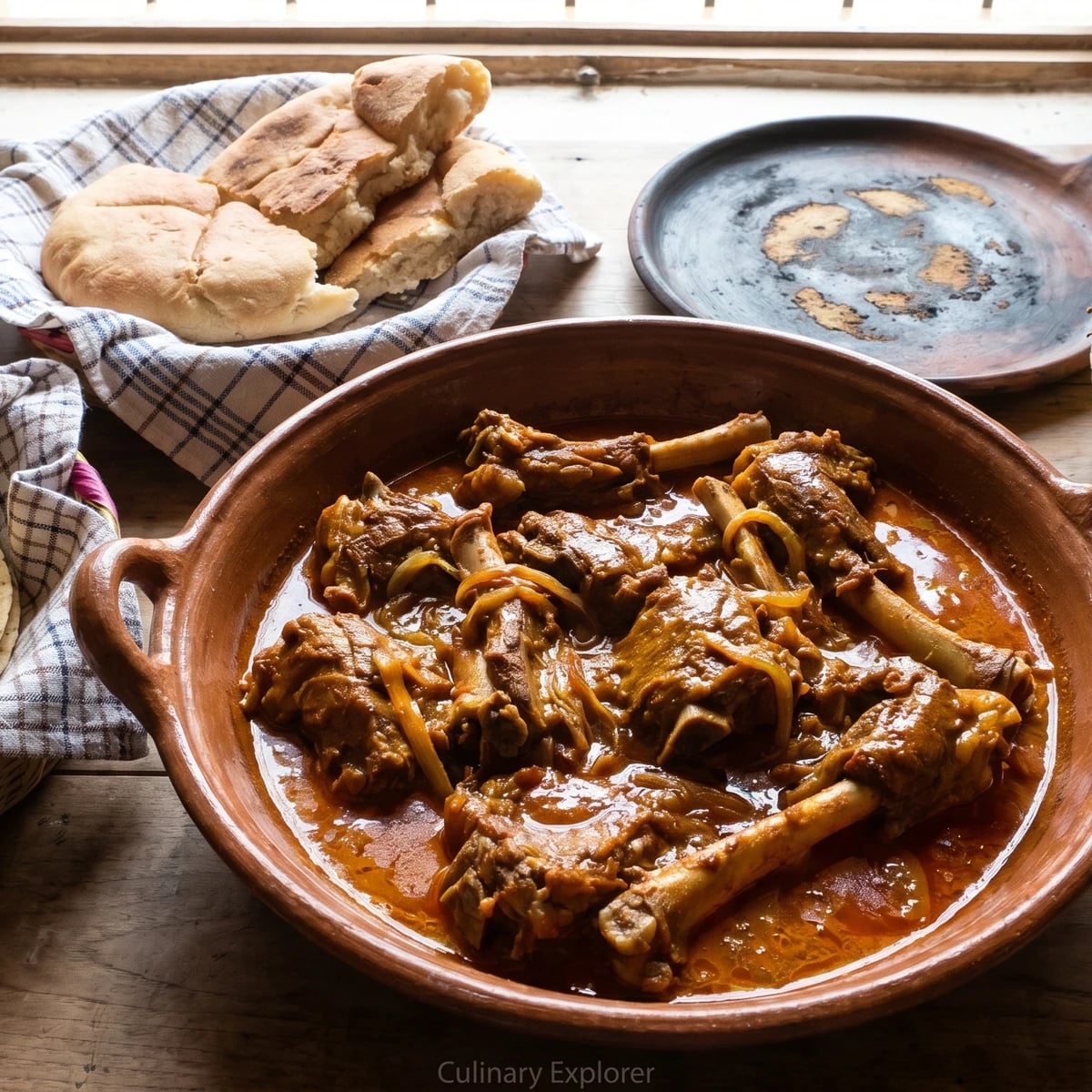
Querétaro's Sierra Gorda cabrito, browned in manteca de cerdo and braised until the young goat turns tender in a guajillo, comino, and azafrán sauce meant for pan de rancho, tortillas calientes, and a crowded table.

Main Dishes
Mexican
Special Occasion
Celebration
Make Ahead
45 min
Active Time
3 hr cook3 hr 45 min total
Yield6 to 8 servings

Querétaro's Sierra Gorda is where this cabrito lives: the rough high country around Jalpan, Pinal de Amoles, Peñamiller, and the roads that connect the Bajío to the Huasteca. It is not Nuevo León cabrito al pastor, and it is not barbacoa tucked under pencas de maguey. This is a cazuela dish, young goat braised in chile guajillo, comino, and azafrán until the sauce is thick enough for pan de rancho. Cada estado, su propia cocina.

The defining ingredient is azafrán del país, the safflower threads sold in mercados by the women who also know which guajillos are still alive and which ones taste like dust. It gives an orange-gold color and a faint bitter-floral note. The guajillo gives fruit and red depth. The cumin marks the highland register. The manteca de cerdo carries it all. La manteca es el sabor.

I learned this rhythm from señoras who cooked for fiestas patronales, not from restaurant cooks. They brown the cabrito in fat, fry the sauce until the raw chile smell leaves, cover the cazuela, and wait. Goat kid is tender, but the bones still need time to give the sauce body. Serve it in barro with tortillas calientes and bread to chase every spoonful. Saber cocinar es saber vivir.

Querétaro's Sierra Gorda sits where Bajío ranching, Huasteca trade routes, and Otomí-Chichimeca highland communities meet, and goats adapted to that dry, broken terrain better than cattle. Saffron arrived after the conquest through Spanish trade, but in rural central Mexican kitchens the name azafrán often came to mean azafrán del país, dried safflower petals used for color and a faint bitter-floral taste. The 2009 UNESCO inscription of the Otomí-Chichimeca traditions of Tolimán recognized the ritual landscape of the Querétaro semidesert; cabrito al azafrán belongs to that same highland habit of making celebration food from goats, dried chiles, and market spices.

The technique, the tradition, and the story behind every dish.

Discover Culinary Explorer

Ingredients

bone-in cabrito (young goat)

Quantity

4 pounds

preferably shoulder, leg, and rib pieces, cut into 2- to 3-inch pieces

coarse sea salt

Quantity

1 tablespoon, plus more to taste

manteca de cerdo (pork lard)

Quantity

3 tablespoons

dried chile guajillo

Quantity

8

stemmed and seeded

azafrán del país (dried safflower petals)

Quantity

2 tablespoons

lightly crushed

cumin seeds

Quantity

1 teaspoon

black peppercorns

Quantity

1/2 teaspoon

whole cloves

Quantity

2

dried Mexican oregano

Quantity

1/2 teaspoon

white onion

Quantity

1 medium

half thinly sliced and half chopped

garlic cloves

Quantity

6

unpeeled

bay leaves

Quantity

2

vinagre de piña

Quantity

2 tablespoons

hot light goat stock or hot water

Quantity

3 cups, plus more as needed

pan de rancho or bolillos (optional)

Quantity

for serving

hand-pressed corn tortillas (optional)

Quantity

for serving

warmed

thin raw white onion rings (optional)

Quantity

for serving

lime halves (optional)

Quantity

for serving

Equipment Needed

  • Wide 5- to 6-quart lead-free cazuela de barro or heavy Dutch oven
  • Cast iron comal or clay comal for toasting chiles
  • Blender
  • Fine-mesh strainer
  • Molcajete or spice grinder for the toasted spices

Instructions

  1. 1

    Salt the cabrito

    Pat the cabrito dry and season it all over with the coarse sea salt. Let it stand 45 minutes while you prepare the sauce, or salt it the night before and refrigerate it uncovered. Cabrito is young goat, not adult chivo. The bones are part of the flavor, so do not ask the butcher to remove them.

  2. 2

    Toast the chiles

    Heat a dry comal over medium. Toast the chile guajillo one or two at a time, about 15 to 20 seconds per side, just until the skin darkens slightly and the chile smells fruity. Do not let them blacken. Put the toasted chiles in a bowl and cover with hot water for 20 minutes. Hot water softens the flesh. Boiling water pulls bitterness from the skin.

    A good guajillo is flexible and leathery, not dusty and brittle. You can have perfect technique and bad chiles and still end up with a flat sauce. Start at the market, not the stove.
  3. 3

    Toast the spices

    On the same comal, toast the cumin seeds, black peppercorns, and cloves for 30 to 45 seconds, shaking them so they do not scorch. Toast the unpeeled garlic cloves until the skins show dark spots and the cloves soften slightly. Peel the garlic. The cumin is not background here. It is the highland note that tells you this dish is not from the coast.

  4. 4

    Bloom the azafrán

    Put the crushed azafrán del país in a small bowl with 1/2 cup of the hot goat stock or hot water. Let it stand 10 minutes, pressing the strands with the back of a spoon until the liquid turns orange-gold. This is not turmeric and not yellow dye. Azafrán del país gives color and a faint bitter-floral edge. That edge belongs in the dish.

  5. 5

    Blend the sauce

    Drain the soaked guajillos and put them in a blender with the azafrán liquid and petals, toasted garlic, toasted spices, dried Mexican oregano, chopped half of the onion, vinagre de piña, and 1 cup of hot stock or water. Blend until completely smooth. Strain through a fine-mesh sieve, pressing hard on the solids. You want a clean sauce that will cling to the goat, not a gritty paste.

  6. 6

    Brown the meat

    Heat the manteca de cerdo in a wide heavy pot or lead-free cazuela over medium-high heat. Brown the cabrito in batches, turning until the edges take color and the bones show a little caramelization. Do not crowd the pot. Crowding makes the meat leak water and gray itself. La manteca es el sabor, and browning is where that flavor starts.

  7. 7

    Fry the sauce

    Lower the heat to medium. Add the sliced half of the onion to the fat left in the pot and cook until softened. Pour in the strained guajillo and azafrán sauce. It will sputter. Stir and fry the sauce for 8 to 10 minutes, until the raw chile smell leaves, the color deepens to brick-gold, and a thin line of orange fat gathers at the edge. Skip this and the sauce tastes unfinished. No me vengas con atajos.

  8. 8

    Braise gently

    Return the browned cabrito to the pot with the bay leaves. Add enough hot stock or hot water to come halfway up the meat, usually 2 cups more. Bring to a low simmer, cover, and cook 2 to 2 1/2 hours, turning the pieces every 40 minutes, until the meat is tender and beginning to pull from the bone. The sauce should thicken, not drown the goat. Add hot water in small splashes only if the bottom looks dry.

  9. 9

    Rest and serve

    Uncover the pot and simmer 10 to 15 minutes more if the sauce needs tightening. Taste for salt. Let the cabrito rest off the heat for 20 minutes so the sauce settles back into the meat. Serve from the cazuela with pan de rancho or bolillos for sopping and tortillas calientes wrapped in a servilleta. Onion rings and lime stay on the side. Recetas probadas y garantizadas.

Chef Tips

  • Ask for cabrito, not adult chivo. You want young goat with bone, ideally shoulder, leg, and rib. Adult goat will work only with a longer braise and a stronger flavor. That is a compromise, not the same dish.
  • Buy chile guajillo that bends. If it cracks like old paper, leave it. At Mercado de La Cruz in Querétaro or the morning market in Jalpan, pregúntale a las señoras del mercado. They know which vendor is selling last year's chiles.
  • Azafrán del país is dried safflower, not turmeric. If all you can find is true saffron threads, use 1/4 teaspoon and understand that the aroma will be sharper and more floral. Do not use yellow coloring. That is not cooking.
  • Use a lead-free cazuela de barro if you have one. If you are not sure the clay is safe, cook in a Dutch oven and serve in barro. Beautiful clay does not excuse lead in your food.
  • Serve with corn tortillas and pan de rancho or bolillos. Flour tortillas belong to other registers. This is Sierra Gorda, not the norteño asada table.

Advance Preparation

  • Salt the cabrito up to 24 hours ahead and refrigerate uncovered. The salt firms the surface and helps the meat brown instead of sweating in the pot.
  • The chile and azafrán sauce can be blended one day ahead and refrigerated, but fry it in manteca on the cooking day. Raw chile paste sitting in a bowl is not the finished flavor.
  • Cabrito al azafrán reheats well. Make it one day ahead, refrigerate it in its sauce, and reheat gently over low heat with a splash of hot water. The sauce deepens overnight.
  • Warm the tortillas at the last moment on a comal. A tortilla wrapped too early turns damp and tired. Así se hace y punto.

Frequently Asked Questions

Nutrition Information

1 serving (about 350g)

Calories
500 calories
Total Fat
13 g
Saturated Fat
4 g
Trans Fat
0 g
Unsaturated Fat
9 g
Cholesterol
105 mg
Sodium
1350 mg
Total Carbohydrates
51 g
Dietary Fiber
7 g
Sugars
4 g
Protein
44 g

Note: Chef personas and recipes are created with AI assistance. Cook with care: follow safe food-handling practices, check doneness with a thermometer when needed, and adapt for allergies and your kitchen.

Where cooking meets culture.

Culinary guides, cultural storytelling, and the editorial depth that makes cooking meaningful.

Discover Culinary Explorer

More from Bajío Main Dishes

Browse the full collection