Chef Lupita
Acúmara Tatemada al Comal
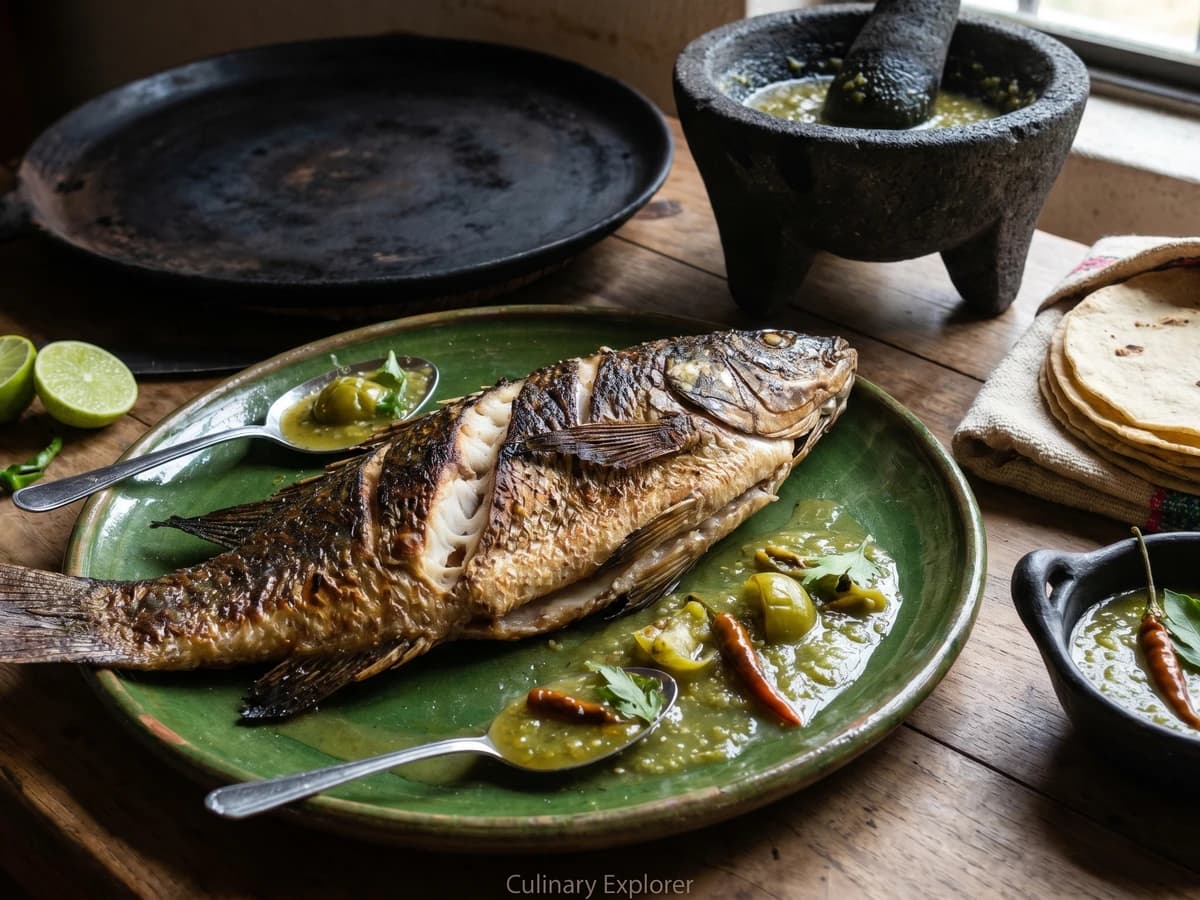
Michoacán's Lake Pátzcuaro acúmara, a whole kurucha from the lago tatemada on a comal de leña and served with chile perón atápakua, corn tortillas, and P'urhépecha discipline.
A cooking platform built around craft, culture, and the stories behind what we eat.

Created by
Guanajuato's Lerma basin fish plate: tiny charales dried well, dusted with nixtamalized corn, fried until crisp, and eaten with limon, chile piquin, salsa verde, and hot tortillas.
Guanajuato, the Lerma basin, Lake Yuriria, the river towns near Salamanca and Acambaro: this is where charales belong. People say the Bajio is landlocked as if that means fishless. No. The Lerma and its lagoons have fed families with tiny freshwater fish for generations, especially when meat was expensive and the market still had baskets of silver fish from the morning catch.
Charales are not fillets. They are small lake fish, eaten whole, bones and all, after they are dried well and fried hard enough to turn crisp from head to tail. The women who sell them near the markets know the work: rinse gently, spread them on cloth, let the surface dry, fry in small batches, season while hot. If you crowd the pot or leave water on the fish, they go limp. No me vengas con atajos.
The flavor here is lake, corn, lime, and chile piquin. The salsa verde is tomatillo and chile serrano roasted on the comal, not a sweet green sauce from a jar. Serve the charales on a Guanajuato talavera platter or a barro plate from Apaseo el Alto, with tortillas in a chiquihuite and lime halves on the table. Cada estado, su propia cocina. This is the Bajio telling you it knows its own water.
Charales are small freshwater fish of the Chirostoma group and related central Mexican lake species, long eaten fresh, dried, toasted, or fried around the Lerma-Santiago basin, Lake Chapala, Patzcuaro, and Lake Yuriria. Lake Yuriria in Guanajuato was created in the 16th century, traditionally dated to 1548 under Augustinian direction, as one of New Spain's major early hydraulic works, and its fisheries became part of the Bajio market diet. The dried charal trade helped inland communities keep fish on the table outside coastal regions, proving that central Mexico's fish cookery is freshwater, local, and serious.
Quantity
1 1/2 pounds
1 to 2 inches long, rinsed gently and dried very well
Quantity
1 tablespoon
Quantity
1 1/2 teaspoons, divided, plus more to taste
Quantity
1 teaspoon, divided, plus more for serving
Quantity
3/4 cup
Quantity
1/4 cup
Quantity
1/2 teaspoon
crushed between your fingers
Quantity
4 cups, or enough for 1 1/2 inches in the pot
Quantity
1 pound
husked and rinsed
Quantity
3
stemmed
Quantity
1
1/4 left whole for roasting and the rest thinly sliced for serving
Quantity
1
unpeeled
Quantity
1/2 cup
chopped
Quantity
for serving
warmed
Quantity
for serving
Quantity
for serving
| Ingredient | Quantity |
|---|---|
| fresh charales1 to 2 inches long, rinsed gently and dried very well | 1 1/2 pounds |
| fresh lime juice | 1 tablespoon |
| kosher salt | 1 1/2 teaspoons, divided, plus more to taste |
| ground chile piquin | 1 teaspoon, divided, plus more for serving |
| masa harina nixtamalizada | 3/4 cup |
| all-purpose flour | 1/4 cup |
| dried Mexican oreganocrushed between your fingers | 1/2 teaspoon |
| aceite de maiz | 4 cups, or enough for 1 1/2 inches in the pot |
| tomatilloshusked and rinsed | 1 pound |
| fresh chile serranostemmed | 3 |
| small white onion1/4 left whole for roasting and the rest thinly sliced for serving | 1 |
| garlic cloveunpeeled | 1 |
| fresh cilantro leaves and tender stemschopped | 1/2 cup |
| hand-pressed corn tortillas (optional)warmed | for serving |
| lime halves (optional) | for serving |
| extra ground chile piquin (optional) | for serving |
Rinse the charales gently in cold water and pick out any broken bits or lake grass. If you see a fish larger than 3 inches, pinch out the belly and rinse it clean. Spread the charales on a clean cotton towel and pat them very dry. Leave them uncovered for 15 minutes while you make the salsa. Water is the enemy here. Wet fish steams before it fries, and then you get softness where you need crunch.
Heat a dry comal over medium heat. Roast the tomatillos, chile serrano, onion quarter, and unpeeled garlic, turning as needed, until the tomatillos blister and turn olive green, the serranos spot with black, and the garlic softens in its skin. This takes 8 to 10 minutes. Do not burn the tomatillos black. A little char gives flavor. Too much makes the salsa bitter.
Peel the roasted garlic. In a molcajete, grind the garlic with 1/2 teaspoon salt until it becomes a paste. Add the roasted serranos and grind them into the garlic. Add the tomatillos and roasted onion, crushing until the salsa is juicy but still has texture. Stir in the chopped cilantro. Taste for salt. Blender salsa works when it must, but this one is better with the stone bruising the chile and tomatillo.
In a wide bowl, mix the masa harina nixtamalizada, all-purpose flour, 1 teaspoon salt, 1/2 teaspoon chile piquin, and the crushed Mexican oregano. Sprinkle the dry charales with the lime juice and toss once. Add the charales to the flour mixture and coat them lightly, shaking off the excess. You want a thin dusting, not armor. The fish should still look like fish.
Pour the aceite de maiz into a wide heavy pot or deep cazuela to a depth of about 1 1/2 inches. Heat to 350F. If you do not have a thermometer, drop in a pinch of the masa mixture. It should sizzle immediately and rise to the surface without turning dark in five seconds. This is fish, not carnitas. Use clean oil. Stale fat will cover the taste of the lake.
Fry the charales in small handfuls, stirring once with a spider so they do not clump. Cook 2 to 3 minutes, until the fish are golden, stiff, and make a dry tapping sound against the spoon. Do not crowd the pot. Crowding drops the heat and leaves you with greasy fish. Lift each batch to a wire rack or brown paper and let the oil drain.
While each batch is still hot, sprinkle with a little salt and the remaining chile piquin. Taste one charal from the first batch. The head and bones should be crisp enough to eat without thinking about them. If the center bends softly, return the next batch to the oil for another 30 seconds. Recetas probadas y garantizadas means you check the food, not the clock.
Pile the charales on a warm platter. Put the salsa verde, sliced white onion, lime halves, extra chile piquin, and hot corn tortillas on the table. Make tacos with a spoonful of salsa and a hard squeeze of lime. Eat them right away. Fried charales wait for nobody, and the first ten minutes are when the cook gets paid for her work.
1 serving (about 350g)
Culinary guides, cultural storytelling, and the editorial depth that makes cooking meaningful.
Discover Culinary ExplorerChef Lupita
Michoacán's Lake Pátzcuaro acúmara, a whole kurucha from the lago tatemada on a comal de leña and served with chile perón atápakua, corn tortillas, and P'urhépecha discipline.

Chef Lupita
Puebla's weekday adobo of pork shoulder braised in a thick guajillo and ancho sauce sharpened with vinegar, cumin, and clove. The deep red of a market spice stall, the dish a poblana cooks without thinking.

Chef Lupita
Loreto's pit-roasted clams, planted hinge-up in beach sand and tatemadas under a fast fire of dried romerillo brush, the resinous Baja desert shrub that gives this dish its smoke.

Chef Lupita
Oaxaca's eighth mole, the silky, almond-and-cinnamon almendrado, served over poached chicken. Mild, sweet, restrained, and a quiet rebuttal to anyone who thinks Mexican food has to be hot to be Mexican.