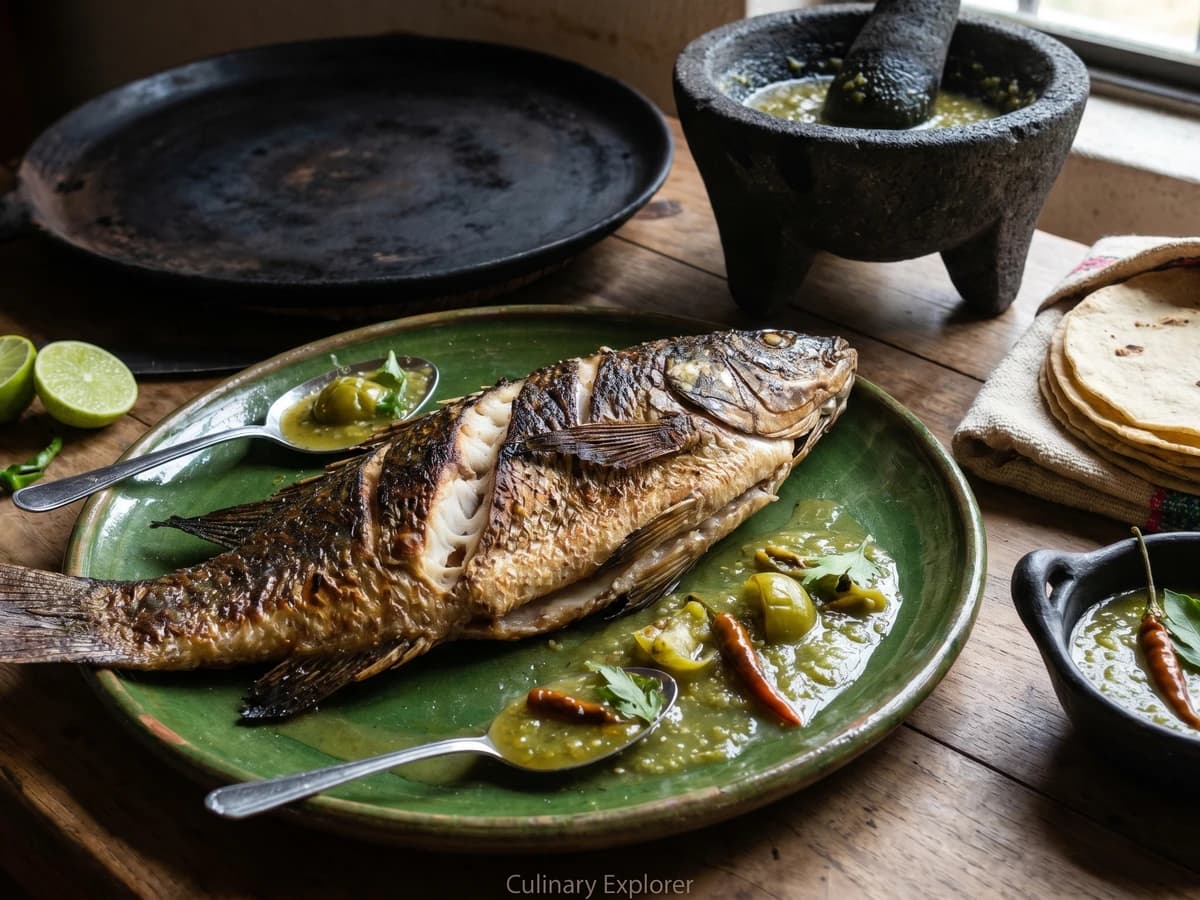
Chef Lupita
Acúmara Tatemada al Comal
Michoacán's Lake Pátzcuaro acúmara, a whole kurucha from the lago tatemada on a comal de leña and served with chile perón atápakua, corn tortillas, and P'urhépecha discipline.
A cooking platform built around craft, culture, and the stories behind what we eat.

Created by
San Luis Potosí's Día de la Asunción platter of cecina, lengua, poached chicken, fruit, and market vegetables, served cold over lettuce with a sharp vinaigrette that wakes up every layer.
San Luis Potosí, sitting between the Bajío and the Altiplano, has a cold August dish that people outside the state barely know: fiambre potosino. It belongs to Día de la Asunción, August 15, when the work is done early and the platter waits cold on the table after Mass. This is not food from a single Mexico. Cada estado, su propia cocina.
The dish is built, not stewed. Cecina de res, lengua, and pollo are cooked separately, cooled, sliced, and laid over lechuga with potatoes, carrots, green beans, beets, fruit, olives, and jalapeños en escabeche. The vinaigrette is the thread that ties it together. It has to be sharp because cold food needs stronger seasoning. Ask the women at Mercado República in the capital and they will tell you the same thing without making a speech.
I learned a version from a señora who made it every August in a kitchen where the tongue cooled in its own broth and the cecina rested on a plate by the comal. She did not dump everything into a bowl. She composed it on a wide platter, lettuce first, then meat, vegetable, fruit, egg, chile. La cocina no es decoración, es trabajo. If the plate does not show that work, you missed the point.
The word 'fiambre' came into Mexican kitchens from Spain as a term for cooked foods served cold, useful for feast days when the main work had to be finished before church and before guests arrived. In San Luis Potosí, the dish attached itself to August 15, Día de la Asunción, especially in the capital and nearby towns, where families built a cold platter from cecina, lengua, chicken, seasonal fruit, boiled vegetables, and vinaigrette. It should not be confused with Guatemala's fiambre for Todos Santos on November 1; the Potosino version is smaller, sharper, and tied to the Bajío and Altiplano habit of preserving, salting, and composing food for a full table.
Quantity
1, 2 1/2 to 3 pounds
rinsed well
Quantity
1 large
halved
Quantity
1
halved crosswise
Quantity
3
Quantity
1 teaspoon
Quantity
2 teaspoons
divided
Quantity
2 tablespoons, divided, plus more to taste
Quantity
2 pounds
Quantity
1 pound
thin sheets
Quantity
1 pound
scrubbed
Quantity
4 medium
peeled
Quantity
1/2 pound
trimmed
Quantity
1 cup
Quantity
2 medium
scrubbed
Quantity
2 heads
leaves separated, washed, and dried
Quantity
2
cored and sliced into thin wedges
Quantity
2
peeled and cut into clean segments
Quantity
2
sliced just before serving
Quantity
4
peeled and quartered
Quantity
1/2 cup
drained
Quantity
6
sliced into rajas
Quantity
1/2 cup
Quantity
1/4 cup
Quantity
3/4 cup
Quantity
1 teaspoon
Quantity
1/2 teaspoon
Quantity
1/2 teaspoon
Quantity
to taste
Quantity
for serving
| Ingredient | Quantity |
|---|---|
| beef tonguerinsed well | 1, 2 1/2 to 3 pounds |
| white onionhalved | 1 large |
| head of garlichalved crosswise | 1 |
| bay leaves | 3 |
| black peppercorns | 1 teaspoon |
| dried Mexican oreganodivided | 2 teaspoons |
| kosher salt | 2 tablespoons, divided, plus more to taste |
| bone-in, skin-on chicken breasts | 2 pounds |
| cecina de resthin sheets | 1 pound |
| small waxy potatoesscrubbed | 1 pound |
| carrotspeeled | 4 medium |
| green beanstrimmed | 1/2 pound |
| fresh or frozen peas | 1 cup |
| beetsscrubbed | 2 medium |
| lechuga orejona or romaine lettuceleaves separated, washed, and dried | 2 heads |
| crisp applescored and sliced into thin wedges | 2 |
| orangespeeled and cut into clean segments | 2 |
| firm bananassliced just before serving | 2 |
| hard-boiled eggspeeled and quartered | 4 |
| green olivesdrained | 1/2 cup |
| pickled jalapeños en escabechesliced into rajas | 6 |
| apple cider vinegar | 1/2 cup |
| brine from pickled jalapeños en escabeche | 1/4 cup |
| mild olive oil | 3/4 cup |
| dried Mexican oregano for the vinaigrette | 1 teaspoon |
| freshly ground black pepper | 1/2 teaspoon |
| sugar | 1/2 teaspoon |
| fine sea salt | to taste |
| warm corn tortillas (optional) | for serving |
Put the beef tongue in a heavy stockpot with the white onion, garlic, bay leaves, peppercorns, 1 teaspoon dried Mexican oregano, and 1 tablespoon kosher salt. Cover with cold water by 2 inches. Bring to a gentle simmer, then lower the heat and cook 2 1/2 to 3 hours, until a knife slides into the thickest part without fighting you. Lengua is patient meat. Rush it and it stays tough.
Lift the tongue from the broth while it is still warm enough to handle. Peel off the thick outer skin with your fingers and a small knife. Do it warm. Cold tongue peels badly and wastes meat. Return the peeled tongue to a little strained broth, let it cool, then refrigerate until firm. Slice it thin across the grain once cold.
Place the chicken breasts in a pot with enough water to cover, 1 teaspoon kosher salt, and a spoonful of the tongue broth if you have it. Simmer gently 25 to 35 minutes, until the thickest part reaches 165F and the meat is cooked through but still juicy. Let the chicken cool in its broth. Dry chicken has no place on a celebration platter.
In salted water, cook the potatoes until tender, 18 to 25 minutes depending on size. Cook the carrots until just tender, then blanch the green beans and peas until bright and still firm. Cook the beets in a separate pot so they do not stain everything like a careless cook. Cool all the vegetables completely, then slice the potatoes, carrots, and beets into neat pieces.
Heat a dry comal or heavy skillet over medium. Pass the cecina over the hot surface just until the edges darken slightly and the meat smells salty and roasted, about 45 seconds per side. Do not turn it into leather. Let it cool, then cut it into strips. The cecina brings the dry-country flavor of San Luis Potosí to the plate.
Whisk together the apple cider vinegar, jalapeño escabeche brine, olive oil, 1 teaspoon dried Mexican oregano, black pepper, sugar, and fine sea salt. Taste it with a piece of potato, not with a spoon. The dressing should be sharp because it has to season cold meat, fruit, and lechuga. If it tastes timid, add more vinegar and salt. No me vengas con atajos.
In separate bowls, lightly dress the sliced tongue, chicken, cecina, potatoes, carrots, green beans, peas, and beets with the vinaigrette. Keep the beets separate until assembly. Let everything stand cold for 30 minutes so the vinegar enters the food instead of sliding off the surface. This is a composed dish, not a tossed salad.
Slice the apples and oranges. Slice the bananas only at the end, right before the platter is built, because they brown while you are congratulating yourself. Moisten the apple and banana lightly with a spoonful of vinaigrette. The fruit should brighten the meats, not turn the plate sweet.
Line a wide platter with dry lechuga leaves. Arrange the potatoes, carrots, green beans, peas, tongue, chicken, cecina, apples, oranges, bananas, olives, jalapeño rajas, hard-boiled eggs, and beets in clean sections or overlapping bands. Pour a final thin thread of vinaigrette over the top. Serve cold, with warm corn tortillas on the side. Así se hace y punto.
1 serving (about 455g)
Culinary guides, cultural storytelling, and the editorial depth that makes cooking meaningful.
Discover Culinary ExplorerChef Lupita
Michoacán's Lake Pátzcuaro acúmara, a whole kurucha from the lago tatemada on a comal de leña and served with chile perón atápakua, corn tortillas, and P'urhépecha discipline.

Chef Lupita
Puebla's weekday adobo of pork shoulder braised in a thick guajillo and ancho sauce sharpened with vinegar, cumin, and clove. The deep red of a market spice stall, the dish a poblana cooks without thinking.

Chef Lupita
Loreto's pit-roasted clams, planted hinge-up in beach sand and tatemadas under a fast fire of dried romerillo brush, the resinous Baja desert shrub that gives this dish its smoke.

Chef Lupita
Oaxaca's eighth mole, the silky, almond-and-cinnamon almendrado, served over poached chicken. Mild, sweet, restrained, and a quiet rebuttal to anyone who thinks Mexican food has to be hot to be Mexican.