
Chef Lupita
Apaseo el Grande Carnitas (Carnitas Estilo Apaseo)
Guanajuato's Apaseo el Grande carnitas, pork shoulder and skin cooked slowly in manteca de cerdo with orange, salt, and milk, then torn and crisped on the comal for celebration tacos.
A cooking platform built around craft, culture, and the stories behind what we eat.
Created by
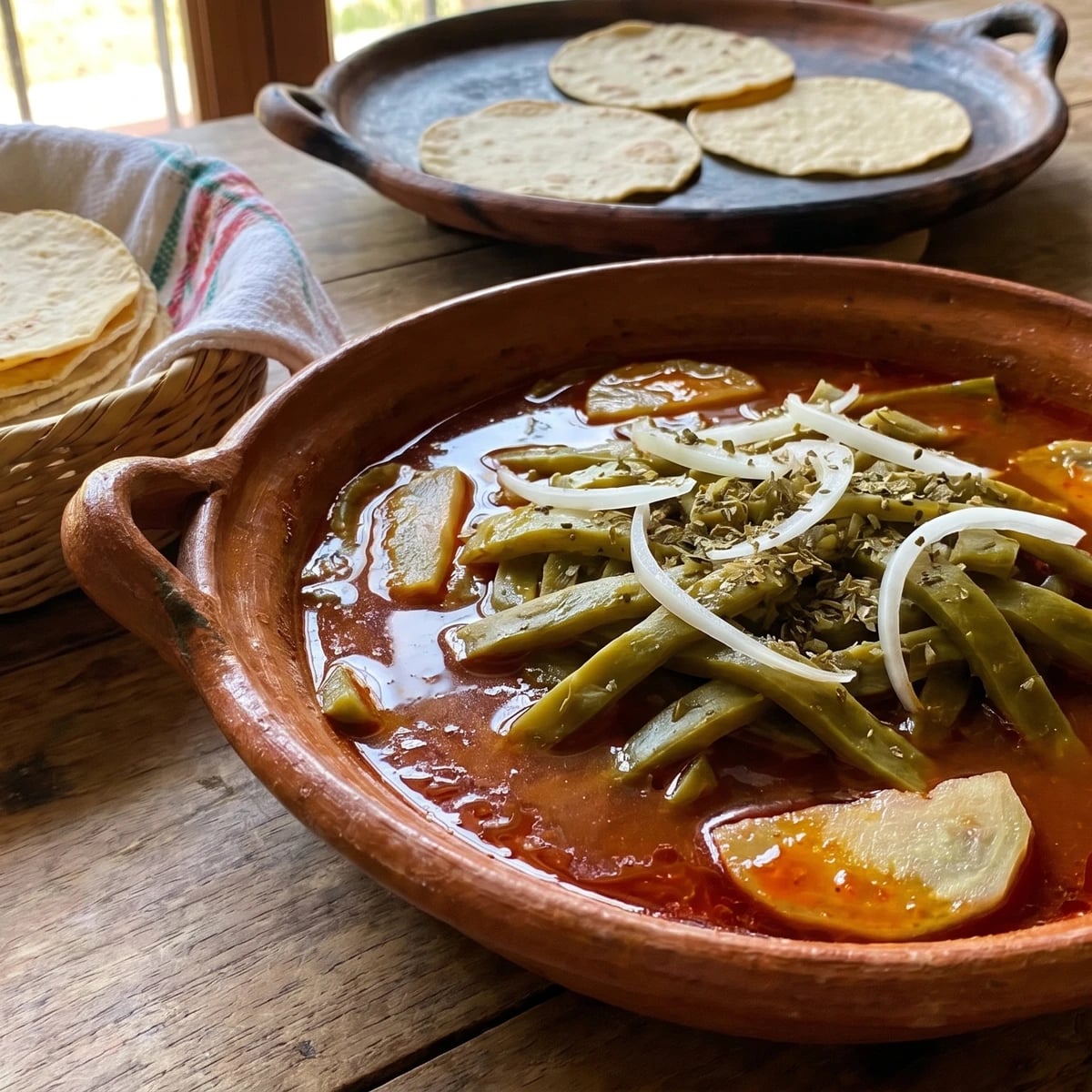
Villa Progreso's Otomí feast-day nopales, tender cactus paddles simmered in a brick-red guajillo caldo with xoconostle and Mexican oregano, served from a clay cazuela with corn tortillas.
Querétaro, in the semidesierto around Villa Progreso, is where these nopales de santo belong. They come to the table on patron saint feast days, when the community kitchen feeds relatives, musicians, mayordomos, and whoever walked in hungry. The pot looks modest until you understand what is in it: cactus from the dry hills, chile guajillo for color, xoconostle for the Otomí sour edge, and Mexican oregano rubbed between the fingers at the end.
This is not any nopal in red sauce. The nopales must be young, the paddles still tender enough to bend, because old paddles cook into leather. The guajillo is toasted and strained so the caldo is brick-red and clean. The xoconostle is not regular tuna and it is not tomatillo. It belongs to this semidesert register, pale and sharp, the taste that tells you where you are.
The women who perfected this dish were not trying to impress anyone. They were feeding a feast without meat and still making the table serious. Cook the nopales first to tame the baba, fry the guajillo puree until the color deepens, then simmer everything just long enough for the cactus to drink the caldo. Cada estado, su propia cocina. Querétaro earns its place quietly, with cactus, clay, and patience.
Nopal, from the Nahuatl 'nopalli,' has been cultivated and gathered in central Mexico since pre-Columbian times, and the semidesert of Querétaro keeps both tender paddles and xoconostle in daily cooking. Villa Progreso is part of the Otomí cultural corridor near Peña de Bernal, where patron-saint foodways include meatless stews, ceremonial tortillas, and chile caldos tied to the mayordomía system. The broader Otomí-Chichimeca sacred landscape of the Querétaro semidesert, centered on Tolimán and Peña de Bernal, was inscribed by UNESCO in 2009, recognizing living ritual practice rather than museum display.
Quantity
2 pounds
cleaned, spines removed, and cut into 1/2-inch strips
Quantity
1/2 medium
for cooking the nopales
Quantity
2
peeled, for cooking the nopales
Quantity
1 tablespoon, divided, plus more to taste
Quantity
10
stemmed and seeded
Quantity
2 cups
for soaking the chiles
Quantity
1 small
quartered
Quantity
3
unpeeled
Quantity
2 tablespoons
Quantity
1 large
peeled, seeds removed, and cut into thin half-moons
Quantity
4 cups
Quantity
1 1/2 teaspoons
crumbled
Quantity
for serving
Quantity
for serving
Quantity
for serving
warmed
| Ingredient | Quantity |
|---|---|
| tender nopalescleaned, spines removed, and cut into 1/2-inch strips | 2 pounds |
| white onionfor cooking the nopales | 1/2 medium |
| garlic clovespeeled, for cooking the nopales | 2 |
| kosher salt | 1 tablespoon, divided, plus more to taste |
| dried chile guajillostemmed and seeded | 10 |
| hot waterfor soaking the chiles | 2 cups |
| white onionquartered | 1 small |
| garlic clovesunpeeled | 3 |
| aceite de maíz (corn oil) | 2 tablespoons |
| xoconostlepeeled, seeds removed, and cut into thin half-moons | 1 large |
| water | 4 cups |
| dried Mexican oregano, preferably oregano de montecrumbled | 1 1/2 teaspoons |
| thinly sliced white onion (optional) | for serving |
| dried Mexican oregano (optional) | for serving |
| hand-pressed corn tortillas (optional)warmed | for serving |
Trim the edges from the nopales and scrape away every spine. Cut the paddles into strips about 1/2 inch wide. Use young paddles that still bend when you hold them. Old nopales cook tough, and no chile guajillo can rescue that.
Put the nopales in a pot with the half onion, 2 peeled garlic cloves, 2 teaspoons of the salt, and enough water to cover by one inch. Simmer uncovered for 12 to 15 minutes, until the color shifts from bright green to olive and the baba foams up, then settles. Drain well and discard the onion and garlic. Do not cover the pot. Covering traps the mucilage and gives you a slippery mess.
Heat a dry comal over medium. Toast the chile guajillo a few at a time, about 15 seconds per side, just until the skins darken slightly and smell fruity. They should never blacken. Guajillo is thin. Look away and it turns bitter.
On the same comal, roast the quartered onion and the 3 unpeeled garlic cloves until they are charred in spots and softened at the edges. Peel the garlic. This gives the caldo depth without turning it heavy. This dish is lean because that is its feast-day character, not because anyone is afraid of fat.
Place the toasted guajillos in a bowl and cover with the hot water. Let them soften for 15 minutes. Drain them and blend with the roasted onion, peeled roasted garlic, 2 cups fresh water, and 1 teaspoon salt until completely smooth. Strain through a fine-mesh sieve, pressing hard on the solids. The caldo should be clean and brick-red, not full of chile skins.
Heat the aceite de maíz in a wide clay cazuela or heavy pot over medium. Pour in the strained guajillo puree. It will sputter, so stir with control. Cook for 6 to 8 minutes, until the red deepens, the sauce thickens, and the oil marks the edges. A chile sauce that is not fried tastes raw. Así se hace y punto.
Add the xoconostle half-moons and 4 cups water to the cazuela. Bring to a gentle simmer and cook for 8 minutes, until the xoconostle softens but still holds its shape. Xoconostle is the sour prickly pear of the semidesert. It is not regular tuna and it is not tomatillo. If you cannot find it, leave it out and admit the compromise.
Add the drained nopales and the crumbled Mexican oregano. Simmer 15 to 18 minutes, stirring now and then, until the cactus has taken on the guajillo color and the caldo lightly coats a spoon. Taste for salt. The flavor should be red chile first, cactus second, and that xoconostle sourness underneath.
Turn off the heat and let the cazuela rest for 10 minutes. Serve the nopales de santo directly from the clay pot with thinly sliced white onion, a pinch of dried Mexican oregano, and warm hand-pressed corn tortillas. This is feast food without meat, and it still stands straight on the table. Saber cocinar es saber vivir.
1 serving (about 245g)
Culinary guides, cultural storytelling, and the editorial depth that makes cooking meaningful.
Discover Culinary Explorer
Chef Lupita
Guanajuato's Apaseo el Grande carnitas, pork shoulder and skin cooked slowly in manteca de cerdo with orange, salt, and milk, then torn and crisped on the comal for celebration tacos.

Chef Lupita
Querétaro's Sierra Gorda cabrito, browned in manteca de cerdo and braised until the young goat turns tender in a guajillo, comino, and azafrán sauce meant for pan de rancho, tortillas calientes, and a crowded table.

Chef Lupita
Guanajuato's Lerma basin fish plate: tiny charales dried well, dusted with nixtamalized corn, fried until crisp, and eaten with limon, chile piquin, salsa verde, and hot tortillas.

Chef Lupita
Querétaro Sierra Gorda goat sealed in a clay olla with guajillo adobo, hierbas de monte, xoconostle, and a masa-wrapped lid that keeps every bit of flavor inside.