Chef Lupita
Acúmara Tatemada al Comal
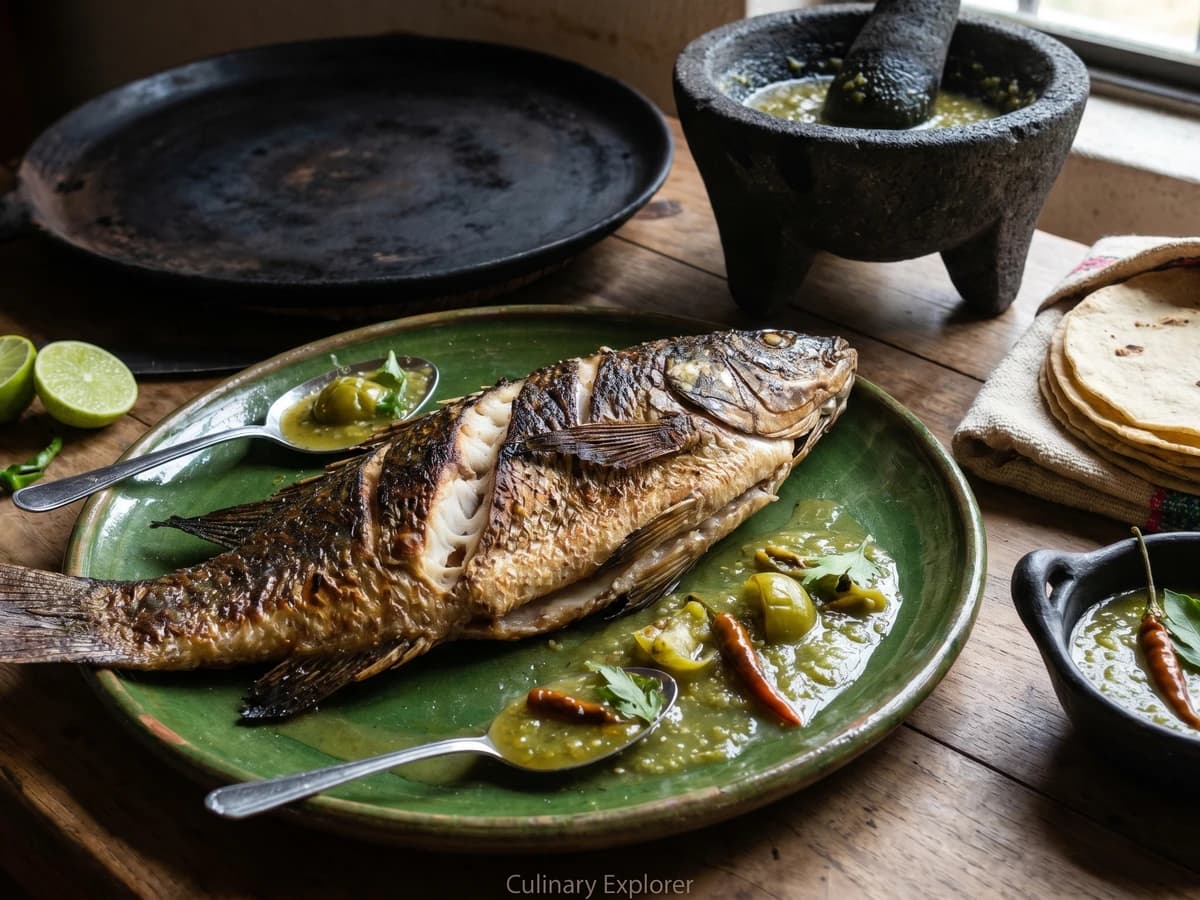
Michoacán's Lake Pátzcuaro acúmara, a whole kurucha from the lago tatemada on a comal de leña and served with chile perón atápakua, corn tortillas, and P'urhépecha discipline.
A cooking platform built around craft, culture, and the stories behind what we eat.

Created by
Guanajuato's Bajio beef pacholas are thin metate-worked ovals seasoned with chile ancho, bolillo, mint, parsley, and warm spices, then fried in manteca until the edges brown.
Guanajuato, in the Bajio, is where these pacholas live: León, Irapuato, Celaya, Dolores Hidalgo, the ranch kitchens where beef, wheat bread, dried chile ancho, and manteca de cerdo make sense together. This is not a hamburger with Mexican seasoning. It is a thin worked patty, stretched on the metate until the meat changes texture and the chile goes through every bite.
The chile is ancho. Not chile powder. Not a mystery red blend from a jar. Chile ancho gives sweetness, color, and that raisin-dark depth that belongs with beef. The bolillo tells you something about the Bajio too, because wheat entered this region hard after the Spanish brought cattle, mills, and bread ovens. The women who perfected pacholas did what good cooks always do: they took what the land and the market gave them and made a system.
I learned a version like this from a señora outside Celaya who kept her metate beside the stove, not in the patio as a museum piece. She pressed the meat so thin I thought it would tear, then fried it in lard without apology. La manteca es el sabor. If you want the pachola to taste like Guanajuato, you use the fat Guanajuato uses. Así se hace y punto.
Serve them with frijoles de la olla or refritos, tortillas calientes, and a salsa of roasted jitomate. Cada estado, su propia cocina. The plate is plain, filling, and exact, the kind of food that makes sense after work and still belongs at a family table on Sunday.
Pacholas are shared across the Bajio and western Mexico, especially Guanajuato, Jalisco, Zacatecas, and Michoacán, with each state adjusting the meat, herbs, and chile balance. The dish reflects the colonial-era food economy of the Bajio, where cattle ranching, wheat bread, lard, and dried chiles became everyday household ingredients by the 18th and 19th centuries. The metate technique connects the dish to older Mesoamerican grinding practices, even though the beef and bolillo came through Spanish colonial foodways.
Quantity
3
stemmed and seeded
Quantity
1/2 cup
for soaking the chiles
Quantity
1 bolillo or 2 slices
torn into pieces
Quantity
1/3 cup
Quantity
1 1/2 pounds
85 percent lean
Quantity
1/4 medium
finely grated
Quantity
2
finely grated
Quantity
1
Quantity
1 teaspoon, plus more to taste
Quantity
1/2 teaspoon
Quantity
1/2 teaspoon
Quantity
1/4 teaspoon
Quantity
1 pinch
Quantity
1 tablespoon
chopped
Quantity
1 tablespoon
finely chopped
Quantity
1/2 cup
as needed for texture
Quantity
1/2 cup
for frying
Quantity
for serving
Quantity
for serving
Quantity
for serving
warmed
Quantity
for serving
| Ingredient | Quantity |
|---|---|
| dried chile anchostemmed and seeded | 3 |
| hot waterfor soaking the chiles | 1/2 cup |
| small bolillo or day-old white breadtorn into pieces | 1 bolillo or 2 slices |
| whole milk | 1/3 cup |
| ground beef85 percent lean | 1 1/2 pounds |
| white onionfinely grated | 1/4 medium |
| garlic clovesfinely grated | 2 |
| large egg | 1 |
| kosher salt | 1 teaspoon, plus more to taste |
| freshly ground black pepper | 1/2 teaspoon |
| ground cumin | 1/2 teaspoon |
| ground Mexican cinnamon | 1/4 teaspoon |
| ground clove | 1 pinch |
| fresh flat-leaf parsleychopped | 1 tablespoon |
| fresh mintfinely chopped | 1 tablespoon |
| fine dry bread crumbsas needed for texture | 1/2 cup |
| pork lard (manteca de cerdo)for frying | 1/2 cup |
| refried bayo beans (optional) | for serving |
| Mexican red rice (optional) | for serving |
| hand-pressed corn tortillas (optional)warmed | for serving |
| salsa de jitomate asado (optional) | for serving |
Heat a dry comal over medium. Toast the chile ancho one at a time, about 20 to 30 seconds per side, just until the skin darkens slightly and the chile smells sweet, like raisins and warm earth. Do not blacken it. Burned ancho turns bitter and then you are fighting the whole recipe.
Put the toasted chiles in a bowl and cover with the hot water. Let them soften for 15 minutes. Drain, saving 2 tablespoons of the soaking liquid, then grind the chiles on a metate with the garlic and salt until you have a thick red paste. If you use a blender, use only enough soaking liquid to move the blades. A watery chile paste makes loose pacholas.
Put the torn bolillo in a small bowl and pour the milk over it. Let it sit for 5 minutes, then squeeze it with your hand until it becomes a soft paste. This bread is not filler. It holds moisture in the thin meat patty so the pachola fries crisp at the edge without drying into shoe leather.
In a wide bowl, combine the ground beef, chile ancho paste, soaked bread, grated onion, egg, black pepper, cumin, Mexican cinnamon, clove, parsley, and mint. Mix with your hand until the meat feels sticky and even, 2 to 3 minutes. The warm spices should sit behind the chile, not announce themselves like perfume. This is Guanajuato, not a pastry shop.
Pinch off a tablespoon of the mixture and fry it in a little lard. Taste for salt. If the mixture feels too wet to shape, add fine dry bread crumbs a spoonful at a time. Stop as soon as the meat holds together. Too much crumb makes a stiff pachola, and stiff pacholas are how you know the cook got nervous.
Divide the meat into 12 equal balls. On a lightly moistened metate, press each ball forward with the metlapil to make a thin oval, about 1/4 inch thick and 5 to 6 inches long. Lift it carefully with wet fingers or a thin spatula. If you do not have a metate, press each ball between two sheets of plastic with a tortilla press, then shape the oval by hand. The metate marks are traditional, but thinness is the real instruction.
Melt the manteca de cerdo in a wide cast iron skillet over medium heat. When the fat shimmers, lay in 2 or 3 pacholas without crowding. Fry 2 to 3 minutes per side, until the edges turn dark brown and the center is just cooked through. La manteca es el sabor. Vegetable oil gives you a flat taste and a harder crust. No me vengas con atajos.
Transfer the pacholas to a rack or brown paper for one minute, just long enough for extra fat to settle. Serve hot with refried bayo beans, Mexican red rice, salsa de jitomate asado, and warm corn tortillas wrapped in a servilleta. The plate should look like a Bajio home meal, not a restaurant performance. Recetas probadas y garantizadas.
1 serving (about 470g)
Culinary guides, cultural storytelling, and the editorial depth that makes cooking meaningful.
Discover Culinary ExplorerChef Lupita
Michoacán's Lake Pátzcuaro acúmara, a whole kurucha from the lago tatemada on a comal de leña and served with chile perón atápakua, corn tortillas, and P'urhépecha discipline.

Chef Lupita
Puebla's weekday adobo of pork shoulder braised in a thick guajillo and ancho sauce sharpened with vinegar, cumin, and clove. The deep red of a market spice stall, the dish a poblana cooks without thinking.

Chef Lupita
Loreto's pit-roasted clams, planted hinge-up in beach sand and tatemadas under a fast fire of dried romerillo brush, the resinous Baja desert shrub that gives this dish its smoke.

Chef Lupita
Oaxaca's eighth mole, the silky, almond-and-cinnamon almendrado, served over poached chicken. Mild, sweet, restrained, and a quiet rebuttal to anyone who thinks Mexican food has to be hot to be Mexican.