
Chef Lupita
Agua de Xoconostle del Bajio
Queretaro's Bajio agua fresca, made from acidic pink xoconostle peeled by hand, blended with water and piloncillo, and served cold when the altiplano heat gets serious.

Updated June 1, 2026
The cactus-and-maguey beverage architecture of the Bajío, the Pame and Otomí documented and the criollo hacienda kitchens carried forward. Twenty drinks across three registers: the fermented agave and tuna-fruit alcohols of the semidesierto Potosino and Altiplano (colonche, pulque, mezcal de Charcas, binguí guanajuatense, ponche de la Feria de San Marcos), the hacienda-lechera hot drinks (café de olla, atole de garbanzo de Cortázar, atole de teja potosino, champurrado con chocolate de metate, atole de cacahuate de Tarimoro), and the semidesierto aguas frescas (cebadina de León, agua de xoconostle, agua de garambullo de la Sierra Gorda, agua de palmito potosino, agua de tuna roja, agua de betabel aguascalentense). Cada estado, su propia cocina, y el Bajío bebe como granero.
A cooking platform built around craft, culture, and the stories behind what we eat.
Chef Lupita
Queretaro's Bajio agua fresca, made from acidic pink xoconostle peeled by hand, blended with water and piloncillo, and served cold when the altiplano heat gets serious.

Chef Lupita
Guanajuato's León refresher from Portal Guerrero, pink with jamaica, sharp with tamarind, rounded by barley and pineapple, then awakened with bicarbonato in the glass over crushed ice.

Chef Lupita
San Luis Potosí's Altiplano atole, thickened with fresh nixtamal masa and sweetened only by same-day aguamiel, tastes like a cold dawn beside the maguey fields before pulque begins.

Chef Lupita
Guanajuato's Bajío champurrado is a masa-thickened chocolate atole built with chocolate de metate, canela, and piloncillo, poured into clay jarros beside tamales on cold December mornings.

Chef Lupita
San Luis Potosí's Altiplano pulque is dawn-drawn aguamiel from mature maguey pulquero, fermented only until milky, lightly sour, and alive enough for a celebration under the sun.

Chef Lupita
Southern Guanajuato's atole de cacahuate is built from comal-toasted peanuts, nixtamal masa, piloncillo, and canela, the thick drink Tarimoro families keep alive one patient pot at a time.

Chef Lupita
Guanajuato's Bajio morning coffee, brewed in a clay olla with piloncillo, Mexican canela, clove, and anise until the kitchen smells like a dairy hacienda waking up.

Chef Lupita
San Luis Potosí's Altiplano drink for May, pale palmito de yuca blended with cold water and cane sugar, served icy in clay jarritos when the semidesert heat stops pretending.

Chef Lupita
San Luis Potosí's red desert ferment, made from ripe tuna cardona, strained, briefly boiled, cooled, and left to wake in clay until it turns sweet, bright, and lightly fizzy.

Chef Lupita
Aguascalientes pours this fruit-and-caña ponche during the Feria de San Marcos, built with Calvillo guava, tejocote, sugarcane, piloncillo, and cinnamon for a jarro made for celebration.

Chef Lupita
Guanajuato's late-summer agua fresca, made when the Bajío nopaleras are heavy with tuna roja, balanced with lime and piloncillo, and strained with restraint.

Chef Lupita
San Luis Potosí's market atole built from toasted semilla de teja, nixtamal masa, piloncillo, and cinnamon, the creamy hot drink sold by the ladle in the Mercado República.

Chef Lupita
San Luis Potosi's Altiplano mezcal, made from maguey salmiana around Charcas, served the serious way: clay copita, xoconostle, lime, and sal de chile piquin.
Chef Lupita
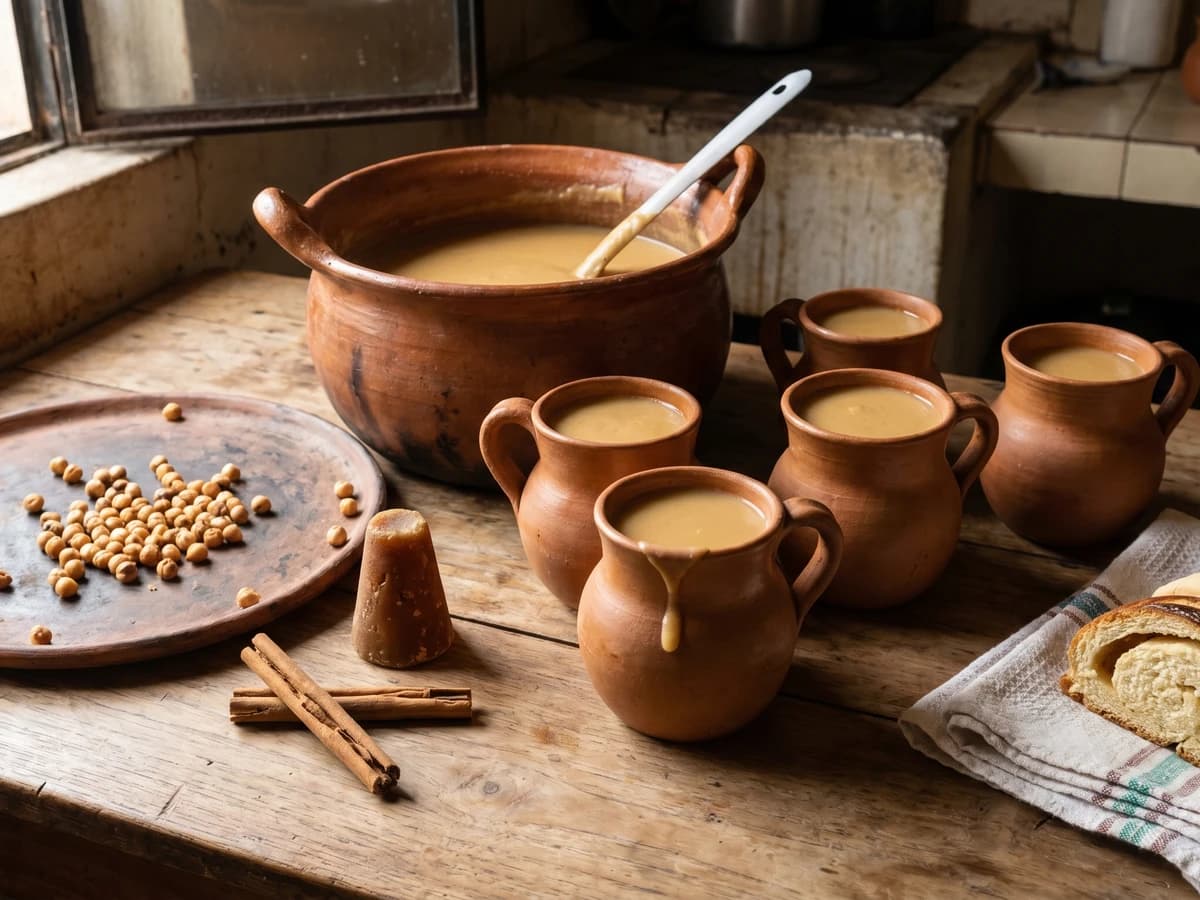
Guanajuato's toasted garbanzo atole from Cortazar and Abasolo, thickened slowly with piloncillo and canela until the pot smells like January, market grain, and patience.

Chef Lupita
Guanajuato's Bajío morning chocolate, ground on a warm metate with cacao, canela, almonds, and piloncillo, then beaten with hot milk until the molinillo raises a thick foam.

Chef Lupita
Guanajuato's old agave drink, built from roasted maguey hearts, piloncillo, and slow fermentation, sweet and low-alcohol, made for celebration without pretending it is pulque.

Chef Lupita
Guanajuato's Bajío tepache is pineapple rind, piloncillo, canela, and patience, a light ferment poured cold outside the mercado when the afternoon heat starts leaning on everyone.

Chef Lupita
Aguascalientes' Lenten agua fresca, jewel-red from cooked beet and full of apple, banana, orange, lettuce, and ground peanuts, served cold when Holy Week meets the Feria de San Marcos.

Chef Lupita
Guanajuato's rainy-season atole turns toasted field corn into pinole, then thickens it with piloncillo, canela, and chocolate de metate until the spoon leaves a clean path.

Chef Lupita
Querétaro's Sierra Gorda refresher made from July garambullo berries, cold water, and just enough sugar, a deep purple drink that tastes of cactus fruit, limestone soil, and market patience.
Culinary guides, cultural storytelling, and the editorial depth that makes cooking meaningful.
Discover Culinary ExplorerChef Lupita is a fictional culinary guide to Regional Mexican Cuisine, written with the assistance of AI.