
Chef Lupita
Agua de Alfalfa
Ciudad de México's highland market agua fresca, fresh alfalfa blended with pineapple and lime until bright green, strained clean, and poured cold from the vitrolero.
A cooking platform built around craft, culture, and the stories behind what we eat.
Created by
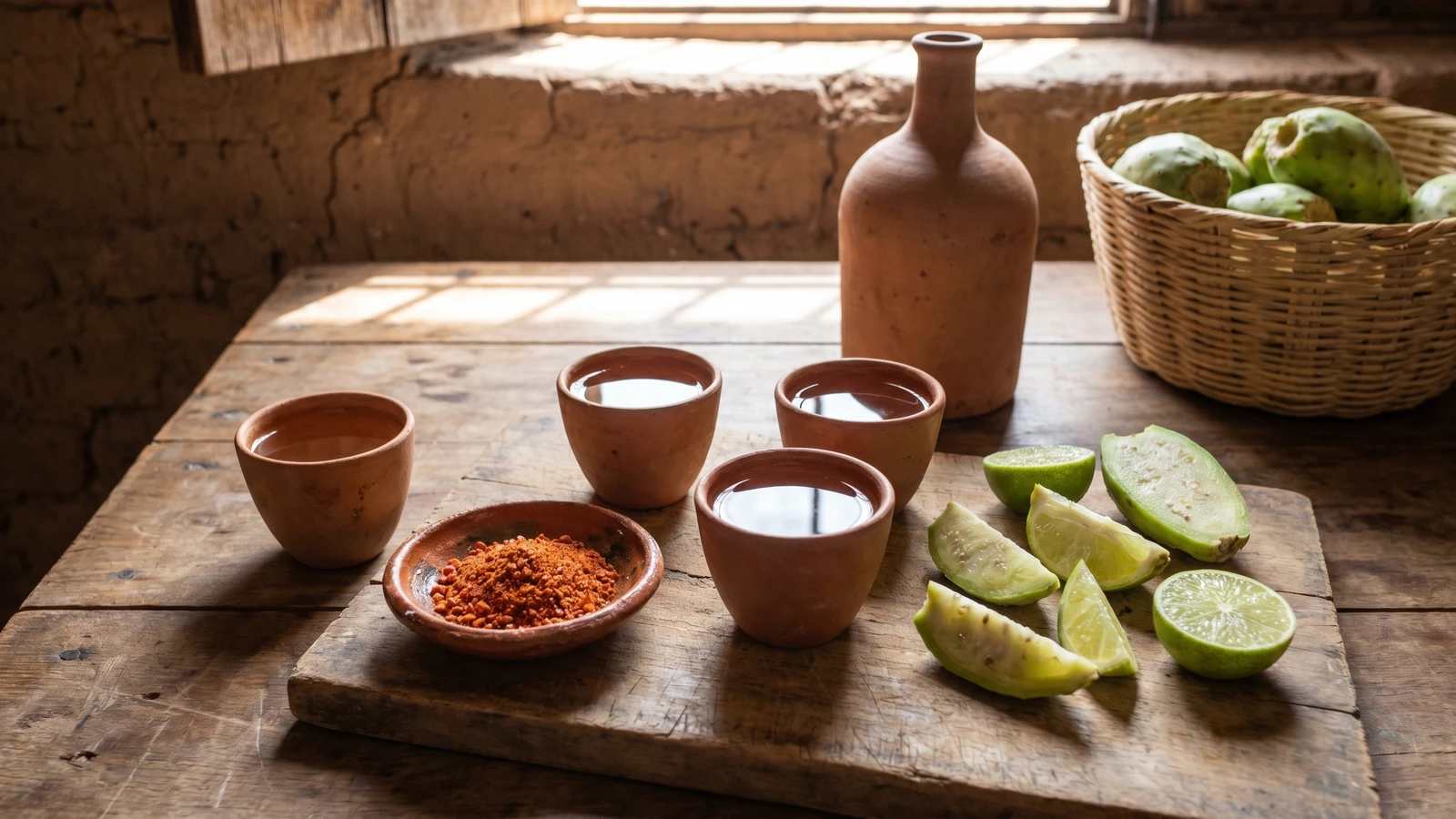
San Luis Potosi's Altiplano mezcal, made from maguey salmiana around Charcas, served the serious way: clay copita, xoconostle, lime, and sal de chile piquin.
San Luis Potosi, Altiplano Potosino, Charcas. That is where this mezcal lives. Not Jalisco. Not Oaxaca. Charcas sits in the dry high country north of the capital, where maguey salmiana grows hard and patient in soil that does not forgive laziness.
Mezcal de Charcas is usually called mezcal de campanilla because of the old clay-pot distillation system, the bell-shaped campana that catches and guides the spirit. You are not making that at home. Don't play distiller in a kitchen. You are serving it properly, with the things that belong to the region: xoconostle, lime, and sal de chile piquin. The point is to taste the maguey, not bury it under sugar and perfume.
I learned this service from men and women in the Altiplano who poured mezcal like something serious, not like a party trick. The copita was clay, the fruit was sharp, the salt was small and fierce. Cada estado, su propia cocina, and yes, cada estado, su propia bebida too. Saber cocinar es saber vivir.
San Luis Potosi has held denomination of origin protection for mezcal since 1994, and Charcas is one of the municipalities tied to the state's traditional production. Mezcal de campanilla is associated with clay-pot distillation methods adapted during the colonial period, when Iberian distillation technology met local maguey fermentation. Unlike many Oaxacan mezcales made from espadin, the Altiplano Potosino tradition centers on maguey salmiana, a large desert agave with an herbal, mineral profile.
Quantity
8 ounces
preferably maguey salmiana mezcal de campanilla
Quantity
1
peeled and cut into thin wedges
Quantity
2
cut into halves or wedges
Quantity
1 tablespoon
Quantity
1 teaspoon
Quantity
1/2 teaspoon
crushed
Quantity
1
cut into thin half-moons
| Ingredient | Quantity |
|---|---|
| mezcal de Charcaspreferably maguey salmiana mezcal de campanilla | 8 ounces |
| xoconostlepeeled and cut into thin wedges | 1 |
| limescut into halves or wedges | 2 |
| coarse sea salt | 1 tablespoon |
| ground chile piquin | 1 teaspoon |
| dried Mexican oreganocrushed | 1/2 teaspoon |
| orange (optional)cut into thin half-moons | 1 |
Use a real mezcal from Charcas or the Altiplano Potosino, ideally one labeled maguey salmiana or mezcal de campanilla. Do not substitute tequila and pretend it is the same. Tequila is Jalisco's story. This is San Luis Potosi.
Mix the coarse sea salt, ground chile piquin, and crushed dried Mexican oregano in a small clay dish. The chile piquin should bite, not dominate. This salt is there to sharpen the mezcal between sips, not turn the drink into a circus.
Peel the xoconostle and cut it into thin wedges. Cut the limes and orange if using. Xoconostle is sour and dry, more serious than sweet tuna. That acidity belongs with salmiana mezcal because it cleans the palate without covering the maguey.
Pour 2 ounces of mezcal into each clay copita or small vaso mezcalero. Serve at room temperature. Good mezcal does not need ice. Sip it slowly, then take a small bite of xoconostle touched with the chile salt. Así se hace y punto.
1 serving (about 125g)
Culinary guides, cultural storytelling, and the editorial depth that makes cooking meaningful.
Discover Culinary ExplorerChef Lupita
Ciudad de México's highland market agua fresca, fresh alfalfa blended with pineapple and lime until bright green, strained clean, and poured cold from the vitrolero.

Chef Lupita
Aguascalientes' Lenten agua fresca, jewel-red from cooked beet and full of apple, banana, orange, lettuce, and ground peanuts, served cold when Holy Week meets the Feria de San Marcos.

Chef Lupita
Sonora and Sinaloa's creamy malted barley water, built on toasted cebada perla, Mexican canela, vanilla from Papantla, and evaporated milk. Pink-beige, rich, and served cold over heavy ice in a heavy glass tumbler. Liquid cookie comfort the northwest way.

Chef Lupita
Yucatán's everyday tonic of boiled chaya leaves blended with lima agria, sugar, and ice. The bright green jarra that sits on every Peninsula table from Mérida to Valladolid.