
Chef Lupita
Agua de Alfalfa
Ciudad de México's highland market agua fresca, fresh alfalfa blended with pineapple and lime until bright green, strained clean, and poured cold from the vitrolero.
A cooking platform built around craft, culture, and the stories behind what we eat.
Created by
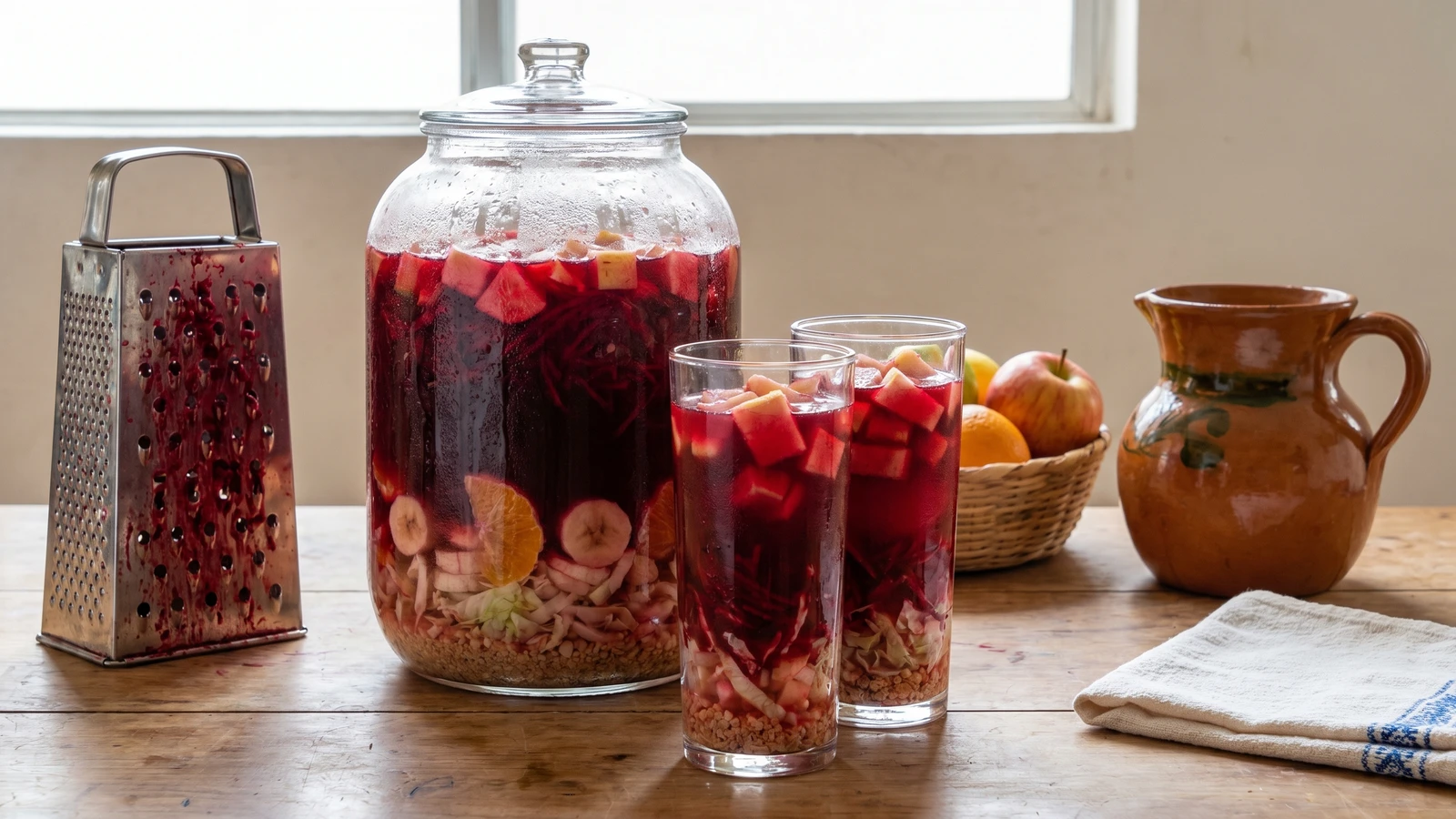
Aguascalientes' Lenten agua fresca, jewel-red from cooked beet and full of apple, banana, orange, lettuce, and ground peanuts, served cold when Holy Week meets the Feria de San Marcos.
Aguascalientes keeps this agua in the Bajio, right in that small, stubborn state between Jalisco, Zacatecas, and San Luis Potosi. This is not hibiscus water pretending to be festive. This is agua de betabel de Cuaresma, red from the beet, sweet from the fruit, and served cold in big glass jars when the days get warm and the feria starts filling the streets.
The beet gives the color, but the chopped fruit gives the body. Apple, banana, orange, tender lettuce, and ground peanuts. Yes, lettuce. Don't make that face. The lettuce floats fresh and pale against the beet water, the way the señoras in Aguascalientes have served it for generations. This is a drinking agua with something to chew, halfway between refreshment and fruit salad.
I first drank it near the Mercado Teran, from a plastic cup so full of fruit the spoon stood up. The woman selling it told me, 'si no lleva cacahuate, no es de aqui.' If it doesn't have peanut, it isn't from here. She was right. The peanut makes the sweetness round and gives the drink its Aguascalientes character.
Cook the beet gently, grate it by hand, and let the fruit sit in the cold red water long enough to stain and perfume everything. No me vengas con atajos. A blender will turn this into baby food. The pieces matter. Cada estado, su propia cocina.
Agua de Cuaresma, also called agua de betabel or sangre de Cristo in parts of central Mexico, belongs to the Catholic food calendar of Lent and Holy Week, when meatless meals and fruit-based refreshments became part of household observance after the colonial period. In Aguascalientes, the version with beet, lettuce, orange, banana, apple, and ground peanut became tied to spring gatherings and the Feria Nacional de San Marcos, whose modern form dates to the 19th century. The drink's red color carries religious association with Holy Week, but the technique is practical mercado cooking: stretch seasonal fruit, sweet water, and one beet into a pitcher that serves a family.
Quantity
1
scrubbed but not peeled
Quantity
8 cups
divided
Quantity
3/4 cup, plus more to taste
Quantity
1/4 cup
Quantity
1/4 teaspoon
Quantity
2
cored and diced small
Quantity
2
peeled, seeded, and chopped
Quantity
2
sliced into thin half-moons
Quantity
2 cups
finely shredded
Quantity
1/2 cup
finely ground
Quantity
for serving
| Ingredient | Quantity |
|---|---|
| large beetscrubbed but not peeled | 1 |
| waterdivided | 8 cups |
| piloncillo or granulated sugar | 3/4 cup, plus more to taste |
| fresh lime juice | 1/4 cup |
| fine sea salt | 1/4 teaspoon |
| crisp applescored and diced small | 2 |
| orangespeeled, seeded, and chopped | 2 |
| ripe but firm bananassliced into thin half-moons | 2 |
| tender romaine lettuce or orejona lettucefinely shredded | 2 cups |
| roasted unsalted peanutsfinely ground | 1/2 cup |
| ice (optional) | for serving |
Put the scrubbed beet in a small saucepan and cover with 4 cups of water. Simmer gently for 30 to 35 minutes, until a knife slides into the center without fighting. Do not boil it violently. You want the water stained deep red and the beet tender, not beaten to death.
Lift the beet out and save the red cooking water. While the water is still warm, stir in the piloncillo or sugar and the salt until dissolved. Add the remaining 4 cups cold water and the lime juice. Taste it. It should be sweet first, then lightly sharp. The fruit will dilute it, so don't make the base timid.
When the beet is cool enough to handle, slip off the skin with your fingers or a small knife. Grate it on the large holes of a box grater. Do not blend it. The grated beet should float in fine strands through the agua and stain the fruit slowly. That texture is part of the drink.
Dice the apples small, chop the oranges, slice the bananas, and shred the lettuce finely. Keep the pieces spoonable. This is served in a glass, yes, but a proper glass needs fruit in every sip. If the pieces are too large, the drink becomes awkward. A señora at the market would correct you before I had to.
In a large glass vitrolero or clay pitcher, combine the sweet beet water, grated beet, apples, oranges, bananas, lettuce, and ground peanuts. Stir slowly so the banana does not break apart. Refrigerate for at least 30 minutes. The apple will turn pink, the lettuce will stay crisp, and the peanut will settle slightly at the bottom. Stir again before serving.
Serve in tall glasses with ice, making sure each glass gets plenty of fruit and a spoon if needed. This is not a strained agua fresca. It should look generous, red, cold, and full. Recetas probadas y garantizadas.
1 serving (about 400g)
Culinary guides, cultural storytelling, and the editorial depth that makes cooking meaningful.
Discover Culinary ExplorerChef Lupita
Ciudad de México's highland market agua fresca, fresh alfalfa blended with pineapple and lime until bright green, strained clean, and poured cold from the vitrolero.

Chef Lupita
Sonora and Sinaloa's creamy malted barley water, built on toasted cebada perla, Mexican canela, vanilla from Papantla, and evaporated milk. Pink-beige, rich, and served cold over heavy ice in a heavy glass tumbler. Liquid cookie comfort the northwest way.

Chef Lupita
Yucatán's everyday tonic of boiled chaya leaves blended with lima agria, sugar, and ice. The bright green jarra that sits on every Peninsula table from Mérida to Valladolid.

Chef Lupita
Yucatán's signature green agua fresca, chaya leaves blanched and blended with ripe pineapple and lima agria, served ice-cold from a sweating glass jarra against the Mérida heat.