
Chef Lupita
Agua de Alfalfa
Ciudad de México's highland market agua fresca, fresh alfalfa blended with pineapple and lime until bright green, strained clean, and poured cold from the vitrolero.
A cooking platform built around craft, culture, and the stories behind what we eat.
Created by
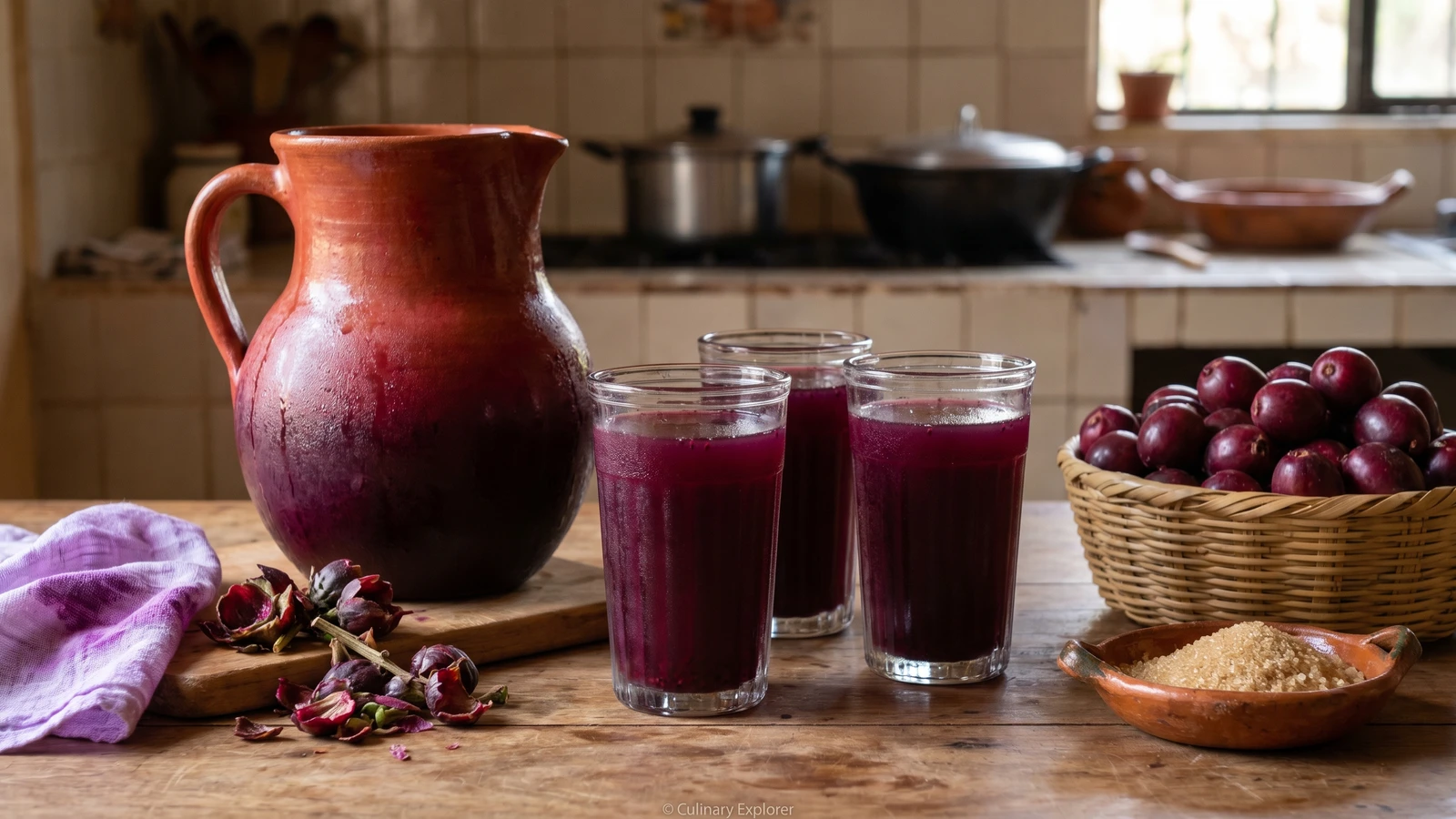
Querétaro's Sierra Gorda refresher made from July garambullo berries, cold water, and just enough sugar, a deep purple drink that tastes of cactus fruit, limestone soil, and market patience.
Querétaro, the Sierra Gorda and its dry semidesert edge, is where this agua belongs. Around Peñamiller, Jalpan, and the road toward Cadereyta, garambullo ripens on Myrtillocactus geometrizans when July heat has already done its work. The fruit looks modest on the cactus, then it stains your fingers and the glass a purple so deep it looks almost black.
I learned this from Otomí women selling garambullo by the jícara, not from a restaurant menu. They did not drown the fruit in sugar. They rinsed it gently, crushed it just enough, blended it with cold water, and strained it with a patient hand so the seeds stayed behind. That is the technique. Light pressure. Good fruit. Cold water. Así se hace y punto.
This is not agua de jamaica and it is not blueberry lemonade. Garambullo has the mineral taste of cactus fruit from limestone country, a small wild sweetness, and a faint tart edge that tells you it came from a thorned plant, not a supermarket shelf. If the market does not have garambullo, make another agua fresca. Mexican grandmothers cook with what is in front of them. Saber cocinar es saber vivir.
Garambullo is the fruit of Myrtillocactus geometrizans, a columnar cactus native to the arid and semi-arid belt of central Mexico, including Querétaro, Hidalgo, Guanajuato, San Luis Potosí, and Puebla. In Querétaro, Otomí (Ñähñu) and neighboring campesino communities have long treated cactus fruits, nopales, xoconostle, tunas, and garambullo as seasonal foods tied to the first summer rains. The fruit's short July season explains why agua de garambullo remains a market drink, not a year-round supermarket flavor.
Quantity
2 cups, about 10 ounces
picked over and rinsed gently
Quantity
6 cups
divided
Quantity
1/4 cup, plus 1 to 2 tablespoons more
adjusted to the tartness of the fruit
Quantity
1 small pinch
Quantity
1 tablespoon
only if the fruit tastes flat
Quantity
for serving
| Ingredient | Quantity |
|---|---|
| fresh garambullo berriespicked over and rinsed gently | 2 cups, about 10 ounces |
| cold drinking waterdivided | 6 cups |
| cane sugaradjusted to the tartness of the fruit | 1/4 cup, plus 1 to 2 tablespoons more |
| fine sea salt | 1 small pinch |
| fresh limón criollo juice (optional)only if the fruit tastes flat | 1 tablespoon |
| ice (optional) | for serving |
Spread the garambullo berries on a tray. Pull out stems, shriveled berries, bits of cactus skin, and anything that does not belong in the pitcher. Rinse the fruit in a bowl of cold water, lift it out with your hands, and drain it well. Do not soak it. Garambullo is small and delicate, and if you bruise it before its time, you lose the clean cactus-fruit flavor.
Put the drained garambullo in a bowl with the cane sugar and the pinch of salt. Crush lightly with a wooden spoon until the berries begin to split and a dark purple syrup gathers at the bottom. Let it sit for 10 minutes. The sugar should pull juice from the fruit, not bury it. This is an agua fresca, not candy.
Transfer the macerated fruit and all its syrup to a blender. Add 3 cups of the cold water. Blend on medium for 15 to 20 seconds, just until the skins break and the water turns deep purple. No me vengas con atajos, but also do not punish the fruit. If you grind the seeds too hard, the drink turns sandy and bitter.
Set a fine-mesh strainer, or a strainer lined with manta de cielo, over a pitcher. Pour in the blended garambullo and press gently with a spoon. Rinse the blender with the remaining 3 cups cold water and pour that through the strainer too. Press enough to get the color and juice. Stop before you force the seed grit through.
Taste the agua. It should be lightly sweet, earthy, and tart at the edges, with that deep purple color staining the spoon. Add more sugar if the fruit demands it. Add the limón criollo only if the flavor feels dull. Chill for 30 minutes so the drink settles and the color deepens.
Stir the pitcher before serving because the fine pulp settles. Pour over ice in simple glasses or cantaritos de barro. Serve it outside, with the jarra on the table and the basket of fruit nearby if you have it. There are no chiles here. Not all Mexican food needs to announce itself with heat. Cada estado, su propia cocina.
1 serving (about 290g)
Culinary guides, cultural storytelling, and the editorial depth that makes cooking meaningful.
Discover Culinary ExplorerChef Lupita
Ciudad de México's highland market agua fresca, fresh alfalfa blended with pineapple and lime until bright green, strained clean, and poured cold from the vitrolero.

Chef Lupita
Aguascalientes' Lenten agua fresca, jewel-red from cooked beet and full of apple, banana, orange, lettuce, and ground peanuts, served cold when Holy Week meets the Feria de San Marcos.

Chef Lupita
Sonora and Sinaloa's creamy malted barley water, built on toasted cebada perla, Mexican canela, vanilla from Papantla, and evaporated milk. Pink-beige, rich, and served cold over heavy ice in a heavy glass tumbler. Liquid cookie comfort the northwest way.

Chef Lupita
Yucatán's everyday tonic of boiled chaya leaves blended with lima agria, sugar, and ice. The bright green jarra that sits on every Peninsula table from Mérida to Valladolid.