
Chef Lupita
Agua de Alfalfa
Ciudad de México's highland market agua fresca, fresh alfalfa blended with pineapple and lime until bright green, strained clean, and poured cold from the vitrolero.
A cooking platform built around craft, culture, and the stories behind what we eat.
Created by
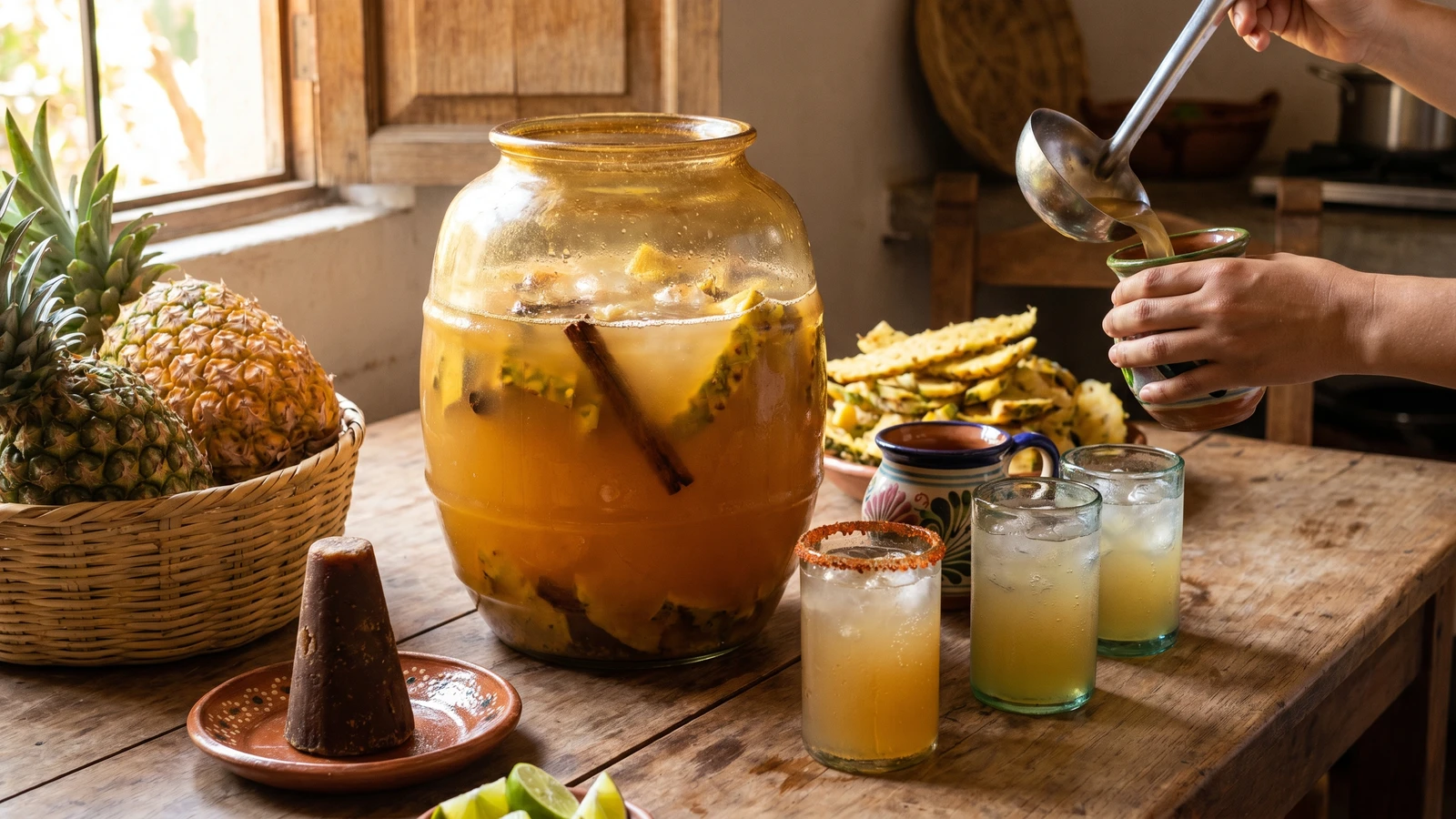
Guanajuato's Bajío tepache is pineapple rind, piloncillo, canela, and patience, a light ferment poured cold outside the mercado when the afternoon heat starts leaning on everyone.
Guanajuato, in the Bajío, is where I place this tepache: León, Irapuato, Celaya, the market streets where a plastic cup of something cold can save your whole afternoon. This is not a fancy cocktail. It is a working drink, a home ferment made from pineapple rind, piloncillo, canela, and time.
The ingredient that defines the Bajío version is piloncillo, dark cones of cooked cane sugar that taste deeper than white sugar ever will. The pineapple peel carries wild yeast. The canela gives warmth. The clay jar or glass vitrolero does the quiet work in the corner of the kitchen while everyone else thinks nothing is happening. That is fermentation. It looks still until it isn't.
I learned a version like this from a señora near the Mercado Hidalgo in Guanajuato capital, who told me to stop wasting pineapple peel like a person with too much money. She was right. Tepache is household economy in a jar. Saber cocinar es saber vivir.
Do not confuse this with a sugary soda poured from a machine. Tepache should be alive, lightly sour, sweet but not sticky, and just fizzy enough to tell you it has worked. Cada estado, su propia cocina, and in the Bajío the good cook knows how to turn scraps into a drink worth waiting three days for.
Tepache comes from the Nahuatl word 'tepiatl,' often translated as a drink made from corn, and older versions in central Mexico were fermented from maize before pineapple became common in household preparations. Pineapple was cultivated in tropical regions of the Americas before the Spanish conquest, then moved through colonial trade networks into central Mexican markets, where its rind became valuable for quick ferments. In the Bajío, piloncillo production from colonial sugarcane agriculture shaped the flavor of everyday drinks like tepache, atole de piloncillo, and cafe de olla.
Quantity
1
well scrubbed
Quantity
8 cups
divided
Quantity
10 ounces
chopped
Quantity
1
Quantity
3
Quantity
1 thin strip
pith removed
Quantity
1/4 teaspoon
Quantity
1/2 cup
optional starter
Quantity
for serving
Quantity
for serving
Quantity
for glass rims
| Ingredient | Quantity |
|---|---|
| ripe pineapplewell scrubbed | 1 |
| filtered waterdivided | 8 cups |
| piloncillochopped | 10 ounces |
| Mexican cinnamon stick (canela) | 1 |
| whole cloves | 3 |
| orange peelpith removed | 1 thin strip |
| kosher salt | 1/4 teaspoon |
| unpasteurized tepache from a previous batch or raw pineapple scraps (optional)optional starter | 1/2 cup |
| ice (optional) | for serving |
| lime wedges (optional) | for serving |
| chile piquin and salt (optional) | for glass rims |
Wash the pineapple under running water and scrub the rind well. Tepache uses the peel, so dirt has no business in the jar. Cut off the crown and base, then peel the pineapple in wide strips, leaving some fruit attached to the rind. Save the flesh for eating or add a few chunks to the ferment if the fruit is not very sweet.
In a small pot, combine 2 cups of the water with the chopped piloncillo, canela, cloves, orange peel, and salt. Warm over medium heat until the piloncillo dissolves, about 8 to 10 minutes. Do not boil it hard. You want a dark, fragrant syrup that smells of sugarcane and canela, not cooked candy.
Take the pot off the heat and let the syrup cool until it is just warm to the touch. If it is hot, it will damage the wild yeast living on the pineapple peel. That yeast is what does the work. No me vengas con atajos.
Put the pineapple rinds and any reserved fruit chunks into a clean 1-gallon glass jar or clay vitrolero. Add the cooled piloncillo syrup with the canela and cloves, then pour in the remaining 6 cups water. Add the optional unpasteurized tepache starter if you have it. Stir with a clean wooden spoon until everything is submerged.
Cover the jar with a clean cloth or coffee filter and secure it with string or a rubber band. Leave it at room temperature, away from direct sun, for 48 to 72 hours. After the first day, you should see small bubbles at the edges and smell pineapple, piloncillo, and light acidity. If the room is hot, start tasting at 36 hours. Tepache can go from lively to vinegar while you are busy pretending time does not matter.
Taste the tepache on day two. It should be sweet, lightly sour, and gently fizzy. If it tastes flat, give it another 12 to 24 hours. When it is where you want it, strain through a fine-mesh sieve into clean bottles or a pitcher. Discard the spent pineapple peel and spices.
For still tepache, refrigerate it immediately. For more fizz, bottle it in swing-top bottles, leave at room temperature for 6 to 12 hours, then refrigerate. Burp the bottles once during that time. Fermentation builds pressure. Respect it or clean sticky pineapple from your ceiling.
Serve over ice in clay jarritos or sturdy glasses. Add a squeeze of lime if the batch is very sweet. A rim of chile piquin and salt is common at some market stands, but it is not required. The drink should taste like pineapple peel transformed by piloncillo and time. Así se hace y punto.
1 serving (about 240g)
Culinary guides, cultural storytelling, and the editorial depth that makes cooking meaningful.
Discover Culinary ExplorerChef Lupita
Ciudad de México's highland market agua fresca, fresh alfalfa blended with pineapple and lime until bright green, strained clean, and poured cold from the vitrolero.

Chef Lupita
Aguascalientes' Lenten agua fresca, jewel-red from cooked beet and full of apple, banana, orange, lettuce, and ground peanuts, served cold when Holy Week meets the Feria de San Marcos.

Chef Lupita
Sonora and Sinaloa's creamy malted barley water, built on toasted cebada perla, Mexican canela, vanilla from Papantla, and evaporated milk. Pink-beige, rich, and served cold over heavy ice in a heavy glass tumbler. Liquid cookie comfort the northwest way.

Chef Lupita
Yucatán's everyday tonic of boiled chaya leaves blended with lima agria, sugar, and ice. The bright green jarra that sits on every Peninsula table from Mérida to Valladolid.