
Chef Lupita
Agua de Betabel Aguascalentense de Cuaresma
Aguascalientes' Lenten agua fresca, jewel-red from cooked beet and full of apple, banana, orange, lettuce, and ground peanuts, served cold when Holy Week meets the Feria de San Marcos.
A cooking platform built around craft, culture, and the stories behind what we eat.
Created by
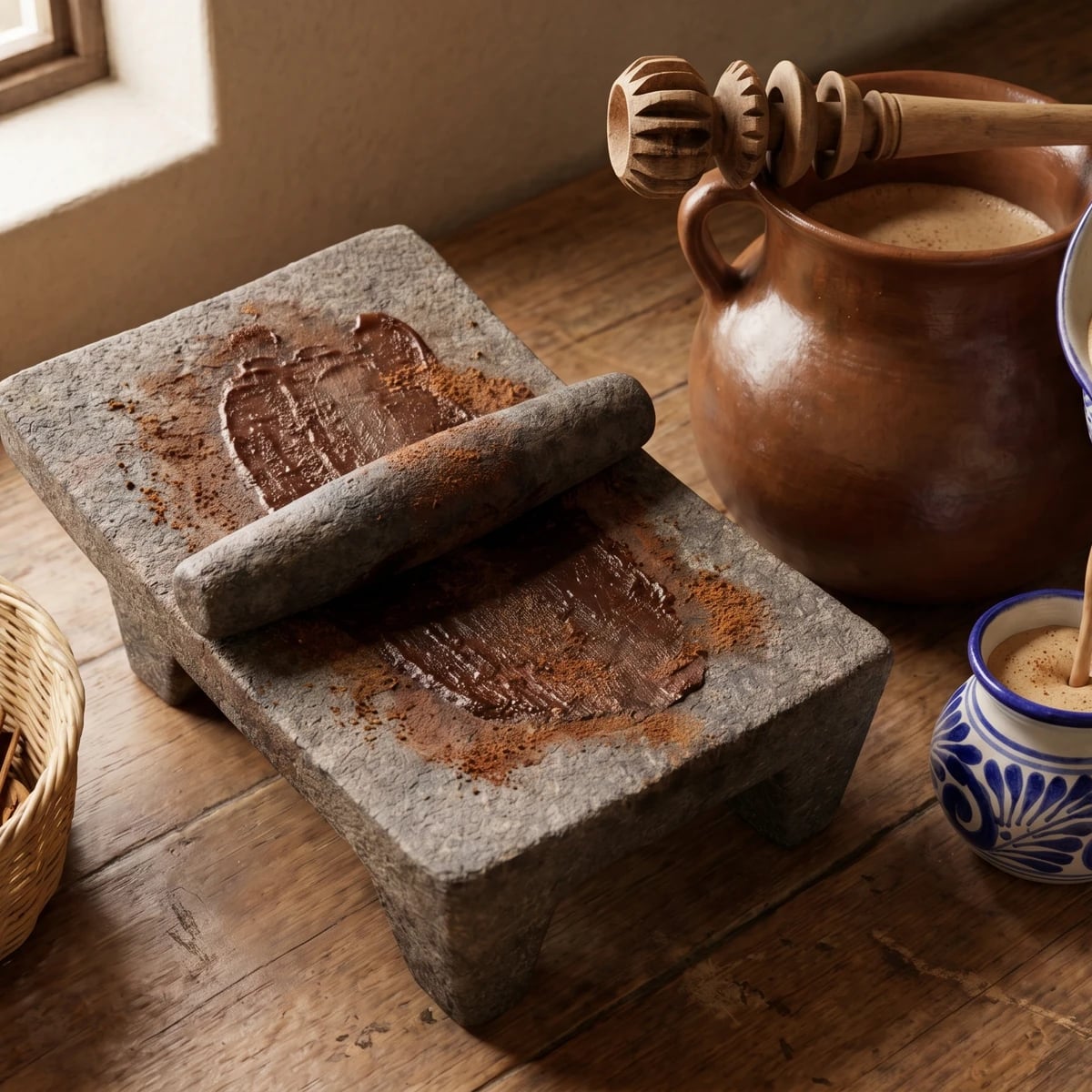
Guanajuato's Bajío morning chocolate, ground on a warm metate with cacao, canela, almonds, and piloncillo, then beaten with hot milk until the molinillo raises a thick foam.
Guanajuato, the Bajío, is where this chocolate belongs on the map: the old hacienda kitchens around Celaya, Salvatierra, Irapuato, and Dolores Hidalgo, where milk was not decoration but daily economy. Cacao did not grow in those dry fields. It arrived by trade from the tropical south, and the women of the Bajío made it their own with dairy, piloncillo, almonds, and the thin, sweet bark of Mexican canela.
This is chocolate de metate, not cocoa powder stirred into milk. You roast the cacao on a comal, rub away the husk, and grind it on warm volcanic stone until the bean stops being a bean and becomes a dark, oily paste. The metate teaches patience. The mano pushes, the cacao resists, then the oils release and the kitchen smells like toasted nuts, canela, and market mornings. No me vengas con atajos.
I learned this version from a señora in Salvatierra who served it in blue-and-white mayólica from Dolores Hidalgo, with a molinillo worn smooth at the handle. She told me the foam was proof that the cook did not abandon the pot. She was right. The Bajío gives you milk, the south gives you cacao, and the metate makes them speak the same language. Cada estado, su propia cocina.
Cacao was cultivated in tropical Mesoamerica long before the conquest, especially in the Gulf and southern regions, while the semi-arid Bajío received it through trade rather than growing it. In the 17th and 18th centuries, criollo households and hacienda kitchens in Guanajuato and Querétaro adapted older cacao drinking practices to Spanish-introduced milk, cane sugar, almonds, and canela, creating a breakfast and feast-day chocolate distinct from maize-thickened champurrado. The molinillo, a turned wooden whisk used in New Spain by the 18th century, became the table tool that marked properly beaten chocolate.
Quantity
8 ounces
preferably from Tabasco or Chiapas
Quantity
2 ounces
Quantity
2 sticks, about 3 inches each
broken into pieces
Quantity
5 ounces
grated or shaved
Quantity
1/4 teaspoon
Quantity
1 cup
Quantity
6 cups
| Ingredient | Quantity |
|---|---|
| whole Mexican cacao beanspreferably from Tabasco or Chiapas | 8 ounces |
| blanched almonds | 2 ounces |
| Mexican canela sticksbroken into pieces | 2 sticks, about 3 inches each |
| piloncillograted or shaved | 5 ounces |
| fine sea salt | 1/4 teaspoon |
| water | 1 cup |
| whole milk | 6 cups |
Set the metate near the stove while you roast the cacao, or pour hot water over the stone and dry it completely. A slightly warm stone helps the cacao oils release. A cold metate makes you fight the bean longer than necessary, and cooking is already enough work.
Heat a dry comal over medium-low. Add the cacao beans in one layer and stir constantly for 10 to 12 minutes, until the skins loosen, a few beans crack, and the smell turns deep and nutty. Do not blacken them. Burned cacao tastes harsh, and no amount of piloncillo will rescue it.
Tip the hot cacao into a clean kitchen towel. Rub firmly to loosen the papery husks, then transfer to a shallow tray and blow or lift away the skins. Work patiently. A little husk will not ruin the chocolate, but too much gives the drink a dry, dusty edge.
Put the almonds on the same comal and toast for 3 to 4 minutes, moving them often, until they show pale gold spots and smell sweet. Add the broken canela pieces for the last 15 seconds only. Mexican canela is thin and delicate. Treat it like bark, not firewood.
On the warm metate, grind the canela with the salt until fine. Add the almonds and work them into a rough paste. The almonds should smear, not bounce. If they scatter, slow your hand and use the weight of the mano. Pregúntale a las señoras del mercado, they will tell you the same thing: the stone does the work when you let it.
Add the peeled cacao a handful at a time and grind until the mixture turns dark, glossy, and heavy. At first it will look like crumbs. Keep going. The cacao butter will release and the paste will begin to drag under the mano. Add the grated piloncillo in small handfuls and grind until it disappears into the chocolate. Do not add water. This is a paste, not a sauce.
Scrape the chocolate paste together and divide it into 6 equal portions, about 2 ounces each. Press each portion into a thick disk with your hands or a small mold. Let the tablets rest on parchment for 20 minutes so they firm up. They will look rough. Good. La cocina no es decoración, es trabajo.
Pour the water into a clay chocolatera or heavy saucepan and bring it to a gentle simmer. Add the milk and heat until small bubbles gather at the edge. Do not boil it hard. Milk that boils aggressively tastes cooked and makes a tired cup of chocolate.
Add the chocolate tablets to the hot milk and stir until fully dissolved, 4 to 5 minutes. Lower the heat. Set the molinillo between your palms and roll it quickly back and forth, keeping the carved head just below the surface. The chocolate should turn thick and frothy, with a tan cap of foam across the top. That foam is not decoration. It is proof you did the work.
Pour immediately into warm jarros de mayólica from Dolores Hidalgo or thick clay cups. Leave space for the foam. Serve without whipped cream, marshmallows, or cinnamon powder thrown on top like a disguise. This is Bajío chocolate de metate. Así se hace y punto.
1 serving (about 335g)
Culinary guides, cultural storytelling, and the editorial depth that makes cooking meaningful.
Discover Culinary Explorer
Chef Lupita
Aguascalientes' Lenten agua fresca, jewel-red from cooked beet and full of apple, banana, orange, lettuce, and ground peanuts, served cold when Holy Week meets the Feria de San Marcos.

Chef Lupita
Querétaro's Sierra Gorda refresher made from July garambullo berries, cold water, and just enough sugar, a deep purple drink that tastes of cactus fruit, limestone soil, and market patience.

Chef Lupita
San Luis Potosí's Altiplano drink for May, pale palmito de yuca blended with cold water and cane sugar, served icy in clay jarritos when the semidesert heat stops pretending.

Chef Lupita
Guanajuato's late-summer agua fresca, made when the Bajío nopaleras are heavy with tuna roja, balanced with lime and piloncillo, and strained with restraint.