
Chef Lupita
Agua de Alfalfa
Ciudad de México's highland market agua fresca, fresh alfalfa blended with pineapple and lime until bright green, strained clean, and poured cold from the vitrolero.
A cooking platform built around craft, culture, and the stories behind what we eat.
Created by
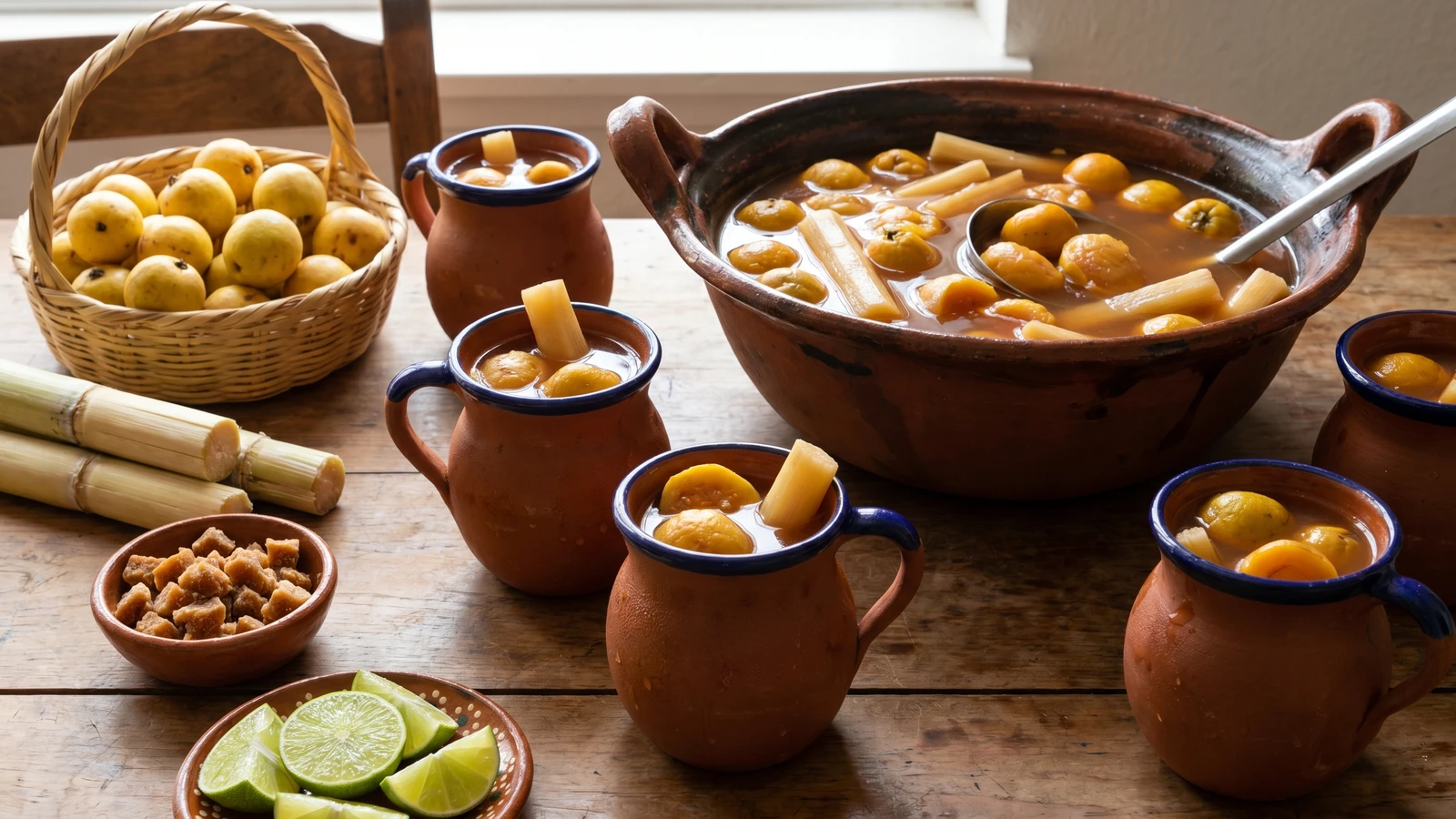
Aguascalientes pours this fruit-and-caña ponche during the Feria de San Marcos, built with Calvillo guava, tejocote, sugarcane, piloncillo, and cinnamon for a jarro made for celebration.
Aguascalientes, right in the Bajío, claims this ponche when April brings the Feria de San Marcos and the city fills around the Jardín de San Marcos. This is not Christmas ponche dressed in another name. The feria version is lighter, more festive, and honest about the splash of caña or brandy that turns cooked fruit into a drink for adults.
The guava matters. In Aguascalientes, you look toward Calvillo, where guava is not decoration, it is economy, pride, and perfume. Tejocote gives body, sugarcane gives that clean fibrous sweetness, tamarind pulls the syrup away from cloying, and cinnamon ties the pot together. No chiles here. Not all Mexican food needs chile to prove where it comes from. That idea is lazy.
I learned a version of this from a señora near the feria who sold it in clay jarros, fruit spooned heavy at the bottom and the liquor added only when the customer nodded. That is the correct method. Cook the fruit first, let the syrup cool, then add the caña. Boil the liquor and you lose the edge you paid for. Saber cocinar es saber vivir.
The Feria de San Marcos began in Aguascalientes in the 19th century as a regional fair tied to agricultural and livestock commerce, later settling around the Barrio de San Marcos and becoming one of Mexico's largest annual celebrations. Calvillo, in western Aguascalientes, became nationally associated with guava production during the 20th century, and that fruit shaped local sweets, ates, liqueurs, and feria drinks. Ponches with fruit, piloncillo, cinnamon, and cane spirits belong to a broader Mexican tradition of market celebration beverages, but this version carries the Bajío signature through guava, tejocote, sugarcane, and the fairground pour of caña.
Quantity
12
trimmed and quartered
Quantity
1 pound
Quantity
2 long pieces
peeled and cut into thin batons
Quantity
2
cored and diced
Quantity
1 cup pulp or 6 pods
Quantity
10 cups
Quantity
10 ounces
chopped
Quantity
2 sticks
Quantity
4
Quantity
1 strip
without white pith
Quantity
1/2 teaspoon
Quantity
1 1/2 to 2 cups
Quantity
for serving
Quantity
for serving if drinking chilled
| Ingredient | Quantity |
|---|---|
| ripe guavas, preferably from Calvillotrimmed and quartered | 12 |
| fresh tejocotes | 1 pound |
| fresh sugarcanepeeled and cut into thin batons | 2 long pieces |
| tart applescored and diced | 2 |
| tamarind pulp with seeds, or peeled tamarind pods | 1 cup pulp or 6 pods |
| water | 10 cups |
| piloncillochopped | 10 ounces |
| Mexican canela or cinnamon sticks | 2 sticks |
| whole cloves | 4 |
| orange peelwithout white pith | 1 strip |
| fine sea salt | 1/2 teaspoon |
| caña, Mexican aguardiente de caña, or good brandy | 1 1/2 to 2 cups |
| lime wedges (optional) | for serving |
| ice (optional) | for serving if drinking chilled |
Bring 6 cups of the water to a boil in a heavy pot. Add the tejocotes and simmer for 8 to 10 minutes, just until the skins loosen. Lift them out, rinse under cool water, and rub off the skins. Cut a small slit in each fruit so the syrup can enter. Do not cook them until they collapse. Tejocote should give body to the ponche, not turn into paste.
In a large clay olla or heavy stockpot, combine the remaining 4 cups water, piloncillo, canela, cloves, orange peel, tamarind, and salt. Bring to a gentle simmer and cook for 10 minutes, stirring until the piloncillo dissolves. The liquid should smell like canela first, then tamarind, then dark sugar. That order tells you the base is balanced.
Add the peeled tejocotes, guavas, sugarcane batons, and diced apples to the syrup. Simmer gently for 25 to 30 minutes, until the guava perfumes the kitchen and the apples are tender but still hold their shape. Stir from the bottom so the piloncillo does not catch. The sugarcane stays fibrous. You chew it, you do not swallow it. Ask any feria vendor.
Remove the tamarind seeds and any loose fibers with a spoon or small strainer. Press the softened pulp back into the pot so its sourness stays in the ponche. Taste the liquid. It should be sweet, tart, and fragrant, not syrupy like candy. If it is too thick, add a cup of water. If it tastes flat, add a small pinch of salt.
Take the pot off the heat and let the ponche cool until warm, about 30 minutes, or chill it completely for a fairground-style cold pour. Add the caña or brandy only after the fruit syrup has cooled. No me vengas con atajos. If you boil the liquor, you cook away the bite and leave only sweetness.
Spoon fruit into clay jarros or thick glasses, making sure each serving gets guava, tejocote, and a piece of sugarcane. Pour the ponche over the fruit. Serve warm or over ice, with lime wedges on the side for anyone who wants a sharper finish. This is feria drinking: generous, fragrant, and built from the market.
1 serving (about 325g)
Culinary guides, cultural storytelling, and the editorial depth that makes cooking meaningful.
Discover Culinary ExplorerChef Lupita
Ciudad de México's highland market agua fresca, fresh alfalfa blended with pineapple and lime until bright green, strained clean, and poured cold from the vitrolero.

Chef Lupita
Aguascalientes' Lenten agua fresca, jewel-red from cooked beet and full of apple, banana, orange, lettuce, and ground peanuts, served cold when Holy Week meets the Feria de San Marcos.

Chef Lupita
Sonora and Sinaloa's creamy malted barley water, built on toasted cebada perla, Mexican canela, vanilla from Papantla, and evaporated milk. Pink-beige, rich, and served cold over heavy ice in a heavy glass tumbler. Liquid cookie comfort the northwest way.

Chef Lupita
Yucatán's everyday tonic of boiled chaya leaves blended with lima agria, sugar, and ice. The bright green jarra that sits on every Peninsula table from Mérida to Valladolid.