Culinary Explorer
A cooking platform built around craft, culture, and the stories behind what we eat.
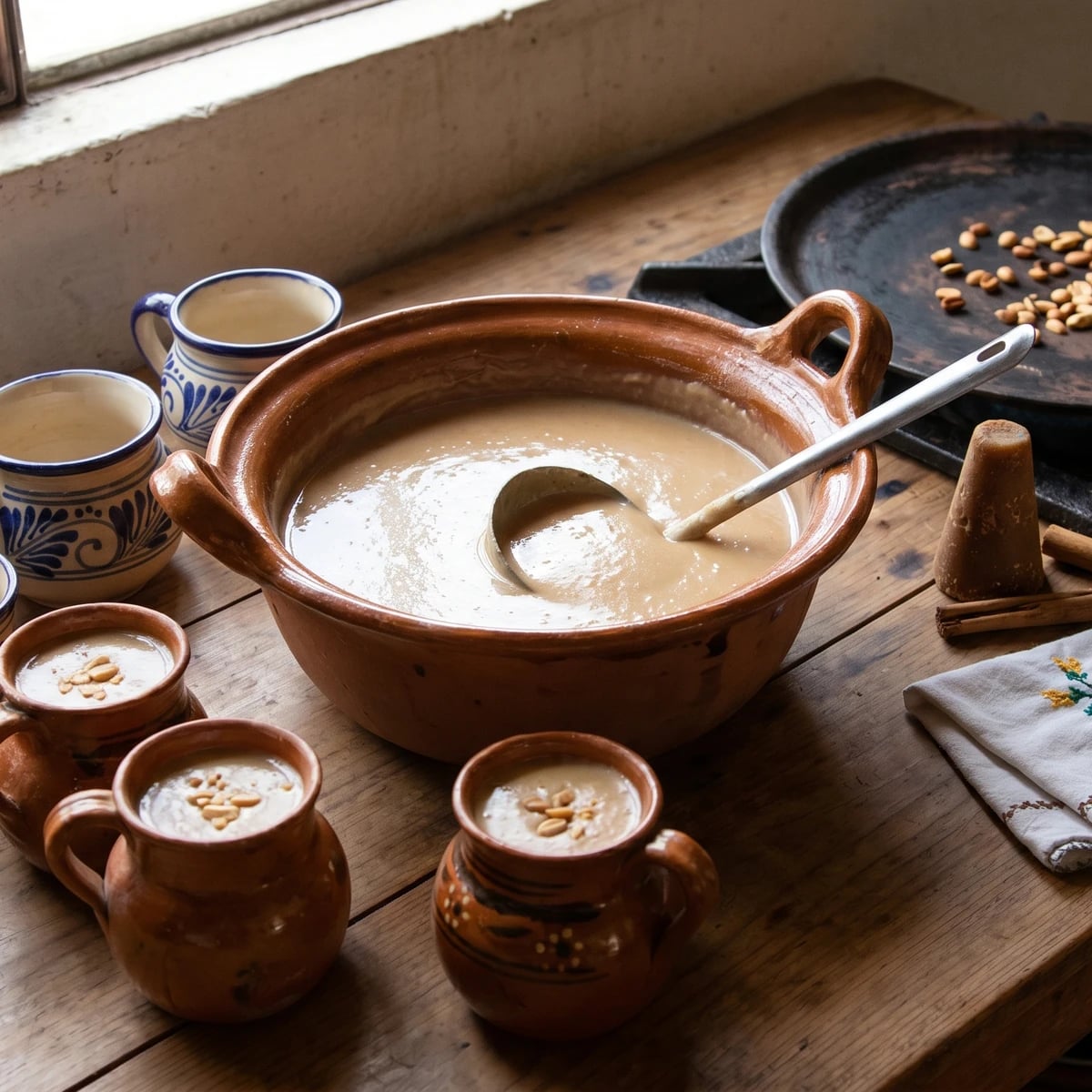
Atole de Cacahuate de Tarimoro
Created by Chef Lupita
Southern Guanajuato's atole de cacahuate is built from comal-toasted peanuts, nixtamal masa, piloncillo, and canela, the thick drink Tarimoro families keep alive one patient pot at a time.
Guanajuato, southern Bajio, Tarimoro: that is where this atole belongs. Not the mining city, not the postcard towns. Tarimoro sits in the agricultural south, near Salvatierra and Acambaro, where the pot on the stove still tells you what the land and the market gave that week.
The women who perfected this did not treat peanut as candy. They toasted cacahuates on a black comal until the skins blistered, ground them with milk, thickened the pot with masa de maiz nixtamalizado, and sweetened it with piloncillo and canela. That is the technique: toast, grind, simmer, keep stirring. Atole punishes laziness. Turn your back and the bottom of the pot will remind you.
My mother's Jalisco notebook had atoles, but not this one. I learned this flavor in Guanajuato from a señora who watched the spoon more closely than she watched the clock. No chocolate, no chile, no vanilla perfume. Not every Mexican dish asks for heat. This one asks for corn, peanut, and patience in a clay jarro. Cada estado, su propia cocina.
Ingredients
raw skin-on peanuts
Quantity
1 1/2 cups
unsalted
whole milk
Quantity
5 cups
divided
cold water
Quantity
2 cups
| Ingredient | Quantity |
|---|---|
| raw skin-on peanutsunsalted | 1 1/2 cups |
| whole milkdivided | 5 cups |
| cold water | 2 cups |
Where cooking meets culture.
Culinary guides, cultural storytelling, and the editorial depth that makes cooking meaningful.
Discover Culinary Explorer