Culinary Explorer
A cooking platform built around craft, culture, and the stories behind what we eat.
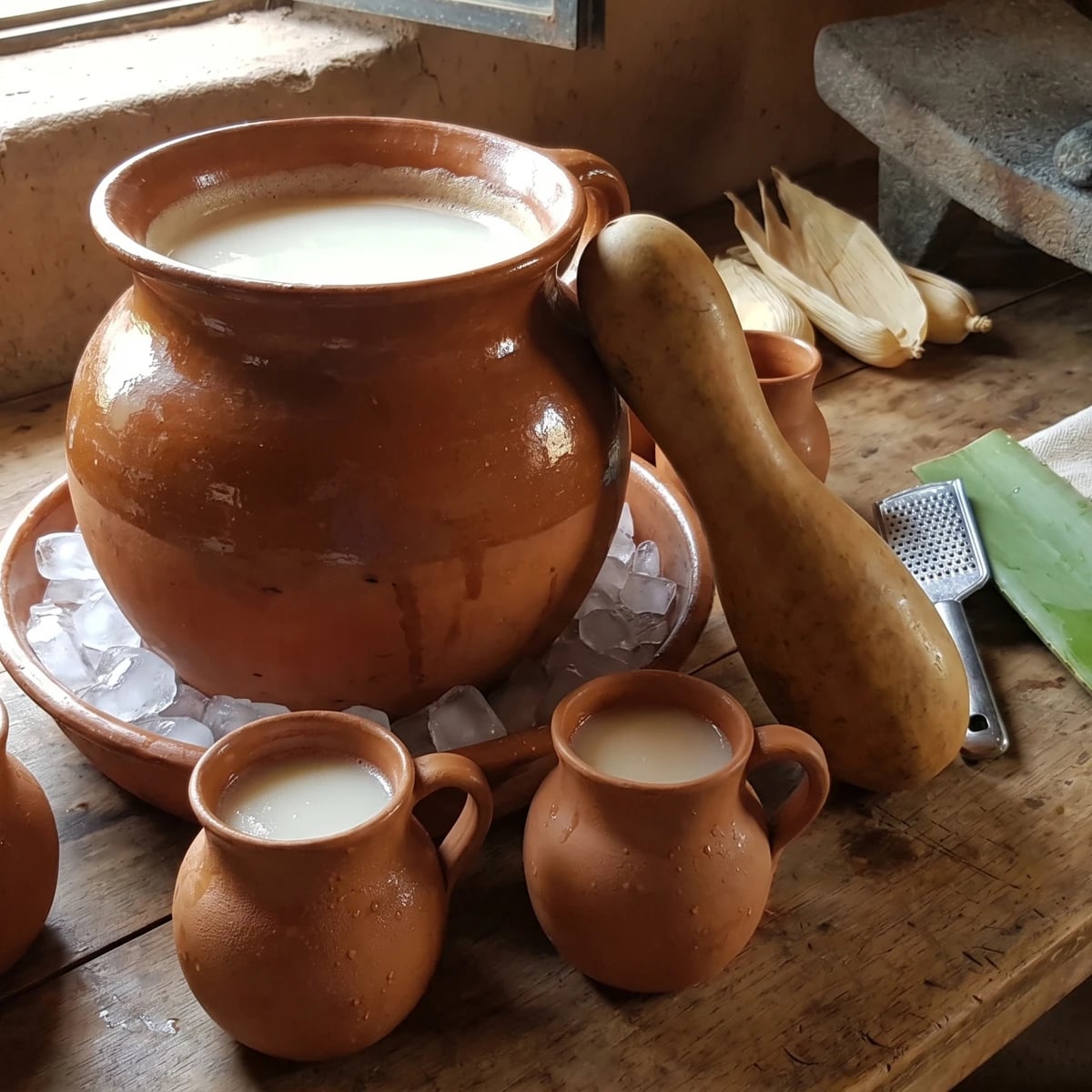
Pulque Fresco del Altiplano Potosino
Created by Chef Lupita
San Luis Potosí's Altiplano pulque is dawn-drawn aguamiel from mature maguey pulquero, fermented only until milky, lightly sour, and alive enough for a celebration under the sun.
San Luis Potosí, Altiplano Potosino, where the northern edge of the Bajío dries into maguey country: that is where this pulque lives. Around Matehuala, Charcas, and Villa de Guadalupe, the plant is not decoration. It is fence, medicine, shade, sweet aguamiel, and when the morning goes right, pulque.
The ingredient is fresh aguamiel from maguey pulquero, especially maguey manso, Agave salmiana. The tlachiquero cuts the cajete, scrapes it clean, and draws the sap with an acocote before the day turns hot. Then the kitchen takes over. The women who keep the tinacal know by smell when the sweetness is still alive and when the sourness has gone too far.
This is not tequila, mezcal, or a bar cocktail. It is fermented sap, milky, slightly thick, sweet at first and then gently sour. No fruit, no cinnamon, no blender. Curados have their place. This is pulque fresco, and fresco means you drink it the day it is made.
If your aguamiel is old, the pulque will be bad. If your vessel is dirty, it will turn ugly. If you seal it in a bottle, it can burst. La cocina no es decoración, es trabajo.
Ingredients
fresh aguamiel from maguey pulquero (Agave salmiana)
Quantity
4 liters
drawn the same morning
pulque madre or unpasteurized plain pulque fresco
Quantity
500 milliliters
active, unsweetened, unflavored, at room temperature
clean ice (optional)
Quantity
as needed
for chilling the outside of the serving jarro only
| Ingredient | Quantity |
|---|---|
| fresh aguamiel from maguey pulquero (Agave salmiana)drawn the same morning | 4 liters |
| pulque madre or unpasteurized plain pulque frescoactive, unsweetened, unflavored, at room temperature | 500 milliliters |
| clean ice (optional)for chilling the outside of the serving jarro only | as needed |
Where cooking meets culture.
Culinary guides, cultural storytelling, and the editorial depth that makes cooking meaningful.
Discover Culinary Explorer