Chef Lupita
Acúmara Tatemada al Comal
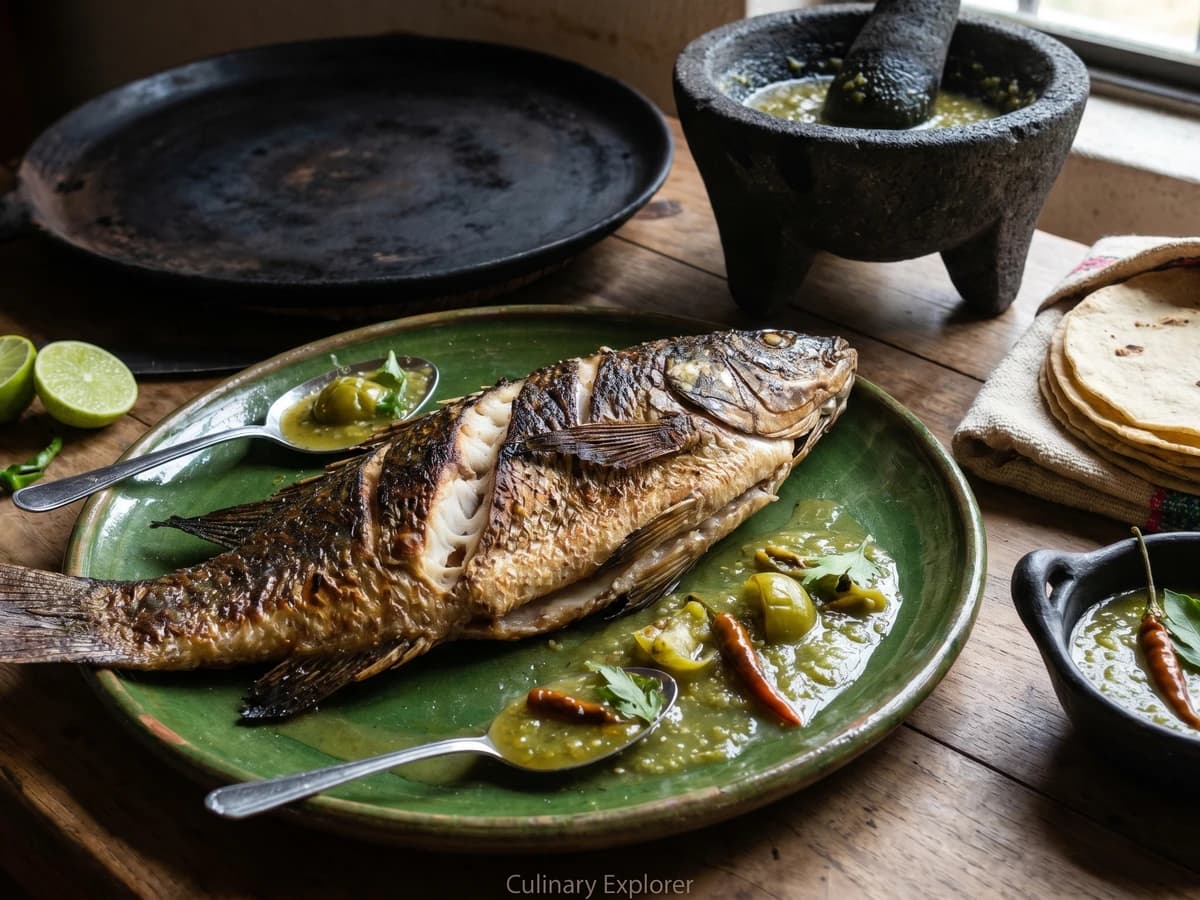
Michoacán's Lake Pátzcuaro acúmara, a whole kurucha from the lago tatemada on a comal de leña and served with chile perón atápakua, corn tortillas, and P'urhépecha discipline.
A cooking platform built around craft, culture, and the stories behind what we eat.
Created by
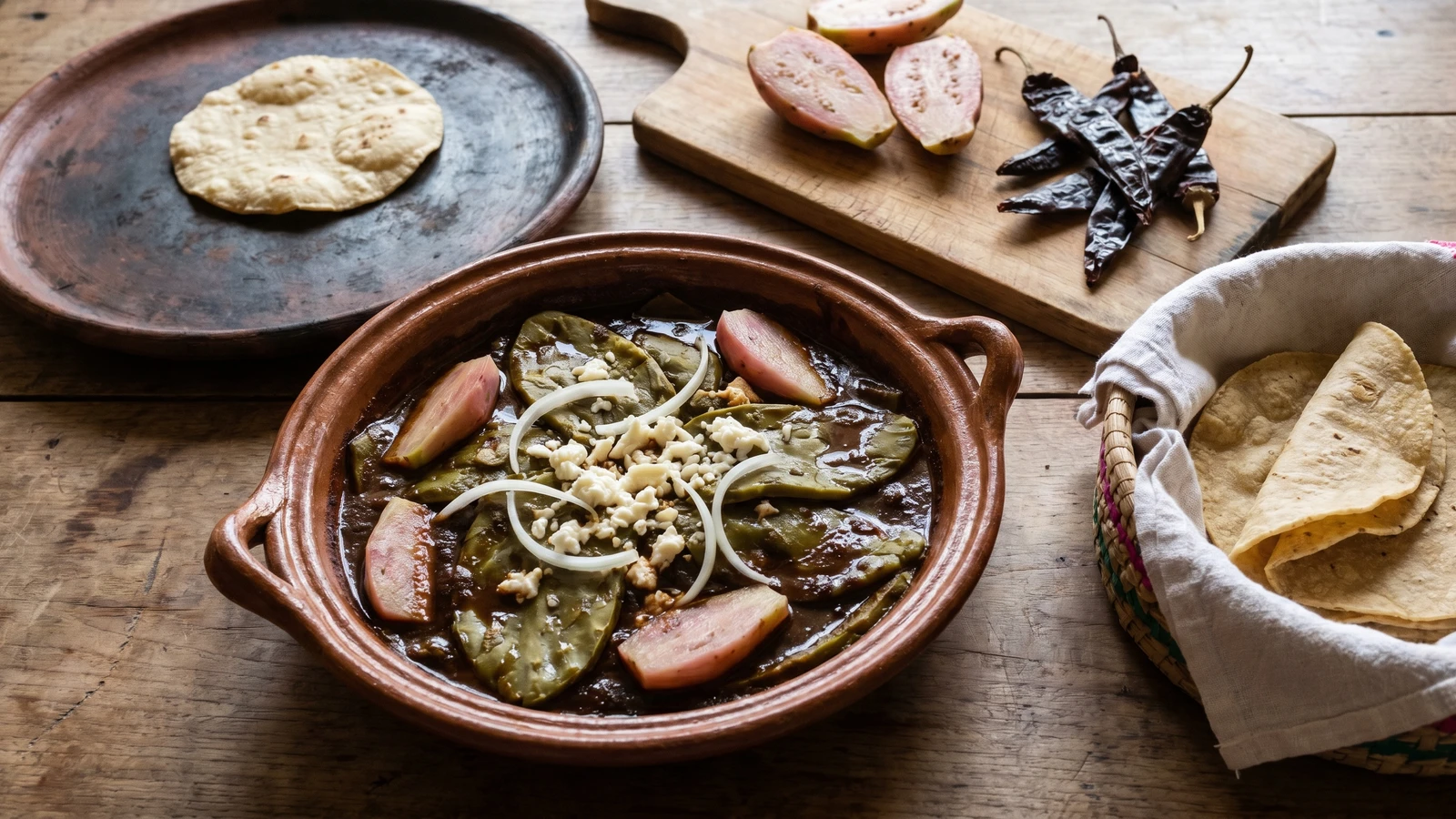
Sierra Gorda de Guanajuato's capones are tender nopales stewed with sour xoconostle, chile pasilla, epazote, and cebolla, a milpa-and-monte pot finished with queso fresco and eaten with hot corn tortillas.
Guanajuato, Sierra Gorda, the northeastern sierra around Xichú, Atarjea, Santa Catarina, Victoria, and Tierra Blanca. That is where this dish belongs. Not in the flat Bajío image people carry around, all wheat fields and cajeta. This is monte cooking: nopal, xoconostle, chile pasilla, epazote, and the patient hand of women who learned to make a meal from what the hill gives back.
Capones de nopales are not fancy. They are exact. Young cactus paddles are cleaned, trimmed, cooked until the baba relaxes, then stewed in a dark pasilla sauce with wedges of xoconostle. The xoconostle is the signature. Sour prickly pear, firm-fleshed, sharp enough to make the chile stand upright. Do not replace it with sweet tuna. Do not replace it with tomatillo. Pregúntale a las señoras del mercado and they will tell you the same thing.
I first ate a version like this from an Otomí cook who set the cazuela on the table with nothing more than tortillas in a cloth-lined chiquihuite and a little queso fresco. No performance. No garnish parade. The pasilla gave the sauce its dark, raisin smell, the epazote kept the nopales honest, and the xoconostle cut through everything. Cada estado, su propia cocina.
This is a 32-state cuisine, and Guanajuato has more than one face. The city tourists know is silver, churches, and alleyways. The Sierra Gorda cooks with cactus, maguey, beans, corn, and hunger turned into intelligence. Saber cocinar es saber vivir.
Xoconostle comes from the Nahuatl words 'xococ,' meaning sour, and 'nochtli,' meaning prickly pear; unlike sweet tuna, its edible flesh is the acidic wall around the seed pocket, which is why central Mexican cooks used it in stews, salsas, and preserves. The Sierra Gorda de Guanajuato sits on the old northern frontier where Otomí and Chichimeca-Jonaz foodways met Spanish colonial ranching after the 16th century, but cactus, maguey, maize, and beans remained the practical base of household cooking. Capones de nopales belongs to that survival register: a meatless dish with pre-Columbian ingredients, made substantial through chile, acidity, and tortillas.
Quantity
2 pounds
preferably nopales cambray or tender paddles, cleaned of spines
Quantity
4 medium
peeled, seed pockets removed, cut into wedges
Quantity
5
stemmed and seeded
Quantity
2
unpeeled
Quantity
1 small
half roasted for the sauce and half thinly sliced
Quantity
2 tablespoons
Quantity
1 1/2 cups
plus more as needed
Quantity
1 large sprig
Quantity
1 teaspoon, plus more to taste
Quantity
1/2 cup
crumbled
Quantity
for serving
warmed
| Ingredient | Quantity |
|---|---|
| fresh young nopalespreferably nopales cambray or tender paddles, cleaned of spines | 2 pounds |
| xoconostlespeeled, seed pockets removed, cut into wedges | 4 medium |
| dried chile pasilla mexicanostemmed and seeded | 5 |
| garlic clovesunpeeled | 2 |
| white onionhalf roasted for the sauce and half thinly sliced | 1 small |
| corn oil | 2 tablespoons |
| bean broth or waterplus more as needed | 1 1/2 cups |
| fresh epazote | 1 large sprig |
| kosher salt | 1 teaspoon, plus more to taste |
| queso frescocrumbled | 1/2 cup |
| hand-pressed corn tortillas (optional)warmed | for serving |
Lay each nopal flat on the board and scrape away the spines and eyes with a small sharp knife. Trim the dry edge. If the paddles are small, leave them whole and score them in a shallow crosshatch. If they are larger, cut them into wide strips. Capones means the nopal has been cleaned and trimmed for the pot, not drowned in a jar. No me vengas con jarred nopales for this dish.
Place the nopales in a pot with enough water to cover by one inch, 1/2 teaspoon salt, and one small slice of the onion. Bring to a steady simmer and cook 12 to 15 minutes, until the color turns deep olive and the flesh is tender but still has bite. The baba will foam. Let it. That is the nopal doing what nopal does. Drain and rinse once with warm water.
Cut off the ends of each xoconostle, peel away the thick skin, and open the fruit lengthwise. Scoop out the seed pocket with a spoon and keep the firm sour flesh. Cut it into wedges. Xoconostle is not regular tuna and it is not tomatillo. The sourness is the point. Remove it and you have changed the dish.
Heat a dry comal over medium. Toast the chile pasilla mexicano one at a time, about 15 to 20 seconds per side, just until the skin softens, shines, and smells like raisins and dark earth. Do not blacken them. Pasilla is thin and bitter when burned. Place the toasted chiles in a bowl and cover with hot water for 15 minutes.
On the same comal, roast the unpeeled garlic and the reserved half onion until the garlic skin is spotted and the onion has browned edges. Peel the garlic. This little char gives the sauce its backbone. A raw blender sauce tastes lazy, and the women who make this in the Sierra would hear it before they tasted it.
Drain the soaked chiles and place them in a blender with the roasted garlic, roasted onion, 1 cup bean broth or water, and 1/2 teaspoon salt. Blend until completely smooth. Strain through a fine-mesh sieve if your blender leaves skins behind. The sauce should be dark brick-red, earthy, and loose enough to pour.
Heat the corn oil in a lead-free clay cazuela or heavy skillet over medium. Add the thinly sliced white onion and cook until it softens and turns translucent at the edges, about 5 minutes. This is a vegetarian pot, so the oil stays clean and quiet. The sweetness of the onion has to carry the chile, not fight it.
Pour the pasilla sauce into the cazuela with the onion. It will thicken quickly. Stir and cook 4 to 5 minutes, until the sauce darkens and a light oil sheen appears at the edges. Add the cooked nopales, xoconostle wedges, epazote, and the remaining 1/2 cup bean broth or water. Simmer uncovered for 18 to 22 minutes, stirring gently, until the xoconostle softens but still holds its shape and the sauce clings to the nopales.
Taste for salt. Pull out the epazote sprig. Spoon the capones into a shallow cazuela and scatter the queso fresco over the top just before serving. Eat with hot corn tortillas from the comal. The tortilla is not decoration, it is the utensil. Así se hace y punto.
1 serving (about 330g)
Culinary guides, cultural storytelling, and the editorial depth that makes cooking meaningful.
Discover Culinary ExplorerChef Lupita
Michoacán's Lake Pátzcuaro acúmara, a whole kurucha from the lago tatemada on a comal de leña and served with chile perón atápakua, corn tortillas, and P'urhépecha discipline.

Chef Lupita
Puebla's weekday adobo of pork shoulder braised in a thick guajillo and ancho sauce sharpened with vinegar, cumin, and clove. The deep red of a market spice stall, the dish a poblana cooks without thinking.

Chef Lupita
Loreto's pit-roasted clams, planted hinge-up in beach sand and tatemadas under a fast fire of dried romerillo brush, the resinous Baja desert shrub that gives this dish its smoke.

Chef Lupita
Oaxaca's eighth mole, the silky, almond-and-cinnamon almendrado, served over poached chicken. Mild, sweet, restrained, and a quiet rebuttal to anyone who thinks Mexican food has to be hot to be Mexican.