Chef Lupita
Acúmara Tatemada al Comal
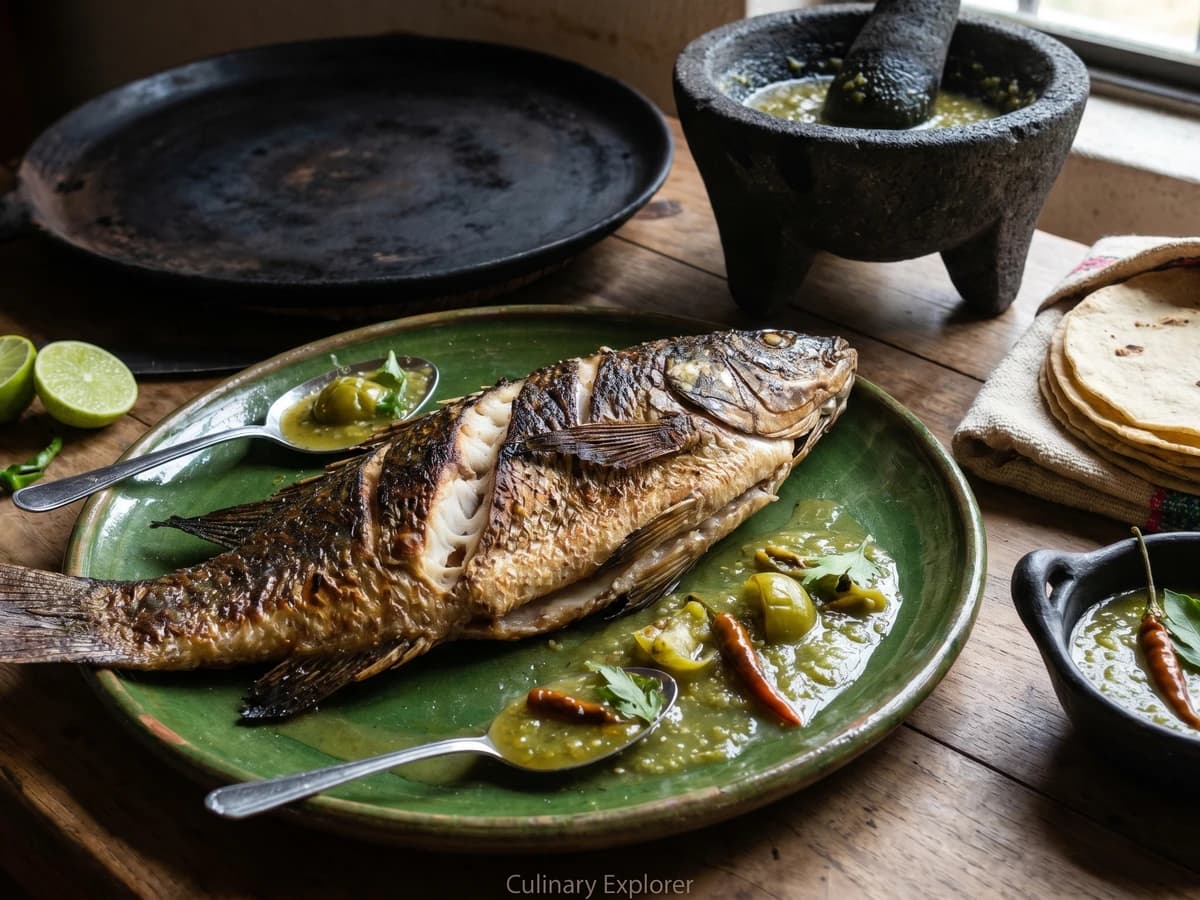
Michoacán's Lake Pátzcuaro acúmara, a whole kurucha from the lago tatemada on a comal de leña and served with chile perón atápakua, corn tortillas, and P'urhépecha discipline.
A cooking platform built around craft, culture, and the stories behind what we eat.
Created by
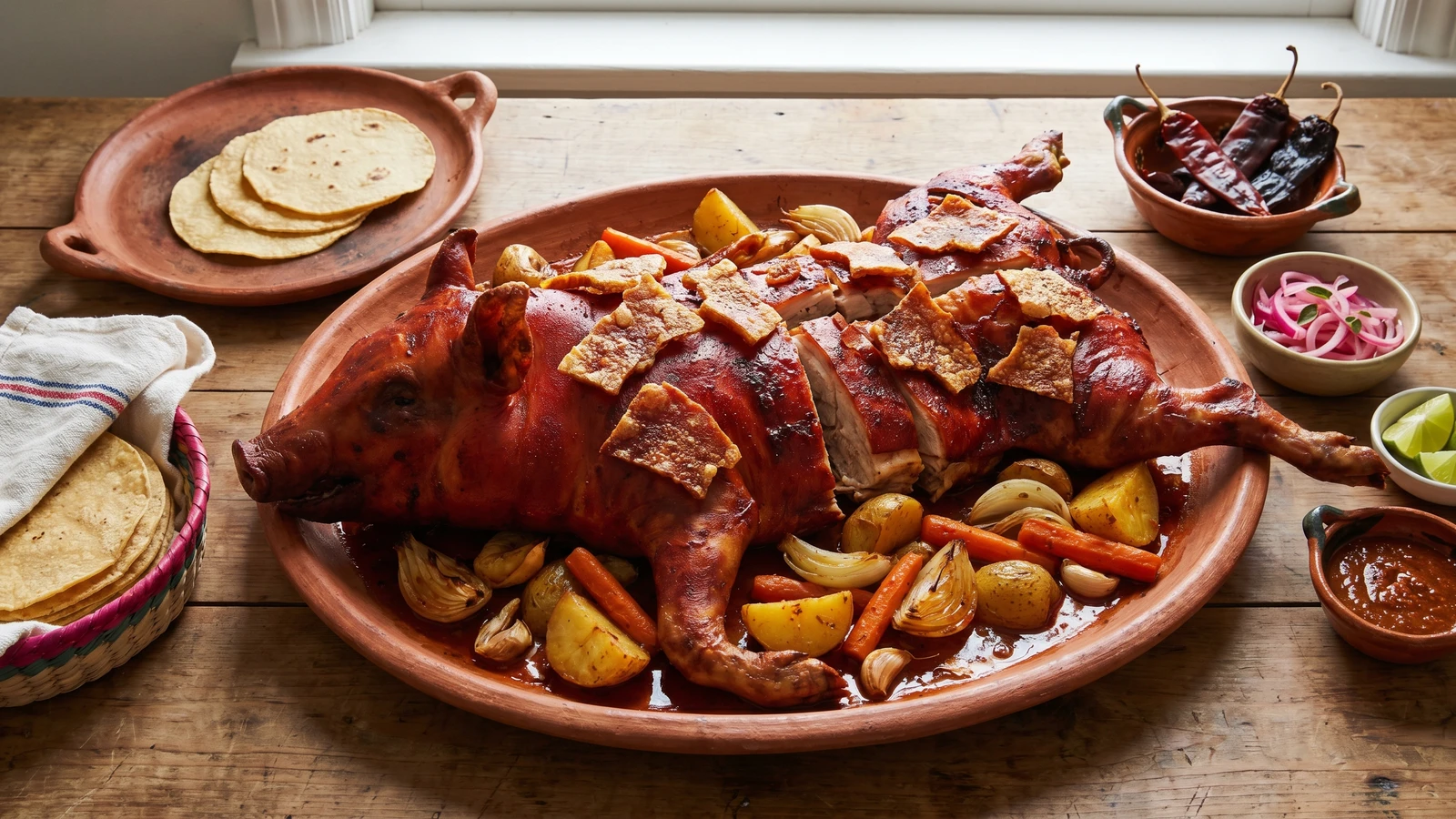
Aguascalientes' hacienda celebration pig, painted with chile guajillo adobo, rested overnight, then roasted low until the meat loosens and the skin crackles under the knife.
Aguascalientes sits in the Bajio, north of Jalisco and south of Zacatecas, a small state with a strong feria table. Lechon al horno lives in the ranchos around the capital, in Jesus Maria, Rincon de Romos, and the old hacienda kitchens where a celebration meant pork, tortillas, salsa, and enough food for whoever walked in.
The adobo is guajillo first. Not tomato sauce wearing red clothes. Chile guajillo gives the clean red color, chile ancho gives body, and chile pasilla gives the darker edge that keeps the sauce from tasting thin. The chiles are toasted on a comal, soaked in hot water, blended with garlic, Mexican oregano, clove, canela, vinegar, and manteca de cerdo. La manteca es el sabor. No me vengas con atajos.
I learned this version from a senora near the Jardin de San Marcos who had cooked through the feria more years than she wanted to count. She rubbed the pig the day before, packed adobo under the skin where the knife could reach, then roasted it slowly while the house kept working around the oven. The skin was brushed with lard at the end and salted hard. That is why it crackles.
This is not food from a single Mexico. Esto no es comida de un solo Mexico. Aguascalientes has its own register, quieter than Oaxaca, less famous than Michoacan, but serious. Serve it on terracotta, with corn tortillas from the comal, salsa de chile seco, and pickled onions if your table wants acidity. Cada estado, su propia cocina.
Lechon al horno in Aguascalientes reflects the state's hacienda cooking, where Spanish-introduced pigs became celebration animals roasted for patron saint days, weddings, and later the Feria de San Marcos, formally established in 1828. The guajillo-based adobo belongs to the north-central corridor shared with Zacatecas, Jalisco, and Guanajuato, but the hydrocálido version is usually milder and more aromatic than picante, built for pork skin and long roasting rather than table heat. By the 20th century, lechon al horno had become one of the dishes associated with feria eating in Aguascalientes, alongside pollo San Marcos and other pork preparations served for crowds.
Quantity
1, 12 to 15 pounds
cleaned, head and feet attached if available
Quantity
3 tablespoons
divided
Quantity
1 tablespoon
Quantity
14
stemmed and seeded
Quantity
4
stemmed and seeded
Quantity
2
stemmed and seeded
Quantity
10
peeled
Quantity
1 medium
quartered
Quantity
1 tablespoon
Quantity
1 teaspoon
Quantity
4
Quantity
1 small 2-inch piece
Quantity
1/2 teaspoon
Quantity
3
crumbled
Quantity
1/2 cup
Quantity
1/2 cup
Quantity
1/4 cup
Quantity
1/2 cup, melted, plus 1/4 cup
for adobo and brushing
Quantity
1 tablespoon
grated
Quantity
1 cup, plus more as needed
Quantity
2 pounds
halved
Quantity
4
cut into thick rounds
Quantity
2
sliced thick
Quantity
2
halved crosswise
Quantity
6
Quantity
2 cups
Quantity
for serving
Quantity
for serving
Quantity
for serving
Quantity
for serving
| Ingredient | Quantity |
|---|---|
| whole suckling pigcleaned, head and feet attached if available | 1, 12 to 15 pounds |
| kosher saltdivided | 3 tablespoons |
| freshly ground black pepper | 1 tablespoon |
| dried chile guajillostemmed and seeded | 14 |
| dried chile anchostemmed and seeded | 4 |
| dried chile pasillastemmed and seeded | 2 |
| garlic clovespeeled | 10 |
| white onionquartered | 1 medium |
| dried Mexican oregano | 1 tablespoon |
| cumin seeds | 1 teaspoon |
| whole cloves | 4 |
| Mexican canela | 1 small 2-inch piece |
| allspice berries | 1/2 teaspoon |
| bay leavescrumbled | 3 |
| apple cider vinegar | 1/2 cup |
| fresh orange juice | 1/2 cup |
| fresh lime juice | 1/4 cup |
| pork lard (manteca de cerdo)for adobo and brushing | 1/2 cup, melted, plus 1/4 cup |
| piloncillo or dark brown sugargrated | 1 tablespoon |
| hot chile soaking liquid | 1 cup, plus more as needed |
| small potatoeshalved | 2 pounds |
| carrotscut into thick rounds | 4 |
| white onionssliced thick | 2 |
| heads of garlichalved crosswise | 2 |
| bay leaves for roasting pan | 6 |
| water or light pork stock | 2 cups |
| warm hand-pressed corn tortillas (optional) | for serving |
| salsa de chile seco or salsa roja de guajillo (optional) | for serving |
| pickled red onion with Mexican oregano (optional) | for serving |
| lime wedges (optional) | for serving |
Pat the suckling pig completely dry, inside and outside. Rub it with 2 tablespoons kosher salt and the black pepper, working into the belly cavity, shoulders, hams, and behind the ears. Set it on a rack over a sheet pan and refrigerate uncovered for at least 8 hours, preferably overnight. Dry skin becomes crisp skin. Wet skin stays stubborn.
Heat a dry comal over medium. Toast the guajillo chiles 20 to 30 seconds per side, just until they brighten and smell fruity. Toast the ancho and pasilla separately because they burn faster. Do not let them blacken. Burned chile turns bitter and then the whole pig carries your mistake.
Put the toasted chiles in a bowl and cover with hot water for 20 minutes. Hot water, not boiling. While they soften, toast the cumin, cloves, canela, and allspice on the comal until fragrant, then grind them. Drain the chiles, saving the soaking liquid. Blend the chiles with garlic, onion, Mexican oregano, ground spices, crumbled bay leaves, vinegar, orange juice, lime juice, melted lard, piloncillo, and 1 cup soaking liquid until absolutely smooth.
Push the adobo through a fine-mesh strainer into a bowl, pressing hard on the chile skins. Taste it. It should be red, deep, lightly sweet, aromatic from clove and canela, and salty enough to season a whole animal. Stir in the remaining 1 tablespoon salt. If it tastes shy now, it will taste shy after eight hours in the oven.
Use a small sharp knife to make shallow slits in the thickest parts of the shoulders and hams without tearing the skin. Rub the adobo all over the pig and into those cuts. Rub the belly cavity well. Keep the skin side mostly clean of thick chile paste, because chile paste on the surface can burn before the meat is tender. Refrigerate uncovered 12 to 24 hours. This is a two-day dish. Así se hace y punto.
Take the pig out of the refrigerator 1 hour before roasting. Heat the oven to 250F. Scatter the potatoes, carrots, sliced onions, halved garlic heads, and bay leaves in a large roasting pan. Pour in the water or light pork stock. Set a rack over the vegetables and lay the pig belly-down or slightly on its side, tucking the legs naturally so the skin is exposed and not pressed flat.
Roast at 250F for 6 to 7 hours, basting the meatier exposed areas with pan juices every hour and rotating the pan once if your oven has hot spots. Add a little water if the pan dries out. The pig is ready for the final heat when a thermometer reads at least 160F near the shoulder and ham, and closer to 180F if you want meat that pulls easily from the bone. The joints should loosen when you move a leg.
Raise the oven to 450F. Brush the skin with the remaining 1/4 cup melted lard and sprinkle lightly with salt. Roast 20 to 35 minutes more, watching carefully, until the skin blisters, tightens, and turns deep mahogany in patches. If one area browns too fast, shield it with foil. The sound you want under the knife is a clean crackle, not a soft tear.
Rest the pig 25 to 30 minutes before carving. Spoon the roasted potatoes, carrots, onions, and garlic onto a warm terracotta platter and set the carved lechon over them with pieces of crisp skin on top. Serve with warm corn tortillas, salsa de chile seco or guajillo, pickled red onion, and lime wedges. The table should be practical: meat, tortillas, salsa, hands. Saber cocinar es saber vivir.
1 serving (about 440g)
Culinary guides, cultural storytelling, and the editorial depth that makes cooking meaningful.
Discover Culinary ExplorerChef Lupita
Michoacán's Lake Pátzcuaro acúmara, a whole kurucha from the lago tatemada on a comal de leña and served with chile perón atápakua, corn tortillas, and P'urhépecha discipline.

Chef Lupita
Puebla's weekday adobo of pork shoulder braised in a thick guajillo and ancho sauce sharpened with vinegar, cumin, and clove. The deep red of a market spice stall, the dish a poblana cooks without thinking.

Chef Lupita
Loreto's pit-roasted clams, planted hinge-up in beach sand and tatemadas under a fast fire of dried romerillo brush, the resinous Baja desert shrub that gives this dish its smoke.

Chef Lupita
Oaxaca's eighth mole, the silky, almond-and-cinnamon almendrado, served over poached chicken. Mild, sweet, restrained, and a quiet rebuttal to anyone who thinks Mexican food has to be hot to be Mexican.