Chef Lupita
Acúmara Tatemada al Comal
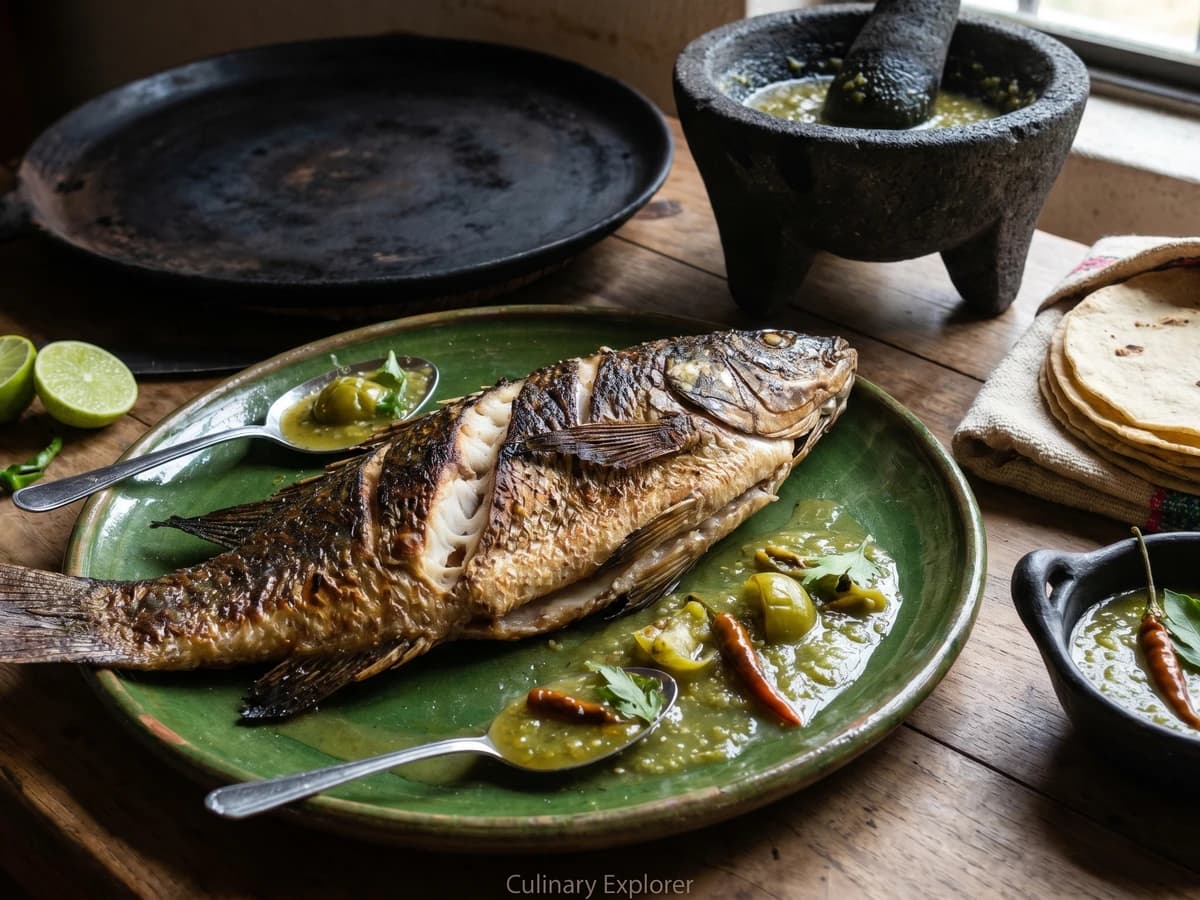
Michoacán's Lake Pátzcuaro acúmara, a whole kurucha from the lago tatemada on a comal de leña and served with chile perón atápakua, corn tortillas, and P'urhépecha discipline.
A cooking platform built around craft, culture, and the stories behind what we eat.

Created by
Queretaro's Otomi rancho nopal, split and stuffed with queso ranchero, chorizo, ajo, cilantro, and a dark chile ancho salsa before the penca chars over carbon.
Queretaro, especially the semidesert communities tied to Otomi cooking around Toliman and Cadereyta, knows what to do with a nopal before the rest of the country finishes deciding if it is a vegetable or a symbol. This dish lives on the rancho table and beside the outdoor fire, where the cactus paddle is not decoration. It is food, plate, wrapper, and flavor all at once.
The nopal must be young but firm, cleaned properly, then sealed around queso ranchero, chorizo, ajo, cilantro, and a chile ancho salsa. The ancho gives sweetness and dark body. The guajillo sharpens the color. The chorizo stains everything red, and that is how you know the filling has done its work. If you are cooking this for a vegetarian table, use a proper chorizo de soya from a Mexican market, browned hard in manteca vegetal or neutral oil. But understand the original register: pork chorizo and manteca de cerdo. A substitution is a compromise, not an upgrade.
I learned this style from a woman outside Cadereyta who tied the paddles shut with ixtle fiber and cooked them over carbon while tortillas puffed on a blackened clay comal. She did not measure the cilantro. She measured with her hand, because she had made the dish longer than I had been alive. Si no conoces el mercado, no conoces la cocina. Cada estado, su propia cocina.
Nopales have been eaten in central Mexico since pre-Columbian times, and the cactus appears in Mexica migration narratives as well as in the national emblem, but the semidesert foodways of Queretaro give it a daily practical role rather than a symbolic one. Otomi and Chichimeca communities of the Queretaro semidesert built a cuisine around drought-resistant plants including nopal, xoconostle, maguey, garambullo, and mesquite. Stuffed and grilled pencas reflect rancho cooking: ingredients from the corral, the cactus patch, and the comal brought together over carbon.
Quantity
8
cleaned of thorns, edges trimmed
Quantity
6 ounces
crumbled
Quantity
5 ounces
casing removed
Quantity
2 tablespoons
Quantity
3
finely chopped
Quantity
1/2 small
finely chopped
Quantity
1/2 cup
chopped
Quantity
2
stemmed and seeded
Quantity
1
stemmed and seeded
Quantity
1 small
roasted
Quantity
1/2 teaspoon
Quantity
1/2 teaspoon, plus more to taste
Quantity
1 tablespoon
Quantity
for serving
warmed
Quantity
for serving
Quantity
for serving
| Ingredient | Quantity |
|---|---|
| large tender nopal paddlescleaned of thorns, edges trimmed | 8 |
| queso rancherocrumbled | 6 ounces |
| fresh Mexican chorizocasing removed | 5 ounces |
| manteca de cerdo | 2 tablespoons |
| garlic clovesfinely chopped | 3 |
| white onionfinely chopped | 1/2 small |
| fresh cilantrochopped | 1/2 cup |
| dried chile anchostemmed and seeded | 2 |
| dried chile guajillostemmed and seeded | 1 |
| ripe tomatoroasted | 1 small |
| dried Mexican oregano | 1/2 teaspoon |
| kosher salt | 1/2 teaspoon, plus more to taste |
| lime juice | 1 tablespoon |
| hand-pressed corn tortillas (optional)warmed | for serving |
| salsa de xoconostle (optional) | for serving |
| lime halves (optional) | for serving |
Rinse the nopal paddles and scrape away every thorn base with a small knife. Trim the dry edge, but do not cut the paddles too thin. You need structure because these will hold filling over the fire. Pat them dry. Wet nopales steam instead of charring.
Heat a dry comal over medium. Toast the chile ancho and chile guajillo separately, about 20 to 30 seconds per side, until they smell deep and the skins loosen. Do not blacken them. Burned chile makes bitter salsa, and no amount of cheese will hide that mistake.
Soak the toasted chiles in hot water for 15 minutes. Drain them and blend with the roasted tomato, oregano, salt, lime juice, and 3 tablespoons of fresh water. Blend until smooth. This salsa should be thick enough to cling to the filling, not run across the board.
Melt the manteca de cerdo in a small cazuela or skillet over medium heat. Add the chorizo and cook until the fat turns red and the meat is browned at the edges, 6 to 8 minutes. Add the onion and garlic and cook 2 minutes more. La manteca es el sabor. Vegetable oil gives you grease. Manteca gives you depth.
Scrape the chorizo mixture into a bowl. Let it cool for 5 minutes, then fold in the queso ranchero, chopped cilantro, and 2 tablespoons of the chile salsa. Taste for salt. The filling should be salty enough to season the nopal from the inside.
Lay 4 nopal paddles flat on the board. Divide the filling among them, keeping it away from the edges. Brush a little chile salsa over the filling. Cover each with a second nopal paddle and tie closed with kitchen twine in two places. Press gently. If filling spills out now, it will spill out on the fire.
Prepare a medium carbon fire or heat a heavy cast iron grill pan. Grill the stuffed nopales 5 to 7 minutes per side, turning with tongs, until the outside blisters, dark green turns olive, and charred spots mark the paddles. The cheese inside should soften and the chorizo fat should stain the edges red.
Rest the nopales for 3 minutes before cutting away the twine. Spoon the remaining chile salsa over the top or serve it on the side. Bring them to the table with warm corn tortillas, salsa de xoconostle, and lime halves. No me vengas con atajos. The char is the point.
1 serving (about 380g)
Culinary guides, cultural storytelling, and the editorial depth that makes cooking meaningful.
Discover Culinary ExplorerChef Lupita
Michoacán's Lake Pátzcuaro acúmara, a whole kurucha from the lago tatemada on a comal de leña and served with chile perón atápakua, corn tortillas, and P'urhépecha discipline.

Chef Lupita
Puebla's weekday adobo of pork shoulder braised in a thick guajillo and ancho sauce sharpened with vinegar, cumin, and clove. The deep red of a market spice stall, the dish a poblana cooks without thinking.

Chef Lupita
Loreto's pit-roasted clams, planted hinge-up in beach sand and tatemadas under a fast fire of dried romerillo brush, the resinous Baja desert shrub that gives this dish its smoke.

Chef Lupita
Oaxaca's eighth mole, the silky, almond-and-cinnamon almendrado, served over poached chicken. Mild, sweet, restrained, and a quiet rebuttal to anyone who thinks Mexican food has to be hot to be Mexican.