Culinary Explorer

A cooking platform built around craft, culture, and the stories behind what we eat.
Discover Culinary Explorer
Pay de Queso de Bola Yucateco

Pay de Queso de Bola Yucateco

Created by

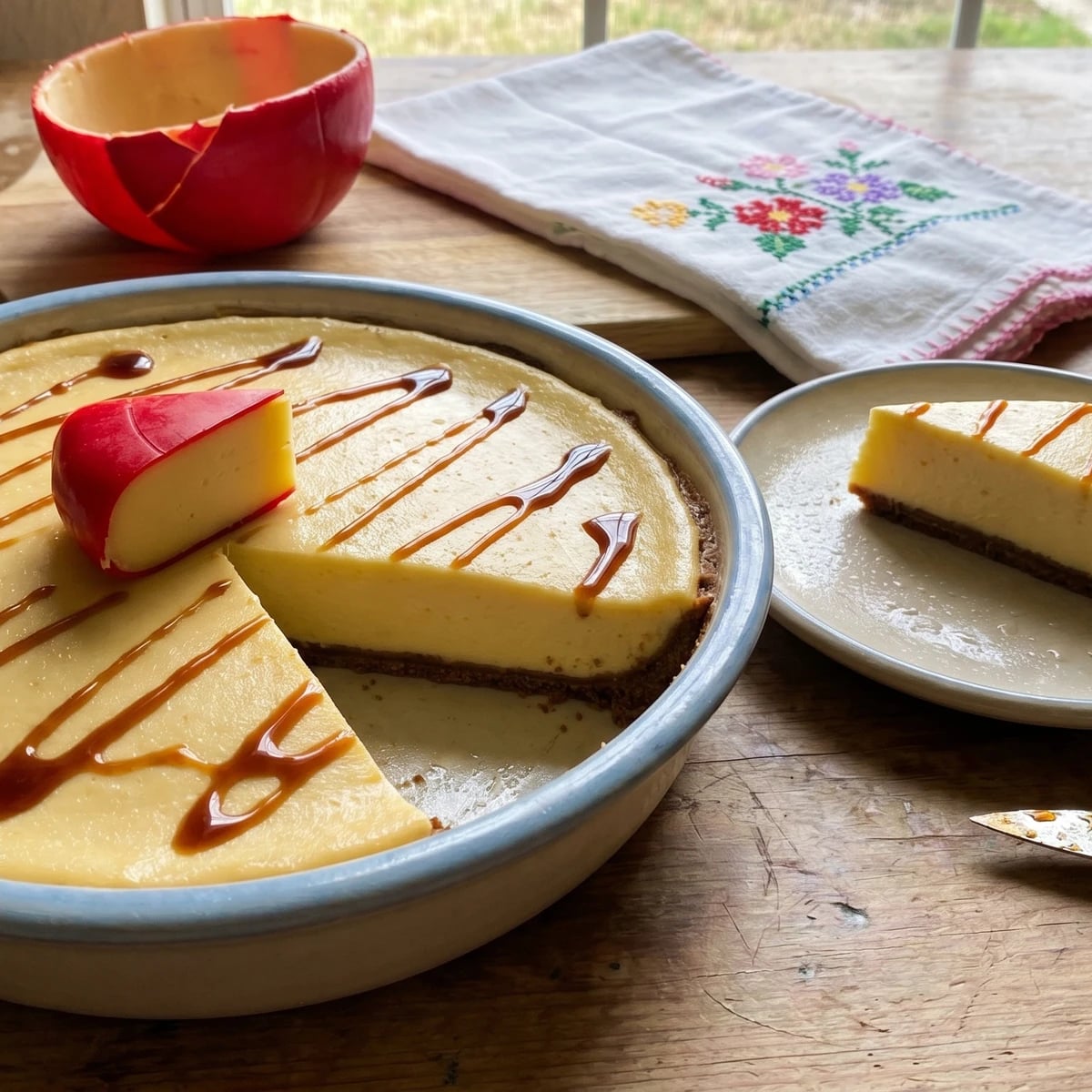
Mérida's modern dessert icon, Tere Cazola's pay de queso de bola, where finely grated Edam disappears into a sweet custard set over a Maria cookie crust and topped with dark caramel. Salty, sweet, and unmistakably yucateco.

Pastries & Cookies
Mexican
Dinner Party
Special Occasion
Celebration
30 min
Active Time
50 min cook1 hr 20 min total
Yield10 to 12 servings

This is from Yucatán. Specifically from Mérida, and even more specifically from the kitchen of Tere Cazola, the pastelera who made this dessert famous in the 1980s when her little shop on Calle 60 started selling it by the slice and then by the whole pie to families who came across the city for it. The pay de queso de bola is not a centuries-old dish. It is a modern Yucatecan classic, and that is its own kind of authority.

The ingredient that makes it is the queso de bola. Edam cheese, the red-waxed ball that came to the peninsula on Dutch trading ships in the colonial era and never left. Yucatán cooks treat queso de bola the way Oaxaca treats quesillo: as their own. It shows up stuffed and baked in queso relleno, grated over papadzules, and here, in the dessert that translates the salty-aged bite of an aged cow's milk cheese into something sweet without losing the cheese itself. If you use mild cheese or a fresh cheese, you are making a different dessert. La identidad esta en la bola roja.

Do not look for queso de bola at a regular supermarket cheese counter. Look for it in the Mexican grocery, in the Latin Caribbean section, or order the Dutch original online. The wax-coated ball is what you want, aged and salty, not pre-grated. Cada estado, su propia cocina, and Yucatán's kitchen brings the Caribbean, Lebanon, the Maya, and the Dutch to the same table without apology.

Queso de bola arrived in Yucatán through the Caribbean trade routes that connected the peninsula to Cuba, New Orleans, and Europe more readily than to central Mexico for much of the 19th century, when the henequen boom made Mérida one of the richest cities in the Americas. Dutch Edam, sealed in red wax for tropical transport, became a staple of yucateco pantries and entered the regional cuisine through dishes like queso relleno, where a whole hollowed ball is stuffed with picadillo and steamed. The pay de queso de bola itself is a 20th-century invention, popularized in the 1980s by Mérida pastelera Tere Cazola, whose bakery turned the dish from a home-cook curiosity into a regional icon now served at celebrations, family dinners, and the end of nearly every Yucatecan tasting menu.

The technique, the tradition, and the story behind every dish.

Discover Culinary Explorer

Ingredients

Maria cookie crumbs

Quantity

1 1/2 cups (about one 7-ounce package, finely ground)

unsalted butter

Quantity

6 tablespoons

melted

granulated sugar (for crust)

Quantity

2 tablespoons

queso de bola (Edam cheese)

Quantity

1 pound

red wax removed, finely grated

sweetened condensed milk

Quantity

1 can (14 ounces)

evaporated milk

Quantity

1 can (12 ounces)

heavy cream

Quantity

1 cup

large eggs

Quantity

4

large egg yolk

Quantity

1

pure vanilla extract

Quantity

2 teaspoons

fine sea salt

Quantity

pinch

granulated sugar (for caramel)

Quantity

1/2 cup

water (for caramel)

Quantity

2 tablespoons

Equipment Needed

  • 9 or 10-inch round baking dish or deep ceramic pie plate
  • Larger roasting pan for the water bath
  • Box grater with fine holes
  • High-powered blender
  • Small heavy saucepan for the caramel
  • Food processor for the cookie crust

Instructions

  1. 1

    Grate the queso de bola

    Peel off the red wax coating and grate the entire ball on the finest holes of a box grater. You want a pile that looks like wet sand, not shreds. Edam is firm and aged, almost dry, and it does not melt smoothly into a custard if you leave it in fat strands. Take your time. This is the ingredient that makes the pay yucateco and not a regular flan. Que no te de pereza.

    If the queso de bola feels too hard to grate, leave it on the counter for fifteen minutes. Do not soften it any further. You want it firm enough to grate cleanly without smearing.
  2. 2

    Build the Maria cookie crust

    Heat the oven to 350F. Pulse the Maria cookies in a food processor until they look like fine sand. Stir in the melted butter and the two tablespoons of sugar with a fork until the mixture holds together when you press it. Tip it into a 9 or 10-inch round baking dish or a deep pie plate. Press firmly across the bottom and up the sides with the flat bottom of a glass. Bake for 8 minutes, until just set and lightly toasted at the edges. Let it cool while you make the filling. Galletas Maria are not optional. They are the crust Tere Cazola used and they have been the crust ever since.

  3. 3

    Make the caramel

    In a small heavy saucepan, combine the half cup of sugar with the two tablespoons of water. Set over medium heat. Do not stir. Swirl the pan occasionally as the sugar dissolves and the syrup starts to color. After about six minutes it will turn deep amber, the color of strong tea. Pull it off the heat the moment it looks right. A second too long and it goes bitter. Pour half into the bottom of the Maria cookie crust, tipping the dish to coat evenly. Reserve the other half in the pan for drizzling at the end.

    Burned caramel cannot be saved. If yours goes black or smells acrid, pour it out and start again. Five minutes of attention now is the whole difference.
  4. 4

    Blend the custard

    Combine the grated queso de bola, condensed milk, evaporated milk, heavy cream, eggs, yolk, vanilla, and salt in a blender. Blend on high for one full minute. The cheese will not disappear completely. You should see a faint texture in the custard when you pour it. That is correct. A perfectly smooth pay de queso de bola is a pay that lost its identity. The salty fragments of Edam are the whole point.

  5. 5

    Pour and bake

    Pour the custard slowly over the caramel-lined crust. Place the baking dish inside a larger roasting pan. Set on the oven rack and pour hot tap water into the roasting pan until it comes halfway up the sides of the pie dish. Bake at 350F for 45 to 55 minutes. The pay is done when the edges are set, the center wobbles slightly like a struck drum, and a knife inserted halfway between the edge and the center comes out clean. Do not overbake. A dry pay de queso is a sad pay de queso.

  6. 6

    Cool and chill

    Lift the dish out of the water bath carefully and set on a rack. Cool to room temperature, about an hour. Cover and refrigerate at least four hours, preferably overnight. The custard needs to set fully and the salty edge of the Edam needs time to bloom against the condensed milk. This is not a dessert you serve warm. Mérida heat or not, it goes in cold.

  7. 7

    Finish and serve

    Just before serving, gently rewarm the reserved caramel in its pan until it pours, adding a splash of water if it has thickened too much. Drizzle over the top of the chilled pay in a loose zigzag. Slice with a knife dipped in hot water and wiped clean between cuts. Eat it at the end of a long Yucatecan meal, after the cochinita and the panuchos and the relajo, when everyone says they are full and then has a slice anyway. Así se hace y punto.

Chef Tips

  • Buy the whole ball of queso de bola with the red wax intact, not the pre-cut or pre-grated versions. The wax keeps the cheese aged and dry, which is exactly the texture you need. A softer cheese will weep fat into the custard and break the set.
  • Mexican Maria cookies (Gamesa is the standard) are the right crust. British digestives are too rich. Graham crackers are too sweet and too American. If you cannot find Maria, look in any Mexican or Latin grocery before you compromise.
  • The water bath is not optional. Without it, the eggs cook too fast at the edges and you get a curdled, rubbery custard with a dry crust at the top. With it, the custard sets evenly and stays silky. No me vengas con atajos.
  • Make this the day before. The flavor at four hours is fine. The flavor at twenty-four hours is the dessert Tere Cazola actually sold. The cheese, caramel, and custard need that time to come together.

Advance Preparation

  • The pay must be made at least four hours ahead to set, and is meaningfully better made the day before. It keeps refrigerated for four days, covered.
  • The Maria cookie crust can be pressed into the dish and refrigerated unbaked up to one day ahead. Bake just before filling.
  • The caramel can be made one day ahead and held in the saucepan at room temperature. Rewarm gently with a splash of water to loosen before drizzling.

Frequently Asked Questions

Nutrition Information

1 serving (about 186g)

Calories
575 calories
Total Fat
36 g
Saturated Fat
21 g
Trans Fat
1 g
Unsaturated Fat
13 g
Cholesterol
185 mg
Sodium
525 mg
Total Carbohydrates
45 g
Dietary Fiber
0 g
Sugars
36 g
Protein
19 g

Note: Chef personas and recipes are created with AI assistance. Cook with care: follow safe food-handling practices, check doneness with a thermometer when needed, and adapt for allergies and your kitchen.

Where cooking meets culture.

Culinary guides, cultural storytelling, and the editorial depth that makes cooking meaningful.

Discover Culinary Explorer

More from Yucatecan Pan Dulce & Pastries

Browse the full collection