
Chef Lupita
Almendrados Conventuales Poblanos
Puebla's convent almond cookies, made from blanched almonds, sugar syrup, egg yolks, canela, and patient hands, the kind of sweet that belongs beside coffee in talavera, not in a plastic bakery box.
A cooking platform built around craft, culture, and the stories behind what we eat.
Created by
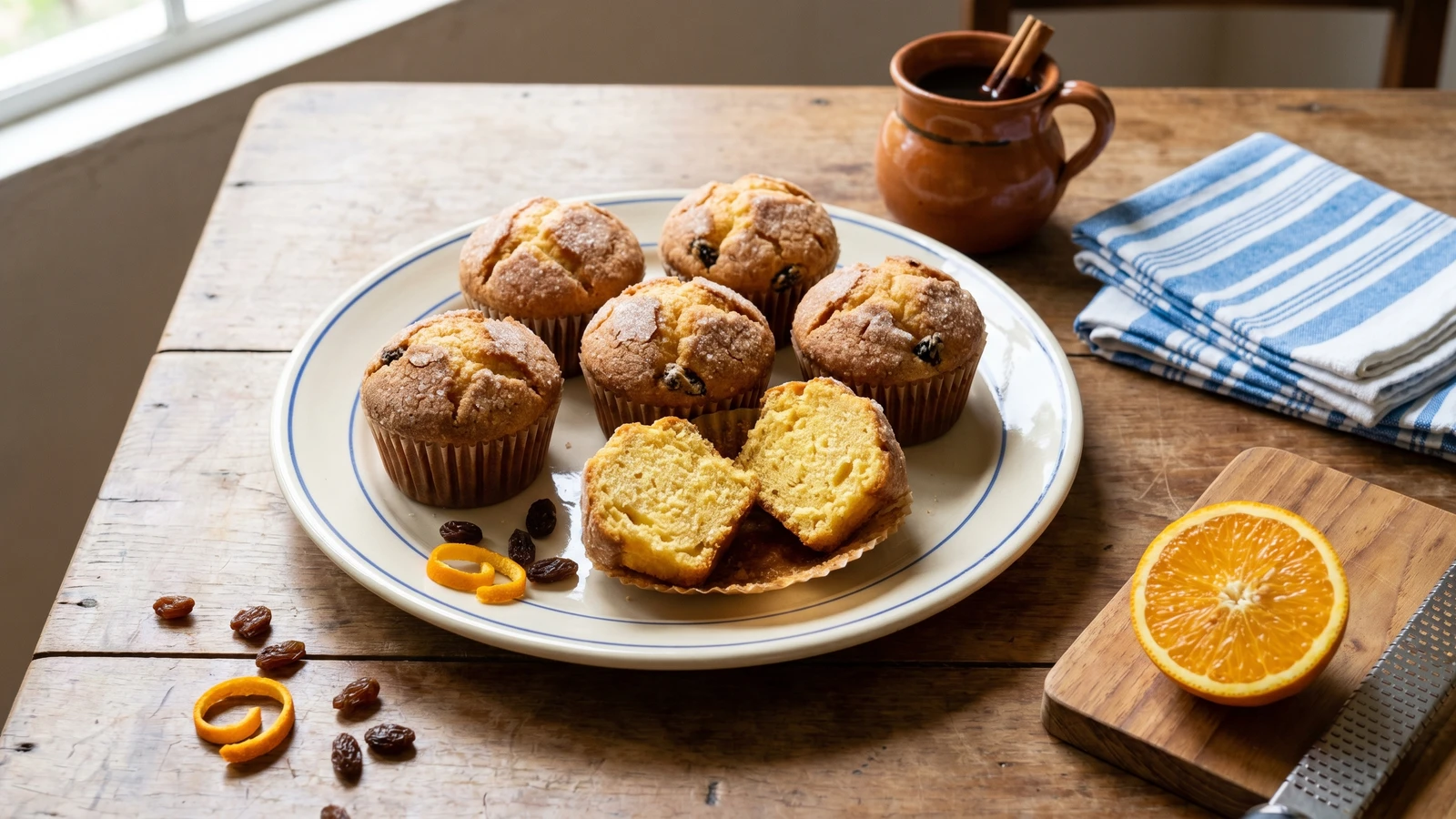
Yucatan's pleated-paper mantecadas, perfumed with orange rind and studded with raisins. The panaderia merienda of Merida, baked in butter and lard the way they have been since the henequen years.
Mantecadas are from Yucatan. Not the dense magdalena of central Mexico, not the dry pan dulce of a CDMX corner panaderia. These are the small buttery cakes of Merida, baked in pleated paper inside a metal mold, sold in stacks at the bakeries on Calle 60 and eaten with cafe de olla at six in the morning before the heat sets in.
The name tells you what matters. Manteca. The lard is not an option. It is half the fat in the batter and it is the reason a yucateca mantecada is more tender than a butter-only cake and carries that faint, savory depth that makes you reach for a second one. La manteca es el sabor, even in the dessert case. The other yucateco signature is the orange rind. If you can find naranja agria, the sour orange that perfumes cochinita pibil and half the peninsular pantry, use that peel. If you cannot, regular orange zest will do the work, and the kitchen will still smell the way a Merida bakery smells at dawn.
The raisins on top are the traditional finish. Some bakers in the peninsula use chocolate chips now and I have eaten both and I will not argue with you. But if you are making these for the first time, make them with raisins. That is the version the senoras of the Mercado Lucas de Galvez will recognize as their own. Cada estado, su propia cocina, and these belong to Yucatan.
The Mexican mantecada descends from the Spanish mantecada of Astorga in the province of Leon, a small lard-based cake brought to New Spain by Spanish bakers in the colonial period and adapted in regional bakeries across Mexico. Yucatan's version diverged from its central Mexican cousins through the addition of citrus peel, particularly the local naranja agria introduced by the Spanish in the 16th century, which became foundational to the peninsular pantry alongside achiote and recado rojo. The pleated paper capacillo, which gives the mantecada its distinctive ridged silhouette, became standard in Mexican panaderias in the late 19th century as commercial paper production expanded, displacing the older practice of baking in greased and floured tin molds.
Quantity
1 cup
at room temperature
Quantity
1/2 cup
at room temperature
Quantity
1 1/4 cups
Quantity
4
at room temperature
Quantity
2 1/4 cups
Quantity
2 teaspoons
Quantity
1/2 teaspoon
Quantity
1/2 cup
at room temperature
Quantity
2 tablespoons
from 2 oranges, naranja agria peel if you can find it
Quantity
1 teaspoon
Quantity
1/3 cup
soaked in warm water for 10 minutes and drained
Quantity
2 tablespoons
Quantity
12
| Ingredient | Quantity |
|---|---|
| unsalted butterat room temperature | 1 cup |
| manteca de cerdo (pork lard)at room temperature | 1/2 cup |
| granulated sugar | 1 1/4 cups |
| large eggsat room temperature | 4 |
| all-purpose flour | 2 1/4 cups |
| baking powder | 2 teaspoons |
| fine sea salt | 1/2 teaspoon |
| whole milkat room temperature | 1/2 cup |
| finely grated orange zestfrom 2 oranges, naranja agria peel if you can find it | 2 tablespoons |
| Mexican vanilla extract | 1 teaspoon |
| raisinssoaked in warm water for 10 minutes and drained | 1/3 cup |
| granulated sugar (for the tops) | 2 tablespoons |
| pleated paper baking cups (capacillos) | 12 |
Heat the oven to 350F. Set the pleated paper cups inside a standard 12-cup muffin tin. The metal tin holds the shape while the capacillos give the mantecadas their pleated sides. Without the paper, you have a cupcake. With the paper, you have a mantecada. The form is part of the identity.
In the bowl of a stand mixer, beat the butter and the lard together on medium-high until pale and fluffy, about three minutes. La manteca es el sabor, even in baking. The lard gives the mantecada its tender crumb and that faint savory depth that butter alone cannot. Add the sugar in a steady stream and beat for three more minutes until the mixture lightens visibly and looks like wet sand.
Add the eggs one at a time, beating well after each. The batter will look briefly curdled after the second egg. Keep going. By the fourth egg, it smooths back out. Beat in the orange zest and the vanilla. The kitchen should smell like a panaderia on the corner of a Merida street at six in the morning.
In a separate bowl, whisk the flour, baking powder, and salt. With the mixer on low, add the flour mixture in three additions, alternating with the milk in two additions, beginning and ending with flour. Mix only until the last streak of flour disappears. Overmixed batter gives you tough mantecadas. Stop the moment it comes together.
Scoop the batter into the lined cups, filling each about three-quarters full. The batter is thick and will not level itself, which is what you want. Press a few drained raisins gently into the top of each one. Three or four per mantecada is plenty. Sprinkle the tops with the reserved two tablespoons of sugar. That sugar crisps in the oven and gives the top its characteristic crackle.
Bake on the middle rack for 22 to 25 minutes. The tops should dome up confidently, crack open a little at the center, and turn a deep golden brown around the edges. A toothpick inserted in the middle should come out with a few moist crumbs, not wet batter. Underbaked mantecadas collapse as they cool. Pull them when the tops feel firm to a light press.
Lift the mantecadas out of the tin within five minutes of pulling them from the oven so the paper does not steam against the metal. Cool on a wire rack for at least ten minutes before serving. They are best eaten the day they are baked, with cafe de olla in the morning or a glass of cold milk in the afternoon. Recetas probadas y garantizadas.
1 serving (about 107g)
Culinary guides, cultural storytelling, and the editorial depth that makes cooking meaningful.
Discover Culinary ExplorerChef Lupita
Puebla's convent almond cookies, made from blanched almonds, sugar syrup, egg yolks, canela, and patient hands, the kind of sweet that belongs beside coffee in talavera, not in a plastic bakery box.

Chef Lupita
Ciudad de Mexico's panaderia banderillas are long sticks of hojaldre pressed with sugar, baked until amber, and finished with a hard glaze for coffee at the kitchen table.

Chef Lupita
Mérida's pale egg-yolk-and-vanilla kisses, tiny cookies built on eight yolks and a perfume of orange blossom, sandwiched with guava paste and dusted heavy with powdered sugar.

Chef Lupita
Hidalgo's bisquet de nata carries Pachuca's mining history into the breakfast table: a Cornish-style bread softened by Mexican nata, split warm and eaten with café de olla.