
Chef Lupita
Almendrados Conventuales Poblanos
Puebla's convent almond cookies, made from blanched almonds, sugar syrup, egg yolks, canela, and patient hands, the kind of sweet that belongs beside coffee in talavera, not in a plastic bakery box.
A cooking platform built around craft, culture, and the stories behind what we eat.
Created by
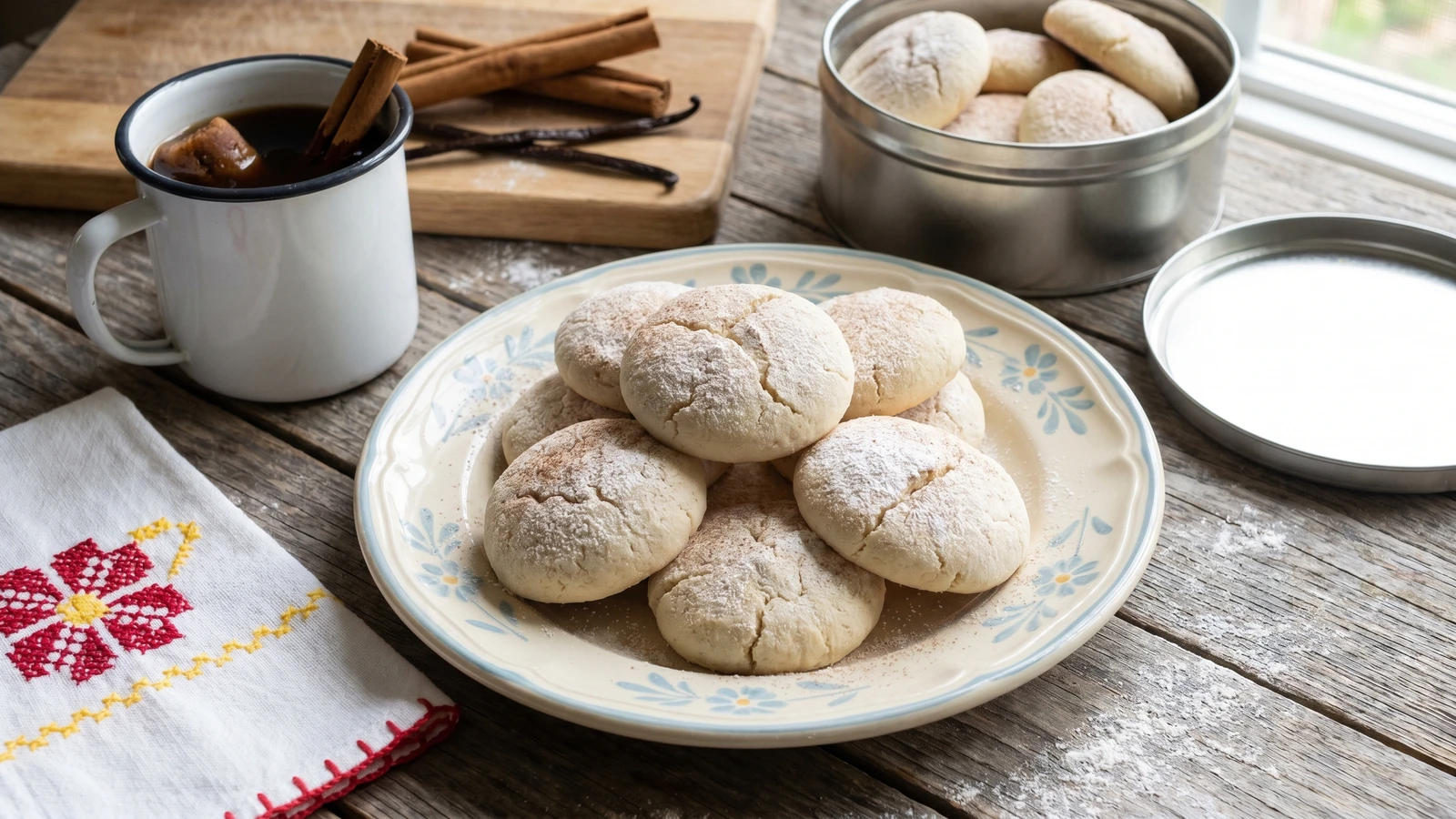
Yucatan's polvoron of mestizaje: Spanish wheat, Mexican lard, canela from the old colonial spice routes, and Papantla vanilla. Crumbly, pale, and dusted in cinnamon sugar for la merienda.
These cookies are from Yucatan. Specifically from the home kitchens of Merida and the small towns of the peninsula where wheat flour, lard, and canela have lived side by side on the same shelf since the 16th century. They are called mestizas because that is what they are: a Spanish polvoron rebuilt with Mexican manteca, Mexican canela, and Mexican vanilla. Not fusion. Mestizaje. There is a difference.
The fat is lard. Not butter, not shortening, not coconut oil. Manteca de cerdo. The texture of a proper polvoron yucateco comes from lard's crystal structure, which traps air differently than butter and gives you that dry, sandy crumble that dissolves the moment it touches the roof of your mouth. Use rendered pork lard from a carniceria. The shelf-stable bricks at the supermarket are not the same thing and your cookies will pay for it.
In Yucatecan homes these belong to la merienda, the late afternoon coffee-and-pastry pause that the peninsula takes seriously. They live in a tin on top of the refrigerator. A grandmother pulls them out when a grandchild walks in the door. They keep for a week and the canela sugar gets more fragrant by the day.
My mother did not make these. She was from Jalisco and Jalisco has its own galletas. But I copied this recipe from Dona Felipa in a small kitchen in Izamal in 2009, after I had spent the afternoon helping her stem habaneros for a recado. She told me to write down the lard temperature and underline it twice. I did. Saber cocinar es saber vivir.
The polvoron arrived in Mexico through the Spanish conquest as a convent confection from Andalusia, where Moorish bakers had refined the lard-based shortbread over centuries of Al-Andalus pastry tradition. Yucatan absorbed the form more deeply than most regions because the peninsula's colonial trade routes ran directly through Havana and Veracruz, importing Sri Lankan canela through Spanish galleons alongside the wheat flour the Spanish crown required colonial settlements to consume. The Yucatecan adaptation, swapping Spanish manteca for locally rendered pork lard and pairing the cookie with vanilla from neighboring Veracruz, produced one of the clearest examples of culinary mestizaje on the peninsula: a European form built entirely from the colonial pantry but reassembled into something the abuelas of Merida claim, correctly, as their own.
Quantity
2 cups
plus more for shaping
Quantity
3/4 cup
plus 1 cup for dredging
Quantity
1 cup
at cool room temperature
Quantity
1 teaspoon
plus 1 tablespoon for dredging
Quantity
1/2 teaspoon
Quantity
1 tablespoon
preferably from Papantla
Quantity
1
Quantity
2 tablespoons
if needed
| Ingredient | Quantity |
|---|---|
| all-purpose flourplus more for shaping | 2 cups |
| powdered sugarplus 1 cup for dredging | 3/4 cup |
| pork lard (manteca de cerdo)at cool room temperature | 1 cup |
| ground Mexican canela (Ceylon cinnamon)plus 1 tablespoon for dredging | 1 teaspoon |
| fine sea salt | 1/2 teaspoon |
| Mexican vanilla extractpreferably from Papantla | 1 tablespoon |
| large egg yolk | 1 |
| whole milk (optional)if needed | 2 tablespoons |
Pull the lard out an hour before you start. It should be soft enough to push your finger through but not greasy or melted. This is not butter. Lard behaves differently. If it is too cold, the dough cracks. If it is too warm, the cookies spread and lose the powdery crumb. La manteca es el sabor and it is also the structure. Treat it with respect.
In a wide bowl, beat the soft lard with the 3/4 cup powdered sugar until pale and fluffy, about three minutes by hand with a wooden spoon or two minutes with a stand mixer on medium. The mixture should look like wet sand turning into cream. Add the egg yolk, vanilla, and salt. Beat another minute until smooth and the color lightens. This is the base of the cookie. Do not rush it.
Sift the flour and the teaspoon of canela directly over the lard mixture. Fold with a spatula or your hands until the dough just comes together. It should feel dry, sandy, almost too crumbly. That is correct. If it absolutely will not hold when you press it, add a tablespoon of milk, then another only if needed. Yucatecan polvorones are dry by design. The crumble in the mouth is the whole point.
Press the dough into a flat disc, wrap it, and refrigerate for 20 minutes. This lets the flour hydrate and the lard firm back up. Skip the rest and the cookies will spread and crack at the edges. Twenty minutes. No me vengas con atajos.
Heat the oven to 325 degrees Fahrenheit (160 Celsius). Line two sheet pans with parchment. Pinch off pieces of dough the size of a walnut, about a tablespoon each. Roll each piece between your palms into a smooth ball, then flatten gently with your thumb into a thick disc about half an inch tall. Do not press too thin. The cookie should look stout. The women in Merida who taught me these shaped them by feel, never with a cutter, and every cookie looked a little different. That is part of the dish.
Arrange the discs about an inch apart on the prepared pans. Bake one tray at a time on the center rack for 16 to 20 minutes. The cookies are ready when the bottoms are pale gold and the tops are barely set, still nearly white. Do not let them brown. A Yucatecan polvoron is pale, dry, and tender. A browned polvoron is a sugar cookie pretending to be something it is not.
Let the cookies rest on the pan for ten minutes. They are extremely fragile while hot and will fall apart if you move them. Once they have firmed up, lift them carefully with a thin spatula. Whisk the remaining cup of powdered sugar with the tablespoon of canela in a shallow bowl. Roll each cooled cookie in the sugar mixture until completely coated. Set on a plate and dust the tops with a second pass of the sugar. Asi se hace y punto.
Pile them on a Yucatecan slipware plate and serve in the late afternoon with cafe de olla or a glass of cold horchata. The cookies should crumble against the roof of the mouth and leave a dusting of canela sugar on the lips. They keep for a week in a tin, and they get better after a day. Recetas probadas y garantizadas.
1 serving (about 22g)
Culinary guides, cultural storytelling, and the editorial depth that makes cooking meaningful.
Discover Culinary ExplorerChef Lupita
Puebla's convent almond cookies, made from blanched almonds, sugar syrup, egg yolks, canela, and patient hands, the kind of sweet that belongs beside coffee in talavera, not in a plastic bakery box.

Chef Lupita
Ciudad de Mexico's panaderia banderillas are long sticks of hojaldre pressed with sugar, baked until amber, and finished with a hard glaze for coffee at the kitchen table.

Chef Lupita
Mérida's pale egg-yolk-and-vanilla kisses, tiny cookies built on eight yolks and a perfume of orange blossom, sandwiched with guava paste and dusted heavy with powdered sugar.

Chef Lupita
Hidalgo's bisquet de nata carries Pachuca's mining history into the breakfast table: a Cornish-style bread softened by Mexican nata, split warm and eaten with café de olla.