
Chef Lupita
Almendrados Conventuales Poblanos
Puebla's convent almond cookies, made from blanched almonds, sugar syrup, egg yolks, canela, and patient hands, the kind of sweet that belongs beside coffee in talavera, not in a plastic bakery box.
A cooking platform built around craft, culture, and the stories behind what we eat.
Created by
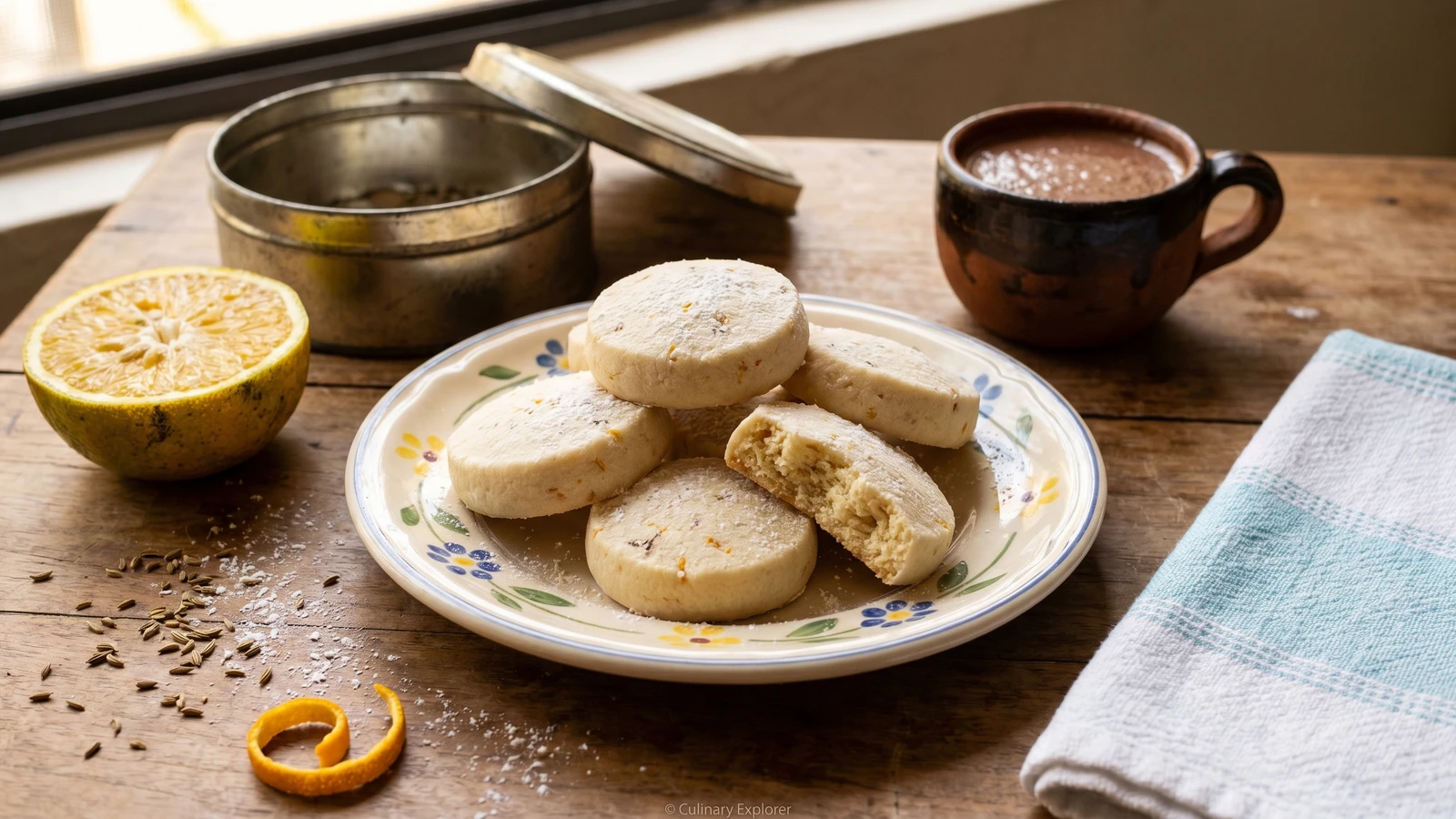
Mérida's anise-and-orange shortbread, made with manteca de cerdo and a few drops of agua de azahar. They crumble the second you touch them, built for hacer chuc with a cup of hot chocolate.
These polvorones are from Yucatán. Mérida, specifically, where the panaderías open before dawn and the women buy bread on the way home from early Mass. You will find polvorones in many states. Each one is different. The yucateco version is the one perfumed with agua de azahar and naranja agria, because Yucatán cooks with the sour orange the way other states cook with lime, and because the Lebanese and Spanish influences that shaped Mérida brought orange blossom water into the pantry and it stayed there.
The fat is lard. Not butter, not shortening, not coconut oil. Manteca de cerdo. That is what makes a polvorón crumble the way it does, the way that gives the cookie its name, from polvo, dust. The lard coats the flour and stops the gluten from waking up, and the cookie falls apart on your tongue instead of crunching. Use butter and you have made a Scottish shortbread with a Mexican accent. That is not what we are doing.
My mother had a recipe for polvorones de naranja in her notebook, written in the margin of another recipe, almost an afterthought. She made them for Día de los Muertos every November. The kitchen smelled like anise and orange for a week. I learned the Yucatecan version later, from a señora named Doña Aurora who ran a panadería in the Mercado Lucas de Gálvez in Mérida and who told me, the first time I asked for her recipe, that the agua de azahar was non-negotiable and the lard had to be fresh. She was right about both. Saber cocinar es saber vivir.
In Yucatán these cookies are eaten hacer chuc, the local custom of dunking bread or galletas into hot chocolate or coffee. The polvorón is engineered for it. It holds its shape just long enough to lift, then dissolves on the tongue with the chocolate. Cada estado, su propia cocina, and this one belongs to Mérida.
The polvorón traveled from Andalusia to Mexico in the colonial period, where Spanish convent kitchens adapted Moorish-influenced almond and lard shortbreads using New World ingredients and the abundant pork fat that became available after the introduction of Iberian pigs. The Yucatecan version's distinctive use of agua de azahar reflects the peninsula's 19th and early 20th-century Lebanese immigration, which brought orange blossom water into Mérida pantries and into the repertoire of local panaderías. The naranja agria, central to so much Yucatecan cooking from cochinita pibil to escabeche, arrived with the Spanish but found its truest home in the peninsula's limestone soil, and its zest in these cookies marks them as unmistakably yucatecos rather than generic Mexican polvorones.
Quantity
1 cup
at cool room temperature
Quantity
3/4 cup, plus more for dusting
Quantity
1 teaspoon
lightly toasted and crushed in a molcajete
Quantity
1 tablespoon
finely grated, from a sour orange (naranja agria) if you can find one
Quantity
2 tablespoons
Quantity
1 teaspoon
Quantity
1/4 teaspoon
Quantity
2 1/2 cups
sifted
Quantity
1/4 cup
| Ingredient | Quantity |
|---|---|
| pork lard (manteca de cerdo)at cool room temperature | 1 cup |
| powdered sugar | 3/4 cup, plus more for dusting |
| anise seedslightly toasted and crushed in a molcajete | 1 teaspoon |
| orange zestfinely grated, from a sour orange (naranja agria) if you can find one | 1 tablespoon |
| fresh orange juice | 2 tablespoons |
| agua de azahar (orange blossom water) | 1 teaspoon |
| fine sea salt | 1/4 teaspoon |
| all-purpose floursifted | 2 1/2 cups |
| powdered sugar (for dusting) (optional) | 1/4 cup |
Set a small dry comal or skillet over medium-low heat. Add the anise seeds and toast them for 30 to 45 seconds, swirling the pan, until they release their perfume. Tip them into a molcajete and crush them coarsely. Not to powder. You want little flecks that will catch your teeth and tell you what you are eating. Skip the toasting and the anise tastes like dust.
Place the lard in a wide bowl. Beat it with a wooden spoon or a stand mixer on medium for three to four minutes, until it looks pale and creamy and holds soft peaks when you lift the spoon. This is where the texture begins. Cold lard from the refrigerator will not aerate. Warm lard from a hot kitchen will go greasy. Cool room temperature, soft but not melting. La manteca es el sabor and it is also the structure.
Add the powdered sugar in two additions, beating well between each. Add the crushed anise, the orange zest, the orange juice, the agua de azahar, and the salt. Beat for another minute until everything is fragrant and even. Stop and smell the bowl. It should smell like a Mérida bakery at six in the morning: orange, anise, the faint floral note of azahar. If it does not, your azahar is old. Buy a new bottle.
Add the sifted flour in three additions, folding gently with a rubber spatula or your hands. Stop the moment the flour disappears. Do not knead this dough. Polvorones get their crumble from minimal gluten development. Overwork them and you have made galletas, not polvorones. The dough should look shaggy but hold together when you press a handful. If it feels dry, add a teaspoon of orange juice. Not more.
Cover the bowl with a clean cotton servilleta and let it rest at cool room temperature for 20 minutes. The flour needs time to hydrate evenly and the lard needs to firm up just enough to shape. Do not refrigerate. Cold dough cracks instead of pressing.
Heat the oven to 325F. Line two sheet pans with parchment. Pinch off pieces of dough about the size of a walnut, roll each one between your palms into a ball, and press gently with your thumb to flatten the top slightly. Place them on the sheet pans with about an inch of space between them. They will not spread much. Some cooks in Mérida press them with a wooden cookie stamp. Some leave them plain. Both are correct.
Bake one sheet at a time on the middle rack for 18 to 22 minutes. They are ready when the bottoms turn pale gold and the tops still look almost raw. Polvorones should never brown on top. If they do, the oven was too hot or you waited too long. Pull them out and let them cool on the sheet for ten full minutes. They will be fragile when warm. Move them too soon and they crumble in your hand before they reach the plate.
When the cookies are cool enough to lift but still slightly warm, dredge each one in powdered sugar through a fine sieve, or roll them gently in a bowl of sugar. Let them rest at least an hour before serving. Polvorones taste better the next day, when the lard and the orange and the anise have settled into each other. Store in a tin lined with parchment. They keep two weeks and only get better. Recetas probadas y garantizadas.
1 serving (about 21g)
Culinary guides, cultural storytelling, and the editorial depth that makes cooking meaningful.
Discover Culinary ExplorerChef Lupita
Puebla's convent almond cookies, made from blanched almonds, sugar syrup, egg yolks, canela, and patient hands, the kind of sweet that belongs beside coffee in talavera, not in a plastic bakery box.

Chef Lupita
Ciudad de Mexico's panaderia banderillas are long sticks of hojaldre pressed with sugar, baked until amber, and finished with a hard glaze for coffee at the kitchen table.

Chef Lupita
Mérida's pale egg-yolk-and-vanilla kisses, tiny cookies built on eight yolks and a perfume of orange blossom, sandwiched with guava paste and dusted heavy with powdered sugar.

Chef Lupita
Hidalgo's bisquet de nata carries Pachuca's mining history into the breakfast table: a Cornish-style bread softened by Mexican nata, split warm and eaten with café de olla.