
Chef Lupita
Almendrados Conventuales Poblanos
Puebla's convent almond cookies, made from blanched almonds, sugar syrup, egg yolks, canela, and patient hands, the kind of sweet that belongs beside coffee in talavera, not in a plastic bakery box.
A cooking platform built around craft, culture, and the stories behind what we eat.
Created by
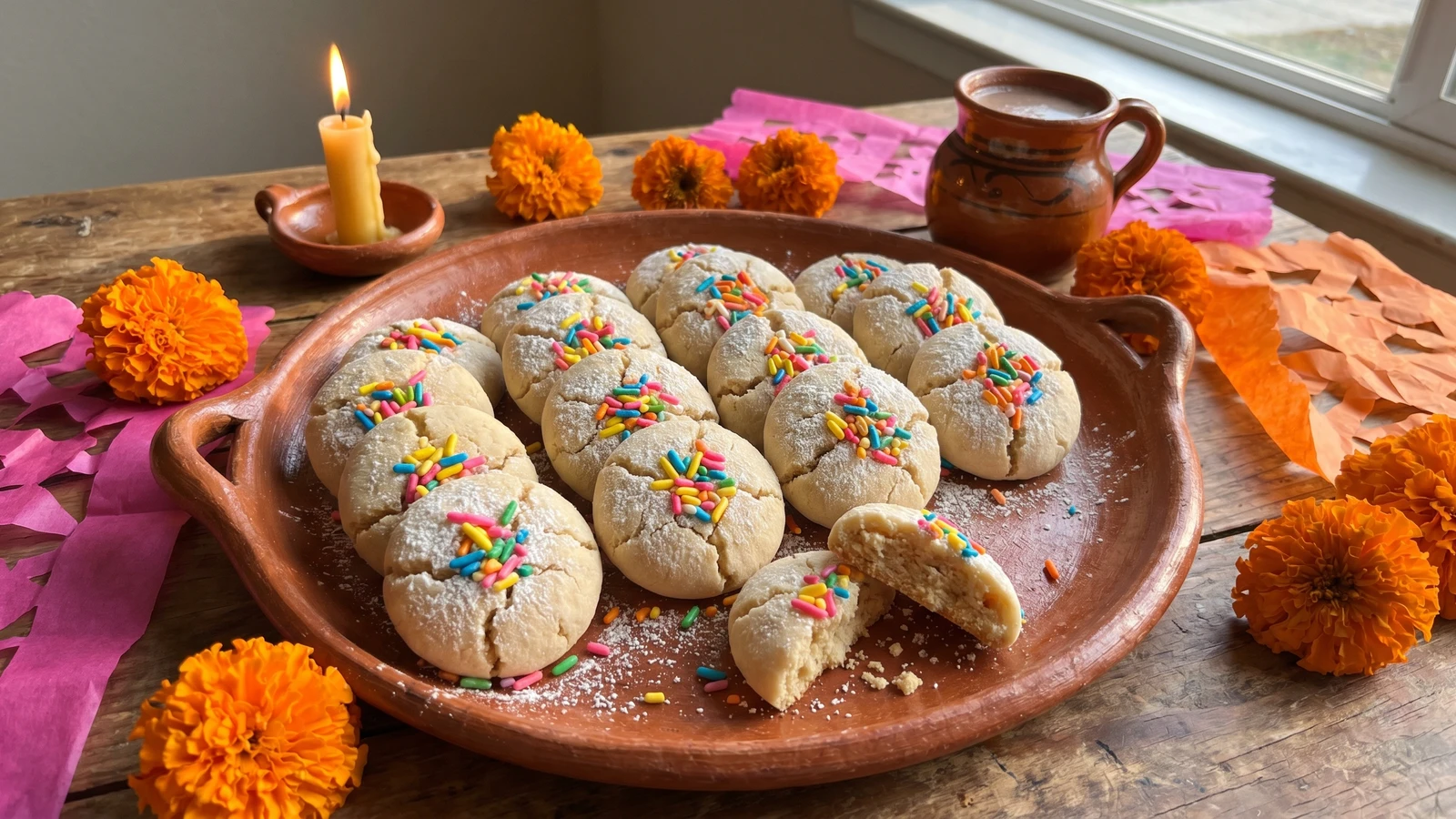
Yucatán's lard-rich shortbread from Ticul, dusted with the bright sprinkles that mark Hanal Pixán. The cookies that sit on the altar in late October, waiting for the souls to come home.
These polvorones come from Ticul, a small town in the Puuc region of southern Yucatán, about an hour and a half south of Mérida. Ticul is known for two things: the alfareros who throw the red clay pottery you see all over the peninsula, and the panaderias that line the streets around the plaza. The polvoron ticuleño belongs to those panaderias.
A polvoron is not a galleta. A galleta has structure. A polvoron has none. It is made to crumble. The word comes from polvo, dust, and that is exactly what should happen the moment one touches your tongue. The Yucatecan version is built on three things: toasted flour, manteca de cerdo, and patience. Skip the toasting and you have a raw-tasting cookie. Use butter instead of lard and you have a different cookie altogether, a perfectly fine one, but it is not a polvoron ticuleño. La manteca es el sabor.
The bright sprinkles, grageas de colores, are not decoration. They are the marker that says: this is for Hanal Pixán. From October 31 through November 2, families in Yucatán build altares for the souls of the dead. Hanal Pixán means food of the souls in Maya. The altar holds pib (the underground-cooked mucbipollo), candles, cempasuchil flowers, water for the thirsty traveler, and sweets. The polvorones go on the children's altar, the altar for los angelitos, because the bright colors are for the children who come home first. My notebook has a page from a panadera in Ticul named Doña Hilaria, who told me in 2014: the dead remember the color. Cada estado, su propia cocina, y este es de Yucatán.
The polvoron arrived in Mexico from Andalusia, where Spanish nuns had been making lard-based shortbreads since the medieval period; the Yucatecan version absorbed local touches including canela and the festive grageas tied to Hanal Pixán, the Maya celebration that runs alongside Día de Muertos and predates the Spanish observance by centuries. Hanal Pixán, which translates from Yucatec Maya as 'food of the souls,' divides its three days between los angelitos (deceased children) on October 31, the adult dead on November 1, and a final misa on November 2, with distinct foods set on the altar for each. Ticul's reputation for polvorones grew through the 20th century alongside the town's panaderia tradition, and the cookies are now sold by the kilo in cardboard boxes throughout the peninsula in the weeks leading up to the holiday.
Quantity
2 cups
Quantity
1/2 cup, plus more for dusting
Quantity
1/4 teaspoon
Quantity
1 cup
at cool room temperature
Quantity
1 teaspoon
Quantity
1/2 teaspoon
Quantity
1
Quantity
1/3 cup
for topping
Quantity
1
lightly beaten, for brushing
| Ingredient | Quantity |
|---|---|
| all-purpose flour | 2 cups |
| powdered sugar | 1/2 cup, plus more for dusting |
| fine sea salt | 1/4 teaspoon |
| pork lard (manteca de cerdo)at cool room temperature | 1 cup |
| pure vanilla extract | 1 teaspoon |
| ground canela (Mexican cinnamon) | 1/2 teaspoon |
| large egg yolk | 1 |
| grageas de colores (Mexican rainbow sprinkles)for topping | 1/3 cup |
| large egg whitelightly beaten, for brushing | 1 |
Heat a dry comal or heavy skillet over medium-low. Add the flour and stir constantly with a wooden spoon for about 8 minutes, until the flour turns the color of pale sand and smells faintly nutty. This is the step most recipes outside Yucatán skip. The Ticul panaderas do not skip it. Toasted flour is what gives the polvoron its dry, sandy crumb that crumbles the second it touches your tongue. That is where the name comes from. Polvo. Dust.
Spread the toasted flour on a sheet pan and let it cool completely to room temperature. Sift it together with the powdered sugar, salt, and canela into a wide bowl. Sifting matters here. Lumps of unsifted flour become hard spots in the cookie.
In a separate bowl, beat the lard with a wooden spoon or a paddle attachment until it is smooth, pale, and the texture of soft frosting. Five minutes by hand, three with a mixer. La manteca es el sabor. No me vengas con atajos. Butter will give you a cookie. Lard gives you a polvoron ticuleño. The two are not the same thing.
Beat the egg yolk and vanilla into the creamed lard. Add the sifted dry ingredients in three additions, mixing gently with your hands until a soft, sandy dough comes together. The dough should hold when squeezed but crumble at the edges. If it feels too wet, add a tablespoon more flour. If it will not hold, add a teaspoon of lard. Wrap in plastic and rest at room temperature for 30 minutes. Do not refrigerate. Cold lard cracks when you shape it.
Heat the oven to 325F. Line two sheet pans with parchment. Pinch off pieces of dough about the size of a walnut, around one heaping tablespoon each. Roll each one between your palms into a smooth ball, then press gently with the heel of your hand to flatten into a thick disc about 1/2 inch high. The Ticul shape is a low round, not a tall ball. Place on the sheet pan with about an inch between them. They do not spread much.
Brush the top of each polvoron lightly with beaten egg white. The egg white is glue, nothing more. Scatter the grageas de colores generously over the top, pressing them in lightly so they stick. The colors matter. Hanal Pixán altars are dressed in color, the marigold orange of cempasuchil, the pink papel picado, the bright candles. The sprinkles are part of that visual language. A plain polvoron is for everyday. A polvoron with grageas is for the dead.
Bake for 18 to 22 minutes, rotating the pans halfway through. The polvorones are done when the bottoms are pale gold and the tops are set but still very pale. They should not brown on top. If they color too much, they lose the sandy, melt-in-the-mouth texture that defines them. They will feel soft when they come out. That is correct. They firm as they cool.
Let the polvorones rest on the sheet pan for at least 20 minutes before lifting them. Warm polvorones break apart in your fingers. Once cool, dust the spaces between the sprinkles with a little more powdered sugar if you want them whiter, the way Ticul panaderias do. Store at room temperature in a tin lined with wax paper. They keep for two weeks and the flavor of the lard and the canela only deepens. Así se hace y punto.
1 serving (about 21g)
Culinary guides, cultural storytelling, and the editorial depth that makes cooking meaningful.
Discover Culinary ExplorerChef Lupita
Puebla's convent almond cookies, made from blanched almonds, sugar syrup, egg yolks, canela, and patient hands, the kind of sweet that belongs beside coffee in talavera, not in a plastic bakery box.

Chef Lupita
Ciudad de Mexico's panaderia banderillas are long sticks of hojaldre pressed with sugar, baked until amber, and finished with a hard glaze for coffee at the kitchen table.

Chef Lupita
Mérida's pale egg-yolk-and-vanilla kisses, tiny cookies built on eight yolks and a perfume of orange blossom, sandwiched with guava paste and dusted heavy with powdered sugar.

Chef Lupita
Hidalgo's bisquet de nata carries Pachuca's mining history into the breakfast table: a Cornish-style bread softened by Mexican nata, split warm and eaten with café de olla.