
Chef Lesia
Pomynalnyi Kalach (поминальний калач, memorial ring bread)
The hole in the middle is not emptiness. It is the place set for the dead, a ring of sweet bread carried after Easter and broken with the living.

Updated June 13, 2026
The breads that mark the Ukrainian year: korovai for the wedding, paska for Easter, the Christmas kalach and knysh, the saint-day and Lenten calendar breads, and the memorial pomana. Enriched, decorated with dough ornament, and closer to ceremony than recipe, every one of them home-baked, never bought.
A cooking platform built around craft, culture, and the stories behind what we eat.
Chef Lesia
The hole in the middle is not emptiness. It is the place set for the dead, a ring of sweet bread carried after Easter and broken with the living.
Chef Lesia
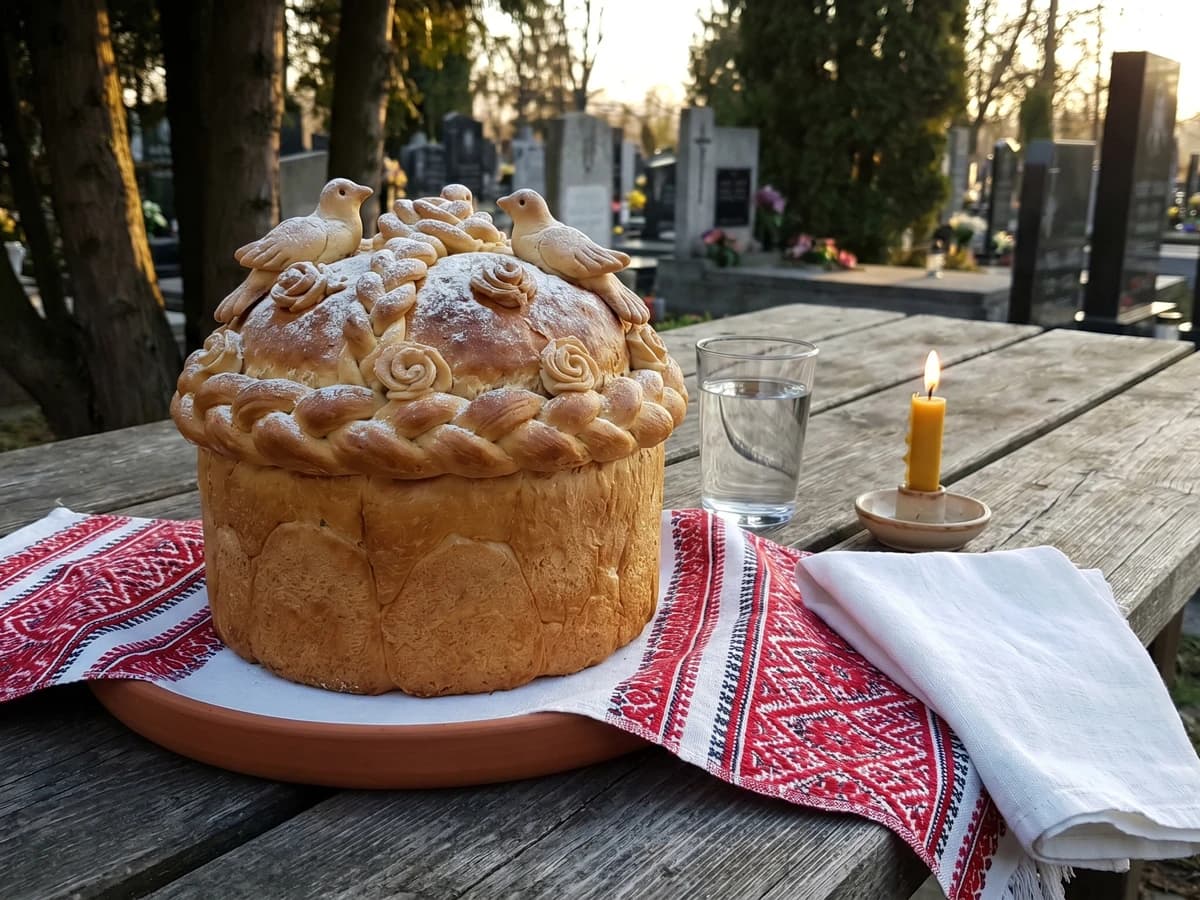
This bread is baked to stand, not to be sliced: a tall Podillia memorial loaf, braided and flowered like a korovai, then given away whole.
Chef Lesia
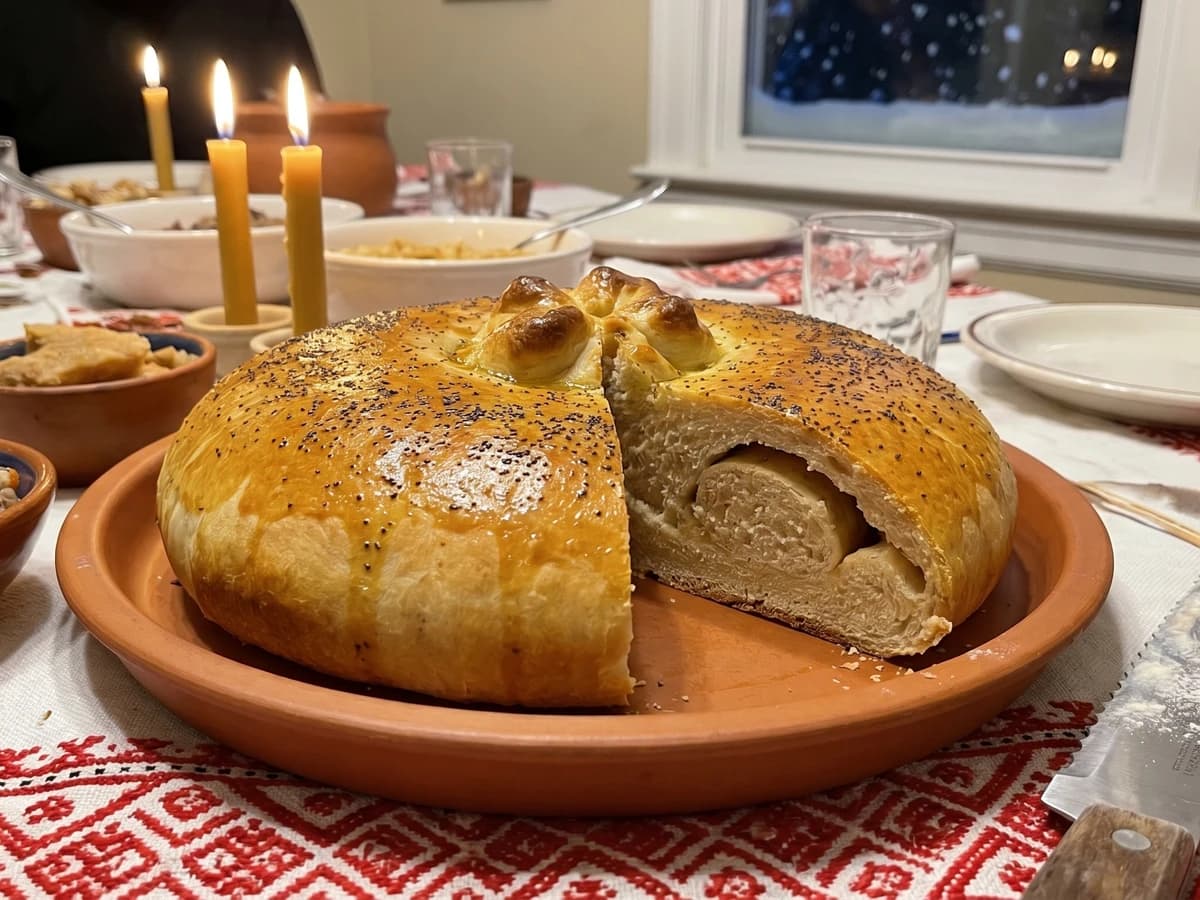
A smaller loaf is tucked inside the larger one, like a name kept warm in bread, then pinched up at the centre for the Christmas table.

Chef Lesia
For one spring dawn, bread leaves the house tall, gold, and crossed, tucked into the Easter basket before anyone cuts it. The dough is rich, but the lift must stay brave.

Chef Lesia
A Ukrainian wedding can start with a small bun in your palm: golden, pinched into pine-cone scales, sweet with milk and egg, carrying the invitation before the feast begins.

Chef Lesia
The empty center is the whole point: a golden three-strand wedding bread, braided from korovai dough, with a hole wide enough to frame the future.

Chef Lesia
This Easter bread rises like a tower: golden from yolks, sweet with raisins, baked in a tall tin, then glazed warm so the sugar runs down its sides.
Chef Lesia
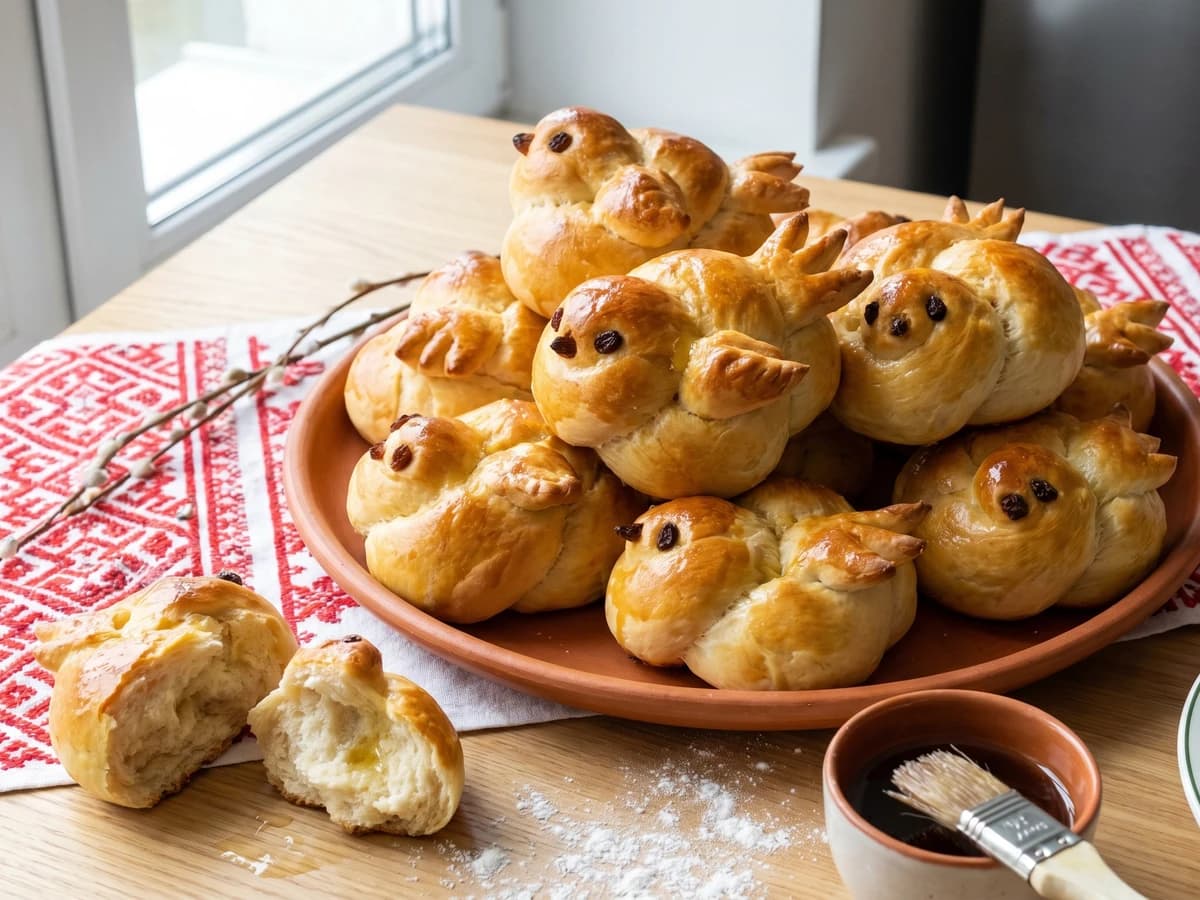
The first birds of spring are sometimes baked before the sky sends the real ones: knotted dough bodies, raisin eyes, wings pinched up, carried outside by children singing warmth home.
Chef Lesia
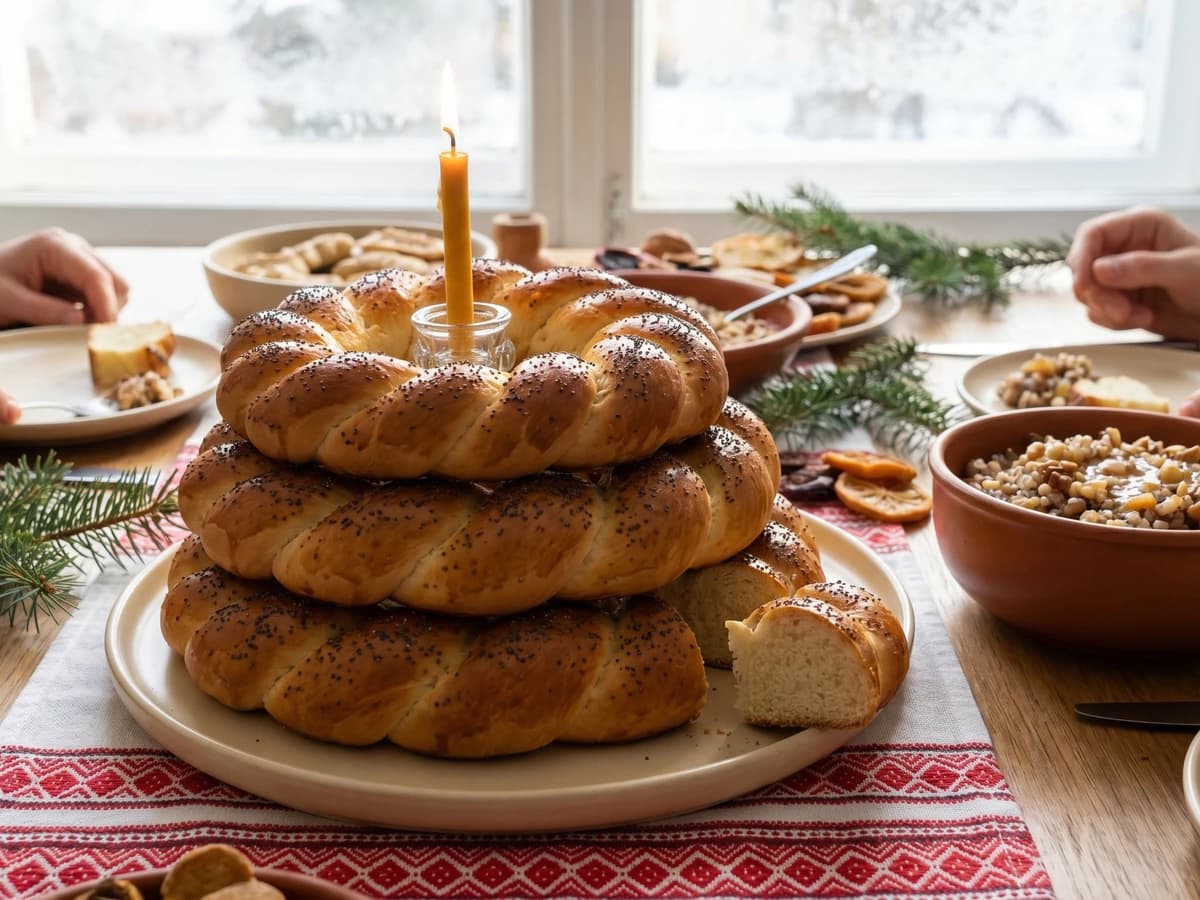
A Christmas loaf with a deliberate hollow: three braided rings stacked around candlelight, white wheat and honey holding the table's blessing in a form your hands can learn.
Chef Lesia
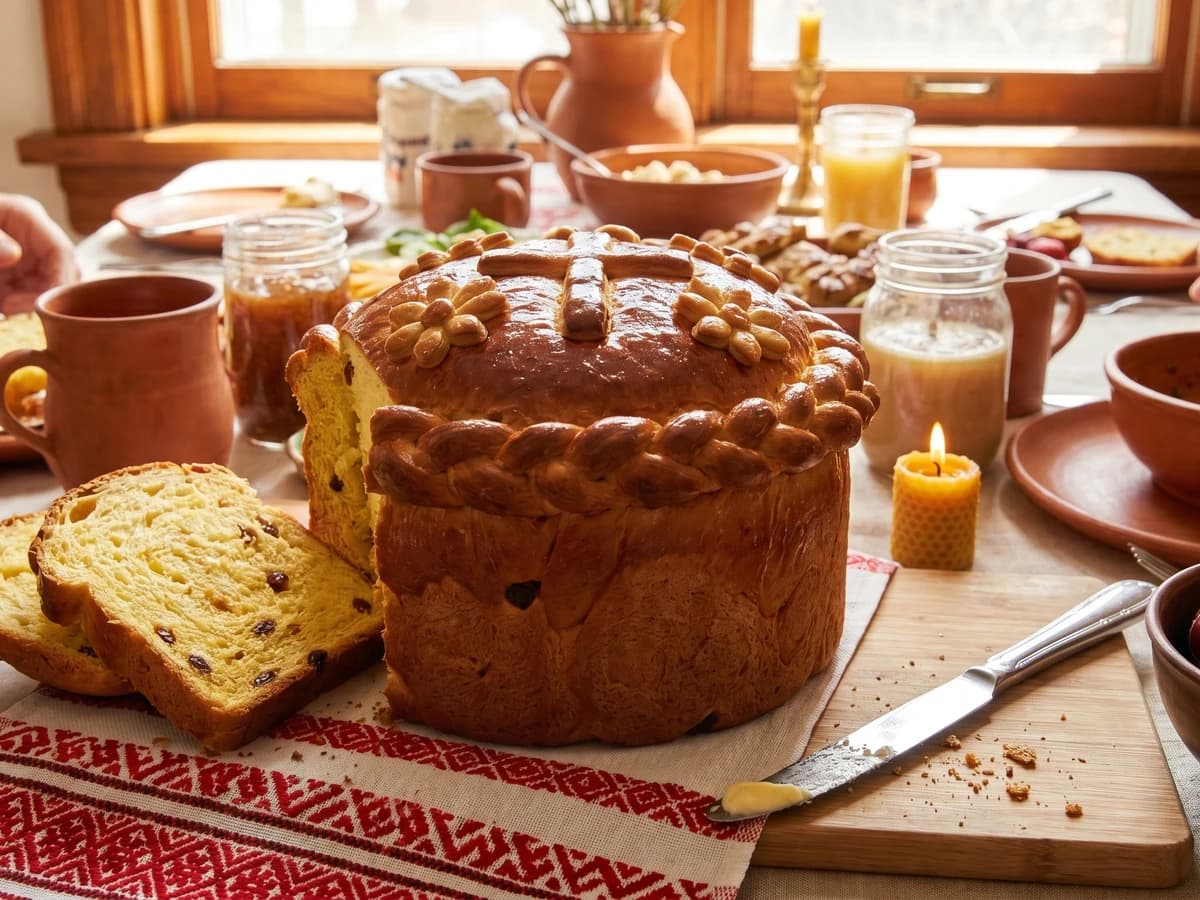
This is the Easter bread that climbs upward before it spreads out, a golden tower of eggs, butter, braids, flowers and crosses from Bukovyna's western table.

Chef Lesia
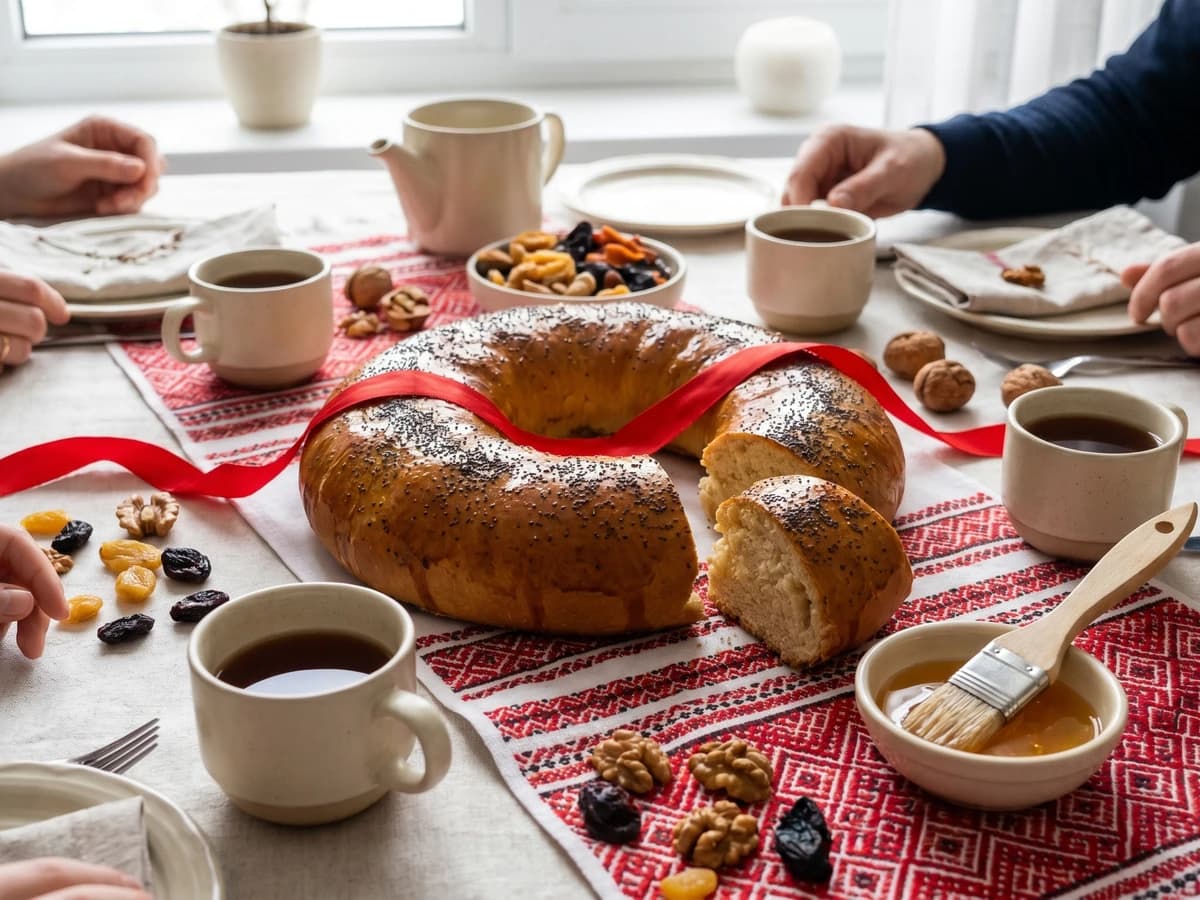
The most important piece is the one you don't eat: a poppy-speckled Lenten cross, honey-brushed after baking, saved with seed grain so spring goes into the field fed.
Chef Lesia
A golden honey ring hangs just out of reach, and the whole room becomes children again: jumping, laughing, guarding the bread, trying not to get soot on their noses.
Chef Lesia
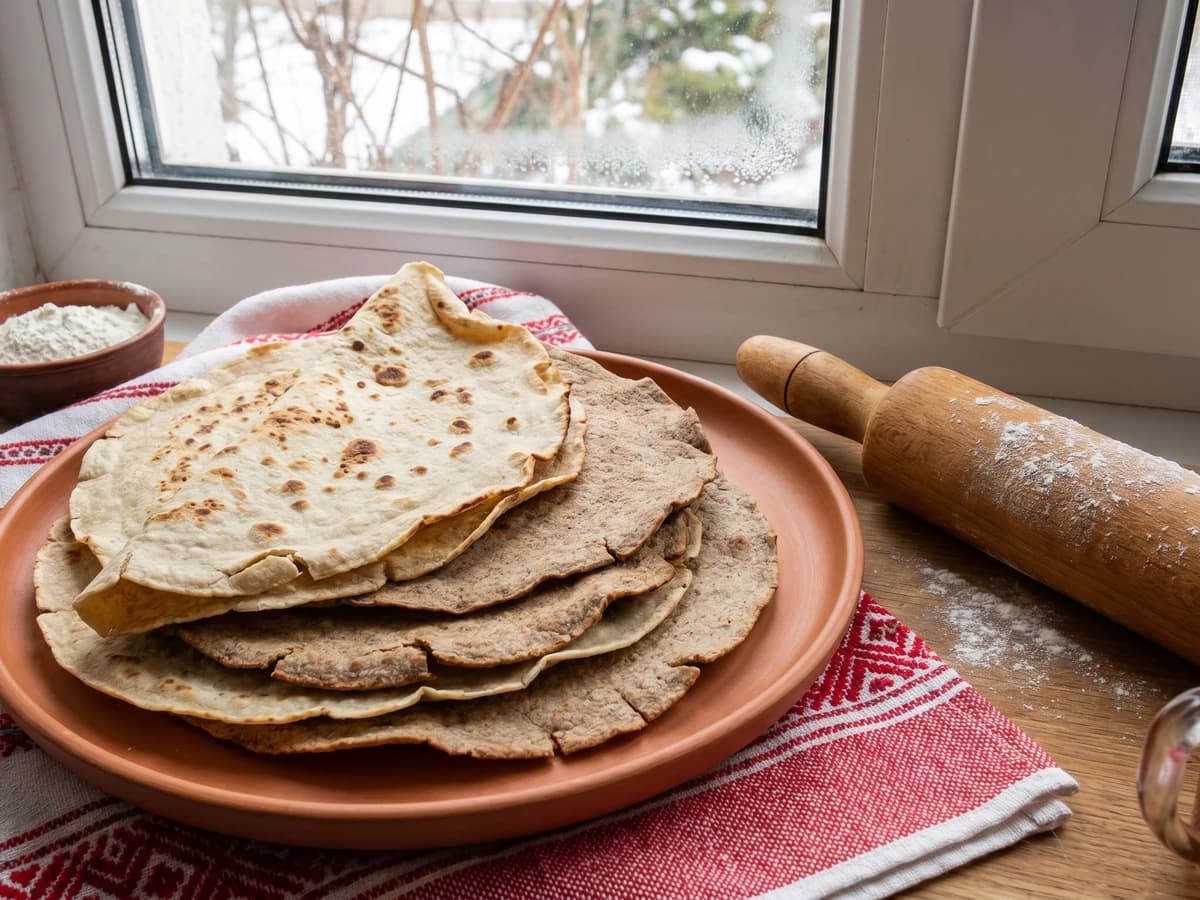
The first bread of Great Lent is not soft, golden, or kind. It is flour and water baked dry until it smells toasted, a small edible reminder that restraint has teeth.

Chef Lesia
A winter loaf goes into the oven with garlic cloves and handfuls of grain tucked under its skin, because Christmas bread in the Carpathians is asked to feed more than hunger.

Chef Lesia
A ladder made from dough is not subtle, and that is its beauty: soft golden rungs for Ascension, brushed with honey, then broken and shared at the table.
Chef Lesia
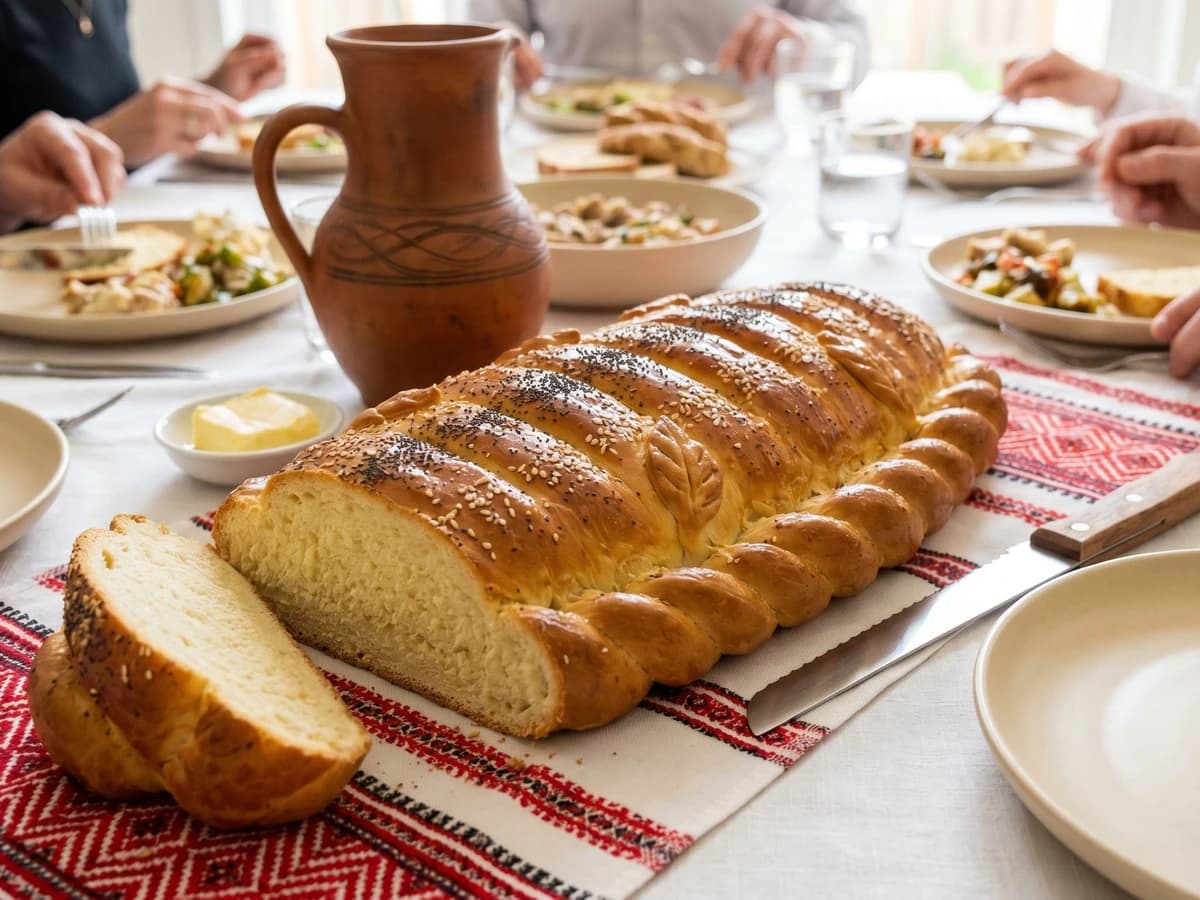
This is the wedding loaf that does its work by lying still: long, golden, butter-rich, watched over on the table until the second day, when it is finally broken and shared.
Chef Lesia
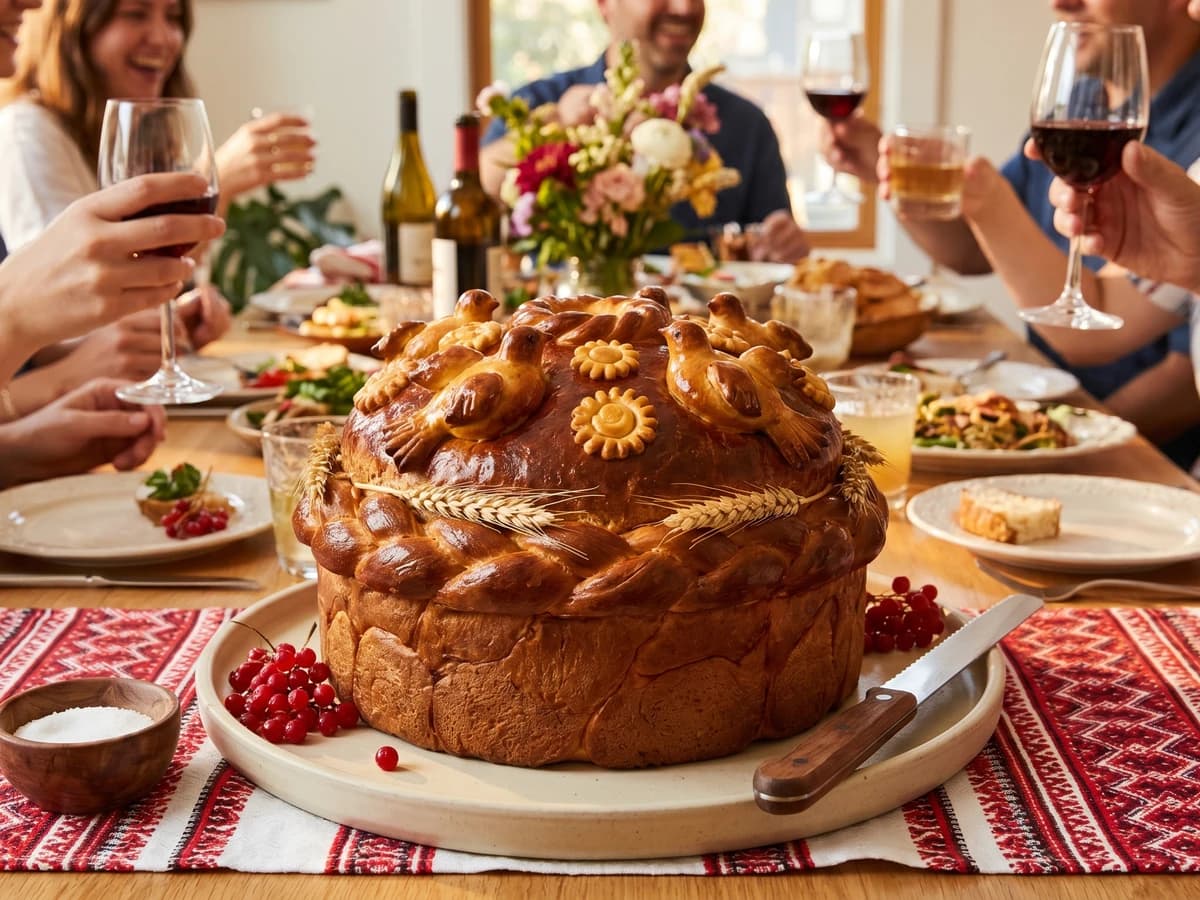
A wedding bread should enter the room like good news: round, high, egg-gold, crowded with dough birds and braids, then cut and shared so the blessing goes home in every pocket.
Culinary guides, cultural storytelling, and the editorial depth that makes cooking meaningful.
Discover Culinary ExplorerChef Lesia is a fictional culinary guide to Ukrainian Southern-Steppe Cuisine, written with the assistance of AI.