
Chef Lesia
Arnautka (арнаутка, southern durum-wheat loaf)
Durum wheat makes bread the color of late steppe sun: golden, firm, nutty, and strong enough to hold salo, tomato juice, and green sunflower oil without collapsing.
A cooking platform built around craft, culture, and the stories behind what we eat.
Created by
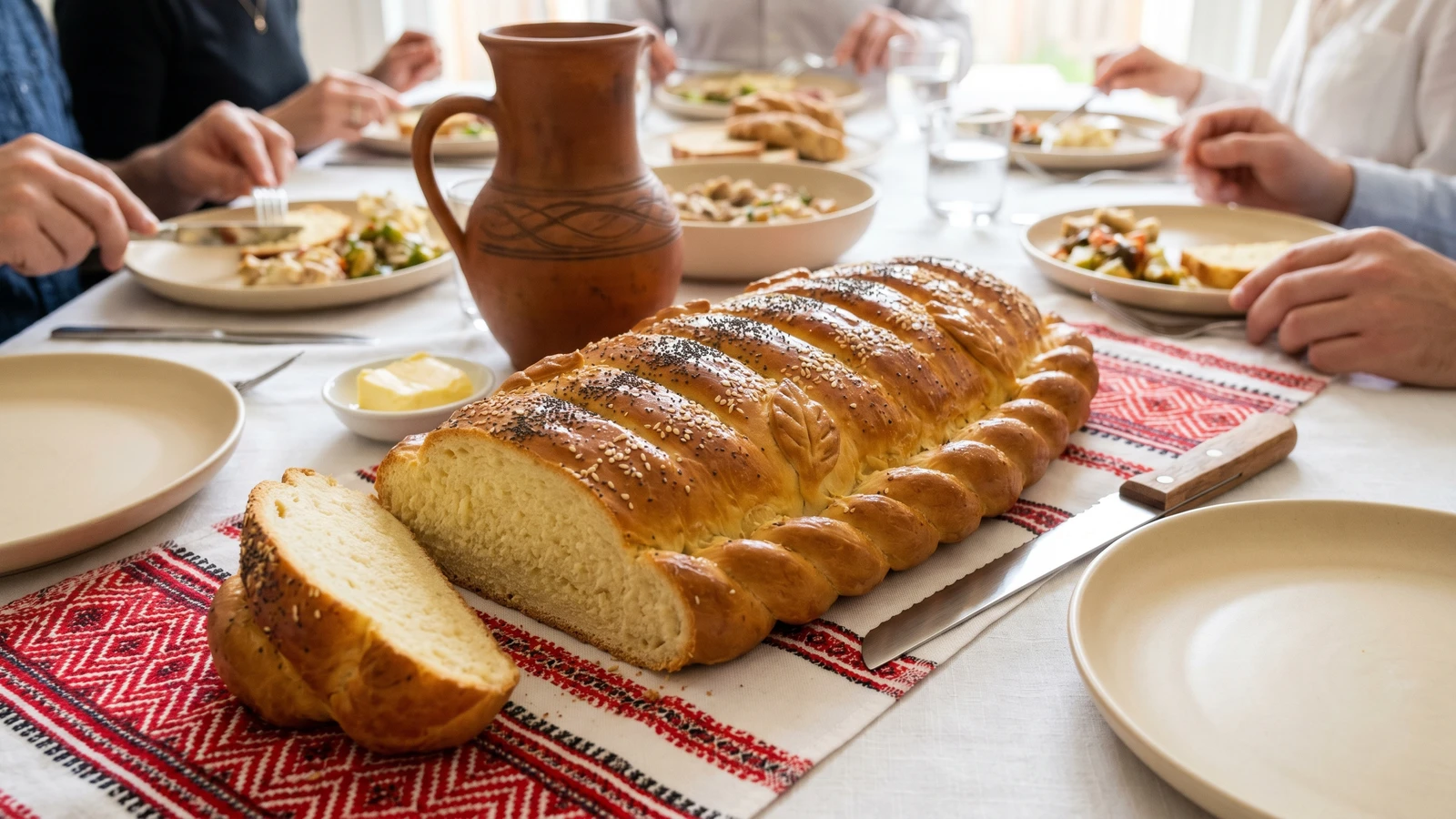
This is the wedding loaf that does its work by lying still: long, golden, butter-rich, watched over on the table until the second day, when it is finally broken and shared.
Awedding bread that lies down has a different temper from a crown. Lezhen is long and oval, brushed gold, low to the table, not towering like a korovai but stretched out in front of the couple as if it has settled in for the whole celebration. It waits. That waiting is the point.
The dough is milk-and-butter rich, soft under your hands, and it should smell sweet before it ever sees the oven. Don't rush the first rise. Let it swell until the bowl feels full of breath, then shape it gently so the surface stays smooth and proud. Aunt Nadia would have written, "until it sounds right," and here that means the baked loaf gives a low hollow knock underneath, not a dull thud.
The one thing that decides the dish is the shape. Keep it long, broad, and reclining, because this is not a sandwich loaf in festive clothing. It belongs on an embroidered rushnyk at a crowded table, with glasses lifted, somebody laughing too loudly, and flour still on the cook's sleeve. Bread remembers best when people are reaching across it.
Lezhen, from the Ukrainian verb lezhaty, to lie down, is a regional wedding bread of southern and central Ukraine, a lower oval cousin of the taller korovai. In some village wedding customs it remained whole before the newlyweds through the first day and was divided on the second day, making the act of sharing part of the marriage ritual rather than just dessert. Soviet-era standard cookbooks favored simplified celebration breads, so loaves like lezhen survived mostly through family practice, local memory, and women who kept shaping them without waiting for permission from print.
Quantity
500g
plus extra for dusting
Quantity
7g
Quantity
80g
Quantity
1 teaspoon
Quantity
220ml
warmed until just blood-warm
Quantity
2
at room temperature
Quantity
80g
very soft
Quantity
1 teaspoon vanilla sugar or 1/2 teaspoon extract
Quantity
zest of 1 lemon
finely grated
Quantity
1 yolk plus 1 tablespoon milk
for glazing
Quantity
1 tablespoon
Quantity
1 tablespoon
| Ingredient | Quantity |
|---|---|
| strong white bread flourplus extra for dusting | 500g |
| dried yeast | 7g |
| caster sugar | 80g |
| fine sea salt | 1 teaspoon |
| whole milkwarmed until just blood-warm | 220ml |
| large eggsat room temperature | 2 |
| unsalted buttervery soft | 80g |
| vanilla sugar or vanilla extract | 1 teaspoon vanilla sugar or 1/2 teaspoon extract |
| lemon zest (optional)finely grated | zest of 1 lemon |
| egg yolk mixed with milkfor glazing | 1 yolk plus 1 tablespoon milk |
| poppy seeds (optional) | 1 tablespoon |
| sesame seeds (optional) | 1 tablespoon |
Stir the warm milk with the yeast and a spoonful of the sugar, then leave it until the surface looks creamy and awake. If your kitchen is cool, give it patience. The milk should feel warm like a hand, not hot, because heat kills yeast faster than any bad mood in a kitchen.
Put the flour, remaining sugar, and salt in a large bowl. Add the yeasted milk, eggs, vanilla, and lemon zest if you're using it, then mix until a rough soft dough forms. Work in the butter a little at a time. At first it will smear and complain, then suddenly the dough will take it in and become smooth, elastic, and faintly glossy.
Knead by hand on a lightly floured table, or in a mixer on low, until the dough stretches without tearing straight away. It should feel soft as an earlobe and spring back when pressed. Add flour only if it truly sticks to everything; enriched dough begins messy and then gathers itself.
Cover the bowl and leave the dough until it has doubled and looks full of breath. Don't stare at the clock. Watch the dough. In a warm kitchen it moves quickly; in winter by the window it takes its time, like all sensible things.
Turn the dough onto the table and cut off a small handful if you want simple decorations. Shape the main dough into a long oval, broad in the middle and tapered gently at the ends, then set it on a lined baking sheet. Roll the reserved dough into thin ropes for a border or small leaves, fixing them with a little water. Keep the loaf low and reclining, not tall. That shape is the ceremony.
Cover loosely and let the loaf puff until it looks relaxed and slightly swollen. Brush gently with the egg yolk and milk glaze, reaching into the seams of any decoration without flooding them. Scatter poppy or sesame seeds if you like; plain gold is just as handsome.
Bake at 180C until the crust is deep golden and the underside gives a hollow, low knock when tapped. If the top colors too quickly, lay a loose sheet of foil over it. The smell will change from sweet dough to warm butter and toasted crust, and that is when the room starts behaving like a wedding.
Cool the loaf fully on a rack before slicing. For the old wedding rhythm, let it sit wrapped in a clean cloth until the next day, then bring it to the table whole and cut it in generous slices. Butter is welcome. Honey is not a crime.
1 serving (about 60g)
Culinary guides, cultural storytelling, and the editorial depth that makes cooking meaningful.
Discover Culinary ExplorerChef Lesia
Durum wheat makes bread the color of late steppe sun: golden, firm, nutty, and strong enough to hold salo, tomato juice, and green sunflower oil without collapsing.

Chef Lesia
A proper hearth loaf announces itself before you cut it: dark crust, hollow knock, flour caught in the blisters, and that deep oven smell that makes people move closer.
Chef Lesia
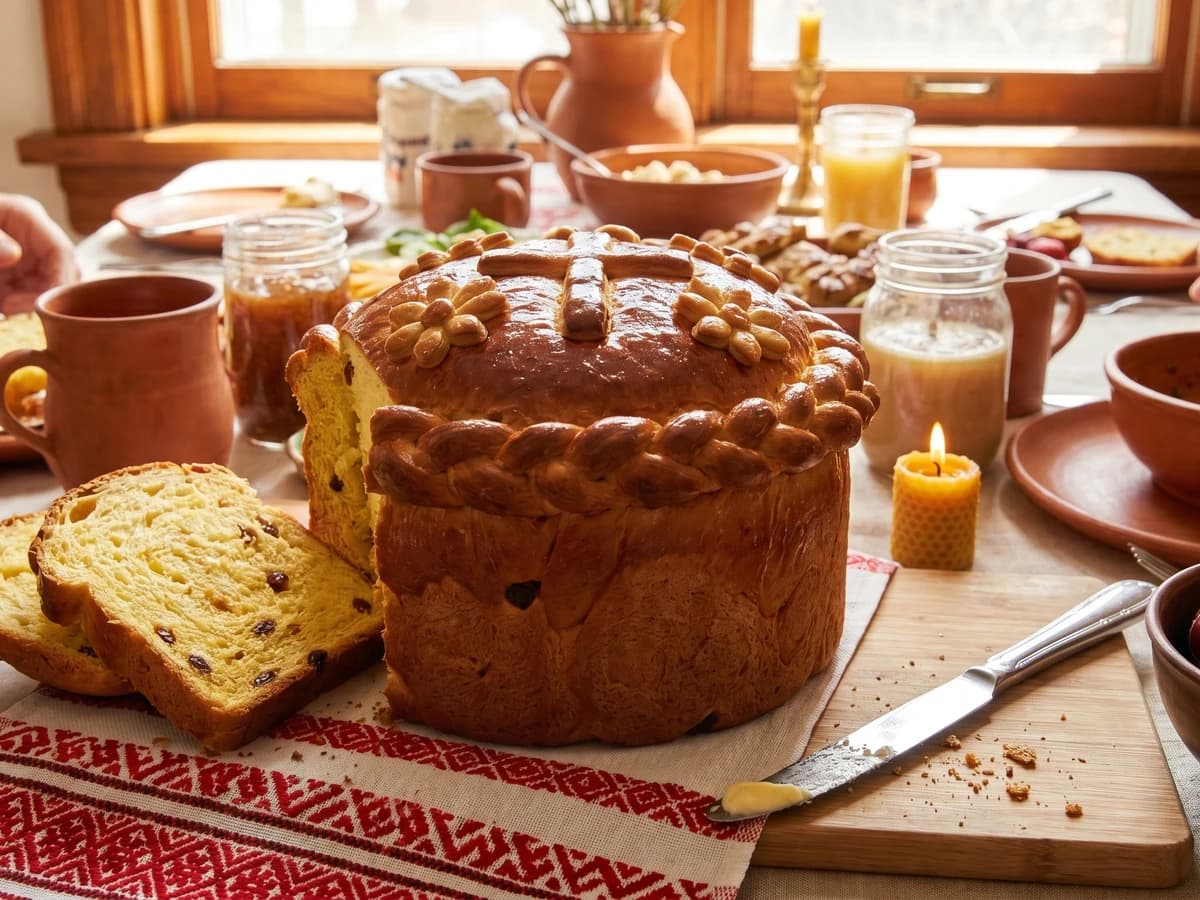
This is the Easter bread that climbs upward before it spreads out, a golden tower of eggs, butter, braids, flowers and crosses from Bukovyna's western table.
Chef Lesia
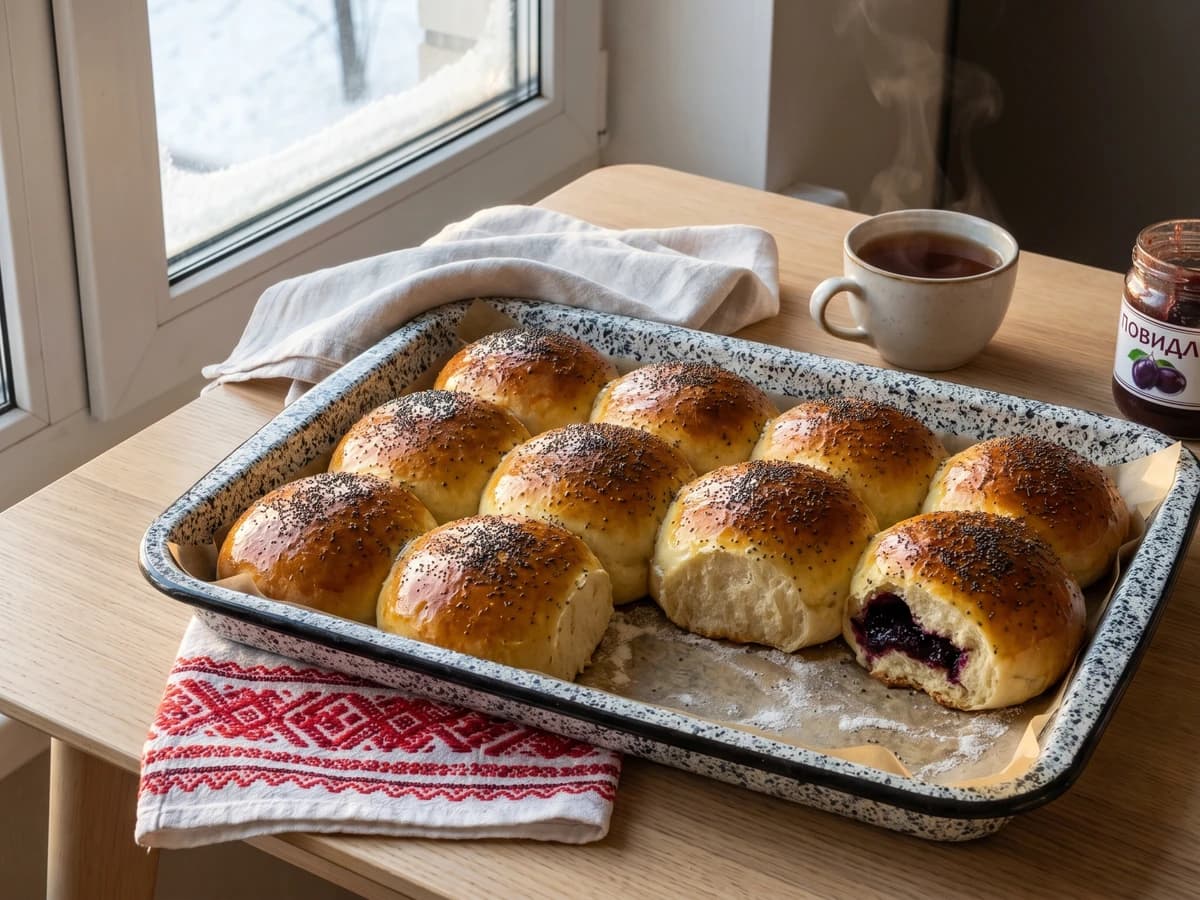
The sweetest part of bulochky is not sugar but milk: it makes a dough that pulls apart in pale threads, ready to stay plain or hide a spoon of thick povydlo.